

Okay, okay—I know I shared “The Rings of Saturn” last Tuesday. However, I went out that Tuesday night to open mic night, and—with all humility—I knocked it out of the park. As such, I had to share footage of this live performance.

Okay, okay—I know I shared “The Rings of Saturn” last Tuesday. However, I went out that Tuesday night to open mic night, and—with all humility—I knocked it out of the park. As such, I had to share footage of this live performance.
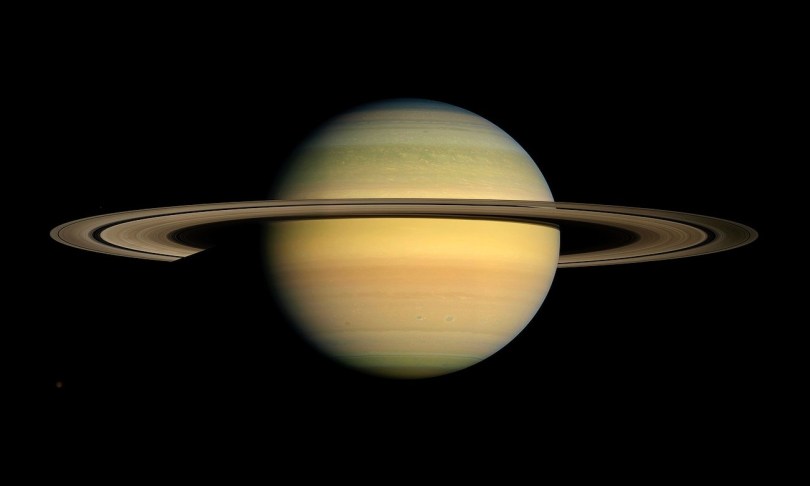
I’ve been writing (and singing!) a lot about space lately. My interest in the topic is steadfast, though the highlighting of it here on the blog ebbs and flows. I also will hasten to add that I’m not much for the technical details of space exploration and colonization, and I suspect that many of our scientific observations about space are, at best, educated guesses. Rather, I adore the idea of humanity stretching its fragile fingers into the firmament.
This recent focus also coincides with the re-release of several of my old instrumental albums into the digital space. To save a few bucks (“quid” to my English readers), I released Electrock Music (2006) and Electrock II: Space Rock (2007) into a digital double LP (twelve tracks each, twenty-four tracks total):
Start with “Launch” to begin a musicologist’s tour throughout our Solar System.
To take an abbreviated tour of our Solar System—with a major emphasis on Saturn—keep reading:
Happy Sunday!
—TPP
Other Lazy Sunday Installments:

We’re back with another movie review from Audre Myers, who is tossing in reviews of her favorite flicks whenever the mood strikes (or whenever I e-mail her asking her to contribute something).
She offers up her review of the 2016 film Hidden Figures, about three black women “computers” working for NASA. It was a darling of the critics for its frank depiction of segregation.
Unfortunately, some its iconic scenes—like the lady having to walk half-a-mile to use a segregated bathroom—are Hollywood hogwash. The segregated facilities were abolished in 1958—three years before the films setting—and while there were segregated restrooms in one part of NASA’s facilities prior to that year, they were unlabeled. Katherine Johnson, one of the titular “hidden figures,” unwittingly used the whites only bathroom for years, and ignored the one complaint that was ever issued without any further escalation.
These inaccuracies—perhaps dramatic artistic license?—don’t mean segregation wasn’t real—it certainly was—but it seems that NASA was not exactly the hotbed of segregationist sentiment that the film depicts. That makes sense—an organization reaching for the stars probably isn’t all that concerned about such earthbound issues as skin pigmentation. Besides, there are plenty of alien species we can discriminate against in the distant future.
With that, here is Audre Myers’s review of 2016’s Hidden Figures:

I’m a big sucker—pun most certainly intended—for vampire movies. I’ve always enjoyed the vampire mythos, and find them to be terrifyingly fascinating villains (or anti-heroes). The concept of immortality in a fallen, ever-changing world is itself a haunting prospect, one filled both with opportunity and, ultimately, hopelessness.
I also love science-fiction movies, notably those that take place in space. The sense of boundless adventure and the thrill of exploration combine with high-tech gobbledygook to make for some fun stories. Sci-fi, like horror, also has the ability to be among the best social commentary put to paper.
With 1985’s Lifeforce, those two genres are combined in a pleasing, memorable way. Indeed, the film is based on a novel called The Space Vampires, which gives the game away on the front cover. The vampires of the film and the novel are energy vampires, sucking the lifeforce from their victims, luring them in by shapeshifting into the guise of what the human victim most desires in a mate. In doing so, they turn their victims in ravenous husks who must feed on the energy of others to survive. If they don’t, they explode into a puff of dust and ash.
What happens when a luxury transport ship on a routine voyage to Mars is thrown off course, set adrift on an endless voyage across the cosmos? That’s the premise behind 2018’s Aniara, based on the 1956 Swedish epic poem of the same name.
The answer, ultimately, is quite bleak. Aniara fits fully into the nihilistic ennui that Scandinavians—materially prosperous but spiritually adrift—relish so stoically. Seriously, the Swedes seemed obsessed with existential crises and a sense of meaningless in life. At its best, that gives us the likes of Danish Christian existentialist philosopher Søren Kierkegaard; at its worst, it creates the kind of mindless pleasure-seeking the passengers of the film’s title ship indulge in here.
For all the film’s depressing messaging about the futility of life (to be fair, being trapped on an endless voyage in space, eating only algae to survive, would be a fairly depressing and psychologically destructive experience), it’s a fascinating look into how a society might develop, survive, and perish in the depths of outer space.

We’re trucking one with more question-based posts in this third installment of Questions. This trio of posts is kind of fun (well, except the one about people with the goods on the Clintons ending up conveniently dead). I was trying to do these in chronological order based on their posting date on the WordPress site, but apparently the Space Force piece slipped through the cracks.
Here it is—with two other questioning posts—for your enjoyment:
That’s it for this week. Keep watching the stars—and watching out for the Clintons. Gulp!
Happy Sunday!
—TPP
Other Lazy Sunday Installments:

Tip The Portly Politico
Support quality commentary on politics, education, culture, and the arts with your one-time donation.
$1.00
The brouhaha over Judge Amy Coney Barrett’s appointment to the Supreme Court will provide ample blog fodder in the days ahead, but there is plenty of time to get into senatorial wrangling. Mondays should be eased into a bit, so I’m taking today to write a short review of one of the best (and probably most over-reviewed) films of all time, The Empire Strikes Back.
Growing up as a chubby kid in the 1990s, I was a huge Star Wars fan. That was long before the new trilogy retconned/soft-rebooted everything and destroyed the legacy of classic Star Wars, and even before the prequels made the flicks even more cartoonishly ridiculous. I’m not even a huge critic of the prequels—they were never going to live up to the perfection of the original trilogy—and I enjoyed some of the fun world-building and thorny trade blockades of Phantom Menace (although that’s all a bit too technocratic for a space opera). But the magic of the original trilogy is more than the sum of its parts, and it’s based on rich storytelling and exceptionally strong character development, with nearly every major character growing and evolving over the course of the three films.
That was readily apparent in Empire, which my girlfriend and I saw (for five bucks!) on the big screen Saturday evening. It has been many years since I’ve watched the original trilogy, and I’m regretting that now. Empire catches the main trio of Luke Skywalker, Princess Leia, and Han Solo at transitional points in their development: Luke at the beginning of his Jedi training with Master Yoda; Leia assuming great command responsibilities in the Rebellion while also wrestling with her feelings for Solo; and Han feeling the tug of his old life (and debts) while maturing as a man capable of great self-sacrifice for his friends.

Since the dawn of this blog, space exploration has been a perennial theme. But it’s been awhile since I’ve featured space-based posts for Lazy Sunday. The last one was way back with “Lazy Sunday XII: Space,” which I wrote in May 2019.
With that, and after writing “Music Among the Stars,” it seemed like an intergalactically good time to revisit some more recent posts about the vastness of space:
That’s it for another Lazy Sunday. Here’s hoping yours is out of this world!
Happy Sunday!
—TPP
Other Lazy Sunday Installments:

Donate to The Portly Politico
Support quality commentary on politics, education, culture, and the arts with your one-time donation.
$5.00

We’re continuing our dive into the B-sides and deep cuts of the TPP oeuvre. For this Lazy Sunday, I decided to check out September 2019.
Whoa! What a gold mine of hidden gems and nuggets, forgotten in the tide of events. I didn’t realize how many good posts I generate during that first full month of the 2019-2020 school year. There’s enough for a couple of weeks, but here are three forgotten posts to tide you over until next Sunday:
That’s it for this Sunday! We’ll continue our exploration for at least another week, as there are some more goodies from September 2019 to explore.
Happy Sunday!
—TPP
Other Lazy Sunday Installments:

In this blog’s long and storied history, I’ve been a consistent advocate of space exploration, with a particular interest in lunar colonization. An enduring frustration of this blog is that the United States has satiated its thirst for exploration with the numbing effects of consumer technologies. Yes, we can FaceTime one another from halfway around the globe and can set our thermostats remotely so the house is cooled down before we arrive—all wonderful conveniences—but is that truly the apex of human endeavor? Is being comfortable really the point of it all?
There was a time when we dreamed of exploring the stars, or at least of visiting our nearest celestial neighbors. But that drive for adventure dissipated—or, perhaps, exploded—sometime in the 1980s. The Age of The Virus further highlights our society’s obsession with safety, an obsession anathema to the derring-do necessary to explore the stars.
To paraphrase Bill Whittle, we’ll know we’re serious about space exploration when our graveyards are filled with astronauts.
 The Portly Politico