Lazy Sunday CCIX: Original Music, Part II

By the time you’re reading this post, I should be about an hour or so into a long drive to Indianapolis, where I’ll be visiting my older brother for a week.  We’ll laugh, we’ll cry, we’ll vomit—well, probably not those last two, unless I overindulge on the chicken sausage dogs he picked up for the Fourth of July.

In the spirit of keeping Lazy Sunday lazy, here are three more pieces of original music from Open Mic Adventures, the series that keeps on giving:

  • Open Mic Adventures XXVIII: ‘Song of the Bigfoot’” – “Song of the Bigfoot” is designed to be a simple étude (a “study”) for acoustic guitar to help students learn the notes on the B and E strings.  It also teaches note durations, with quarter, half, dotted half, and whole notes.  I like the slightly mysterious sound of this simple piece.  Listener consensus says that the guitar version better captures the mystery of the piece, and I agree, but I like the more robust piano version, too.
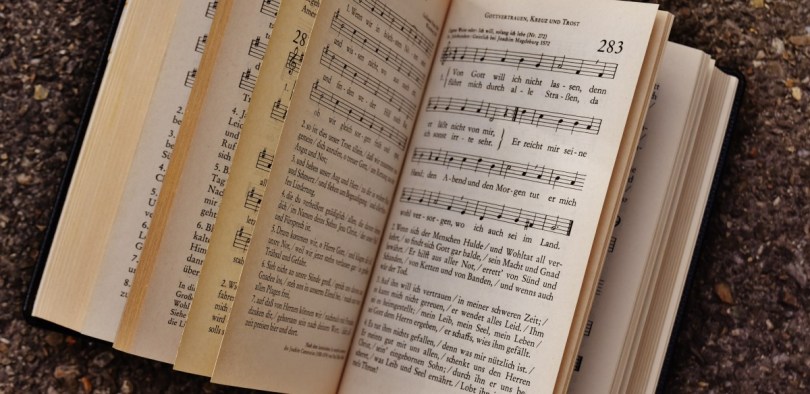
  • Open Mic Adventures XXX: ‘Chorale for a Sleepy Wednesday’” – I composed “Chorale for a Sleepy Wednesday” during one of my planning periods.  I thought it would make a fun sightreading exercise for my Middle School Music Ensemble, and eventually I’ll upload their full recording of this piece (audio only).  When I write chorales, I tend to do so as a music theory exercise, so it was fun to see my more astute student-musicians notice some of the stepwise motion in this little piece.
  • Open Mic Adventures XXXI: ‘Carousel’” – I wrote “Carousel” as a Haydn-esque little gigue or dance in 3/4 time.  My Middle School Music Ensemble students nominated two possible names, “Carousel” and “Ambata,” and “Carousel” won the day.  I promised the student who proposed “Ambata” that I would composed that piece, and I still need to do so.  I already have a good sense for what it will sound like in my head.

Happy Sunday—and Happy Listening!

—TPP

Other Lazy Sunday Installments:

TBT: A Little Derb’ll Do Ya: Haydn’s “Derbyshire Marches”

The blog of late has been focusing more and more on culture, specifically music.  That makes sense because I am, after all, a music teacher, and am increasingly moving away from teaching social studies.  That’s never been truer than this year, where I am teaching, among other things, a detailed Music Appreciation course covering the major works and stylistic periods of Western music.

This focus is also a result of a desire to move away from the constant flux of politics.  More and more, I’m coming to believe that the best way to improve our lot is to focus on creating culture and building our communities.  Decentralized, localized bulwarks against progressivism offer one peaceful form in which like-minded conservatives and traditionalists can continue to live freely—at least to some extent—and happily.

So in casting about for a TBT post this week, I stumbled upon this one from 16 December 2019, “A Little Derb’ll Do Ya: Haydn’s ‘Derbyshire Marches.’”  My Music Appreciation students and I have been discussing Haydn, Mozart, and Beethoven, and have listened to a number of their works this week in class.

Joseph Haydn lived a remarkable, long, and successful life.  He grew up poor, and his early musical experiences involved hearing and singing the folk tunes of his native Austria.  He spent his childhood singing in a church, but was turned out when his voice changed.  He then made ends meet teaching music lessons and taking side gigs, slowly teaching himself how to compose.

His fortunes changed at 29 when he joined the Hungarian Esterházy family as their Kappelmeister, writing and composing a mind-boggling amount of pieces (at one point, the family staged two operas a week in their personal theatre in Hungary, all of which required Haydn’s pen and conductor’s baton).  But the position—difficult as it was—made Haydn wealthy and secure.

Even in spite of his workload and an unhappy marriage, Haydn maintained a positive attitude, and adopted an optimistic, humorous outlook on life.  It shows in his compositions, which are light-hearted, whimsical, joyous—and fun.

With that, here is 2019’s “A Little Derb’ll Do Ya: Haydn’s ‘Derbyshire Marches’“:

Read More »

Lazy Sunday XLIII: Music, Part II – More Music

Well, it had to come at some point—the end to my glorious Christmas Break.  Sure, sure, summer break is great, but two weeks off at Christmas is just the right amount of time to recharge the batteries.  Plus, it’s not 100 degrees outside, and we get to celebrate the Birth of Jesus!

I wrote a great deal about music in the last quarter of 2019, and I’m kicking off 2020 focused intensely on the performing arts:  I’m going to be in a play this weekend.  That personal detail is somewhat important for the blog, as after today my focus (other than work during the day) will be almost entirely on that production.  As such, posts may be shorter than usual, or a bit delayed in getting up.

Regardless, in keeping with the fine arts, I thought I’d feature three recent pieces I wrote about music.  Enjoy!

  • Milo on Romantic Music” – Readers are probably exhausted of reading about this post, but Milo’s analysis of Romantic music, while certainly contentious, is fascinating.  He might play the role of a melodramatic, catty queen online, but he possesses deep erudition on a variety of topics.  This post was one of “2019’s Top Five Posts” thanks to Milo’s sharing of it.
  • A Little Derb’ll Do Ya: Haydn’s ‘Derbyshire Marches’” – Saturday mornings just aren’t the same with Radio Derb‘s opening music, Haydn’s “Derbyshire March No. 2.”  Nothing makes you feel more sophisticated about pouring coffee in your underwear than the strains of Haydn’s jaunty little march.
  • O Little Town of Bethlehem and the Pressures of Songwriting” – This morning I’ll finally be back to my little Free Will Baptist Church to play piano.  I’m also struggling to remember a huge amount of naturalistic dialogue for the aforementioned play.  The juxtaposition of returning to church piano playing and the pressure of conjuring up untold mental energies in a short span of time made this post a logical choice.  The music for “O Little Town of Bethlehem” was composed in great haste, and completed mere hours before it was performed.  My instincts (and experience) tell me that the play will, much to the director’s chagrin, unfold the same way—incompetence giving way to brilliance the night of the show.

Well, there you have it!  Happy New Year to one and all.  Back to work!

—TPP

Other Lazy Sunday Installments:

A Little Derb’ll Do Ya: Haydn’s “Derbyshire Marches”

My Saturday morning ritual involves “sleeping in” until about 8:30 AM, brewing some coffee, and listening to Radio Derb, John Derbyshire’s weekly podcast for VDare.com.  Derb goes back for years—he used to write for National Review, before they kicked him out for writing “The Talk: Nonblack Version” for Taki’s Magazine.

I first found out about him and his controversial essay from NR, back when I was a devout print subscriber, amid the heady days when campus protests were novel enough to be terrifying.  NR ran a little blurb about Williams College cancelling a scheduled talk from Derb, and I’ve been listening to his podcast—an entertaining mix of news, science, political and cultural commentary, and updates on the president of Turkmenistan—ever since.

Read More »