

I saw This is Spinal Tap (1984) on the big screen a few weeks ago, and I can’t get the soundtrack out of my head. I love this film—I wrote my History senior seminar paper about the film back in Fall 2005—

I saw This is Spinal Tap (1984) on the big screen a few weeks ago, and I can’t get the soundtrack out of my head. I love this film—I wrote my History senior seminar paper about the film back in Fall 2005—
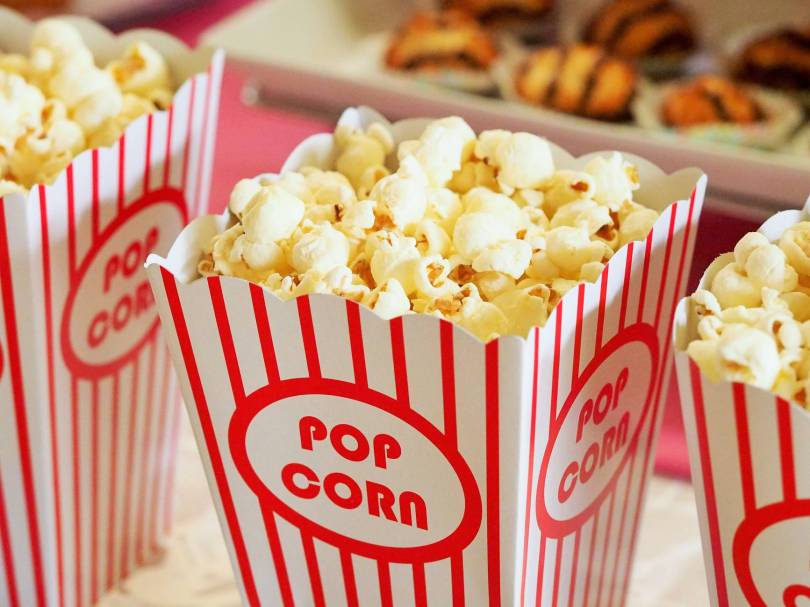
The excellent horror host Joe Bob Briggs opened the current season of The Last Drive-in with Joe Bob Briggs with a screening of the 1925 silent film The Phantom of the Opera (1925), the classic starring Lon Cheney in the title role. I had never seen the film, and I can see why it has stood up to the test of time.
It’s also wild to consider that this movie is 100 years old. It released the year my paternal grandfather was born, between the World Wars, before the Great Depression. The 1920s and the 2020s share more than we realize, but it was also a fundamentally different world. That the movie is still enjoyable is a testament to the strength of the story.
There is no original print of The Phantom that survives today (according to Joe Bob), and the score to the film has, it seems, been lost to time. The version Joe Bob presented seems to track closely with the plot on Wikipedia, and featured a score composed and recorded in 2011. The version he presented also featured colored tinting, an early version of Technicolor.
Based on the music credit after the film, this version is not the one Joe Bob presented, but it’s a reasonable facsimile and worth your time:

After writing about my U-Haul experience earlier this week, I thought I’d look at some of my pet peeves—those minor inconveniences that, while not a huge deal, frustrate me nonetheless:
What are your pet peeves, dear readers? What are the little things that annoy you to no end?
Happy Sunday!
—TPP
Other Lazy Sunday Installments:

Today’s post is a SubscribeStar Saturday exclusive. To read the full post, subscribe to my SubscribeStar page for $1 a month or more. For a full rundown of everything your subscription gets, click here.
As my summer break wanes to a close—I return to work this Thursday, 7 August 2025—I’ve been frantically making the most of time and trying to do as much writing as possible. Rather than writing for the blog, it’s mostly been fiction writing.
After The One-Minute Mysteries of Inspector Gerard took eleventh place in overall sales in Hans G. Schantz‘s quarterly Based Book Sale, I decided it might be worthwhile to return to fiction writing.
First, I took an entire day to make audiobook versions of Inspector Gerard and my collection of non-fiction travel essays, Arizonan Sojourn, because Amazon has a nifty feature that creates an audiobook from your text using a range of computer-generated voices (I picked “English 5,” which has a great British accent); listening back to my writing (I needed to edit certain pronunciations for the computer-generated voiceover), I remembered how fun fiction writing can be.
[Note that most of the links in the preceding paragraph, as well as all links about books in this post, are Amazon Affiliate links. I receive a portion of proceeds from any sales made through this links, at no additional cost to you. —TPP]
Second, I checked out some books in the Schantziverse about writing fiction, specifically pulp fiction. I’ve always enjoyed short stories, ranging from literary fiction to fast-paced pulps, but in the world of online self-publishing, writing quick, punchy, pulpy tales of adventure and intrigue seems to be the way to go.
I purchased three books in particular to dive into the world of pulp writing (again, all Amazon Affiliate links ahead; I receive a portion of purchases made through these links, blah, blah, blah):
Of these Bell’s How to Write Pulp Fiction has been the most useful so far. To be fair, I haven’t ready any of Cheah’s book yet, so I cannot yet give any guidance into how efficacious it is for the budding pulp writer. Bell’s book, however, is full of actionable (and action-packed!) advice that I have already began incorporating into my own writing.
Cowen’s The Pulp Mindset was the first book I purchased on the topic. It is not a “how-to” guide (as the author reiterates frequently), but rather a “call to action” for writers to embrace the “pulp mindset” of NewPub. “NewPub” is Cowen’s term for the new-ish world of self-publishing, one in which gripping, fast-paced storytelling and genre fiction dominate over slower-paced literary fiction. For Cowen, the distinction is almost a political one: the world of “OldPub” is an ossified world of progressive gatekeepers who push a certain ideology over actual quality (although Cowen makes it clear that he is not attempting to make a political point in the book, it’s fairly clear that he has little patience for the stodgy editors of the “OldPub” world promoting woke fiction at the expense of good storytelling).
The book has some issues—it’s clear that Cowen is padding out his page count to stretch the book to something he can charge $7.29 for (I’m guilty of this as well; I suspect all writers are to an extent), and the editing leaves a lot to be desired (I’m guilty of this, too)—but it also offers a fascinating history of the pulps, and how they developed.
I’ll save that history for another time, but just skim through these Wikipedia entries on Argosy magazine and Frank Munsey, about whom Cowen dedicates an entire chapter, and you’ll quickly see that the roots of the pulps go way back into the nineteenth century (and really, probably back to the dawn of storytelling itself). Cowen argues—rather persuasively—that the future of fiction lies in the past, to the golden age of the pulps.
Technologically, we’re at the point where we can replicate the affordable nature of pulps through Kindle Direct Publishing and other self-publishing platforms. Naturally, self-publishing has always suffered from lots of low-quality writing (and AI has only exacerbated the problem), but for those willing to put in the hours and the sweat, it offers the opportunity for dedicated writers to reach a wider audience at a price anyone can afford.
An example: the author Mariella Hunt began self-publishing just a couple of years ago. As I recall (and I hope she’ll forgive this rough paraphrase of a past conversation), she told me that she had always been a writer, but needed to start making some money from it to pitch in with her family. Her book The Sea Rose, takes place in (I believe) an alternate Georgian England in which mermaids are real. That spawned a sequel, The Sea King, part of her Lords & Ladies of the Sea series. She used the now-defunct Kindle Vella serialized publishing platform to release the second book in chapters. Her ability to write compelling cliffhangers and digestible chapters, from what I could tell, made her very popular on the platform.
I have long wanted to write a collection of weird fiction, and to experiment more with the pulp format. One of Bell’s key pieces of advice was to maintain a file of story ideas, and earlier this week I hammered out a long list of ideas.
Then I started to write.
To read the rest of this post, subscribe to my SubscribeStar page for $1 a month or more.

Yours portly has been making some adjustments to his diet lately. With the wedding coming up, I want to lose a few pounds so I’m not quite so chunky in all those wedding photos. I also want to feel better and to improve my health overall.
To that end, I’ve been doing a lot more cooking at home. It being summertime in South Carolina, my local Piggly Wiggly has tons of delicious, mostly-local produce available, so I’ve been eating copious amounts of veggies and fruits.
A local farmer is supplying fresh okra to the store, and it is very tasty. Okra grows in long pods full of tiny (and easily edible) seeds. It can be fried, roasted, pickled, etc.; all of these methods result in deliciousness.
Okra, for the uninitiated, is often served fried in the South, and fried okra is a favorite Southern side dish. When prepared as such, it’s chopped into little medallions or coins; breaded; then dropped into hot oil.
As I’m looking for something healthier and easier, I’ve opted to roast my okra. I looked up a simple recipe online and got to it (Robin would be proud)!
The recipe is super simple:
One pound of okra is anywhere from 120-140ish calories (the Internet has different estimates), so you can eat a lot of okra. One night this past week, I served fried eggs and tomatoes over a bed of okra (about 0.7 pounds of okra), along with some cheese and meat, and the entire dinner was roughly 450 calories for a massive plate:

Obviously, you could serve two or three people an ample portion of okra as a side with this same recipe, and often I’ll split it into two servings. But it’s been a great food for the summer and for weight loss, and it’s easy to prepare and very filling.
I made a short YouTube video the first time I roasted okra, which I’d like to share today:
This past weekend I had to move a bunch of furniture from my future in-laws’ home to my little house. They are downsizing to a smaller home, and have been donating, selling, and/or rehoming nearly twenty years’ worth of accumulation to whoever will take it. That means a great deal of their goods have made their way to Dr. Fiancée and me.
The move itself was not terrible, although we had the brutal task of moving an elliptical machine from their second-story rec room to their first-floor garage. I recruited two former Music students of mine (quipping, “you didn’t know when you signed up for Music in the seventh grade that it was a lifelong commitment”; one of them rejoined, “I should have signed up for Drama”) to assist in the hurly-burly, and we got it all done. We’re in the midst of a severe heatwave here in the South, so all three of us guzzled down water. One of my guys got a bit lightheaded from the heat and exertion, but still managed to assist admirably.
In the process, we moved a recliner, couch, nightstand, dresser, and queen-sized bed (with mattress, boxspring, frame, and headboard) into my little house. I also received a Husqvarna riding lawnmower—quite a gift!
The idea is that I will live like a hoarder for the next nine months or so until Dr. Fiancée and I purchase a home together—one that will, hopefully, accommodate all of this furniture (it will).
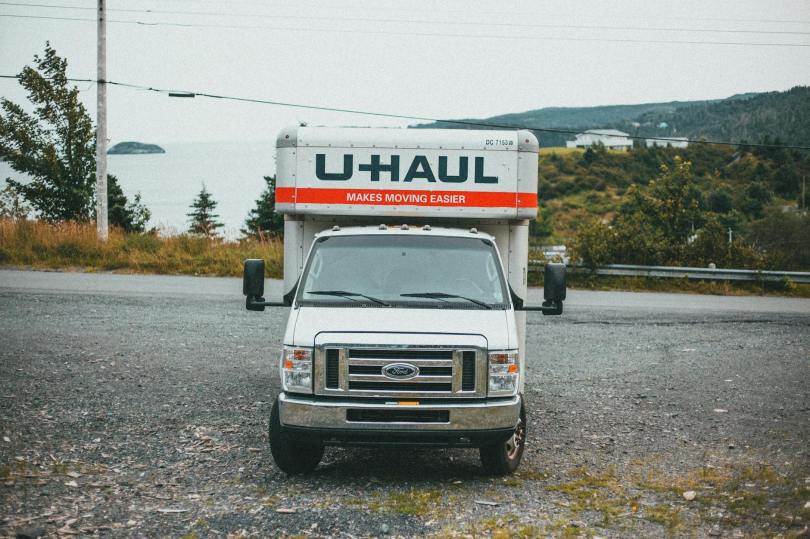
But moving all of this nice furniture (thanks, Dr. Fiancée’s mom and dad!) meant getting a truck and trailer large enough to pull it off. That meant making a reservation with—groan—U-Haul.
Yours portly has three separate releases that I plan to now release in early September, as my distributor, CD Baby, usually takes about three weeks to approve releases for distribution. Two of the releases feature older works, but one will feature tons of new pieces.
This week, I’m featuring one of those new pieces, “Vibin'”:
Today I’m taking a bit of a departure from my usual reviews. Instead, I’m going to review a television series, although one with a cinematic quality and a Hollywood director attached: The Strain (2014-2017).
The Strain is about a group of creatures that resemble a zombie-vampire hybrid called the strigoi (also called “strigs” and “munchers” in the show). These creatures are filled with parasitic worms that they pass onto their victims. Even one worm will multiply rapidly inside a host body, although the full transformation into a strigoi takes a few days.
The strigoi in the show are under the control of The Master, an ancient, powerful strigoi who has almost limitless power over his minions: he can see through their eyes; he can speak through their mouths; he can command them to attack (or not to do so); and he can give some strigoi greater or lesser degrees of autonomy and/or their original personalities. The Master can also transfer himself (in the form of a red parasitic worm among thousands of white ones) to other bodies, and can give humans “The White”—a white substance that, in the right doses, grants humans incredibly renewed health and an extended lifespan.
There are strigoi not under The Master’s control, but the show never clearly explains why. One strigoi, The Born, is the vengeful offspring of The Master and a human. There are also The Ancients, a set of which reside in New York City (the “New World Ancients”), and a set that reside in the Old World. The New World Ancients are portrayed as vampiric husks, existing in a state of stasis and complacency. All of these strigoi are at odds with The Master.
A plucky band of humans, led by the elderly Jewish pawnbroker Abraham Setrakian, also fight against The Master, to degrees that grow increasingly desperate as the show progresses and their numbers dwindle. Setrakian is a Holocaust survivor, and his archnemesis is Thomas Eichhorst, the chief lieutenant of The Master. Eichhorst was the commander of the concentration camp where Setrakian was held captive, and the two share a lethal bond that, I would argue, is the best part of the show. The decades-long duel between them is fascinating viewing.
So, what of the show itself? I have mixed feelings about it, to be sure. Over the course of its four seasons, I found much about the show that I found tedious and boring. Season 3, particularly, got bogged down in side stories, but the finale almost made the ride worth it.

I couldn’t think of a good theme for this weekend’s Lazy Sunday, so I went back to the archives from July 2018 and picked three deep cuts; let’s see how they’ve aged:
So, tell me—are these posts stale with the stink of irrelevancy? Or are they still farm-fresh examples of my biting wit?
Happy Sunday!
—TPP
Other Lazy Sunday Installments:

Today’s post is a SubscribeStar Saturday exclusive. To read the full post, subscribe to my SubscribeStar page for $1 a month or more. For a full rundown of everything your subscription gets, click here.
Every summer for the past three summers I’ve taken a trip to see my older brother, who lives in Indianapolis, Indiana. I go the week of the Fourth of July, when everything slows down and we can enjoy some quality time together.
As part of my visits, we always spend a day or two in Chicago. We will drive a couple of hours north from Indy to Hammond, Indiana, where we catch the South Shore Line train to Chicago’s Millennium Station.
Every visit is different, as Chicago contains multitudes of everything: museums, restaurants, public artworks, parks, libraries, theatres—and a Dunkin’ Donuts on every block. It is also a wonderland of architecture, as various Gilded Age magnates competed with one another following the Great Chicago Fire to build the biggest, tallest, most ornate buildings in the world. I love how every nook and cranny of Chicago seems to possess some beautiful architectural flourish and Gothic ornamentation.
This trip, we decided to spend the morning of our second day to visit the legendary Field Museum of Natural History. The Field Museum is most notable for Sue, the massive Tyrannosaurus Rex fossil, a replica of which is on display deep in the bowels of the museum. Her actual skull is displayed nearby, as well as this impressive Triceratops skull:

I love museums, and while I love art and historical museums, I think natural history museums are my favorites by far. There is something mind-blowing and humbling about witnessing the breadth and depth of God’s Creation, from ancient beasts to exquisite gemstones to human artifacts (the last of which, really, is an extension of God’s Creative Power, that small sliver with which he endowed us humans, made in His Image).
The Field Museum had all of that—and more!—in glorious abundance.
To read the rest of this post, subscribe to my SubscribeStar page for $1 a month or more.
 The Portly Politico