Lazy Sunday CCX: MAGAWeek2023 Posts

Well, another MAGAWeek is in the books.  It was a star-spangled affair, with biographies of four important historical figures (one of recent vintage, the others from the eighteenth and nineteenth centuries).  $5 and up subscribers also got three bonus editions of Sunday Doodles (here, here, and here).

Of course, to get access to my four detailed biographies—as well as all past MAGAWeek posts—it’s just $1 a month.  One measly buck!  As of the time of this writing, there are 429 posts on my SubscribeStar page, over half of which are available for just $1 a month.  At $5 a month, it comes out to one cent per post as of right now, and I’m adding new content every single week (with rare exceptions).

Even at just $1 a month, and assume (conservatively) that you only get access to half of the posts (about 215 posts), it works out to just $0.0047 per post—less than a half-cent per post!

At $12 a year—the price of a single, one-topping large pizza—you can a.) support your favorite chubby content creator and b.) gain access to an ever-growing library of long-form essays.  For $60 a year—what most of us pay for Internet access for one month—you get everything—doodles (which often contain additional commentary), bonus doodles, bonus posts, exclusive election coverage posts, etc., etc.

Thanks to those who have donated and subscribed in the past.  Please help spread the word!

Happy Sunday!

—TPP

Other Lazy Sunday Installments:

MAGAWeek2023: James Madison

This week is MAGAWeek2023, my celebration of the people and ideas that MADE AMERICA GREAT!  Starting Monday, 3 July 2023, this year’s MAGAWeek2023 posts will be SubscribeStar exclusives.  If you want to read the full posts, subscribe to my SubscribeStar page for as little as $1 a month.  You’ll also get access to exclusive content every Saturday.

Another shamefully neglected figure in the annals of MAGAWeek is that of James Madison, the fourth President of the United States and the so-called “Father of the Constitution.”  While Madison has graced the digital pages of this blog a number of times, he has yet to receive the biographical treatment—until today.

James Madison is one of the most fascinating of our Founding Fathers.  He was among the youngest of the major Founders—Washington, Adams, Jefferson, Hamilton, et. al.—but his contributions to political and constitutional theory were profound.  Indeed, his contributions to the Constitution were so significant, some political writers refer to our constitutional order as the “Madisonian order” or the “Madisonian system.”

It was Madison, for example, who argued that the sheer, physical size of the United States (which, at that time, extended to the Mississippi River) would preserve national unity, rather than undermine it.  That insight was completely contrary to all of the wisdom of the ancient and early modern worlds, both of which argued—with a great deal of evidence—that a republican form of government could only exist on a very small scale.  Eventually, the theory went, the rise of factions would rend a republic of any substantial size apart.

Madison argued the opposite:  because of the nation’s massive size, it would dilute factions, preventing regional parties from forming.  Through a system of federalism, in which each State would maintain significant local rights while enjoying representation in the national government, the States could make important, State-or-locality-specific decisions locally, while sharing the strength of a unified nation in foreign affairs and national defense.

Well, he was half right, anyway.  National parties did emerge, and they enjoyed broad support across all regions.  But regionalism set in regardless:  the High Federalists in New England during the War of 1812 (which they derisively called “Mr. Madison’s War”); the Democrats in the South from the 1850s until at least the 1970s; the rural-urban divide between the modern Republican and Democratic Parties today; etc.  That regionalism tended to be strongest, though, when the national government was overstepping its boundaries, or acting to the detriment of one region for the benefit of others (a key complaint of Southerners leading up to the American Civil War, for example, was that the Whig regime of extremely high tariffs was explicitly a national policy that benefited one region [New England and the Upper Midwest] at the expense of another [the South]).

But who was James Madison, this short (at 5′ 4″, Madison is our shortest president), shy nerd living in his parents’ home when he wrote the Virginia Plan for the Constitutional Convention?

To read the rest of today’s MAGAWeek2023 post, head to my SubscribeStar page and subscribe for $1 a month or more!

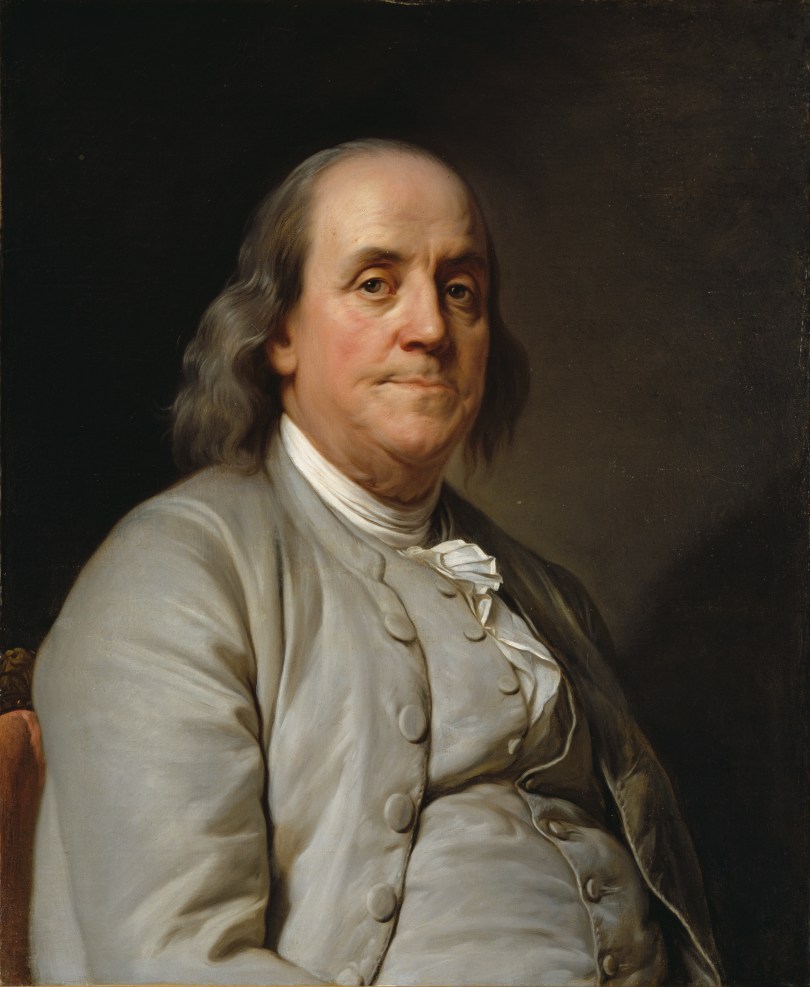
MAGAWeek2023: Benjamin Franklin

This week is MAGAWeek2023, my celebration of the people and ideas that MADE AMERICA GREAT!  Starting Monday, 3 July 2023, this year’s MAGAWeek2023 posts will be SubscribeStar exclusives.  If you want to read the full posts, subscribe to my SubscribeStar page for as little as $1 a month.  You’ll also get access to exclusive content every Saturday.

In looking through the extensive TPP archives, I’ve apparently only written the name “Benjamin Franklin” in a single post—9 May 2020’s SubscribeStar Saturday: Liberty and Safety.  Much like Franklin’s classic canard about trading liberty for safety and losing both, the lack of Franklin’s presence on this website is shameful.

That’s especially true considering that Benjamin Franklin is one of my personal heroes.  He was a skilled writer, editor, printer, inventor, politician, diplomat, wit, international playboy (seriously), statesman, and citizen.  He was the king of the nerds, at a time when nerds were celebrated not because of their weird Japanese body pillow fetishes, but because they were strong, smart, witty, and curious.

No single man’s life better exemplifies eighteenth-century colonial America.  Born in 1706 and passing in 1790, Franklin’s long life extended nearly the full breadth of that eventful century—eventful in large part because of him!

To read the rest of today’s MAGAWeek2023 post, head to my SubscribeStar page and subscribe for $1 a month or more!

MAGAWeek2023: John Taylor Gatto

This week is MAGAWeek2023, my celebration of the men, women, and ideas that MADE AMERICA GREAT!  Starting Monday, 3 July 2023, this year’s MAGAWeek2023 posts will be SubscribeStar exclusives.  If you want to read the full posts, subscribe to my SubscribeStar page for as little as $1 a month.  You’ll also get access to exclusive content every Saturday.

It’s no secret that education in the United States—at least, formalized, factory-style education—is broken, and quite badly.  No one, however, quite understands why.  State politicians, federal Department of Education bureaucrats, and local schoolboards all pass more and more regulations and requirements, few of which actually address the root causes of this brokenness.  Instead, they merely treat the symptoms, symptoms they themselves have created, and the treatments usually just breed more symptoms, to be treated once again with another dose of “education reform.”

Naturally, these “reforms” and “treatments” fall squarely on teachers to administer.  Politicians and school administrators are like aloof doctors who are so disconnected from their patient, and so motivated by their own agendas, they don’t really care about the patient’s health, so long as they can say, “we did something.”  Parents—forced into long working hours and with little free time—foist their students into a system that is supposed to work, but ultimately is just government-funded daycare.  How else is mom supposed to work sixty hours a week alongside dad?  That’s progress, after all!

So students and teachers are caught in the middle.  Teachers become nurses in this sick system.  Like real nurses, most of them think they know everything, and know better than the doctors.  Typically, teachers are correct in assuming they know more than the doctors; the problem, however, is that most of the most strident nurse-teachers go on to become the doctors, and then proceed to prescribe the same medicines, only this time they think they know better.

The other teachers labor on with some quiet grumbling, making the best of an increasingly impossible situation.  Caught between parents who are by turns indifferent and meddling and administrators and politicians who are inflexible and demanding, teachers administer whatever prescriptions they are forced to deliver, and try to do some actual teaching in the process.

The results are clear:  the worst become whiney thorns that are absorbed into the administrative ranks.  The best labor on, looking forward to summer.  The rest burnout quickly, leaving the profession early.

Students, meanwhile, are alternatively coddled and hyper-micromanaged.  They spew obscenities in the hallways and locker rooms with abandon; they vandalize bathroom stalls; they vape (the gayest form of nicotine consumption) between classes; they show up late every day.  At the same time, their every movement is tracked—by cameras, by sign-in and sign-out sheets, by teachers roaming the halls.  It’s a bizarre form of anarcho-tyranny in which all the poor behaviors are allowed to run rampant like kudzu, a weed the administration timidly trims from time to time while blaming the teachers for not realizing Johnny was at the vending machine instead of in the bathroom.

Is it any wonder we live in a world with rampant cheating and arbitrary rules, which are just arbitrarily waived the moment anyone offers up a sob story?  We’ve bred generations of students who are paradoxically rebellious and conformist—as long as Johnny takes his shot and is a good little office worker, he can indulge in whatever lame vices he wishes, so long as he shows up mostly on time the next day.  Did Johnny sleep with the secretary or steal money from the till?  Well, he must have had a good reason—he had a rough home life, you know.

None of these problems are particularly new or novel.  We’ve all come to accept them as the price for modern living:  send the kids off to indoctrination daycare, because God forbid both parents aren’t working.  After all, that’s feminism—women are liberated when they can slave for some strange man eight hours every day.  That’s way better than staying home with her kids and maintaining a good home for her husband and children… right?

Into this Orwellian nightmare stepped the great John Taylor Gatto.  Gatto taught in New York City public schools for thirty years, and was a renowned teacher, author, and public speaker.  He was one of the pioneers and major proponents of the “unschooling” movement, a variation on homeschooling that emphasizes activities chosen by the learner.  He was also a major critic of the kind of factory-style public education we have today (itself an innovation from socialist German intellectuals that, unfortunately, glommed its way onto the minds of American education “reformers” in the late nineteenth century).  Gatto argued forcefully that modern education is not only broken, but actively destroys real learning.  Instead, it merely creates conformist worker drones who are educated simpletons.

To read the rest of today’s MAGAWeek2023 post, head to my SubscribeStar page and subscribe for $1 a month or more!

Monday Morning Movie Review: The Electrical Life of Louis Wain (2021)

In continuing with my movie reviews of requested films (see last week’s review of 1999’s Bicentennial Man, which I reviewed at the request of Audre Myers), I’m reviewing 2021’s The Electrical Life of Louis Wain at the request of my Aunt Marilyn.  She recommended the film, which stars Benedict Cumberbatch as the eccentric title character, enthusiastically.

I love Benedict Cumberbatch—one of my favorite current actors—and just about anything about eccentric creative types in Victorian England; needless to say, I loved this film, which details the quite tumultuous, tortured life and mind of Louis Wain, the man responsible for normalizing the keeping of cats as pets.

Viewing the film was a bit tricky at first.  As far as I can tell, it is only on the Amazon Prime Video service.  When I would pull up the movie on there, the only option I could see required an Amazon Prime membership, but my aunt assured me I’d be able to rent it (probably all I had to do was click on that subscription button and I’d be given the option to rent).

It occurred to me that I might still have access to Prime Video through my ex-girlfriend’s account on my Roku; sure enough, I was able to watch the movie—for free!—using those surreptitious means.

Logistical nonsense aside, I should probably review the film, rather than talk about how I had to access it.  All this blogging is going to my head.

Read More »

TBT: A Little Derb’ll Do Ya: Haydn’s “Derbyshire Marches”

The blog of late has been focusing more and more on culture, specifically music.  That makes sense because I am, after all, a music teacher, and am increasingly moving away from teaching social studies.  That’s never been truer than this year, where I am teaching, among other things, a detailed Music Appreciation course covering the major works and stylistic periods of Western music.

This focus is also a result of a desire to move away from the constant flux of politics.  More and more, I’m coming to believe that the best way to improve our lot is to focus on creating culture and building our communities.  Decentralized, localized bulwarks against progressivism offer one peaceful form in which like-minded conservatives and traditionalists can continue to live freely—at least to some extent—and happily.

So in casting about for a TBT post this week, I stumbled upon this one from 16 December 2019, “A Little Derb’ll Do Ya: Haydn’s ‘Derbyshire Marches.’”  My Music Appreciation students and I have been discussing Haydn, Mozart, and Beethoven, and have listened to a number of their works this week in class.

Joseph Haydn lived a remarkable, long, and successful life.  He grew up poor, and his early musical experiences involved hearing and singing the folk tunes of his native Austria.  He spent his childhood singing in a church, but was turned out when his voice changed.  He then made ends meet teaching music lessons and taking side gigs, slowly teaching himself how to compose.

His fortunes changed at 29 when he joined the Hungarian Esterházy family as their Kappelmeister, writing and composing a mind-boggling amount of pieces (at one point, the family staged two operas a week in their personal theatre in Hungary, all of which required Haydn’s pen and conductor’s baton).  But the position—difficult as it was—made Haydn wealthy and secure.

Even in spite of his workload and an unhappy marriage, Haydn maintained a positive attitude, and adopted an optimistic, humorous outlook on life.  It shows in his compositions, which are light-hearted, whimsical, joyous—and fun.

With that, here is 2019’s “A Little Derb’ll Do Ya: Haydn’s ‘Derbyshire Marches’“:

Read More »

TBT: Support Milo

On Tuesday I wrote a “Giving Tuesday” post to give some shout-outs to conservative and dissident content creators and organizations that could use your support.  In my haste, I neglected to include a man who could always use another leopard-spotted ivory back-scratcher:  Milo.

As a mea culpa to His Majesty, I’m dedicating this week’s TBT to a post in which I urged readers to “Support Milo.”  I think it speaks for itself, so without further ado, here’s “Support Milo“:

I hold a soft spot in my heart for conservative gadfly and Internet provocateur Milo Yiannopoulos.  I recall fondly his heyday in 2015-2016, when he championed free speech in the Babylon of Progressivism, Berkeley, California.  I still wish President Trump would appoint him White House Press Secretary—it would be must-see TV every day.

Behind the flamboyant, cartoonish homosexuality and the over-the-top trollery, though, is a talented journalist and writer; indeed, Milo’s work is some of the best long-form journalism I’ve ever read.  His writing, like his public speaking, is engaging and well-researched:  he really checks his facts and his sources, while still delivering that withering Coulterian death strike upon his unfortunate target.

Unfortunately, even fewer Americans will have the opportunity to read his work, as he’s apparently sold his websiteDangerous.com.

I understand that for many conservatives Milo can be a bit much.  I love his public speaking, but you have to realize that the first twenty or thirty minutes are going to be Milo playing his best and favorite character—himself.  Once he’s paraded around in drag and told some incredibly off-color jokes, he’ll get down to the raw facts—where he truly shines.

In the years I’ve followed Milo’s work, I would wager that 90% of his factually-supportable positions are inside the conservative mainstream.  Yes, he’s made some wacky statements before, but these are generally hyperbole in service to the overall experience:  he draws crowds in with shock value, but wins them with knowledge.

But Conservatism, Inc., couldn’t have an effective proselytizer cutting into their racket.  The David Frenchian pseudo-Right—the controlled opposition of neocons who don’t want to ruffle feathers lest their Leftist masters call them “racists” or “bigots”—cut Milo off at the knees.

For years I read National Review, and always heard conservatives pining for a cool, gay and/or minority Republican (because the establishment Right is desperate to prove to progressives that they aren’t racists or homophobes).  Along came Milo—fun, smart, and into biracial man-love—and the decorum caucus suddenly realized that a cool, gay Republican was, by definition, going to be pretty melodramatic.

Read More »

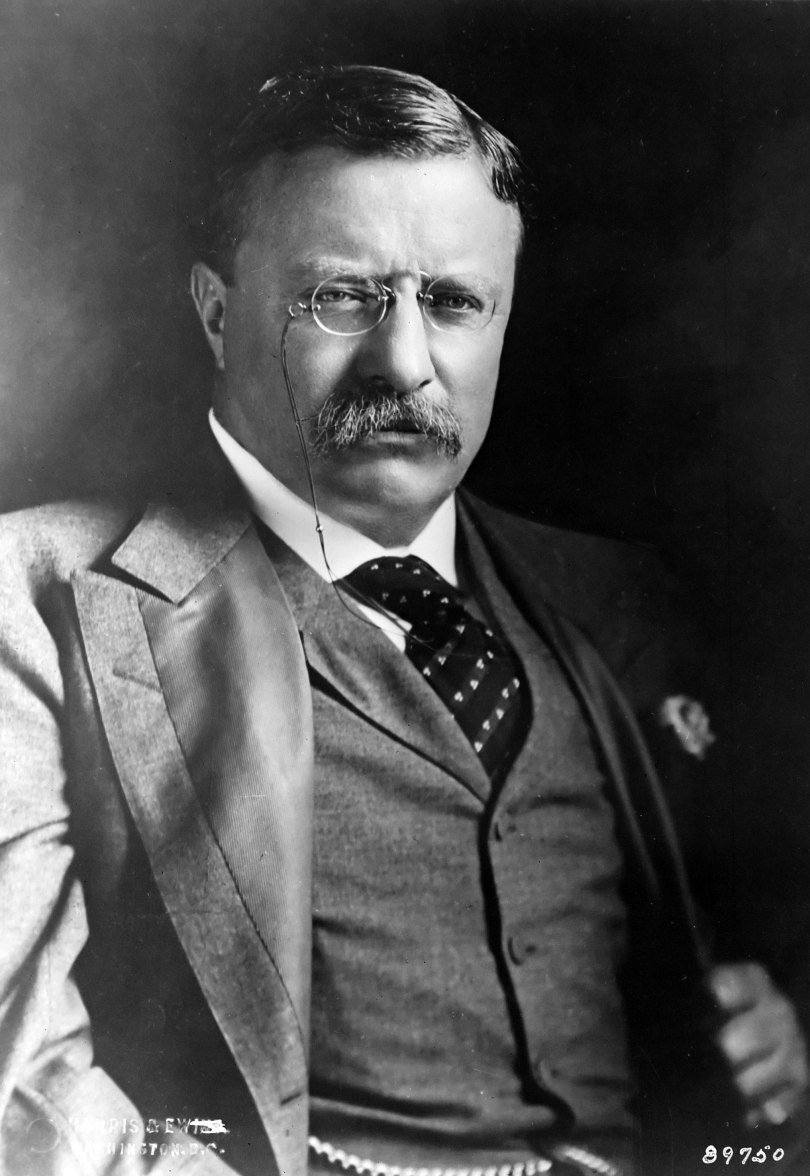
#MAGAWeek2020: Theodore Roosevelt, Part I

This week marks the beginning of , my celebration of the men, women, and ideas that MADE AMERICA GREAT!  Starting today (Monday, 6 July 2020) and running through this Friday, 10 July 2020, this year’s posts will be SubscribeStar exclusives.  If you want to read the full posts, subscribe to my SubscribeStar page for as little as $1 a month.  You’ll also get access to exclusive content every Saturday.

It’s that time of year again—a week of posts!  This year, I’m kicking off the festivities with America’s youngest and most dynamic president, Theodore Roosevelt.

Roosevelt’s presidency, like that of the similarly charismatic and action-packed Andrew Jackson, is a source of controversy among conservatives.  He was very clearly a Progressive Republican, and pushed for some of the measures that have created so many difficulties for conservatives and our nation today.  He used the power and influence of his office—his “bully pulpit”—to intervene in the economy, primarily by busting up “trusts,” major monopolistic companies with immense economic and political influence.

In light of the current dominance of Big Tech oligarchs and officious technocrats in the government and private sector, however, conservatives would do well to reassess Teddy Roosevelt’s presidency.  While conservatives typically abhor excessive federal activity and intervention, Roosevelt’s robust execution mitigated the worst excesses of the Gilded Age robber barons and renewed the promise of a “Square Deal” for every American.  For that reason and more, he should be celebrated for Making America Great Again.

To read the rest of today’s post, head to my SubscribeStar page and subscribe for $1 a month or more!

Lazy Sunday XVII: #MAGAWeek2019

This past week was #MAGAWeek2019 here at The Portly Politico.  Each day’s post was a SubscribeStar exclusive.  For a subscription of $1/month, you gain exclusive to each day’s posts, as well as exclusive content every Saturday throughout the rest of the year.  Visit my SubscribeStar page for more details.

In case you missed anything from #MAGAWeek2019, this week’s edition of Lazy Sunday is dedicated to catching you up on what you missed.  But remember, you only get a teaser of each post; to read the full posts, you have to subscribe to my SubscribeStar page for $1/month or more.  That includes exclusive content every Saturday, too, like yesterday’s review of my trip to New Jersey and Coney Island, NYC, “Mid-Atlantic Musings.”

But enough sales pitches.  Here were the highlights from #MAGAWeek2019:

  • Fast Food” – After a long day on the road last Sunday, I decided to do something fun and lighthearted to kick off #MAGAWeek2019.  President Trump famously loves fast food, even feeding it to the Clemsux National Championship football team in vast quantities.  I, too, appreciate good fast food, and marvel at its ability to provide a filling, calorie-rich meal at an affordable price.  You can read more of my high cholesterol musings on the topic at my SubscribeStar page.
  • Alexander Hamilton” – Hamilton engenders a great deal of debate between decentralist Jeffersonians (such as myself) and centralists, but his influence on and importance to America’s early political and financial formation cannot be denied—indeed, it should be celebrated.  Jefferson and Madison were probably correct, constitutionally, on the issue of the national bank—Congress had no explicit constitutional authority to create such an institution—but Hamilton’s financial reforms placed the nation on solid financial footing, ensuring the United States had the financial infrastructure in place for explosive growth and expansion.
  • John Adams” – John Adams is an unappreciated Founder and Framer, though David McCullough’s magisterial biography of the second President of the United States has done much to lift Adams’s profile.  Adams served the United States ably as our Commander in Chief during his single term, staving off a full-blown war with France while protecting American mercantile shipping on the high seas.
  • President Trump’s Independence Day Speech” – On a particularly star-spangled Fourth of July, President Trump delivered a powerhouse of an Independence Day speech.  Not only were the multiple flyovers of military aircraft impressive (ending, of course, with the Blue Angels soaring majestically over the National Mall), the speech itself was a masterclass in what I dub “old, patriotic American history.”  It’s well worth watching—and reading my full analysis on my SubscribeStar page.

Other Lazy Sunday Installments:

TBT: Mark Sanford’s Ideology

Today’s #TBT mines the depths of my 2009 scribblings, during the “TPP 1.0” era of the blog.  Yesterday’s post about the “The State of the Right” got me thinking about how much the state of play has changed in the last decade, particularly since the Trump Ascendancy in 2015-2016.

One example of that change is former Congressman and South Carolina Mark Sanford.  Sanford was the first Republican I ever voted for in a general SC gubernatorial race, and I loved his fiscal conservative grandstanding (he once walked into the General Assembly carrying two piglets under his arms to oppose “pork barrel spending”; he allegedly barbecued the two oinkers later on).

He always took largely principled stands.  He refused to expand Medicare during the worst part of the Great Recession, knowing that once federal dollars were withdrawn, South Carolinians would pick up the tab.  He opposed the seatbelt law (you can now be pulled over specifically for not wearing a seatbelt in South Carolina, whereas before it was only ticketable if you were pulled over for some other infraction), arguing that adults can make their own decisions about their safety, and that traffic officers have enough to deal with already (it has to be difficult to spot through a window).

So, in my youthful naivete, I wrote a letter to my hometown paper, The Aiken Standard, showing my support for Mark Sanford.  He was under intense pressure to accept federal “stimulus” dollars, and when he relented, the opponents who argued he should take the money gleefully noted his inconsistency (a rule here:  the Left will never be satisfied).  Governor Sanford sent me a letter thanking me for the op-ed, which I still have somewhere on my bookshelf.

Then, less than a month or so later, Sanford was caught in a major sexual scandal (and I learned an important lesson about not overly-idealizing political figures).  After disappearing from the State, an aide told the press the governor was “hiking the Appalachian Trail” to clear his head.  A reporter with The State newspaper happened to see Sanford at the Atlanta airport at the time, and within days the whole sleazy story came out:  Governor Sanford had been in Argentina with his mistress (now wife), and his cloyingly sentimental love e-mails to her were blasted all over the news.

Sanford refused to step down as governor—a good call, as snake-in-the-grass, power-hungry, loafer-lightener Lieutenant Governor Andre Bauer would have taken over—and finished out his term.  Everyone was sure he was done with politics… until he ran for US Congress for SC-1, his old district during his tenure in the 1990s.

He won against incredible odds.  His opponent, Elizabeth Colbert-Busch (the sister of Comedy Central hack Stephen Colbert), received huge fundraising donations from Democrats all over the country, including from the national party.  Sanford—deprived of his wealthy ex-wife, Jenny Sanford—urged supporters to make homemade yard signs out of plywood, cardboard, or whatever they had around the house.

Outspent 4:1, Sanford won.  He successfully painted his opponent as a hollow stand-in for Chuck Schumer and Nancy Pelosi, and his grassroots, DIY campaigning worked.  Of course, as one of my former students put it, “Jesus could run as a Democrat in that district and lose.”

Sanford returned to Congress for a few terms, then lost in a primary battle against Trumpist Katie Arrington.  Sanford always had one foot firmly planted in the Never Trumper wing of the GOP, and Arrington gobbled up his support in the primary.  She would, unfortunately, end up temporarily wheelchair bound due to a bad car wreck, and lost a very tight race to her Democratic opponent in 2018, a loss that still stings.

That’s enough history lesson for today.  Here is 2009’s “Mark Sanford’s Ideology“:

There has been much discussion lately about Governor Mark Sanford’s resistance to accepting federal stimulus money.  In the face of enormous public and political pressure, the governor has accepted these funds but will exercise considerable authority in determining who gets it.  For the purposes of this letter, I am not interested in whether or not this was the right thing to do.

I am more concerned with how the governor’s opponents have characterized his decisions.  Sanford’s rivals have accused him of political posturing.  Ignoring the vehement protestation against the governor’s actions, I find this interpretation lacking.  While the cynic in me is willing to acknowledge that there might have been an element of posturing to Sanford’s resistance, it seems highly unlikely that this was his only, or even a major, motivator.

His month-long battle against the federal stimulus, however, is much more readily explained by taking a look at his ideology and his record both as governor and as a congressional representative.  Sanford is perhaps the most ideologically consistent politician in contemporary American politics.  Since entering the political arena in 1994, Sanford has been the quintessential Republican; at least, he has been what the quintessential Republican should be.  By this I mean Sanford has sustained an unwavering faith in free enterprise and the free market while also endorsing socially conservative measures.  He is not quite a libertarian, but he has the general ideological bent of Ron Paul when it comes to the economy without the gold standard baggage.

A cursory glance at a website like ontheissues.org demonstrates how consistent Sanford’s ideology is.  In fact, the only inconsistency in his voting over the past 15 years is on affirmative action in college admissions.  While in Congress in 1998, Sanford voted against ending preferential treatment by race in college admissions, but in 2002 he said that affirmative action was acceptable in state contracts but not in colleges.  A closer examination of his voting history in Congress might reveal a few more inconsistencies, but I would wager any additional irregularities would still be far less than the typical congressman.

Regardless, Sanford’s commitment to fiscal conservatism and government accountability is astounding.  Sanford has repeatedly supported term limits (for example, he imposed one on himself while a representative to Congress), a balanced budget, and lower taxes, as well as pushing for choices for citizens in education.  Therefore, if we view Sanford’s struggle against the federal stimulus through the lens of his voting record and his statements as a congressman and governor, it is clear that his position derives from his sincere belief in his ideals.

Whether or not the governor is right is another matter.  That is not the point I want to make.  Agree or disagree, Governor Sanford is not taking a stand for political attention.  He is taking a stand because he believes it is right.  And, after all, isn’t that the important thing?