Yours portly had a pretty jam-packed summer with lots of time on the road visiting family, friends, and floozies. Most of that driving was spent on the soulless, boring Interstate Highway System, but I managed to get onto some backroads (including a stop at Old Sheldon Church earlier this summer).
Over the long Labor Day weekend I was keeping I-20 hot with babysitting duties and celebrating my maternal grandparents’ seventieth (!) wedding anniversary. No real backroads on those excursions, but I did get to drive through the lovely town of Camden, South Carolina, on way to dinner with a friend (she made meatloaf stuffed with mushrooms and bleu cheese; it was absolutely incredible).
But yours portly can’t resist the siren song of undiscovered backroads for long. I’m looking forward to discovering some more of forgotten graveyards, abandoned middle schools, tiny shops, and other highway bric-a-brac in the near future.
Yours portly is slightly strapped for time after a raucous Labor Day weekend, so I’m assigning my readers some homework.
I’ve been kicking around the idea of a post comparing Donald Trump and Robert F. Kennedy, Jr., to the Gracchi Brothers of the Roman Republic. The Gracchi were members of the elite who realized that the common people were struggling mightily under the republic’s economic system, which blatantly favored wealthy Roman Senators and other patricians at the expense of the people. The Gracchi proposed land reforms and modest redistribution, which would have eased tensions between patricians and plebeians, giving the plebeians a chance at living modest, fulfilling lives.
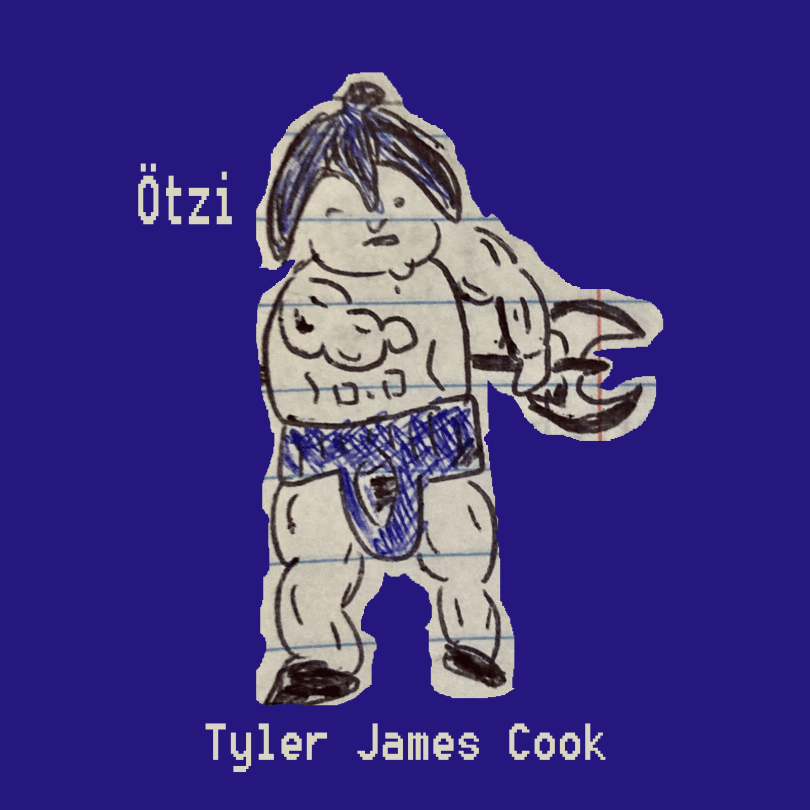
Yours portly released a new album earlier this summer, Heptadic Structure. It’s an exploration of pieces in 7/4, 7/8, and 7/16 time. Each piece is twenty-one written measures, for a total of 147 measures across the seven pieces. Also, 14+7=21. Math is fun!
You can listen to and/or purchase the album at the following links:
Ah, yes, another glorious Labor Day—the last gasp of summer. Sure, we technically have another few weeks of the calendrical summer, but Labor Day marks the end of the cultural summer. Schools all over the country are back in session—or will be tomorrow. And there are few days off from here until Christmas.
At the time of writing, I’m not exactly sure what I’ll be doing this Labor Day, but I imagine there’ll be a lot of lounging around and maybe playing some video games. Whatever the case, I’m thankful all those unions made a fuss and got us a day off in September.
Yours portly likes to make rash, snap judgments. Fortunately, I’m usually right—at least when it comes to video games.
This weekend, I’m looking back at a couple of video games that I assessed to be excellent—correctly!—after only putting in a few hours in each of them:
“Fallout: Initial Reactions” – The timeless classic from 1997. It controls like a game from 1997, but it also offers the kind of open-ended roleplaying that only a game from 1997 can offer.
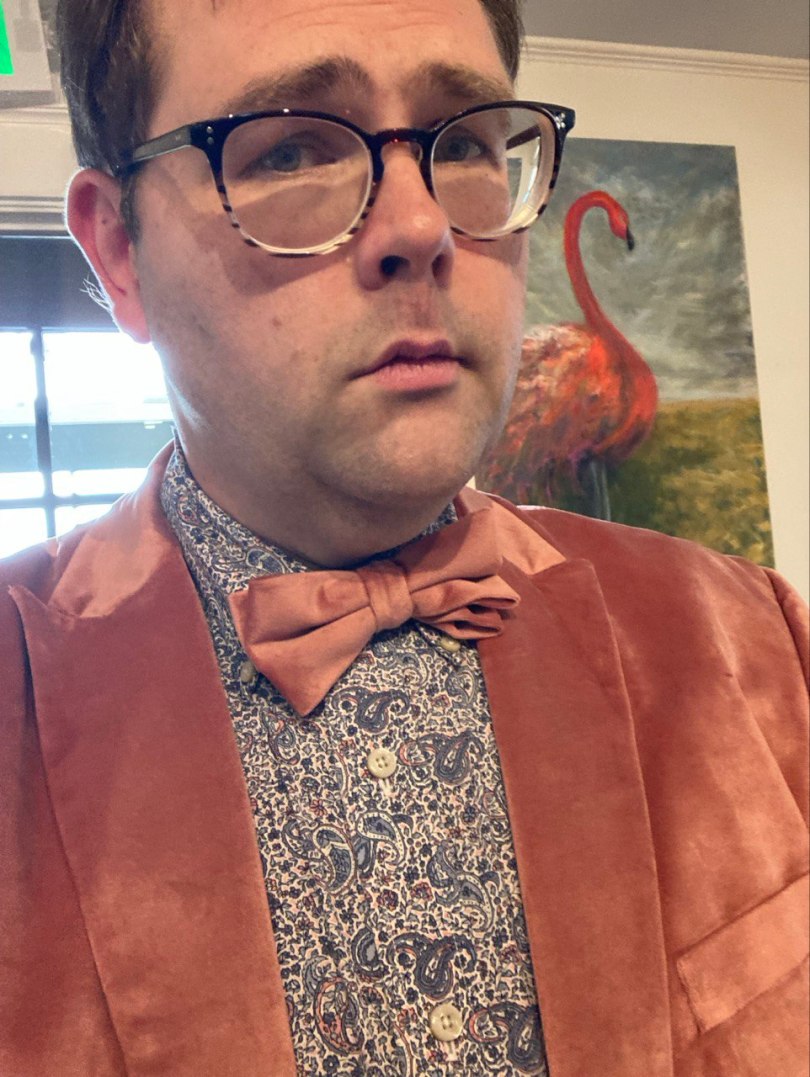
We’d been rehearsing all summer to play a small program of eight songs—four Adele, four Ronstadt, mixed up with each other—for the partygoers. Sarah wanted to capture a real 1970s piano lounge vibe, and even asked guests to dress up in cocktail dresses and suits.
Naturally, yours portly had to lean into this vibe with a pink velvet tuxedo:
It helped that I already owned that outrageous paisley shirt. Here’s me right after showering, my hair still wet:
I love how I look like a gay choir director in that second picture.
Questionable sartorial choices aside, the concert itself was a smashing success.
Sometimes, though, for inexplicable reasons, one of my musical compositions—which usually clock views in the single digits, or maybe in the 20s-30s—will take off and get a (relatively) large amount of engagement. That still might only translate to a 100 views or so, but it’s always fun when it happens.
So this week, I’m looking at some “sleeper hits” in this installment of YouTube Roundup.
As readers are doubtlessly tired of hearing, I am teaching World History this year for the first time in over a decade. So far it’s been hugely fun, as we have been studying the earliest humans and how people transitioned from the hunter-gathering lifestyle of the Paleolithic Age to the settled agricultural lifestyle of the Neolithic Age. With agriculture came cities and, ultimately, civilization.
There’s been a subtle-but-noticeable trend of late that idolizes the hunter-gatherer lifestyle. Wouldn’t it be great to spend a few hours gathering food each day, then lounging by the campfire with your kinsmen and relaxing? Well, yes, if you’re in an area of great abundance, that wouldn’t be bad, but you’re also living with massive food insecurity all the time.
One telling graph in my students’ World History textbooks shows the population of the world prior to the rise of agriculture, and the population afterwards. The transition is dramatic: while the global population hovered around just a few hundred thousand people for millennia, the global population shot up to roughly ninety million people in the first 5000 years following the advent of agriculture. The graph is a real hockey stick.
We definitely have made sacrifices for civilization, and I think Western Civilization has particularly grown quite sick. Crowding a bunch of people into tightly-packed cities is probably not good for our mental health. Some people need to live on forty acres in the middle of nowhere. I suspect that most of us need considerably less space, but there’s something dehumanizing about cramming people into shoebox apartments stacked one atop the other. We’re probably also not meant to destroy our minds and bodies on soul-sucking corporate work for a dozen hours a day, either.
But even with these drawbacks, civilization breeds life. And the struggles inherent in maintaining a civilization create the greatest art and literature the world has ever known.
My argument for civilization will always boil down to this idea: the civilization that produced Bach is a civilization worth preserving.
I was talking to a friend recently who recommended I try out the original Fallout video game, which first hit computer screens in 1997 (when yours portly was a doughy lad of twelve). I missed Fallout and Fallout 2, only dipping into the series with the release of Fallout 3 and Fallout: New Vegas. I never played Fallout 4 or the doomed Fallout 76, the latter I had hoped would do well because it takes place in West Virginia, which just seemed cool to me (I’m still waiting for a Fallout game in the Southeast; West Virginia is the closest they’ve gotten so far). Suffice it to say that, as much as I love this franchise, my experience is limited to the two games in the series that are arguably the finest entries (F:NV being the widely-accepted best installment in the franchise).
But what of the isometric origins of this series? I’ve always wanted to dip my toes into Fallout and Fallout 2, but even having grown up in the era of late 90s/early 2000s gaming, some of the controls and interfaces of that era have aged poorly. Even yours portly has become soft and indolent with the various quality of life improvements abundant in modern games.
That said, clunky controls (and, goodness, Fallout controls are clunky, until you get the hang of them) can’t stop this pudgy dynamo. So it was that, a little over a week ago, I took my first serious foray into the game that started it all.
Yours portly released a new album earlier this summer, Heptadic Structure. It’s an exploration of pieces in 7/4, 7/8, and 7/16 time. Each piece is twenty-one written measures, for a total of 147 measures across the seven pieces. Also, 14+7=21. Math is fun!
You can listen to and/or purchase the album at the following links:
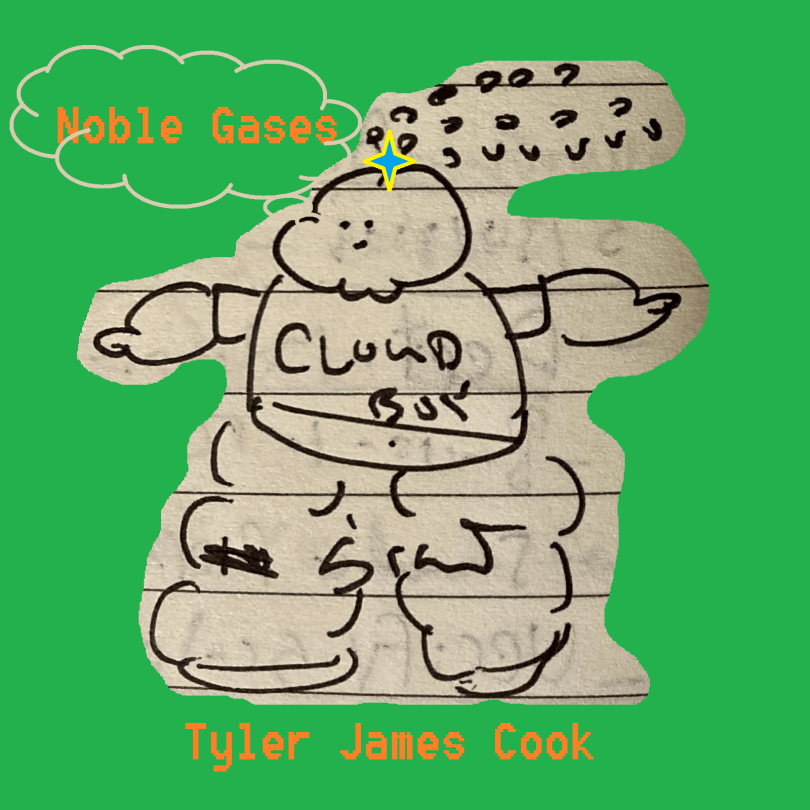
This week I’m featuring the sixth track from the album, “Nobles Gases.“ I did not realize until now that I mistakenly titled this piece “Nobles,” with an “S”; it’s supposed to be “Noble Gases,” but I apparently copy-pasted that errant “S” into all of the versions of the song, including what went to digital streaming services, so the title is now, and forever more shall be, “Nobles Gases”—ha!








 The Portly Politico