TPP’s Greatest Hits, Track II: Thalassocracy

After MAGAWeek2023 and my extended time out of town, I’ve decided to take this week to rerun some classic hits from the extensive TPP back catalog.  Most of the posts are those with very high view counts, though I am presenting them in no particular order.  TBT will proceed as usual, and regular posts will resume Saturday, 15 July 2023.

With that, here is 18 May 2020’s “Thalassocracy“:

Read More »

Lazy Sunday CCX: MAGAWeek2023 Posts

Well, another MAGAWeek is in the books.  It was a star-spangled affair, with biographies of four important historical figures (one of recent vintage, the others from the eighteenth and nineteenth centuries).  $5 and up subscribers also got three bonus editions of Sunday Doodles (here, here, and here).

Of course, to get access to my four detailed biographies—as well as all past MAGAWeek posts—it’s just $1 a month.  One measly buck!  As of the time of this writing, there are 429 posts on my SubscribeStar page, over half of which are available for just $1 a month.  At $5 a month, it comes out to one cent per post as of right now, and I’m adding new content every single week (with rare exceptions).

Even at just $1 a month, and assume (conservatively) that you only get access to half of the posts (about 215 posts), it works out to just $0.0047 per post—less than a half-cent per post!

At $12 a year—the price of a single, one-topping large pizza—you can a.) support your favorite chubby content creator and b.) gain access to an ever-growing library of long-form essays.  For $60 a year—what most of us pay for Internet access for one month—you get everything—doodles (which often contain additional commentary), bonus doodles, bonus posts, exclusive election coverage posts, etc., etc.

Thanks to those who have donated and subscribed in the past.  Please help spread the word!

Happy Sunday!

—TPP

Other Lazy Sunday Installments:

SubscribeStar Saturday: Reject a Dictator’s Peace

Today’s post is a SubscribeStar Saturday exclusive.  To read the full post, subscribe to my SubscribeStar page for $1 a month or more.  For a full rundown of everything your subscription gets, click here.

Franklin Delano Roosevelt’s State of the Union Address for 1941 has come down to us as “The Four Freedoms” speech.  In it, Roosevelt envisioned a world in which all people would enjoy freedom of worship, freedom of speech, freedom from want, and freedom from fear.

In the context of the Second World War, which had already been raging in Europe for two years (and much longer in Asia), these freedoms may have seemed like a distant dream for anyone outside of the United States.  Indeed, many Americans took the attitude (one with which I am broadly sympathetic) that Europe’s problems were for Europeans to handle, not Americans.  After all, we’d gotten embroiled in the First World War—ostensibly because “the world must be made safe for democracy,” as President Woodrow Wilson put it in his address to Congress requesting war with Germany in 1917—only to see authoritarian regimes rise throughout Europe and Asia.  Why should we get involved in another mess on a continent an ocean away?

Even with Hitler and Stalin sweeping through Poland, and with the former on the cusp of invading France, Americans were reluctant to get involved in another of Europe’s conflicts.  Roosevelt knew that Americans had little appetite for war, but he made a compelling point in his speech:

No realistic American can expect from a dictator’s peace international generosity, or return of true independence, or world disarmament, or freedom of expression, or freedom of religion–or even good business.

Such a peace would bring no security for us or for our neighbors. “Those, who would give up essential liberty to purchase a little temporary safety, deserve neither liberty nor safety.”

As a nation, we may take pride in the fact that we are softhearted; but we cannot afford to be soft-headed.

We must always be wary of those who with sounding brass and a tinkling cymbal preach the “ism” of appeasement.

In other words, a Europe—not to mention Africa and Asia—in which Hitler reigned supreme would provide no real peace for Americans.  It would be “a dictator’s peace,” one in which Americans, while ostensibly independent, would constantly have to negotiate—and even bend the knee—to a powerful Old World hegemon.  Our own peace and liberties would be forever contingent on Hitler’s mercurial whims.

So it is that the United States today once again faces those who yearn for “a dictator’s peace.”  The enemy is not abroad—not North Korea, not Russia, not even China (although the Chinese are certainly a threat)—but at home.  Our national government, many of our State governments, our universities, our museums, our most important cultural and economic institutions:  all have been infiltrated and co-opted by an enemy within our gates, the enemy of Cultural Marxism, or “progressivism.”

A regular, albeit whispered, refrain in 2020 was, “maybe if Biden wins, we’ll finally have peace.”  These were words uttered by conservatives as much as progressives.  The relentless attacks on President Trump—easily the best President of the twenty-first century so far—were wearying.  Apparently, many of his supporters grew “tired of winning,” as candidate Trump cheekily predicted.  Even when people knew they were shams—like the two ludicrous impeachments—they secretly wished for some return to normalcy, which presented itself in the form of a geriatric octogenarian with a penchant for sniffing little girls’ hair.

Mind you, most of the people wanting “peace”—no more cities burned down by Antifa and BLM, they hoped—weren’t enduring even a fraction of what President Trump endured—still endures!—on a daily basis.  Mostly, their feathers were ruffled by a few cheeky Tweets and a great deal of hostile press coverage.  Oh, my, what a hardship—we have to hear Rachel Maddow squawk boyishly about how bad we Republicans are!  The terror!  Never mind that as their feathers ruffled, they feathered their retirement accounts with 20%-plus annual returns for their 401(k)s.

Now, here we are facing down 2024.  Markets are frothy at best.  Inflation is still through the roof, albeit it cooling slightly.  Grown men are increasingly emboldened—in no small part by our institutions and our own “President”—to espouse sexual relationships with minors.  Young people are mutilating themselves permanently in a vain quest for meaning.

Yet, the same voices yearning for “peace” are back at it, cooing over anyone but the one man who is equipped—and hardened—to take on the system.  Indeed, I was distraught to read this analysis from one of this site’s major contributors:

I don’t think I could vote for [Trump] were he to win the nomination. Another four years of the crap we endured in his first term? Count me out. “Sufficient unto the day is the evil thereof.” (Matt 6:34) 2025 will have its own evils and I want those evils to be faced with a singular determination and not as an item amongst many items that are causing charges to be brought against a sitting president. You know they’ll never stop – they will hound him to the grave and then put up a neon hate sign where a headstone should be.

It is precisely because “they’ll never stop” that we must support President Trump.  Anything else is a dictator’s peace, which we must reject.

To read the rest of this post, subscribe to my SubscribeStar page for $1 a month or more.

MAGAWeek2023: James Madison

This week is MAGAWeek2023, my celebration of the people and ideas that MADE AMERICA GREAT!  Starting Monday, 3 July 2023, this year’s MAGAWeek2023 posts will be SubscribeStar exclusives.  If you want to read the full posts, subscribe to my SubscribeStar page for as little as $1 a month.  You’ll also get access to exclusive content every Saturday.

Another shamefully neglected figure in the annals of MAGAWeek is that of James Madison, the fourth President of the United States and the so-called “Father of the Constitution.”  While Madison has graced the digital pages of this blog a number of times, he has yet to receive the biographical treatment—until today.

James Madison is one of the most fascinating of our Founding Fathers.  He was among the youngest of the major Founders—Washington, Adams, Jefferson, Hamilton, et. al.—but his contributions to political and constitutional theory were profound.  Indeed, his contributions to the Constitution were so significant, some political writers refer to our constitutional order as the “Madisonian order” or the “Madisonian system.”

It was Madison, for example, who argued that the sheer, physical size of the United States (which, at that time, extended to the Mississippi River) would preserve national unity, rather than undermine it.  That insight was completely contrary to all of the wisdom of the ancient and early modern worlds, both of which argued—with a great deal of evidence—that a republican form of government could only exist on a very small scale.  Eventually, the theory went, the rise of factions would rend a republic of any substantial size apart.

Madison argued the opposite:  because of the nation’s massive size, it would dilute factions, preventing regional parties from forming.  Through a system of federalism, in which each State would maintain significant local rights while enjoying representation in the national government, the States could make important, State-or-locality-specific decisions locally, while sharing the strength of a unified nation in foreign affairs and national defense.

Well, he was half right, anyway.  National parties did emerge, and they enjoyed broad support across all regions.  But regionalism set in regardless:  the High Federalists in New England during the War of 1812 (which they derisively called “Mr. Madison’s War”); the Democrats in the South from the 1850s until at least the 1970s; the rural-urban divide between the modern Republican and Democratic Parties today; etc.  That regionalism tended to be strongest, though, when the national government was overstepping its boundaries, or acting to the detriment of one region for the benefit of others (a key complaint of Southerners leading up to the American Civil War, for example, was that the Whig regime of extremely high tariffs was explicitly a national policy that benefited one region [New England and the Upper Midwest] at the expense of another [the South]).

But who was James Madison, this short (at 5′ 4″, Madison is our shortest president), shy nerd living in his parents’ home when he wrote the Virginia Plan for the Constitutional Convention?

To read the rest of today’s MAGAWeek2023 post, head to my SubscribeStar page and subscribe for $1 a month or more!

TBT^65,536: Happy Birthday, America!

On Tuesday, American celebrated its 247th birthday.  We’re now just three years away from the “Bisesquicentennial,” or whatever the word is for “250th.”  That’s going to be a big one, for sure.

Since last year’s Independence Day post, things seem about the same.  The culture war rages on, but everything feels like it’s in a weird sort of stasis.  Yes, Trump has been indicted on (pardon the expression) trumped up charges.  Yes, Tucker got the boot from Fox News.  But even those events—which are major turning points—don’t feel all that consequential.  I mean, they are, but in a world where we’re constantly passing through one looking glass after another, crossing one Rubicon after the other, even the momentous has become mundane.

It probably doesn’t help that we all know the Trump indictments are a political witch hunt and are utterly meaningless in any legal sense, and that we all knew Fox News was going to defenestrate The Tuck sooner or later.  That doesn’t diminish the importance of those events, but they’re not exactly shocking, either.  Persecution of popular and effective figures on the Right is now just part of the new normal.

Such is the danger of the banality of evil—we come to suffer them, while still sufferable, because the alternative could be worse.  Jefferson wrote as much in the Declaration of Independence (emphasis added):

Prudence, indeed, will dictate that Governments long established should not be changed for light and transient causes; and accordingly all experience hath shewn, that mankind are more disposed to suffer, while evils are sufferable, than to right themselves by abolishing the forms to which they are accustomed.

Of course, these evils are far less sufferable than the tyranny the American colonists faced in 1776—and which they were already fighting against, starting with Lexington and Concord in April 1775.  Indeed, the colonists were pushing back as early as 1765 and the Stamp Act Crisis; Lexington and Concord were just when Americans were shooting at the British (they started shooting at us in 1770 at the Boston Massacre).

Today, we have hundreds of Americans held indefinitely without trial because they moseyed through the Capitol Building with a police escort serving as tour guides.  Never mind that Leftists and myriad other groups have “stormed” the Capitol Building on multiple occasions, also disrupting the government’s business; they’re the beautiful people, right?

Perhaps it would do us well to reflect upon the Spirit of 1776.

With that, here is “TBT^256: Happy Birthday, America!“:

Read More »

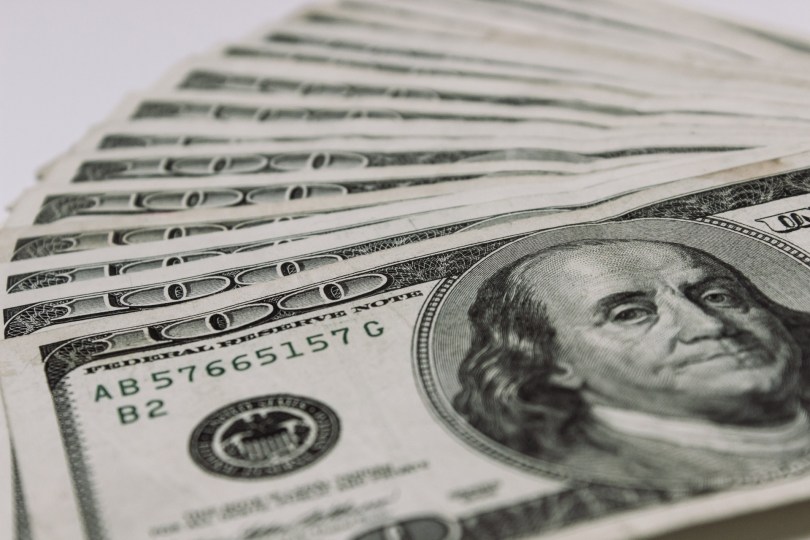
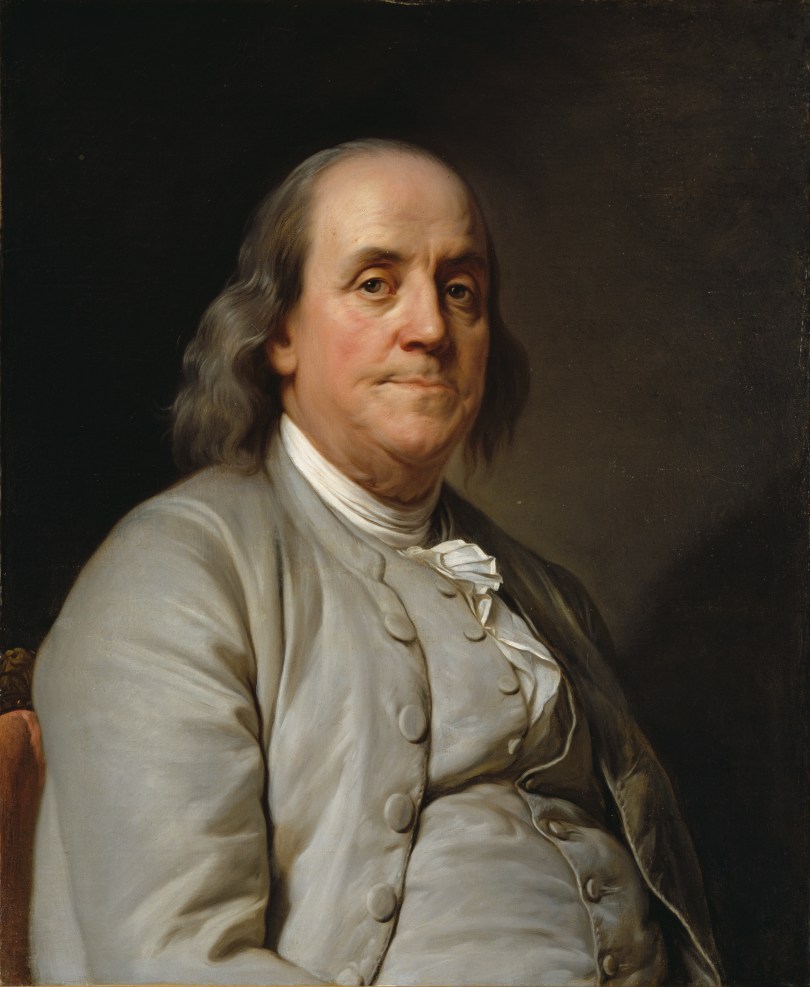
MAGAWeek2023: Benjamin Franklin

This week is MAGAWeek2023, my celebration of the people and ideas that MADE AMERICA GREAT!  Starting Monday, 3 July 2023, this year’s MAGAWeek2023 posts will be SubscribeStar exclusives.  If you want to read the full posts, subscribe to my SubscribeStar page for as little as $1 a month.  You’ll also get access to exclusive content every Saturday.

In looking through the extensive TPP archives, I’ve apparently only written the name “Benjamin Franklin” in a single post—9 May 2020’s SubscribeStar Saturday: Liberty and Safety.  Much like Franklin’s classic canard about trading liberty for safety and losing both, the lack of Franklin’s presence on this website is shameful.

That’s especially true considering that Benjamin Franklin is one of my personal heroes.  He was a skilled writer, editor, printer, inventor, politician, diplomat, wit, international playboy (seriously), statesman, and citizen.  He was the king of the nerds, at a time when nerds were celebrated not because of their weird Japanese body pillow fetishes, but because they were strong, smart, witty, and curious.

No single man’s life better exemplifies eighteenth-century colonial America.  Born in 1706 and passing in 1790, Franklin’s long life extended nearly the full breadth of that eventful century—eventful in large part because of him!

To read the rest of today’s MAGAWeek2023 post, head to my SubscribeStar page and subscribe for $1 a month or more!

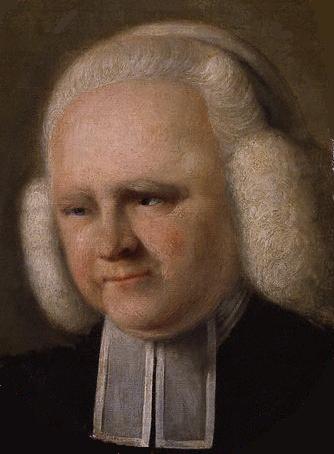
MAGAWeek2023: George Whitefield

This week is MAGAWeek2023, my celebration of the men, women, and ideas that MADE AMERICA GREAT!  Starting Monday, 3 July 2023, this year’s MAGAWeek2023 posts will be SubscribeStar exclusives.  If you want to read the full posts, subscribe to my SubscribeStar page for as little as $1 a month.  You’ll also get access to exclusive content every Saturday.

America is a Christian nation.  At least, it was.  The Christian roots of the nation run deep, not just to the Founding (if we take “The Founding” to be in or around 1776), but far back into the colonial period.  Most readers will know the well-worn story of the Pilgrims—a group of Puritan Separatists who, while not seeking religious freedom for others, at least sought it for their own peculiar version of Christianity—and their arrival in Massachusetts in 1620 (the Southerner in me will be quick to note that, despite the Yankee supremacist narrative, permanent English settlement began in 1607 with the founding of Jamestown in Virginia—the South; the earlier, albeit failed, attempt to settle Roanoke was also in the South, in what is now North Carolina, in 1585).

But there is more to the history of Christianity in America than the Puritans—much more.  The colonies of British North America struggled through some fairly irreligious times (colonial Americans were much heavier drinkers than we are), and while denominations abounded—Tidewater Anglicans, Scotch-Irish Presbyterians and Catholics, New England Puritans, and Mid-Atlantic sects of various stripes—the fervor of American religiosity was at a low ebb in the late 1600s.  Economic prosperity following difficult years in the 1670s—King Philip’s War in New England, Bacon’s Rebellion in Virginia—led many to move away from the church.  In Puritan New England, where voting rights and citizenship required church membership (and church membership was not as easy to obtain as it is today; it required proof of one’s “election”), the Puritan-descended Congregationalist churches began offering “half-elect” membership, as there were so few citizens who could prove their “election.”

Into this void stepped the revivalists of the First Great Awakening.  In the 1730s and 1740s (give or take a decade or two), a series of religious revivals swept throughout England and British North America (the colonies).  These men—Charles Wesley, John Wesley, Jonathan Edwards, and George Whitefield, among others) took difficult, strenuous tours throughout England and the colonies to deliver the Gospel in a powerful, compelling way.

Their impact was immense:  preaching salvation and a personal relationship with Christ, these men united the profusion of denominations and theologies in the colonies with the universal message of Christ’s Gospel.  Granted, denominational and theological differences persisted—indeed, they proliferated, with John Wesley’s Methodism among the plethora of new denominations—but the grand paradox of the First Great Awakening is that, even with that denominational diversity, Americans across the colonies developed a unified identity as Christians.  Protestant Christians, to be sure, and of many stripes.  But that tolerance of denominational diversity, coupled with the near-uniformity of belief in Christ’s Saving Grace, forged a quintessentially American religious identity.

Most readers will be quite familiar with the Wesley Brothers, especially John, and we probably all read Jonathan Edwards’s powerful sermon “Sinners in the Hands of an Angry God” in high school.  But most Americans know precious little about the revivalist George Whitefield, whose prowess as a speaker and evangelist brought untold thousands to the Lord.

To read the rest of today’s MAGAWeek2023 post, head to my SubscribeStar page and subscribe for $1 a month or more!

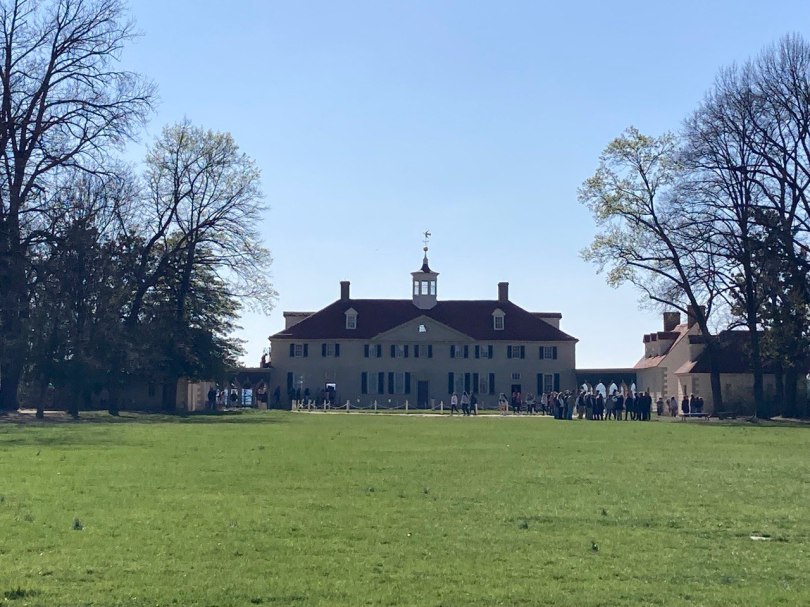
SubscribeStar Saturday: Washington, D.C. Trip Part III: Mount Vernon

Today’s post is a SubscribeStar Saturday exclusive.  To read the full post, subscribe to my SubscribeStar page for $1 a month or more.  For a full rundown of everything your subscription gets, click here.

After the debacle of children sliding down the Lincoln Memorial came much-needed rest.  The long day of traveling was, in many ways, the easiest of our days in D.C.  Thursday promised to be full of walking, but all those steps would be worth it.

Following our food service hotel breakfast—I’m a sucker for those hyper-yellow egg product scrambled “eggs” they serve at hotel continental breakfasts—we loaded the bus and headed for Mount Vernon, the home of our first President, George Washington.

The Mount Vernon Ladies’ Association maintains and preserves Mount Vernon.  The Association is the nation’s first national historic preservation organization, and the oldest active patriotic society.  Founded in 1853 after the founder’s mother witnessed the poor state of the home, the Association had raised $200,000 by 1858, with which it purchased the home and two hundred acres surrounding it.  Following the ructions of the American Civil War, restoration work began, and continues to this day.

It is a gift to the American people to walk the grounds where George and Martha Washington resided.  There’s something appealing, too, about the home and grounds being under the auspices of a private non-profit organization, rather than the National Park Service.  It’s proof that private individuals sharing a common goal can often achieve more, and do it better and more efficiently, than the government can.

It was a crisp, sunny morning when we visited Mount Vernon, and it was easily the highlight of the trip, at least for me.

To read the rest of this post, subscribe to my SubscribeStar page for $1 a month or more.

Fed Up

This Wednesday we’re taking a break from Bigfoot to talk about another terrifying creature:  the Federal Reserve System.

I don’t typically write about the Federal Reserve System because, well, I don’t really get it.  Sure, I’ve taught about it, and I get the general gist of what it is alleged to do, but like most Americans, I know that it tinkers with interest rates and is incredibly boring.

As a kid, I’d hear about Alan Greenspan and how significant he was.  Janet Yellen, the who I thought was still the chair of the Fed (nope—she’s the Secretary of Treasury now, apparently), sounds like a walrus with head cold, and strikes me as about as lively as block of wood.  These are not inspiring or interesting people, but they are immensely powerful.

Read More »

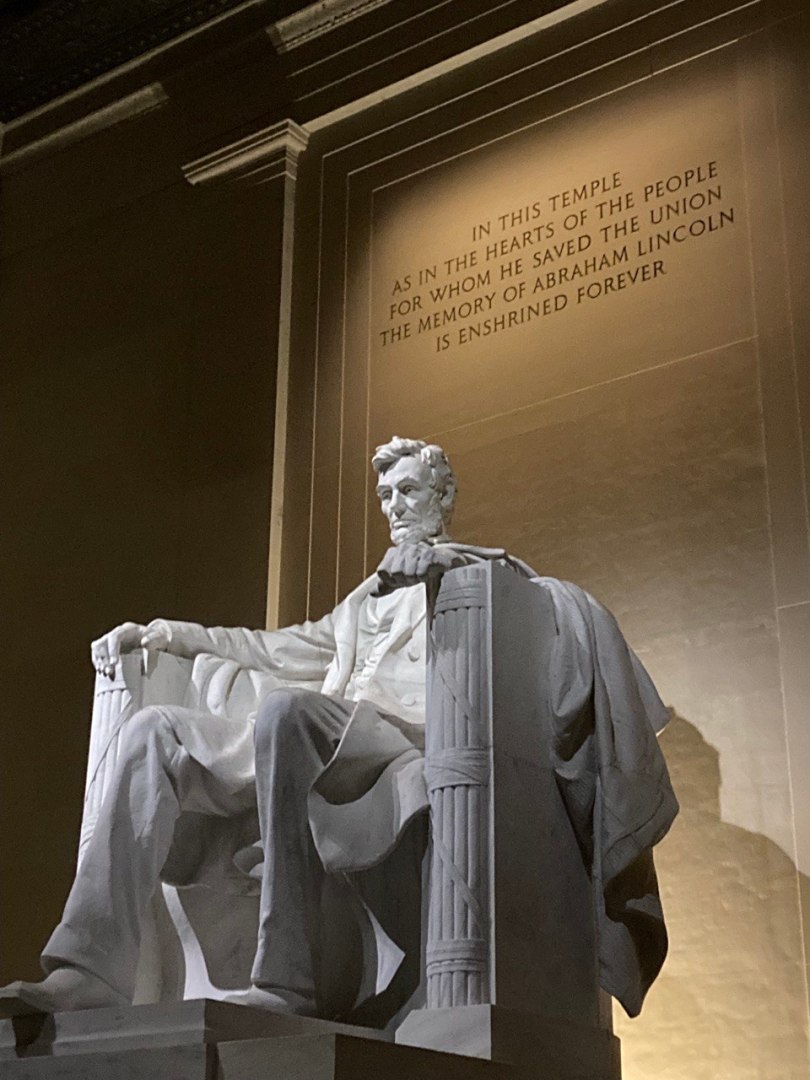
SubscribeStar Saturday: Washington, D.C. Trip Part II: Showdown at the Lincoln Memorial

Today’s post is a SubscribeStar Saturday exclusive.  To read the full post, subscribe to my SubscribeStar page for $1 a month or more.  For a full rundown of everything your subscription gets, click here.
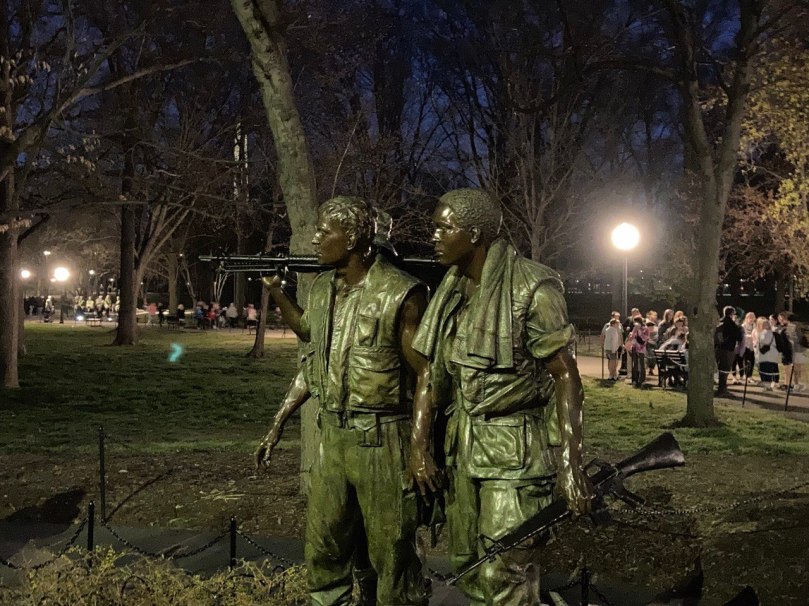
After a long bus ride and a whirlwind tour of two Smithsonians and the Spy Museum—and a hearty feast at Buca di Beppo—our merry band of wastrels and wine moms headed out on an evening tour of three memorials:  the Korean War Memorial, the Vietnam War Memorial, and the Lincoln Memorial.

I first visited the Korean War Memorial on a high school band trip, and found it to be particularly arresting.  The fuzzy images of soldiers crossing a battlefield have stuck with me ever since.  It’s a testament to the power of a good memorial not only to honor the dead, but to highlight the hardships and tribulations they endured.  The Korean War is the “forgotten war” of twentieth-century America, sandwiched as it was between the glory of the Second World War and the ignominy of the Vietnam War.

Korean War Memorial 1

Apparently, I failed to capture any pictures of the Korean War Memorial (the image above is an addition to the Vietnam War Memorial), likely because I was a.) in quite, reverent awe while passing through the memorial and b.) calling down knuckleheads who ought to know to treat these memorials as quasi-sacred places, memorials worthy of silent dignity and respect.

That apparent lack of understanding of and respect for those who gave their lives was a recurring theme of the evening, and one that would result in some frustration and consternation on the part of yours portly.

To read the rest of this post, subscribe to my SubscribeStar page for $1 a month or more.