

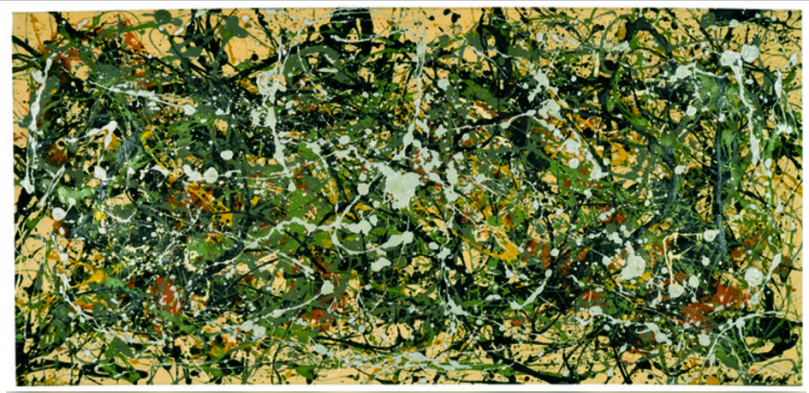
We have a new contributor here at The Portly Politico, a chap from jolly old England, Brian Meredith. He’s a graphic designer by trade and is Internet friends with our own senior correspondent, Audre Myers.
In this piece, “There’s No Such Thing as Bad Art,” Brian makes an essentially semantic argument: if we glorify pieces we like or appreciate as “art,” we conversely consider “bad” pieces as “not art.” Ergo, we cannot have “bad art” if art is definitionally whatever we define as “good.”
As Brian noted in an e-mail to me: “I would like to make it clear that my intention was to write something about the use of language rather [than] about art itself and in particular the commonly-accepted assumption that the very idea of art confers status.”
It’s an interesting argument, and one that I think has its merits. I disagree with the underlying premise, in that we can create things broadly termed “art” that are, indeed, quite poor in quality, either because of aesthetic choices or merely a lack of craftsmanship on the part of the artist. There can be “art” of varying qualities.
But I think Brian is correct when we look at “art” as a term of social categorization—as a form of judgment. In that regard, anything that we think is worthy of praise—even if from an objective or technical standpoint it is not very good—could be elevated to the status of “art,” as his argument is that society uses the term “art” almost exclusively as a term of praise. As such, if enough rubes agree that, say, an ashtray is a work of art, it is merely laudatory “art,” and not “bad art,” which—again—cannot exist in this usage of the word.
That explains why there are plenty of poor craftspeople whose work is lauded as “art” because they are well-connected (as I have written about before on this blog).
Ultimately, this subjective, linguistic/definitional argument results in the kind of postmodern garbage we see coming out of art studios today. I do not think Brian would agree with the sentiment he points out—he seems to be a diagnostician, not a physician, of this problem—but its existence is certainly real. As such, because lay persons exclusively use the term “art” in a laudatory context, the result is that we do end up with a great deal of bad art, even if definitionally that’s impossible.
It’s an intriguing semantic argument, but like most semantic arguments, it seems like it too easily devolves into postmodern nonsense. Again, I don’t think Brian is advocating for that, but is merely diagnosing the problem.
With that, here is Brian Meredith’s “There’s No Such Thing as Bad Art”:





 The Portly Politico