Remember, Remember, the Fifth of November

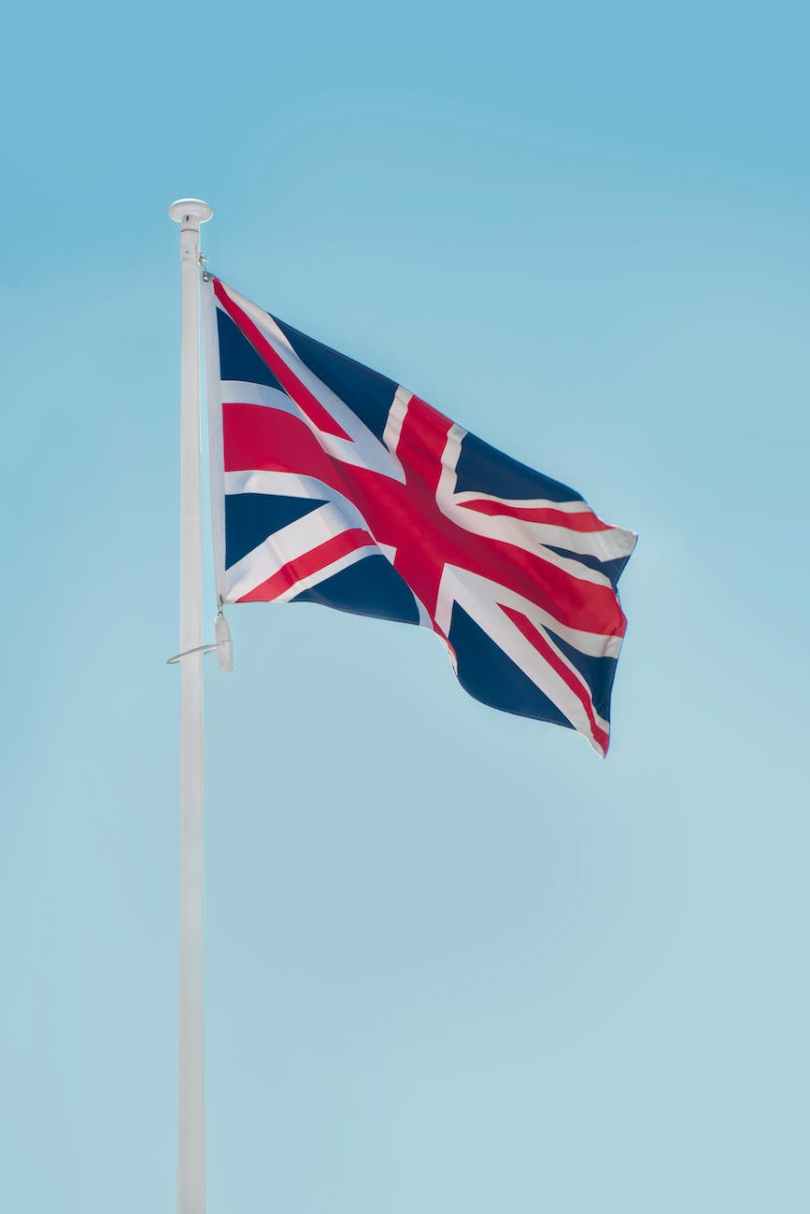
Today is Guy Fawkes Day (or Night) in merry old England, a holiday that is unapologetically nationalist, monarchist (in the best English tradition of that form of government) and Protestant Christian.  There’s something fun and refreshingly patriotic about a holiday dedicated to burning a treacherous Papist in effigy.  Not to make everything about America, but it smacks of the Fourth of July, albeit without the anti-monarchist undertones.

Most Americans will be familiar with Guy Fawkes Day and the iconic mask from the film V for Vendetta (2005), in which the meaning of Guy Fawkes focuses on the man’s role as a would-be freedom fighter for English Catholics against an oppressive Protestant regime.  In the context of the film, the titular V dons the mask in the context of a freedom fighter against a fascistic, quasi-religious British government.

Read More »

Lazy Sunday CXVIII: Monarchy

I’ve been on a British monarchy kick the past month thanks to the excellent biographies over at The People Profiles.  So, as we enjoy the very American Labor Day weekend, let’s also look back at some recent posts about monarchy.

God Save the King—and Happy Sunday!

—TPP

Other Lazy Sunday Installments:

SubscribeStar Saturday: Behind Every Great Man

Today’s post is a SubscribeStar Saturday exclusive.  To read the full post, subscribe to my SubscribeStar page for $1 a month or more.  For a full rundown of everything your subscription gets, click here.

We’ve all heard the expression “behind every great man, there’s a great woman,” or some permutation of it (my personal favorite is Groucho Marx‘s:  “behind every successful man is a woman, behind her is his wife”).  It’s a familiar expression because it’s generally true, even if not quite as universal as the word “every” suggests.

Just as a bad woman can lead to a man’s swift downfall—or, worse yet, years of misery and then a swift downfall—a good woman can support a man through his trials, and even make him king.

Such was the case of Margaret Beaufort, who, through a combination of skill, diplomacy, wealth, and mother love, guided her son Henry through the complicated and dangerous War of the Roses to emerge as King Henry VII, the first monarch of the Tudor Dynasty.

Her bravery, tenacity, and sheer luck safeguarded her son through a lengthy exile, and ultimately to the height of power.  Her grandson, Henry VIII, would become the most powerful English monarch of his age, so much so that modern historians frequently regard him as a tyrant.

To read the rest of this post, subscribe to my SubscribeStar page for $1 a month or more.

In Defense of the British Monarchy

As a natural conservative, not merely a political one, I have always felt an affinity for the British monarchy, and never bought into the excessively utilitarian (and inherently radical) arguments that favor the abolition of the monarchy.  After weeks of listening to videos from The People Profiles about the monarchy, I am even more convinced in the necessity of the British monarchy as a cultural and political force.

To be clear, I do not advocate for monarchy of any form in the United States.  The reader might ask, “if it’s so beneficial to our British cousins, with whom we share quite a bit of history and culture, why isn’t it good for us?”  The answer is simple:  we’ve never had one!  Monarchy is something almost completely foreign to Americans, at least since 1776.  Our Founding was explicitly anti-monarchical, even if there were Americans willing to submit to a kingship under George Washington.

The British—and, more specifically, the English—however, have possessed a monarchy for over 1000 years, with the exception of that Cromwellian unpleasantness from 1648-1660, ending with the restoration of the Stuarts with Charles II.  That is a great deal of tradition, custom, and ceremony to toss out merely to save a few bucks on maintaining the Royal Family.

Read More »

SubscribeStar Saturday: The Folly of King Edward VIII

Today’s post is a SubscribeStar Saturday exclusive.  To read the full post, subscribe to my SubscribeStar page for $1 a month or more.  For a full rundown of everything your subscription gets, click here.

One of my favorite passages of Scripture is Proverbs 31:10-31, the famous passage about the qualities of a good woman.  As verse 10 reads, “Who can find a virtuous wife? For her worth is far above rubies.”  The implication is that a true “Proverbs 31 Woman” is a rare and precious thing.

Based on earlier chapters of Proverbs, which extensively detailed the dangers of a wanton floozy, it’s pretty clear that a bad woman can be quite destructive.  Proverbs 7:6-23 is an entire cautionary tale about a foolish young man who dies when a harlot stabs him after a night of passion!

Too many men (myself included) fall for the allure of a pretty face, which is probably why there are three or four chapters in Proverbs warning us off of them (and only one chapter about a good woman).

Such is the potentially corrosive effect of a loose woman that one nearly destroyed a monarchy.  The short-reigned King Edward VIII, who ruled in 1936 for barely eleven months.

The controversy over King Edward VIII’s decision to marry a twice-divorced woman (still married at the time of Edward’s abdication in December 1936), Wallis Simpson, threatened the House of Windsor, and nearly resulted in a constitutional crisis for the British Empire.

To read the rest of this post, subscribe to my SubscribeStar page for $1 a month or more.

Open Mic Adventures XXIX: “Lavender’s Blue”

I’m diving back into Alfred’s Basic Piano Library, Complete Levels 2 & 3 for the Late Beginner this week with the piece “Lavender’s Blue.”

As I explain in the video, I knew very little about the song, other than it has a kind of Renaissance feel to it.  Since making that hasty recording during a precious planning period, I have done a bit more research on the piece.

The piece dates back to sixteenth-century England, where it was a popular folk song and nursery rhyme.  The lyrics suggest the nursery rhyme elements:

Lavender’s blue, dilly dilly, lavender’s green,

When I am king, dilly dilly, you shall be queen:

Who told you so, dilly dilly, who told you so?

‘Twas mine own heart, dilly dilly, that told me so.

Any tune with “dilly dilly” in the lyrics is prime nursery rhyming.  As is frequently the case with these very old songs, the piece has dozens have verses, and variations upon those verses, so there’s not an “official” version—kind of like Blade Runner (1982).

Fortunately, I’m just playing it on piano, so there’s no confusion there.

Read More »

SubscribeStar Saturday: The Queen and 9/11

Today’s post is a SubscribeStar Saturday exclusive.  To read the full post, subscribe to my SubscribeStar page for $1 a month or more.

Queen Elizabeth II, the long-reigning, dignified, Stoic monarch of Great Britain, passed away this week at the age of 96.  The news was shocking, not because of the tragedy of her death itself, but because I’d always assumed she would live forever—even though I knew that wasn’t possible.  Queen Elizabeth was just always there, and it seemed like she would be.

To be honest, I’m surprised she was only 96; I thought she’d already hit 100.  As it was, she was pretty close.  Her seventy-plus-year reign is the longest in the history of the British monarchy, and the longest any woman has been a head of state in all of recorded history.

The Queen’s passing, as other commentators have noted, truly marks the end of an era, an era in which the West, while fumbling a bit, still reigned supreme, and took itself seriously as a civilization.  Her death marks the final page of a long chapter in the book of Western Civilization, as her reign was the last vestige of the Old England so many of us, even here in the States, loved so dearly.

It is, then, perhaps apropos that the Queen’s death came so close to 9/11, a day of infamy which, sadly, seems to have receded further and further into the collective imagination of our divided and bickering nation.  Both the Queen and 9/11 were once symbols of national unity and patriotism, but the latter marked the death of American liberty.  Queen Elizabeth’s death, on the other hand, is a coda, the last few measures of a piece that lost its orchestra some time ago, but which managed to maintain a few dedicated musicians to play her out.

This post is a SubscribeStar Saturday exclusive.  To read the full post, subscribe to my SubscribeStar page for $1 a month or more.

Flashback Friday^2: Christmas and its Symbols

Okay, okay—it’s not Christmas.  But, hey, close enough, right?

There will be an actual Christmas post tomorrow morning, though it’s going to be very short.  But I couldn’t pass up the opportunity to turn “Flashback Friday” into “Flashback Friday^2,” angering mathematicians and calendar enthusiasts everywhere.

The original post in this “series,” “Christmas and its Symbols,” contains some excellent Christmas wisdom.  So often we hear Christmas denounced as a secretly “pagan” holiday because we hang wreaths, put up trees, and dangle mistletoe.  But as one meme I’ve seen recently put it (to paraphrase), “Yes, I love to display the trophies of my vanquished foes.”

Christianity sure did kick—and continues to kick—some butt.  We could probably do with some more warrior-monks running around with maces and clubs.

For this weekend and beyond, though, Jesus—as He always does—will do.

With that, here is “Flashback Friday: Christmas and its Symbols“:

Read More »

Supporting Friends Friday: Nebraska Energy Observer

Well, it was inevitable—after dedicating an extremely popular edition of Supporting Friends Friday to the irreplaceable Audre Myers, I had to dedicate one to the man and the website that gave her an outlet:  Neo and Nebraska Energy Observer.

I’m not sure how I discovered Nebraska Energy Observer, but I suspect it involved Neo leaving a comment on one of my posts a couple of years ago.  I’m generally suspicious of unknown commenters, as the Internet is full of trolls interested in harassing right-wing bloggers, but I quickly figured out that Neo was one of the good guys.

My initial perception was that Neo was obsessed with English history, and I figured his blog was largely dedicated to the “special relationship” between the United States and our erstwhile mother country.  That relationship is, indeed, an important focus of Nebraska Energy Observer (though you’d never guess it from the title), but the blog covers a wide range of topics (including, of course, reflections on the life of an electrical lineman in Nebraska).

Read More »

Flashback Friday: Christmas and its Symbols

It’s Christmas!  Another magical day to celebrate the birth of our Lord and Savior, Jesus Christ.

2020 was a tough year, but Christ is mightier than The Virus.  Thank God—literally!—for sending His Son.

Have a wonderful, safe, loving Christmas Day.  God Bless all of your for your support and generosity, and for being such amazing readers.

Here’s 25 December 2019’s “Christmas and its Symbols“:

Read More »