The run of films based in the grimy past of analog technology keeps rolling. This week’s movie is a great example of another horror thriller that explores dated technology in fresh ways. Most flicks that attempt to look back at the 1980s tend to do so through rose-tinted glasses, and focus on the neon and the crazy fashion. Dead Mail (2024) looks back at the 1980s as I vaguely remember them—a drab post office in a small town.
Earlier this week I posted one of my recent compositions, “Clarinetti” (the Italian plural for “clarinet”), and I’ve composed quite a bit for the instrument over the last year; as such, I thought I’d cast a glance back at some pieces that feature, or at least use, clarinet:
“Open Mic Adventures CXXI: ‘March of the Molemen’” – This piece, which depicts an army of subterranean Molemen carrying out their crafty underground business, features tenor sax and bass clarinet.
Last week I submitted subscribers to Säx, a collection of saxophone quartet pieces I wrote and recorded way back in 2004 in a buddy’s attic studio. In digging around in the vast depths of my backup hard drive, I found quite a few compositions I believed were lost to time (and/or to a 32-bit operating system; my ancient version of Cakewalk 3.0 won’t run on modern, 64-bit operating systems).
Eventually, I’m going to re-release Säx and release these MIDI-based compositions on Bandcamp and on streaming platforms. I managed to convert the MIDI files to lossless WAVs, and I am doctoring some of them up using Audacity. Säx will be released in its original form—what paid subscribers could hear in full last week.
For now, I wanted to share some of the tracks from what will be the MIDI release, as well as a recording of one of the pieces I did on a tiny Yamaha keyboard my family has had since I was a small child (and I still have it—I think it works, too). Paid subs will have access to some other pieces over on SubscribeStar.
The first piece here is “Euroclydon,” named after the Mediterranean storm from the Book of Acts. I remember learning the name from a sermon at my parents’ church years ago, and I am guessing I composed the bulk of “Euroclydon” around 2012:
“Euroclydon”
The next piece is “Aachen Cathedral Chorale.” I used this chord progression and melody in a number of pieces, including my organ solo “Organic Evolution.” I’m sure it’s from some famous Baroque composer, but back in the day, it was one of my favorite themes to incorporate into music.
This version consists of three MIDI files I converted to WAVs and then aligned in Audacity. I also added some additional reverb and chorus effects. Essentially, I had the same theme composed for organ, strings, and saxophones, and then mashed them together into this glorious wall of sound:
“Aachen Cathedral Chorale”
This version of “Aachen” was played using the Yamaha keyboard and splicing/aligning all of the parts together. As I recall, I plugged the keyboard into my older brother’s ancient Crate amplifier, then dangled a primitive computer microphone in front of it and recorded either to Adobe Audition 1.5 or Windows Recorder (the latter would have been a nightmare to line up properly, so I’m thinking it’s the former). I am playing all of the parts on this one:
“Live at the Aachen Cathedral”
It’s wild to think that I wrote some of these pieces as early 2004 or so. I found stuff that I likely composed in high school, which would place the absolute earliest possible compositions at 1999. I was using Cakewalk 3.0 in the eighth grade, so I have some material that would date back to 1998—whoa!
One day I’ll finally figure out how to setup a Windows 95 virtual machine on my desktop so I can run Cakewalk 3.0 natively, but I’ve never had much success doing that.
Regardless, let’s see what else a young Portly cooked up back in the day.
Want to play the sax? Read my ultimate guide to getting started for under $350.
Yours portly is playing saxophone for a client and his wife this evening; the happy couple is celebrating their first anniversary, and the client has booked me to play a song or two as a surprise for his wife.
Naturally, he asked for videos of me playing two pieces so he could get an idea for what he will be getting, and just as naturally, I turned those into YouTube videos for my subscribers.
Now you, my dear readers, will get to hear some sensual, soulful saxophone solos:
The big news in the gaming world right now is the incredible The Elder Scrolls IV: Oblivion Remastered. It came as a total shock to the gaming world (yeah, there were rumors swirling that it was in the works, but no one knew it was coming so soon), and managed to update the game’s graphics and fix some bugs while also maintaining the legendary “jank” for which the game is so fondly remembered.
Yours portly has not yet taken the dive back into Cyrodiil (although, goodness, I am desperate to do so), but I am looking forward to the rapidly-approaching summer for a chance to dig into some classic games. It’s been so long since I’ve really been able to sit down and lose myself for hours into a good game. I haven’t even been able to touch Civilization VII in almost two months!
Gaming always comes to my mind during the hot, lazy days of summer, when it’s so unbearable outside, I l basically live like my home is a life support pod on Venus, only venturing out when absolutely necessary. So it was that I booted up old SimEarth some years ago, and took a rose-tinted, nostalgia-fueled walk back to my past, when I first played a copy of the game my Indian friend copied onto a 3.5″ floppy disk for me. Those were the days!
With that, join me on this extended walk through the past; here is 16 May 2024’s “TBT^4: SimEarth“:
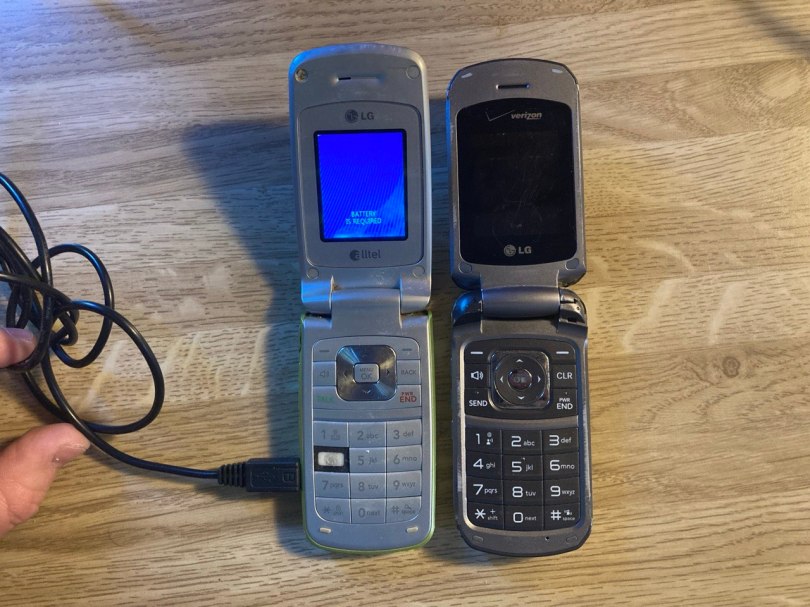
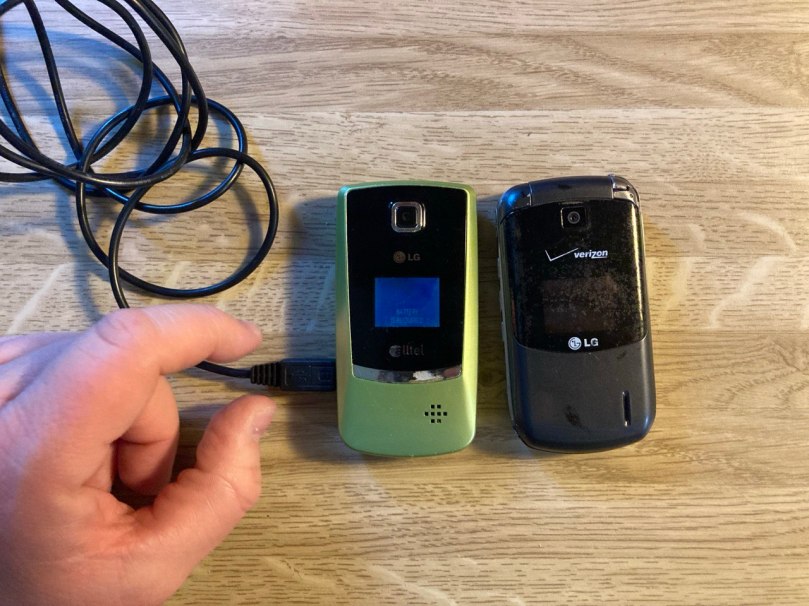
I used these phones for years. I was way behind the curve on adopting smartphone technology. When the black flip phone broke one morning, I finally made the switch… to a Windows Phone! 😣 I loved that phone, but by that point, the Windows Phone OS had zero app support, and I directly attribute it with a serious off-season in my dating life (which, in retrospect, was a good thing, because now I’m marrying the love of my life).
But I digress. People tend to romanticize flip phones now because they allowed one to be relatively disconnected, and were only really good for calls and some limited texting (you had to hit a number one, two, or three times depending on what letter you wanted to use; somehow, I got really fast at writing text messages that were exactly the right number of characters for one message). You could still keep in touch with people, but these phones weren’t constantly bombarding you with notifications, apps, games, distractions, etc., etc. That said, the massive functionality of the modern smartphone is hard to pass up, even if they’re destroying society.
But I digress once again! Here are some photos of these beautiful little LG smartphones:
I recently uncovered a bunch of old music I wrote during a period spanning from roughly 1999 through probably 2012. Today’s piece is not one of those pieces, but I’ll soon be highlighting some of my super deep cuts here. If you want to hear one piece—recorded with me playing real instruments, not computer ones!—check out this past Saturday’s post.
Today’s piece is another digital piece, composed in Noteflight. I’ve been writing a lot of trios lately, and have been experimenting with getting three of the same instruments to blend without sounding too boring. I’m not sure if I have succeeded, but this week’s piece is a stab at it.
Yours portly has been something on a late 1990s/early 2000s nostalgia kick lately, mainly as I have been cleaning out my Drawer of Forgotten Technology to try to sell random bits of twenty-plus-year-old gear to randos on eBay. It seems that all of that pre-YouTube, pre-Facebook, pre-Web 2.0/3.0 technology seems popping up in my pop culture consumption, too: movies about a mostly-pre-digital, mostly-pre-Internet world, when most things were still analog, or at least some intriguing blend of the analog and the digital.
So it was that I came upon the 1996 Spanish film Tesis (or Thesis), a psychological thriller based upon VHS technology and—gulp!—sn*ff films.
My church had revival services earlier last week, and it seemed like the right time to look back at some classic church-related posts this Lazy Sunday:
I’m a tad late posting today because I was up quite late last night digging through some old computer files. I’ve been cleaning out my Drawer of Forgotten Technology, and stumbled upon my old SanDisk Sansa c250 MP3 player (which I am currently selling on eBay, if anyone wants it). The battery doesn’t hold a charge, but it will play when connected to power directly via its USB cable connected to any charging block that accepts USB. Even more intriguing is that it will interface with a PC when that same cable is connected to a USB port.
I uncovered a treasure-trove of music, basically the stuff I listened to in college and graduate school. Among the random bits of novelty music and 80s hair metal I found a track from long-forgotten musical project, Säx.
Säx was my first attempt at recording anything solo. I’d composed a number of saxophone quartet compositions specifically for me to record them. Each piece consisted of two alto sax and two tenor sax parts, and ran the gamut from blues to gospel to rock to circus music—pretty much anything I could think of to demonstrate my composing skills.
I recorded Säx in 2004 at a friend’s house. He was learning audio engineering at the time (and I believe he now does it for a living), so he was willing to record me and mix my tracks for free so he could get the experience. We were both 19 at the time, and home from our first year of college, and it was a period in my life when everything seemed possible.
To put things into perspective, this pre-dated YouTube, Spotify, Apple Music, etc. Getting music out there still pretty much meant burning CDs on your computer, then distributing those in jewel cases with homemade art to your friends and family. You could get them done professionally, but as possible as everything seemed at 19, yours portly didn’t have the money to make everything possible.
Säx was fun, though. I remember my buddy and I in his little attic space, which he had refurbished into a tiny recording studio, figuring out how to get the click tracks at the right tempo. There was one piece, an Irish jig in 6/8 time, that I just could not get down, so we axed it entirely (I love 6/8, but back then, I struggled with figuring out whether to set the metronome to duple or sextuple, something that seems laughably embarrassing to me now).
These recordings are not great, with the exception of “Middle Class White Kid Blues,” which actually came out pretty nicely:
The other recordings are a pretty good example of my composing chops at the time (which, I think, were not that bad; I can definitely hear my influences in these pieces, and composing elements I still use to this day, nearly twenty years later). My playing is often sloppy, with lots of intonation and pitching issues. Some of the examples are really bad—I end one of the pieces on what should be a beautiful chord, but it’s nasty thanks to bad tuning and intonation. But it’s still fun—albeit a bit cringe-inducing—to go back and listen to these pieces.
I’ll be re-releasing Säx at some point on Bandcamp and, ultimately, various streaming platforms, just for the completionists out there who want to hear everything I have ever recorded (I also uncovered some other synthesizer pieces I played and recorded in college under two project names, “Blasphemy’s Belt” and “Fat Guy in Boxer Shorts”; I’ll be releasing those pieces at a future date, too).
For now, my faithful paying subscribers are going to have access to all seven Säx tracks in existence—whether you like it or not! Enjoy this glimpse into some of my earliest recordings.







 The Portly Politico