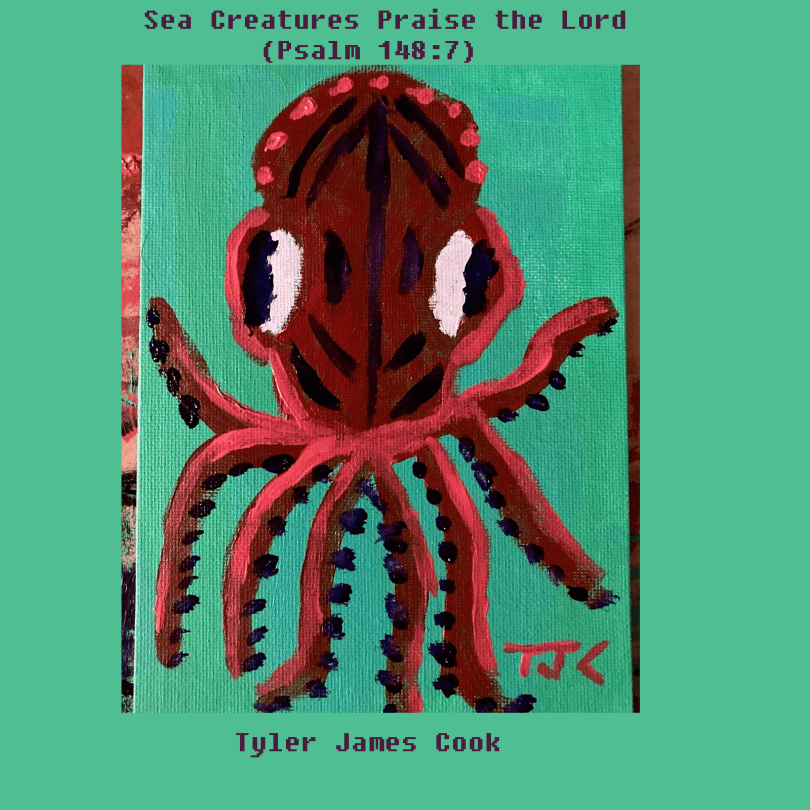
Open Mic Adventures CXXII: “Sea Creatures Praise the Lord (Psalm 148:7)”

Pickup my newest release: The Galactic Menagerie!  Use promo code obesekangaroos to take an additional 20% off all purchases on Bandcamp!  Code expires at 11:59 PM UTC on Friday, 4 April 2025.

With the release of The Galactic Menagerie, I’m really digging into the pieces from the album.  Today’s piece started life as a short string trio I wrote for some of my Middle School Music Ensemble students.

Read More »

Lazy Sunday CXCII: The Beach

I’m returning today from a weekend in Myrtle Beach, where my older brother and I have been celebrating his participation in the Myrtle Beach Marathon.  We’ve stuffed ourselves with seafood, but he actually earned the right to eat all of that.

As such, it seemed like a good time to look back at some beachy posts of yesteryear:

Here’s to more beach trips in the future!

Happy Sunday!

—TPP

Other Lazy Sunday Installments:

MAGAWeek2022: John Paul Jones

This week is MAGAWeek2022, my celebration of the men, women, and ideas that MADE AMERICA GREAT!  Starting Monday, 4 July 2022, this year’s MAGAWeek2022 posts will be SubscribeStar exclusives.  If you want to read the full posts, subscribe to my SubscribeStar page for as little as $1 a month.  You’ll also get access to exclusive content every Saturday.

As MAGAWeek2022 rolls on, it’s my pleasure to feature the indefatigable John Paul Jones as the third entry.

Yes, with his hypnotic bass lines, workmanlike studio skills, and steady reliability, John Paul Jones provided the backbone for Led Zeppelin’s bluesy, protometal sound.

Wait, wait—not that John Paul Jones!  Although he is an amazing bassist, I’m dedicating today’s edition of MAGAWeek2022 to an even greater John Paul Jones:  Captain John Paul Jones of the American Continental Navy (and Rear Admiral in the Russian Imperial Navy).

To read the rest of today’s MAGAWeek2022 post, head to my SubscribeStar page and subscribe for $1 a month or more!

TBT: Baby Sea Turtle

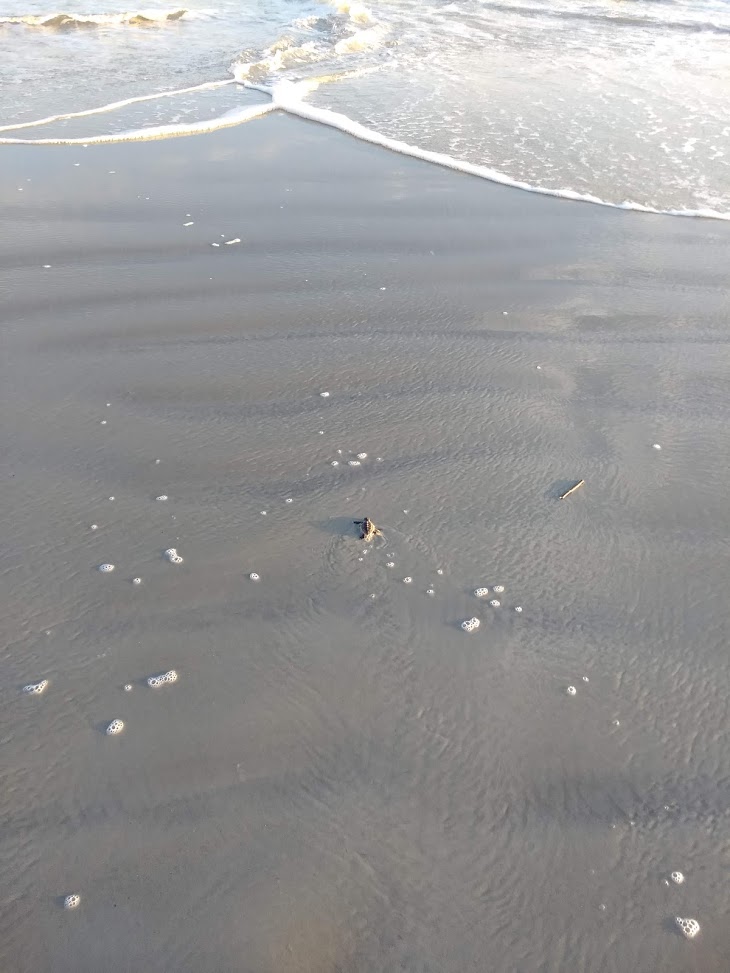
It’s the last quiet week of summer vacation before returning to school.  It’s been a good summer, with a trip to Universal Studios; a grueling but successful move; and getting a dog.  The one thing I didn’t do this summer is see a baby sea turtle take its first, adorable steps into the sea.

But I did get to see that last summer!

There’s something magical and miraculous about witnessing a baby sea turtle leave his little egg and waddle into the ocean.  I thought I’d never see it in my lifetime unless I was specifically trying to see it.

Adding to the magic was that it was totally unplanned—wonderful happenstance.

With that, enjoy this treacly little post, 3 August 2020’s “Baby Sea Turtle“:

Read More »

TBT: Climate Hysteria Robs Us of Joy

In casting about for a good TBT this week, I stumbled upon this post—which really should have ended up in one of my “Forgotten Posts” editions of Lazy Sunday—about the foolishness of climate hysteria, and the arrogance of thinking we can really have a concrete impact on the environment at the macro-level.

Don’t get me wrong:  I enjoy God’s Creation, and I think stewardship of His Creation is incredibly important.  We shouldn’t go around adopting baby sea turtles.  But driving to work everyday isn’t going to affect the environment or the climate in any discernible way.

In fact, it’s funny—climate change doesn’t even seem like a serious issue anymore (who even remembers Greta Thunberg now?).  As soon as the elites went hard for The Virus hysteria, they immediately had us using disposable plastic crap and Styrofoam containers again.  Even the whole message of The Age of The Virus was “Consume”—stay home, eat takeout, watch trash TV.

That puts the lie to the climate change nonsense.  I’ll repeat my admonition from one year ago today:  “Eat, drink, and be merry—and have lots of babies.”

Here is 22 October 2019’s “Climate Hysteria Robs Us of Joy“:

Growing up, I received my fair share of public school climate indoctrination.  My generation cut its teeth on Captain Planet, the eco-propaganda cartoon that, among other things, scolded Americans for using too many resources and having too many babies.  Fast forward to today, and those arguments are mainstream.

In fact, I remember my dad telling me that Captain Planet was Ted Turner‘s ham-fisted attempt at indoctrinating kids—one of the first times I vividly remember learning that the elites were lying to us.  The finger-wagging, puritanical nagging of environmentalists further pushed me away from eco-hysteria.

Still, we were always taught that the oceans were dying, that fresh water was scarce, etc.  Well, thanks to Quora, some easy math shows us that God’s Creation is abundant enough.

Quora user posed the question (to paraphrase):  if everyone drank a glass of water from the ocean (let’s assume it’s been desalinated), how would it affect the sea level?

One poster’s answer goes through the math:  if everyone—including babies! (around 7.7 billion people)—took a twelve-ounce glass of water from the ocean simultaneously, “the water level would drop by 0.0000000075 meters, or about 7.5 nanometers. That’s about 1/1000 the size of a red blood cell.”  Another contributor, Vilmos Shepard, writes that this scenario “would lower the ocean by less than a wavelength of light.”

As the contributor writes in his response, “within a day or two, we’d all sweat, breathe and urinate that water back out, and it would eventually end up back in the oceans. The water cycle is a hard thing to beat.”  Indeed.

The more I learn about Creation, the more I appreciate that there’s not much we can do to affect or alter the macro-level environment.  We can make tweaks and marginal improvements—such as improving desalination of sea water, transporting water more efficiently, picking up trash, etc.—but it’s foolish to think we alone can break or fix the environment.  Creation is incredibly abundant and robust.

Barring massive nuclear warfare, our everyday actions are not going to destroy the planet.  I’m not saying we should casually throw our old tires into the river—we should be good stewards of Creation—but it’s wasted effort to agonize over our carbon footprint.  If the enviro-cultists and eco-hipsters really cared, they’d live in the country, instead of cramming themselves into energy-guzzling urban hellscapes.

Eat, drink, and be merry—and have lots of babies.  Don’t curtail your enjoyment of the bounty of God’s Creation just because Ted Turner and Greta Thunberg are insane and deluded.  Yes,  yes—dispose of your old electronics and used motor oil properly (we’re trying have a society here), but we shouldn’t lose sleep over eating a steak.

Tip The Portly Politico

Support quality commentary on politics, education, culture, and the arts with your one-time donation.

$1.00

Summer Reading: The Story of Yankee Whaling

I released the Portly Politico Summer Reading List 2019 on my SubscribeStar page a few weeks ago, which features a few books I highly recommend.

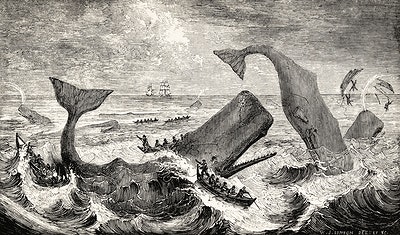
After dashing off yesterday’s post on Sunday night, I picked up a little book I’ve had in my private collection for some years now, The Story of Yankee Whaling.  It’s part of the now-defunct American Heritage Junior Library series of history books for young readers, and it’s a charming little volume about the grand adventures and brutal lives of whalers in colonial and nineteenth-century America.

The first edition of the book was published in 1959, but my edition is a slender paperback edition from 1965.  It is rich in primary source documentation, as well as sketches and woodcuts from the high watermark of whaling.  The author is Irwin Shapiro, who worked closely with Edouard A. Stackpole, the then-curator of the Mystic Seaport Marine Historical Association in Mystic, Connecticut.

Read More »

Reblog: Quintus Curtius, “On Living Near the Ocean”

Blogger Quintus Curtius wrote a beautiful, reflective essay on his blog, Fortress of the Mind, about the effects, both spiritual and physical, of living near the sea.  It’s an excellent example of strong writing; here’s a lengthy quotation:

There is no union with the sea.  There is the sea, and there is you, and this is as it should be.  So we have this cautionary dualism:  there is the ancient, perilous essence of the ocean, this tiger’s heart, and at the same time there is this rejuvenating energy of the sea.  There is this inexplicable allure that calls us to it.  It both provides, and destroys.  There is kindness, and there is cruelty of the most savage sort.  The fire can both sustain and destroy.  And it seems that too much exposure to the ocean has some kind of degenerative effect, as well.  You cannot quite put your finger on it.  But it is there.  You see it with those old mariners.  The grizzled visages of those who have spent too much time with the ocean do not really convey wisdom:  it is rather that the life has been sucked out of them, leaving a desiccated human husk.  There are no places so degenerate as some of these obscure seaside communities.  The odors of decay and ruin hover about them.

The line “it is rather that the life has been sucked out of them, leaving a desiccated human husk” calls to mind H.P Lovecraft’s “The Shadow over Innsmouth,” a classic of Lovecraft’s genre of weird horror fiction, about a town inhabited by people with an overly closer union with the sea and its horrors.

Living in South Carolina, the ocean is a large draw for our tourism industry, which is (I believe still) the largest part of our State’s economy.  But there is a certain strangeness that attaches itself to seaside towns, a certain freewheeling sleaziness.

Take Myrtle Beach, a town that is like a slightly scruffier, tackier, and sleazier Branson, Missouri.  Charleston, with—despite its reputation for elegance and charm—is a bustling port city that suffers from the double-edged sword of cosmopolitanism.

Quintus Curtius relates an example of oceanic dualism in an illustration from the Samnite War.  Another ancient allusion came to my mind:  the view of the ancient Israelite people regarding the sea.  They viewed it distrustfully, and I seem to recall that Old Testament references to “the abyss” may have referred to the wine dark Mediterranean.

Standing by the ocean is a humbling experience; like staring at the starry night sky on a crystal clear night, it reminds us of our own smallness in the vastness of the Universe.