SubscribeStar Saturday: Elective Libertarian Monarchy?

Pickup my newest release: The Galactic Menagerie!  Use promo code obesekangaroos to take an additional 20% off all purchases on Bandcamp!  Code expires at 11:59 PM UTC on Friday, 4 April 2025.

Today’s post is a SubscribeStar Saturday exclusive.  To read the full post, subscribe to my SubscribeStar page for $1 a month or more.  For a full rundown of everything your subscription gets, click here.

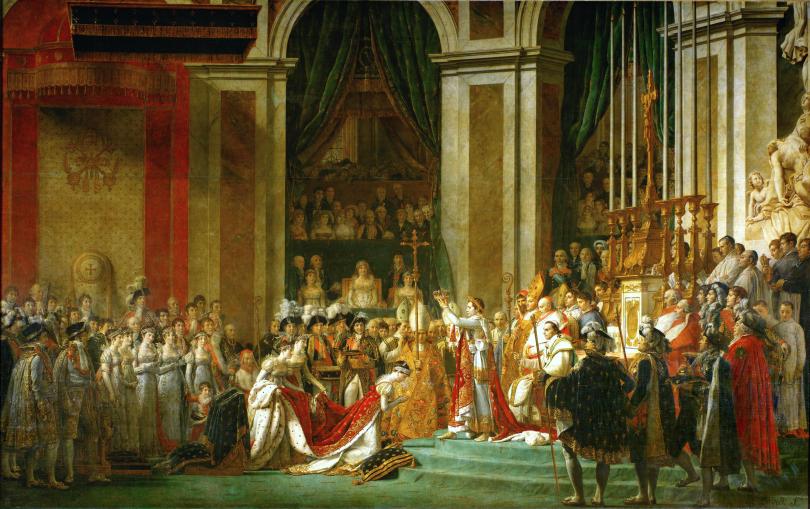
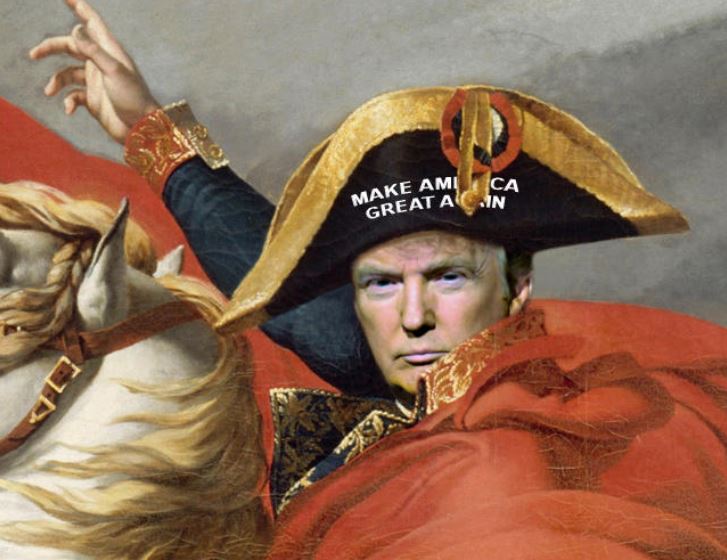
It has been absolutely remarkable to witness the yuge cultural-political shift since President Trump returned to office.  A flurry of executive action, coupled with robust efforts to gut USAID and even federal personnel, has subverted all expectations of what a president can do.  That a flurry of lawsuits have arisen in response to these actions does not seem to have dampened the energy of our very energetic executive.

The contrast with the last administration is glaring, not just for the sheer difference in activity—from zero to 100—but the quality of the executive actions taken.  President Biden—or, more likely, the invisible cadre of swamp dwellers who ran the government during the Jill Biden Regency—weaponized the federal government to persecute conservatives.  President Trump has weaponized the federal government to persecute… the federal government!

There is a common fantasy among doughy, slightly-above-average-IQ white guys of the libertarian king or dictator, someone who paradoxically wields the full power of the government to decrease its power.  The concept has some historical precedence, such as kings and emperors through history who have wielded power with a light touch, allowing their subjects to flourish.  Han China, England since at least the Stuarts, even the Mongols largely left people to pursue their own interests and passions and enterprises, so long as everyone paid their taxes and showed up for military service.

But the idea is a fantasy because it is unreal, impossible, in any real sense.  “Libertarian” means different things to different people; for most libertarians, it means smoking a lot of pot and being a weirdo in public.  The more generous definition would probably describe a system in which individuals pursue their own interests with limited or no government interference, in which the non-aggression principle is always applied.

Libertarianism is a pipe dream, though, because the non-aggression principle—the idea that my right to swing my fist ends where your nose begins—is not always applied.  Government exists in large part to protect us from a.) foreign invaders who don’t respect a nation’s sovereignty and b.) fellow citizens who don’t respect our bodies, homes, and property.  We have police because people sometimes act violently, and sometimes no amount of economic incentive can prevent a Friday night at the bar from turning into a scene from Roadhouse (1989).  If we were driven purely by economic incentives, no one ever get a DUI or an aggravated assault charge—or only those rich enough to pay the fines or to skirt jailtime could afford the luxury of reckless criminal behavior.

But for all of its deficiencies, the core of libertarian thought is the idea that the government that governs least, governs best.  That’s not always the case, but it’s a broadly good principle.  I get nervous every time I get a property tax bill for my house or my car, because I know that, even if I send in the check, if some bureaucrat makes a mistake, I could still lose everything—and the burden of proof would be on me to prove that I paid my taxes and that they made a mistake.  If that seems paranoid, think about the myriad stories of people losing their homes or farms or cars—or getting arrested!—because someone in some distant office made a clerical error.

Enter Donald Trump.  Trump is no libertarian—thank God!—but he possesses the very American impulse that most Americans want to be left alone to live their lives and to do their business relatively unmolested by the guarantors of their domestic tranquility:  the federal, State, and local governments.

With that in mind, his sweeping executive action so far—accomplished largely via executive orders—smacks flavorfully of an elected king wielding his power to restore more power to the people—and to reform the federal bureaucracy.

To read the rest of this post, subscribe to my SubscribeStar page for $1 a month or more.
Lazy Sunday CXVIII: Monarchy

I’ve been on a British monarchy kick the past month thanks to the excellent biographies over at The People Profiles.  So, as we enjoy the very American Labor Day weekend, let’s also look back at some recent posts about monarchy.

God Save the King—and Happy Sunday!

—TPP

Other Lazy Sunday Installments:

SubscribeStar Saturday: Behind Every Great Man

Today’s post is a SubscribeStar Saturday exclusive.  To read the full post, subscribe to my SubscribeStar page for $1 a month or more.  For a full rundown of everything your subscription gets, click here.

We’ve all heard the expression “behind every great man, there’s a great woman,” or some permutation of it (my personal favorite is Groucho Marx‘s:  “behind every successful man is a woman, behind her is his wife”).  It’s a familiar expression because it’s generally true, even if not quite as universal as the word “every” suggests.

Just as a bad woman can lead to a man’s swift downfall—or, worse yet, years of misery and then a swift downfall—a good woman can support a man through his trials, and even make him king.

Such was the case of Margaret Beaufort, who, through a combination of skill, diplomacy, wealth, and mother love, guided her son Henry through the complicated and dangerous War of the Roses to emerge as King Henry VII, the first monarch of the Tudor Dynasty.

Her bravery, tenacity, and sheer luck safeguarded her son through a lengthy exile, and ultimately to the height of power.  Her grandson, Henry VIII, would become the most powerful English monarch of his age, so much so that modern historians frequently regard him as a tyrant.

To read the rest of this post, subscribe to my SubscribeStar page for $1 a month or more.
In Defense of the British Monarchy

As a natural conservative, not merely a political one, I have always felt an affinity for the British monarchy, and never bought into the excessively utilitarian (and inherently radical) arguments that favor the abolition of the monarchy.  After weeks of listening to videos from The People Profiles about the monarchy, I am even more convinced in the necessity of the British monarchy as a cultural and political force.

To be clear, I do not advocate for monarchy of any form in the United States.  The reader might ask, “if it’s so beneficial to our British cousins, with whom we share quite a bit of history and culture, why isn’t it good for us?”  The answer is simple:  we’ve never had one!  Monarchy is something almost completely foreign to Americans, at least since 1776.  Our Founding was explicitly anti-monarchical, even if there were Americans willing to submit to a kingship under George Washington.

The British—and, more specifically, the English—however, have possessed a monarchy for over 1000 years, with the exception of that Cromwellian unpleasantness from 1648-1660, ending with the restoration of the Stuarts with Charles II.  That is a great deal of tradition, custom, and ceremony to toss out merely to save a few bucks on maintaining the Royal Family.

Read More »

SubscribeStar Saturday: The Queen and 9/11

Today’s post is a SubscribeStar Saturday exclusive.  To read the full post, subscribe to my SubscribeStar page for $1 a month or more.

Queen Elizabeth II, the long-reigning, dignified, Stoic monarch of Great Britain, passed away this week at the age of 96.  The news was shocking, not because of the tragedy of her death itself, but because I’d always assumed she would live forever—even though I knew that wasn’t possible.  Queen Elizabeth was just always there, and it seemed like she would be.

To be honest, I’m surprised she was only 96; I thought she’d already hit 100.  As it was, she was pretty close.  Her seventy-plus-year reign is the longest in the history of the British monarchy, and the longest any woman has been a head of state in all of recorded history.

The Queen’s passing, as other commentators have noted, truly marks the end of an era, an era in which the West, while fumbling a bit, still reigned supreme, and took itself seriously as a civilization.  Her death marks the final page of a long chapter in the book of Western Civilization, as her reign was the last vestige of the Old England so many of us, even here in the States, loved so dearly.

It is, then, perhaps apropos that the Queen’s death came so close to 9/11, a day of infamy which, sadly, seems to have receded further and further into the collective imagination of our divided and bickering nation.  Both the Queen and 9/11 were once symbols of national unity and patriotism, but the latter marked the death of American liberty.  Queen Elizabeth’s death, on the other hand, is a coda, the last few measures of a piece that lost its orchestra some time ago, but which managed to maintain a few dedicated musicians to play her out.

This post is a SubscribeStar Saturday exclusive.  To read the full post, subscribe to my SubscribeStar page for $1 a month or more.

Napoleonic Christmas

It’s Christmas Week!  And what a glorious week it is.  It’s been raining persistently in South Carolina since Sunday morning, but I’m enjoying the coziness of the hygge—warm coffee and lazy reading.

PragerU had a little video up this morning from historian Andrew Roberts about Napoleon.  It’s an interesting take on the not-so-short French emperor—an apologia, really (for those that prefer reading—as I often do—to watching videos, here is a PDF transcript).

Roberts argues that Napoleon was not the necessary precursor to Hitler, et. al.; rather, Napoloen was “sui generis“—a man unto himself.  While I believe the ideas of the French Revolution did unleash the totalitarian forces of Hitlerism, Stalinism, Maoism, and all the rest—a murderous, bloody Pandora’s Box—I’ve never considered Napoleon among their ranks.

Read More »