Monday Morning Movie Review: Oppenheimer (2023)

If Sound of Freedom (2023) is the must-see film of the year due to sheer moral imperative, Oppenheimer (2023) is simply the must-see film of the year due to its technical and artistic brilliance.  If means and availability allow, see it in IMAX.  The visuals and the sound are a massive part of this film, and feeling the sound of the first successful test of the atomic bomb really drives home the impact—and the implications—of this terrible new weapon.

Read More »

Lazy Sunday CCXIV: D.C., Part II

I finally slapped together the concluding installments of my Washington, D.C. Trip series, which may or may not make it into a future collection of travel essays.  Based on sales of Arizonan Sojourn, South Carolinian Dreams: And Other Adventures, I’m not exactly hot to rush out another collection of such essays, but we’ll see after I have my book signing (rescheduled so I could deliver the baccalaureate sermon, but the date is still TBD), which should increase the book’s profile a smidge.  I do, however, have an idea for my third book, and it’s going to be something completely different from either of the first two.

Happy Sunday!

—TPP

Other Lazy Sunday Installments:

Lazy Sunday CCXIII: D.C., Part I

Back in March 2023 I chaperoned a particularly difficult group of students on a trip to Washington, D.C.  Some of the behavior and shenanigans I witnessed from other kids—and, sadly, even from my own students—was quite discouraging.  That aside, it was a good, albeit whirlwind, trip, and I’m in the process of finishing off the essays in this mini-saga.

With that said, here are the first three installments of the Washington, D.C. Trip series:

Happy Sunday!

—TPP

Other Lazy Sunday Installments:

SubscribeStar Saturday: Washington, D.C. Trip Part VI: Arlington, Holocaust Museum, Home

Today’s post is a SubscribeStar Saturday exclusive.  To read the full post, subscribe to my SubscribeStar page for $1 a month or more.  For a full rundown of everything your subscription gets, click here.

After a hairy night of elevator-related shenanigans, everyone was pretty ready to hit the road.  That said, we still had a long hike through Arlington National Cemetery, followed by a trip to the Holocaust Museum, before heading home to South Carolina.

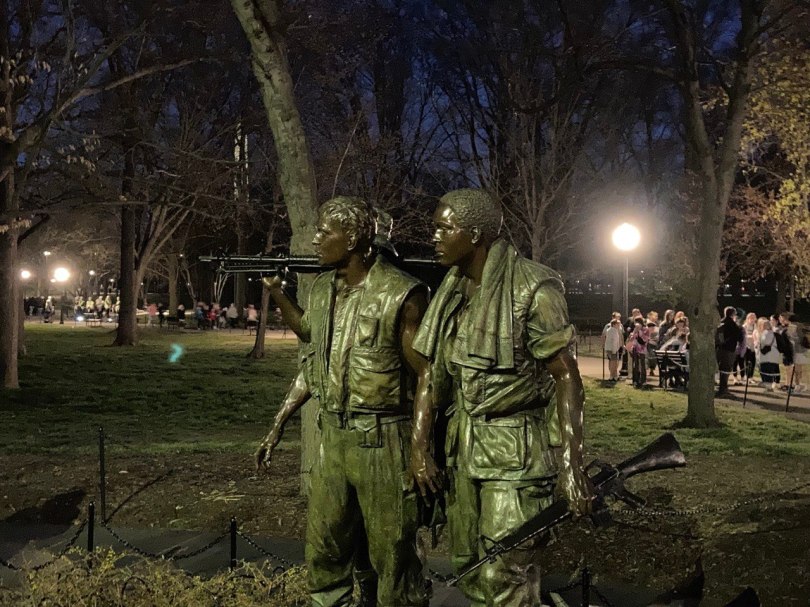
Sadly, it appears I lost the photographs I took at Arlington National Cemetery, as well as the powerful World War II Memorial from the previous night.  It’s a shame, because it’s a humbling and breathtaking place.  The cemetery is massive, with graves everywhere; even so, it is running out of space.

We chanced upon the changing of the guard ceremony, where the guards stand vigil over the Tomb of the Unknown Soldier.  Our tour group was a bit late hiking up the hill to the Tomb, but our students managed to position themselves in such a way as to witness the guards perform the ceremony.

Even with our typically rambunctious group and dozens of other school groups, it was very quiet.  After two long days of trying to explain to them why these places were sacred, the awe and reverence of Arlington did more to quiet their ever-running mouths more than any of my self-righteous jeremiads ever could.

Following the quiet, contemplative morning at Arlington, we had a quick lunch at a mall food court, then headed to the Holocaust Museum—a sobering final coda to our trip.

To read the rest of this post, subscribe to my SubscribeStar page for $1 a month or more.

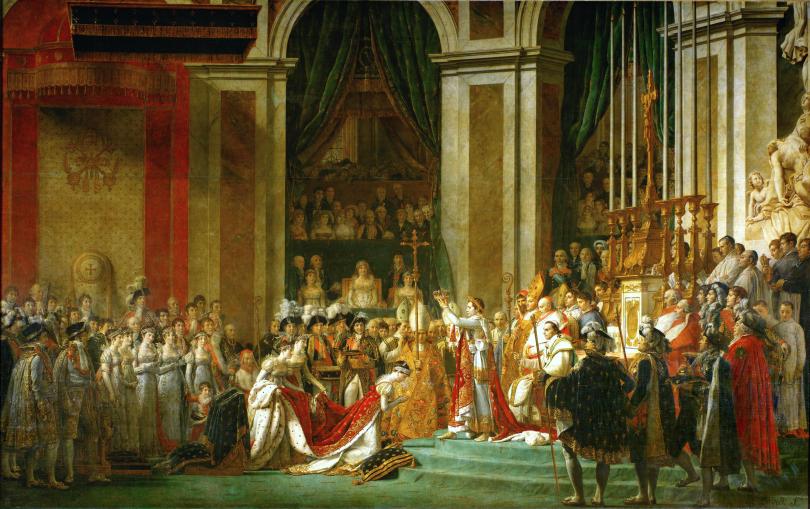
TPP’s Greatest Hits, Track III: Napoleonic Christmas

After MAGAWeek2023 and my extended time out of town, I’ve decided to take this week to rerun some classic hits from the extensive TPP back catalog.  Most of the posts are those with very high view counts, though I am presenting them in no particular order.  TBT will proceed as usual, and regular posts will resume Saturday, 15 July 2023.

With that, here is 23 December 2019’s “Napoleonic Christmas“:

Read More »

TPP’s Greatest Hits, Track II: Thalassocracy

After MAGAWeek2023 and my extended time out of town, I’ve decided to take this week to rerun some classic hits from the extensive TPP back catalog.  Most of the posts are those with very high view counts, though I am presenting them in no particular order.  TBT will proceed as usual, and regular posts will resume Saturday, 15 July 2023.

With that, here is 18 May 2020’s “Thalassocracy“:

Read More »

Lazy Sunday CCX: MAGAWeek2023 Posts

Well, another MAGAWeek is in the books.  It was a star-spangled affair, with biographies of four important historical figures (one of recent vintage, the others from the eighteenth and nineteenth centuries).  $5 and up subscribers also got three bonus editions of Sunday Doodles (here, here, and here).

Of course, to get access to my four detailed biographies—as well as all past MAGAWeek posts—it’s just $1 a month.  One measly buck!  As of the time of this writing, there are 429 posts on my SubscribeStar page, over half of which are available for just $1 a month.  At $5 a month, it comes out to one cent per post as of right now, and I’m adding new content every single week (with rare exceptions).

Even at just $1 a month, and assume (conservatively) that you only get access to half of the posts (about 215 posts), it works out to just $0.0047 per post—less than a half-cent per post!

At $12 a year—the price of a single, one-topping large pizza—you can a.) support your favorite chubby content creator and b.) gain access to an ever-growing library of long-form essays.  For $60 a year—what most of us pay for Internet access for one month—you get everything—doodles (which often contain additional commentary), bonus doodles, bonus posts, exclusive election coverage posts, etc., etc.

Thanks to those who have donated and subscribed in the past.  Please help spread the word!

Happy Sunday!

—TPP

Other Lazy Sunday Installments:

MAGAWeek2023: James Madison

This week is MAGAWeek2023, my celebration of the people and ideas that MADE AMERICA GREAT!  Starting Monday, 3 July 2023, this year’s MAGAWeek2023 posts will be SubscribeStar exclusives.  If you want to read the full posts, subscribe to my SubscribeStar page for as little as $1 a month.  You’ll also get access to exclusive content every Saturday.

Another shamefully neglected figure in the annals of MAGAWeek is that of James Madison, the fourth President of the United States and the so-called “Father of the Constitution.”  While Madison has graced the digital pages of this blog a number of times, he has yet to receive the biographical treatment—until today.

James Madison is one of the most fascinating of our Founding Fathers.  He was among the youngest of the major Founders—Washington, Adams, Jefferson, Hamilton, et. al.—but his contributions to political and constitutional theory were profound.  Indeed, his contributions to the Constitution were so significant, some political writers refer to our constitutional order as the “Madisonian order” or the “Madisonian system.”

It was Madison, for example, who argued that the sheer, physical size of the United States (which, at that time, extended to the Mississippi River) would preserve national unity, rather than undermine it.  That insight was completely contrary to all of the wisdom of the ancient and early modern worlds, both of which argued—with a great deal of evidence—that a republican form of government could only exist on a very small scale.  Eventually, the theory went, the rise of factions would rend a republic of any substantial size apart.

Madison argued the opposite:  because of the nation’s massive size, it would dilute factions, preventing regional parties from forming.  Through a system of federalism, in which each State would maintain significant local rights while enjoying representation in the national government, the States could make important, State-or-locality-specific decisions locally, while sharing the strength of a unified nation in foreign affairs and national defense.

Well, he was half right, anyway.  National parties did emerge, and they enjoyed broad support across all regions.  But regionalism set in regardless:  the High Federalists in New England during the War of 1812 (which they derisively called “Mr. Madison’s War”); the Democrats in the South from the 1850s until at least the 1970s; the rural-urban divide between the modern Republican and Democratic Parties today; etc.  That regionalism tended to be strongest, though, when the national government was overstepping its boundaries, or acting to the detriment of one region for the benefit of others (a key complaint of Southerners leading up to the American Civil War, for example, was that the Whig regime of extremely high tariffs was explicitly a national policy that benefited one region [New England and the Upper Midwest] at the expense of another [the South]).

But who was James Madison, this short (at 5′ 4″, Madison is our shortest president), shy nerd living in his parents’ home when he wrote the Virginia Plan for the Constitutional Convention?

To read the rest of today’s MAGAWeek2023 post, head to my SubscribeStar page and subscribe for $1 a month or more!

MAGAWeek2023: Benjamin Franklin

This week is MAGAWeek2023, my celebration of the people and ideas that MADE AMERICA GREAT!  Starting Monday, 3 July 2023, this year’s MAGAWeek2023 posts will be SubscribeStar exclusives.  If you want to read the full posts, subscribe to my SubscribeStar page for as little as $1 a month.  You’ll also get access to exclusive content every Saturday.

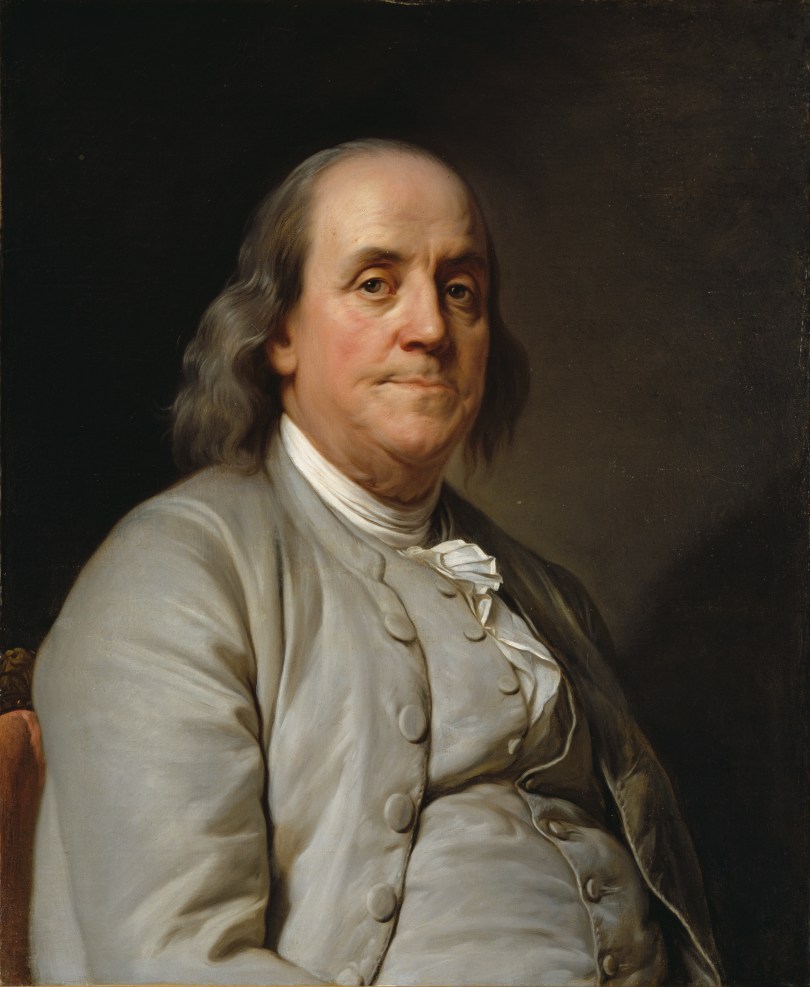
In looking through the extensive TPP archives, I’ve apparently only written the name “Benjamin Franklin” in a single post—9 May 2020’s SubscribeStar Saturday: Liberty and Safety.  Much like Franklin’s classic canard about trading liberty for safety and losing both, the lack of Franklin’s presence on this website is shameful.

That’s especially true considering that Benjamin Franklin is one of my personal heroes.  He was a skilled writer, editor, printer, inventor, politician, diplomat, wit, international playboy (seriously), statesman, and citizen.  He was the king of the nerds, at a time when nerds were celebrated not because of their weird Japanese body pillow fetishes, but because they were strong, smart, witty, and curious.

No single man’s life better exemplifies eighteenth-century colonial America.  Born in 1706 and passing in 1790, Franklin’s long life extended nearly the full breadth of that eventful century—eventful in large part because of him!

To read the rest of today’s MAGAWeek2023 post, head to my SubscribeStar page and subscribe for $1 a month or more!

MAGAWeek2023: George Whitefield

This week is MAGAWeek2023, my celebration of the men, women, and ideas that MADE AMERICA GREAT!  Starting Monday, 3 July 2023, this year’s MAGAWeek2023 posts will be SubscribeStar exclusives.  If you want to read the full posts, subscribe to my SubscribeStar page for as little as $1 a month.  You’ll also get access to exclusive content every Saturday.

America is a Christian nation.  At least, it was.  The Christian roots of the nation run deep, not just to the Founding (if we take “The Founding” to be in or around 1776), but far back into the colonial period.  Most readers will know the well-worn story of the Pilgrims—a group of Puritan Separatists who, while not seeking religious freedom for others, at least sought it for their own peculiar version of Christianity—and their arrival in Massachusetts in 1620 (the Southerner in me will be quick to note that, despite the Yankee supremacist narrative, permanent English settlement began in 1607 with the founding of Jamestown in Virginia—the South; the earlier, albeit failed, attempt to settle Roanoke was also in the South, in what is now North Carolina, in 1585).

But there is more to the history of Christianity in America than the Puritans—much more.  The colonies of British North America struggled through some fairly irreligious times (colonial Americans were much heavier drinkers than we are), and while denominations abounded—Tidewater Anglicans, Scotch-Irish Presbyterians and Catholics, New England Puritans, and Mid-Atlantic sects of various stripes—the fervor of American religiosity was at a low ebb in the late 1600s.  Economic prosperity following difficult years in the 1670s—King Philip’s War in New England, Bacon’s Rebellion in Virginia—led many to move away from the church.  In Puritan New England, where voting rights and citizenship required church membership (and church membership was not as easy to obtain as it is today; it required proof of one’s “election”), the Puritan-descended Congregationalist churches began offering “half-elect” membership, as there were so few citizens who could prove their “election.”

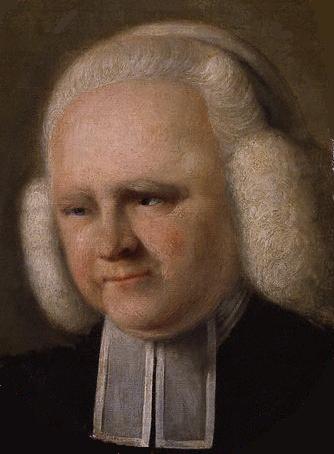
Into this void stepped the revivalists of the First Great Awakening.  In the 1730s and 1740s (give or take a decade or two), a series of religious revivals swept throughout England and British North America (the colonies).  These men—Charles Wesley, John Wesley, Jonathan Edwards, and George Whitefield, among others) took difficult, strenuous tours throughout England and the colonies to deliver the Gospel in a powerful, compelling way.

Their impact was immense:  preaching salvation and a personal relationship with Christ, these men united the profusion of denominations and theologies in the colonies with the universal message of Christ’s Gospel.  Granted, denominational and theological differences persisted—indeed, they proliferated, with John Wesley’s Methodism among the plethora of new denominations—but the grand paradox of the First Great Awakening is that, even with that denominational diversity, Americans across the colonies developed a unified identity as Christians.  Protestant Christians, to be sure, and of many stripes.  But that tolerance of denominational diversity, coupled with the near-uniformity of belief in Christ’s Saving Grace, forged a quintessentially American religious identity.

Most readers will be quite familiar with the Wesley Brothers, especially John, and we probably all read Jonathan Edwards’s powerful sermon “Sinners in the Hands of an Angry God” in high school.  But most Americans know precious little about the revivalist George Whitefield, whose prowess as a speaker and evangelist brought untold thousands to the Lord.

To read the rest of today’s MAGAWeek2023 post, head to my SubscribeStar page and subscribe for $1 a month or more!