

Pickup my newest release: The Galactic Menagerie! Use promo code obesekangaroos to take an additional 20% off all purchases on Bandcamp! Code expires at 11:59 PM UTC on Friday, 4 April 2025.
Today’s post is a SubscribeStar Saturday exclusive. To read the full post, subscribe to my SubscribeStar page for $1 a month or more. For a full rundown of everything your subscription gets, click here.
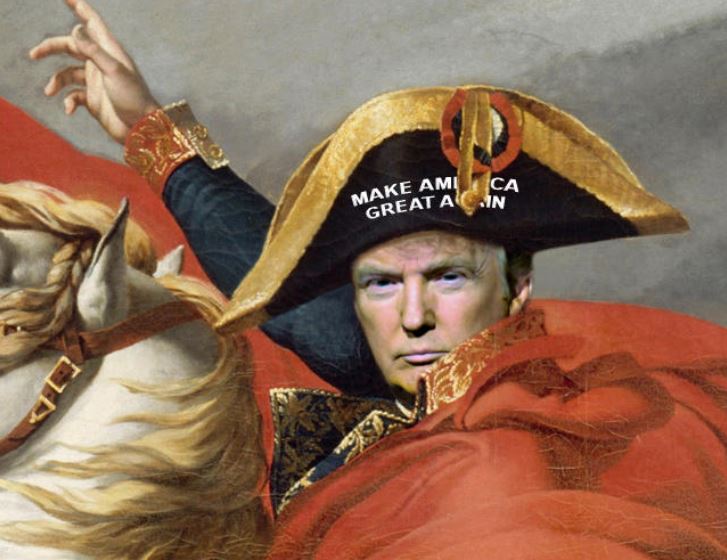
It has been absolutely remarkable to witness the yuge cultural-political shift since President Trump returned to office. A flurry of executive action, coupled with robust efforts to gut USAID and even federal personnel, has subverted all expectations of what a president can do. That a flurry of lawsuits have arisen in response to these actions does not seem to have dampened the energy of our very energetic executive.
The contrast with the last administration is glaring, not just for the sheer difference in activity—from zero to 100—but the quality of the executive actions taken. President Biden—or, more likely, the invisible cadre of swamp dwellers who ran the government during the Jill Biden Regency—weaponized the federal government to persecute conservatives. President Trump has weaponized the federal government to persecute… the federal government!
There is a common fantasy among doughy, slightly-above-average-IQ white guys of the libertarian king or dictator, someone who paradoxically wields the full power of the government to decrease its power. The concept has some historical precedence, such as kings and emperors through history who have wielded power with a light touch, allowing their subjects to flourish. Han China, England since at least the Stuarts, even the Mongols largely left people to pursue their own interests and passions and enterprises, so long as everyone paid their taxes and showed up for military service.
But the idea is a fantasy because it is unreal, impossible, in any real sense. “Libertarian” means different things to different people; for most libertarians, it means smoking a lot of pot and being a weirdo in public. The more generous definition would probably describe a system in which individuals pursue their own interests with limited or no government interference, in which the non-aggression principle is always applied.
Libertarianism is a pipe dream, though, because the non-aggression principle—the idea that my right to swing my fist ends where your nose begins—is not always applied. Government exists in large part to protect us from a.) foreign invaders who don’t respect a nation’s sovereignty and b.) fellow citizens who don’t respect our bodies, homes, and property. We have police because people sometimes act violently, and sometimes no amount of economic incentive can prevent a Friday night at the bar from turning into a scene from Roadhouse (1989). If we were driven purely by economic incentives, no one ever get a DUI or an aggravated assault charge—or only those rich enough to pay the fines or to skirt jailtime could afford the luxury of reckless criminal behavior.
But for all of its deficiencies, the core of libertarian thought is the idea that the government that governs least, governs best. That’s not always the case, but it’s a broadly good principle. I get nervous every time I get a property tax bill for my house or my car, because I know that, even if I send in the check, if some bureaucrat makes a mistake, I could still lose everything—and the burden of proof would be on me to prove that I paid my taxes and that they made a mistake. If that seems paranoid, think about the myriad stories of people losing their homes or farms or cars—or getting arrested!—because someone in some distant office made a clerical error.
Enter Donald Trump. Trump is no libertarian—thank God!—but he possesses the very American impulse that most Americans want to be left alone to live their lives and to do their business relatively unmolested by the guarantors of their domestic tranquility: the federal, State, and local governments.
With that in mind, his sweeping executive action so far—accomplished largely via executive orders—smacks flavorfully of an elected king wielding his power to restore more power to the people—and to reform the federal bureaucracy.
To read the rest of this post, subscribe to my SubscribeStar page for $1 a month or more.

 The Portly Politico