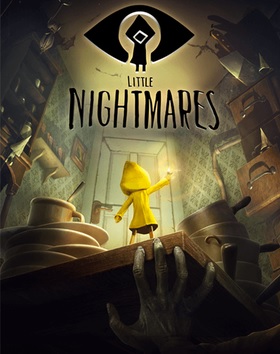
Ponty’s Friday Video Game Review: Little Nightmares 2

What’s better than a spooky game about evading monstrous grotesqueries?  A sequel to that game.

A review of that sequel is better still, and that is what good ol’ Ponty offers up today.

As I noted last Friday, I’ve owned Little Nightmares on Steam for some time now, but I haven’t fired it up yet.  I doubt I will have had an opportunity to do so in the last week, but I’m hoping to dip into it (and some other games) soon enough.  Ponty’s reviews have me itching to try both installments of this macabre little gem—and possibly to revive my dead-in-the-water Morrowednesdays segments.

There’s not much else to say, despite my increasingly legendary ability to write introductions.  I’ll let Ponty take it from here; so with that, here is Ponty’s review of Little Nightmares 2:

Read More »

TBT^4: On Ghost Stories

Ah, yes—ghost stories.  They are perhaps my favorite variation on the short story form.  I always find it fascinating that the Victorians liked their ghost stories at Christmastime, but it makes sense—what else are you going to do on those long, dark, cold nights?  Best to huddle around the fire and spin some yuletide yarns.

Every culture has its ghosts, spooks, haunts, haints, devils, and the like.  As I’m writing this post, I’m reading about the boo hags of the Gullah culture of the South Carolina Lowcountry.  Apparently, homes in the Charleston still feature porch ceilings painted “haint blue” to ward off evil spirits.

Looks I’ll be heading to the hardware store for some Behr Premium Ultra Lowcountry Haint Blue.

With that, here is 14 October 2021’s “TBT^2: On Ghost Stories“:

Read More »

Son of Sonnet: The Ballad of Forgotten Dreams

Son of Sonnet is back with a mildly post-apocalyptic poem.

The premise is intriguing; Son tells me the request was for “a poem about being a feminist in a world where you’re the only female human left. Every other human is a male.”  That sounds like the premise of a 1970s sci-fi flick!

Naturally, it’s not a great existence, but the feminist seems to realize the error of her ways.  These lines were particularly poignant:  “I learned a lesson through romance/That man may build for woman’s sake.”  How very true—I’ve accomplished a great deal in my life simply because I wanted to impress women.  I think that’s probably true for most men.

With that, here is Son of Sonnet’s “The Ballad of Forgotten Dreams”:

Read More »

Monday Morning Movie Review: Portly’s Top Ten Best Films: #7: Krull (1983)

While we’re still outside of the Top Five—where the rubber really hits the road, and the picks have to correspond to actual, objective quality, and not just the passing whims of two amateur film reviewers—I’ve got to squeeze in another personal favorite.  To say this week’s pick is one of the “best” films is, perhaps, a stretch.

Really, no “perhaps” about it—it was a box office bomb and, while it has attained a certain cult status, it has not risen to the heights of many films with that dubious distinction.  Many “cult classics” are viewed overly fondly, as if to counteract the overly negative reviews at the time of the film’s release.  My #7 pick has enjoyed a bit of an improved reputation since its release, but its reviews are still mixed.

But for me, it’s a great film—a bit of swashbuckling, sci-fi/fantasy fun that bends and blends genres like a wet noodle in a food processor:  somehow, the finished product comes out tasting pretty good, even if it doesn’t make any sense.

Should 1983’s adventure Krull go on my honorable mentions post?  Probably.  Am I placing it higher on my list than the (objectively better) films behind it?  You bet.

Read More »

Lazy Sunday CLXVII: More Movies, Part XXXI: Midweek Myers Movie Reviews, Part II

When putting together this weekend’s edition of Lazy Sunday, I thought that surely my longtime reader, contributor, and Internet friend (eFriend, perhaps?) Audre Myers had submitted more than these remaining two Midweek Myers Movie Reviews.  I’m sure she has submitted film reviews prior to the institution of this semi-regular, roughly-twice-monthly feature, but I’m too lazy to go scouring my vast archives for them (it is Lazy Sunday, after all).

But these are two pretty good ones, and while I usually like to feature posts in triplets for LS, I figured—as my beloved Meat Loaf, my God Rest His Soul, once sang—two out of three ain’t bad:

  • Midweek Myers Movie Review: Finding Neverland (2004)” – According to Audre, “Finding Neverland is the story of how J. M. Barrie came to write his best known play, Peter Pan.”  High Britishness, indeed, albeit with Johnny Depp in the main role.
  • Midweek Myers Movie Review: Hidden Figures (2016)” – Audre offers up a review of a movie that, while not necessarily historically accurate (NASA was fairly progressive on race even in the 1950s), at least sounds entertaining.  You’ll also learn that a “computer” is not just a beige machine to which we chain ourselves for eight hours a day.

Thanks again to sweet Audre for all of her contributions.  Here’s to more movie reviews to come!

Happy Sunday!

—TPP

Other Lazy Sunday Installments:

SubscribeStar Saturday: The Great Coarsening

Today’s post is a SubscribeStar Saturday exclusive.  To read the full post, subscribe to my SubscribeStar page for $1 a month or more.  For a full rundown of everything your subscription gets, click here.

A perennial saw of the conservative pundit is the decline of public morality.  Indeed, it is so well-worn that the ignorant use it as evidence that, because people have always complained about “kids these days,” it must mean that we’re just fuddy-duddies who are painfully out of touch.  Why, elders have always complained about their kids!

Of course, that’s not true.  The idea of a “generation gap” is a relatively modern phenomenon.  For most of human history, children grew up to be very much like their parents (indeed, I would argue that is still the case, just with the addition of angsty, extended adolescence tossed into the mix).  Yes, humans have always recognized the folly of youth—Proverbs frequently refers to children and young people as “fools,” or taken with folly—but it wasn’t considered to be either virtuous or some massive, unbridgeable gap.

But in a world with no connection to the past, one which exists in an eternal Present, it is little wonder that we witness—even encourage!—such a separation from our ancestors.  The United States particularly suffers from the pedestalization of youth:  we have come to believe that youngsters possess all wisdom, being spared the corruption of Reality—of real life.

The opposite, of course, is true.  Yes, there is something admirable about the energy and certitude of youthful moral righteousness, but it is often a quite short-sighted self-righteousness.  That’s not the fault of young people—they are, after all, young and inexperienced—but the traditional expectation was that they would grow out of that sunny idealism as Reality and Truth taught their hard lessons.  We should remain optimistic and thankful in the midst of adversity, but true foolishness comes from ignoring these hard-taught lessons.

That’s all a very long preamble to get to the thrust of this piece:  we are witnessing The Great Coarsening of civil and social life, in every arena:  politics, culture, art, manners, customs, etc.  How often do we hear the F-word dropped casually in everyday conversation—the way Nineties Valley Girls used the word “like”?  As a schoolteacher, I overhear this word frequently, as students and adults treat it as, essentially, a sentence enhancer.

Here is where the charges of fuddy-duddiness are most frequently leveled: “Oh, come now, Port, who cares about some word?”  It’s not the word itself, per se—although that word is exceptionally foul—but what it represents.

Or, rather, what it’s ubiquity represents:  the aforementioned Great Coarsening.

To read the rest of this post, subscribe to my SubscribeStar page for $1 a month or more.

Ponty’s Friday Video Game Review: Little Nightmares

It’s the witching season—the time for all sorts of ghoulish, spooky things to go down—and what better way to toy with dark forces than via video games?

Good ol’ Ponty has been dying to review this game for some time now, and he has finally delivered the goods—tasteful bedroom photos of his allegedly hot girlfriend.

Oh, wait—wrong e-mail [just kidding, Tina—Ponty wouldn’t do such a thing, and I wouldn’t ask]!  No, no, Ponty has offered up his review of Little Nightmares, a game of Tim Burton-esque grotesquery.

It’s long sat in my Steam library, just waiting to be played; after the Spooktacular this weekend, I will have to do just that!

With that, here is Ponty’s review of Little Nightmares:

Read More »

TBT^2: Things That Go Bump in the Night

It’s the so-called “spooky season” again, which naturally turns my mind to things not seen.  Lately, I’ve been pondering the pre-modern mind, and how differently pre-moderns saw the world.  It’s hard for us to wrap our minds around it.  What must it have been like to fear God—naturally (as in, without the scientistic arrogance we moderns seem inculcated into at an early age)?  To suspect mercurial forces at play in every tree or lonely bog?

There’s so much we don’t know; so much we can’t see (even if it’s caught on video).  Ironically, for all of our assuredness about how the world works, we find ourselves in an age of constant epistemological confusion, one in which we seem incapable of knowing what is True or not.

Heady contemplations, indeed.  The possible existence of Bigfoot or any other number of odd creatures, corporeal or otherwise, is not insignificant:  if supernatural beings exist, God Exists (or, more probably, because God Exists, there are all manner of spirits and angels and the like at work, just beyond our perception).

Spooky stuff!  With that, here is “TBT: Things That Go Bump in the Night“:

Read More »

Midweek Myers Movie Review: Hidden Figures (2016)

We’re back with another movie review from Audre Myers, who is tossing in reviews of her favorite flicks whenever the mood strikes (or whenever I e-mail her asking her to contribute something).

She offers up her review of the 2016 film Hidden Figures, about three black women “computers” working for NASA.  It was a darling of the critics for its frank depiction of segregation.

Unfortunately, some its iconic scenes—like the lady having to walk half-a-mile to use a segregated bathroom—are Hollywood hogwash.  The segregated facilities were abolished in 1958—three years before the films setting—and while there were segregated restrooms in one part of NASA’s facilities prior to that year, they were unlabeled.  Katherine Johnson, one of the titular “hidden figures,” unwittingly used the whites only bathroom for years, and ignored the one complaint that was ever issued without any further escalation.

These inaccuracies—perhaps dramatic artistic license?—don’t mean segregation wasn’t real—it certainly was—but it seems that NASA was not exactly the hotbed of segregationist sentiment that the film depicts.  That makes sense—an organization reaching for the stars probably isn’t all that concerned about such earthbound issues as skin pigmentation.  Besides, there are plenty of alien species we can discriminate against in the distant future.

With that, here is Audre Myers’s review of 2016’s Hidden Figures:

Read More »