Revival

My little church has been hosting revival services all week.  Tonight is the last night of services.

For those that are not familiar—and even here in the Deep South, I am finding lots of churchgoing Christians who have no idea what a “revival” is—revivals are annual or semi-annual events during which churches hold additional nights of services, usually with a guest preacher or preachers.  The purpose of revival is twofold:  1.) to revive the congregation (as the name suggests) with inspiring teaching and preaching and 2.) to encourage additional evangelism in the community.  While Jesus Calls Christians to the Great Commission all the time, revival makes going to church a bit more of an event—“come hear this dude from the town over preach tonight!”

My pastor has an extensive network of other pastors and Biblical scholars in the area, so he always finds some great preachers.  Some of them are the old-school Pentecostal types—lots of vocal crescendos and emotionalism—while others are more scholarly, with deep theological insights.  I tend to prefer the latter, but it’s always a good variety, swinging from passionate piety to intellectual rigor.

If you would, dear readers, say a prayer for revival tonight.  I have invited several people—some former students, mostly—to attend.  A number of them indicated they’d likely be able to come out tonight.  I know how these things sometimes go—not wanting to offend, vague quasi-commitments are made, only to be broken—often at the last possible moment—with various sudden emergencies and such.  I understand, but I would ask your prayers that these young men and women make an appearance, and that the Word delivered tonight strikes a chord and/or fulfills a need.  I don’t know the hearts of all of these invitees, nor do I know their spiritual condition, but if any are lost, please pray that for their salvation, either tonight or in the future.

I’m trying to evangelize more and to plant the seed of the Gospel in the hearts of others.  I’ve failed to do so far more often than I care to admit.  Please pray that the seed falls on fertile ground.

God Bless!

—TPP

SubscribeStar Saturday: Don’t Panic—God Is with Us!

Today’s post is a SubscribeStar Saturday exclusive.  To read the full post, subscribe to my SubscribeStar page for $1 a month or more.  For a full rundown of everything your subscription gets, click here.

Introduction

What do we do when it feels like God Is nowhere to be found?  That question comes up again and again in the Gospels and, indeed, throughout Scripture.  Of course, we know that God Is Always with us; at least, we know that intellectually.  But there are times when we feel that He Has Abandoned us, even when we know that He Keeps His Promises.

Let us turn to tonight’s passage, the unusual story of the Boy Jesus at the Temple during the Feast of Passover:

Luke 2:41-52 (ESV):  The Boy Jesus in the Temple

41 Now his parents went to Jerusalem every year at the Feast of the Passover. 42 And when he was twelve years old, they went up according to custom. 43 And when the feast was ended, as they were returning, the boy Jesus stayed behind in Jerusalem. His parents did not know it, 44 but supposing him to be in the group they went a day’s journey, but then they began to search for him among their relatives and acquaintances, 45 and when they did not find him, they returned to Jerusalem, searching for him. 46 After three days they found him in the temple, sitting among the teachers, listening to them and asking them questions. 47 And all who heard him were amazed at his understanding and his answers. 48 And when his parents [alternatively, “they”] saw him, they were astonished. And his mother said to him, “Son, why have you treated us so? Behold, your father and I have been searching for you in great distress.” 49 And he said to them, “Why were you looking for me? Did you not know that I must be in my Father’s house?” [alternatively, “about my Father’s business”] 50 And they did not understand the saying that he spoke to them. 51 And he went down with them and came to Nazareth and was submissive to them. And his mother treasured up all these things in her heart.

52 And Jesus increased in wisdom and in stature [alternatively, “years”] and in favor with God and man.

Context

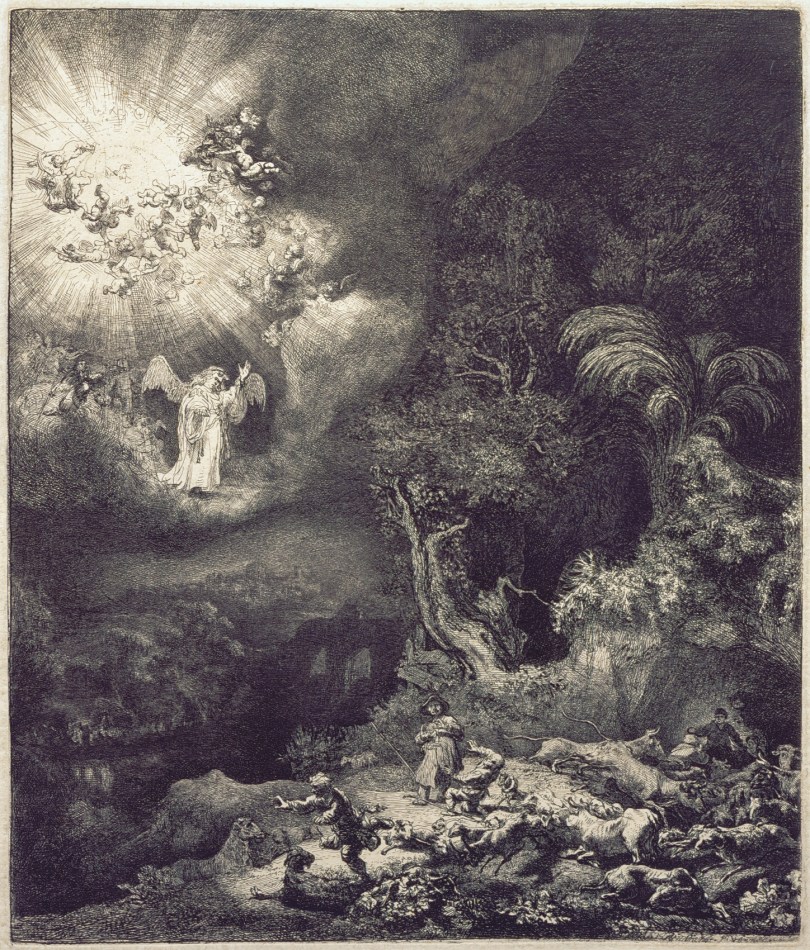
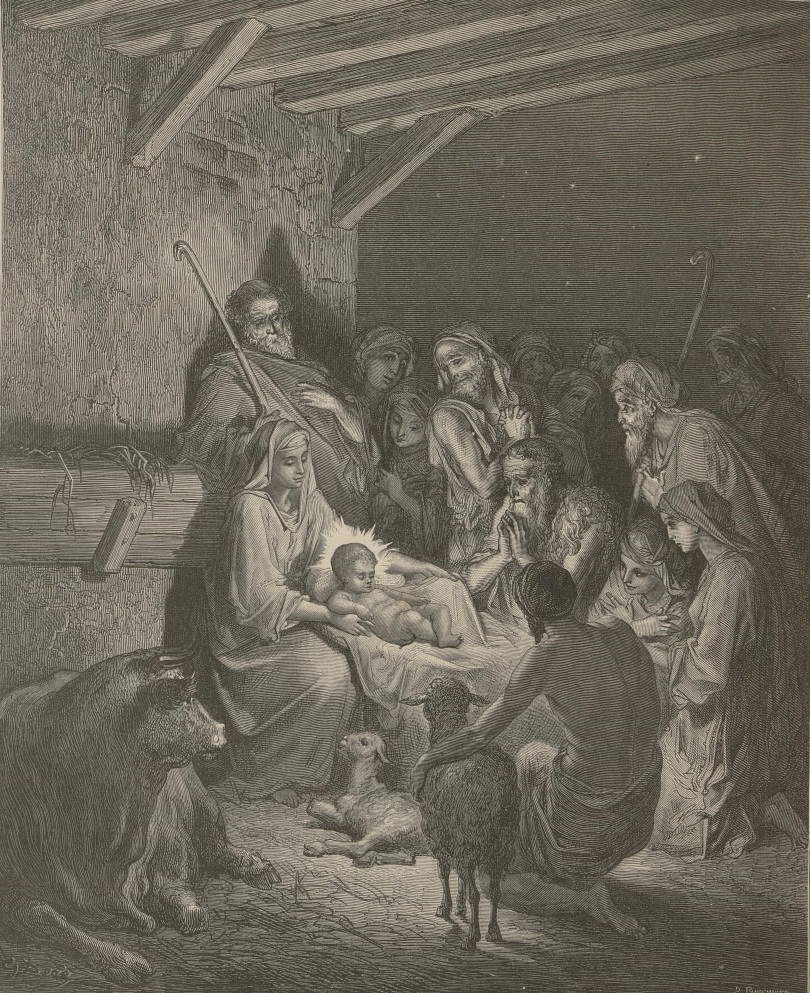
I have always found this passage to be particularly confounding.  It comes at the end of the long, famous, second chapter of Luke, the chapter we all know so well, and which we read aloud every Christmas.  The chapter consists of several scenes from Jesus’ early Life:  His miraculous Birth (v. 1-20); His Circumcision and Naming (v. 21); His Dedication at the Temple and the incredible story of Simeon (v. 22-35); Anna’s praises to God, and her instant recognition of Jesus as the Messiah (v. 36-38).  Then Mary, Joseph, and Jesus return to Nazareth until this passage.

To read the rest of this post, subscribe to my SubscribeStar page for $1 a month or more.

Open Mic Adventures XXII: “Blessed Assurance”

One of my favorites hymns is “Blessed Assurance,” the beloved tune from blind lyricist Franny Crosby and pianist Phoebe Knapp.  They wrote the hymn in 1873.  Knapp played the melody on the piano and asked Crosby what the melody “said,” and she said, “Blessed Assurance, Jesus is mine.”  Thus, history was born.

I love playing this hymn, and had the opportunity to play it with our congregation this past Sunday.  I decided to take a quick recording before service.

Read More »

Open Mic Adventures XIV: “Hark! The Herald Angels Sing”

The title of this week’s piece is a bit of a misnomer:  it’s not from an open mic night, but from a morning church service.  There’s also no singing—at least, not from me!  I’m just tickling the ivories.  *Tickle, tickle!*

The piece here is one of my favorite Christmas carols, “Hark! The Herald Angels Sing.”  We did sing it for morning service this past Sunday, 27 November 2022 at my little country church, but I was warming up and having a bit of cheeky fun beforehand.

Read More »

Lazy Sunday CXLVII: Friends, Part X

It’s the tenth edition of Lazy Sunday posts dedicated to looking back at Supporting Friends Friday features.  I think after this Sunday I’m going to give the SFF retrospectives a break for a bit, as I’ve nearly caught up to the present day with them.

This weekend’s mix is of a more literary and theological bent:

Happy Sunday!

—TPP

Other Lazy Sunday Installments:

The Passing Seasons of Life

My pastor delivered an interesting sermon this past Sunday (23 May 2021) entitled “Recognizing the Passing Seasons of Life.”  The sermon pulled from the famous passage from Ecclesiastes 3, explaining that “To everything there is a season” and there is “a time for every purpose under heaven.”

I’ve always loved Ecclesiastes and its central insight that without God, everything is meaningless.  The perpetual turning of the seasons—the cycle of birth, preparation, harvest, and death—is similarly meaningless—an endless cycle—without God.

Pastor Monday took a slightly different approach, one that is still very important:  we so often abuse, misuse, or waste the time we have.  The season of preparation—planning ahead, planting our seeds, tending to them, etc.—is frequently squandered; as a result, the harvest is lacking.  We all want the harvest without the preparation, but a harvest that lacks preparation is no harvest at all—or a harvest of dust.

Read More »

Memorable Monday: Away in a Manger

Yesterday marked the first December church service of the year, so I was finally able to whip out some Christmas carols for morning service.  My pastor’s personal favorite carol is “Hark! The Herald Angels Sing,” so that was our first congregational singing.  But he requested an interesting pick for the second singing:  “Away in a Manger.”

“Away in a Manger” is not always top-of-mind for me when it comes to Christmas carols, but it possesses the same sweet simplicity (and triple feel) of “Silent Night.”  It’s also very easy to play, which makes it nice to crack open when practice time is short (“Hark!,” by contrast, is a bit more complicated, especially with its profusion of secondary dominants and moving to minor in the last couple of phrases).  The melody is very sweet, and easily harmonized in thirds.

I’ll be writing about more Christmas carols this season.  I hit most of the high-profile ones last year, so it’s going to be fun to dig into some of the more obscure carols over the coming weeks.  But to ease into Monday, I figured I’d look back to last year’s post on “Away in a Manger” [note:  I’ve cut out the lengthy preamble about the pending impeachment at the beginning of the original post, so as to focus exclusively on the hymn itself]:

Read More »

The Joy of Hymnals II: The Cokesbury Worship Hymnal

This week I’ve been teaching and learning a great deal about George Frideric Handel, the great German composer who became, over his long life, a great British one.  In discussing Handel and other Baroque composers with my students, we also veered into the world of hymns.

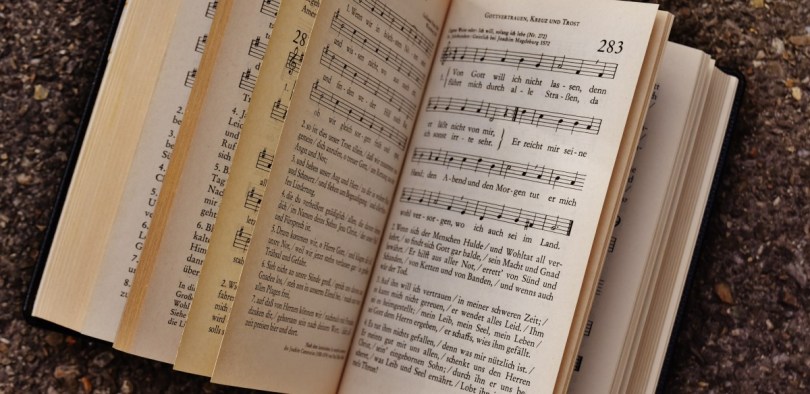
Hymns were and are important in Protestant congregations as simple, memorable tunes with theologically rich texts.  Hymn melodies are often based on folk tunes or popular compositions.  In some cases, such as the lovely Christmas carolSilent Night,” the text is written first, then set to music (indeed, most hymns, being based on Scripture, evolved this way).  Sometimes the tune is written, then an enterprising poet sets the text.  Such was the case with Isaac Watts, who set his text for “Joy to the World” to a Handel melody.  And, of course, there are hymns written and composed by the same person.

In talking about hymns, I brought to my students a slender little hymnal in my small collection of them, The Cokesbury Worship Hymnal.  From what I can gather, my copy was published in or after 1966, when the copyright from 1938 was renewed.  There is a stamp on the inside front cover stating that the hymn book once belonged to Carteret Street Methodist Church, which I thought was in Charleston, but appears to be in Beaufort, South Carolina.  The hymnal includes 296 hymns, with fifty responsive readings—a good collection, but slim by the standards of a pewback hymnal.

Read More »

TBT: The Joy of Hymnals

It being October, I tend to focus on the spookiness of the season.  I love Halloween, ghost stories, and scary movies, but it’s important not to get too bogged down in the chills.

So as I was going through posts from October 2019, I stumbled upon one of my old favorites:  “The Joy of Hymnals.”  My small church roped me into playing piano for Sunday morning services maybe two years ago, and it quickly rekindled an old love of hymns and hymnals.

Hymnals are my favorite items to find in old second-hand shops and antique stores (the latter of which often selling them at an egregious markup).  It’s fun to see which hymns do—and, more importantly, don’t—show up in any given hymnal.  I particularly like slender volumes, the kind that were meant for carrying from service to service or camp meeting to camp meeting, and which tend to possess hymns from the canon, if such a thing exists, of hymnody.

I even recorded and released a very lo-fi EP, The Lo-Fi Hymnal, which consists of crude recordings of my Sunday morning playing.  That short collection also includes a PDF version of today’s TBT feature.

Here is “The Joy of Hymnals“:

Read More »

The Joy of Christmas Carols

Christmas puts me in a musical mood. For one, I’m somewhat contractually-obligated to put on a Christmas concert, which will consume most of my free time this week, so I’d better embrace the Christmas spirit—or else. But it’s not hard to get excited about the iconic music of the season.

(Also, Milo Yiannopoulos—the actual Milo—shared my post about his views on Romantic music, which helped make it the most trafficked post of the year so far. That was incredibly gracious of him to do, and it’s further boosted my excitement for playing and writing about music.)

As I wrote in an earlier blog post on hymnals, I’ve gradually taken over piano playing at my little Free Will Baptist church. We sing many of the traditional hymns that were written and popularized in the nineteenth and twentieth centuries, as well as some earlier selections. Shape-note hymns are often hard to play, with big intervalic leaps in the melodies and surprisingly complex harmonies.

Take that melodic variety and harmonic complexity and multiply it by a factor of ten, and you’ve got Christmas carols.

Read More »