TBT^16: It’s a Thanksgiving Miracle!

In the tradition of the past few Thanksgivings (2020, 2019, 2018, and 2017), I’m reblogging my annual “It’s a Thanksgiving Miracle!” post, originally from Thanksgiving 2017 (and on the old blog).  The Saturday before that Thanksgiving I fell from a ladder and broke my left wrist (and also got a nasty gash in my left leg).  I was thankful to be alive, and to have avoided brain damage (my head, thankfully, was unscathed).

Usually this part of a TBT post is italicized, but to help keep it clear which year’s post you’re reading, I’m alternating between italicized and non-formatted text.  I’ve also added some headers to keep the prior year’s posts straight.

It’s a been a good year—a very busy one, but a good one.  It seems that life is beginning to resume its usual rhythms (and tempo—mine is, apparently, prestissimo).

In looking back at last year’s commentary, I see quite a few changes from 2020 to 2021.  For instance, last year I enjoyed distance learning; the few times we’ve done it this year, I’ve found it unsatisfying and ineffective (but I still like working from home—ha!).

On a brighter note, my private lessons empire has come roaring back.  From a low of just one loyal student, I am back to teaching around ten to fifteen lessons per week—sometimes fewer than ten, rarely more than fifteen, and often somewhere in between the two—which has been fun, lucrative, and exhausting.  I love teaching private lessons; the problem I am running into now is that, in order to accommodate the maximum number of students, I’m having to eat into time spent on other things—writing, lesson planning, and grading.  It’s worth it financially, and lessons have become the highlights of my days, but it’s definitely created some time constraints, especially when tacked on after (and, increasingly, during) a busy school day.

Regardless, I am thankful for the opportunity to work with these students, and for the funds that come with teaching them.  I now have two students who take lessons twice a week, which is fabulous, and I’m looking to add two or three more in January.  I’m looking into shifting students at comparable levels into group lessons to lighten my load a bit, but also out of sheer necessity—I’m literally running out of times to slot students.

Beyond lessons, it has been a very eventful year.  I was elected and re-elected to Lamar Town Council; wrote and published a bookThe One-Minute Mysteries of Inspector Gerard: The Ultimate Flatfoot; and got a dogMy SubscribeStar page is up to ten subscribers, though two of those are inactive; at one point, I’d reached eleven!

That’s all to say that I have much to be thankful for this year.  I’m also very thankful to you, my readers and commenters.  The comments thread on the blog has really come alive in the past few months, and has brought a refreshing energy that motivates me to keep writing.  Thanks to all of you for your continued support, in whatever way that support comes.

With that, here is Thanksgiving 2020’s “TBT^4: It’s a Thanksgiving Miracle!“:
Read More »

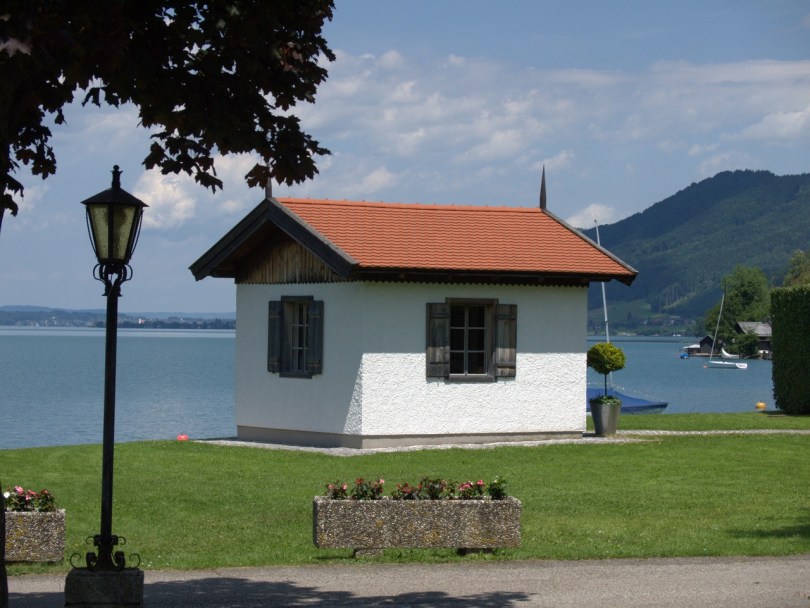
Mahler’s Composing Shack

While teaching Pre-AP Music Appreciation last school year, I stumbled upon an excellent YouTube channel, Inside the Score, which features videos explaining and analyzing some of classical and Romantic music’s greatest works and composers.  It’s a wonderful resource for exploring famous works in greater depth, and has greatly enhanced my own appreciation for music.

At some point, I ended up on Inside the Score‘s mailing list, and I receive little e-mail newsletters from the site periodically.  These are like delicious, bite-sized treats compared to the longer videos (which themselves are by no means daunting, coming it at around twenty minutes a pop).

Recently, one of these morsels found its way into my inbox:  a look at Gustav Mahler‘s daily routine.  Mahler wrote incredibly long symphonies—to this day, the single longest piece of music I have ever sat and listened to live is Mahler’s Fifth Symphony, which clocks in at an impressive seventy-five minutes—and did so while touring the world as a conductor.  According to Inside the Score, Mahler had summers off to compose at a little shack on the Attersee in Austria, and stuck to a fairly consistent schedule.

Read More »

TBT^2: The Joy of Autumn

Well, the first day of autumn was yesterday, although my Middle School Music students came into class Tuesday saying that their Geography teacher told them 21 September, rather than 22 September, was the first day of this glorious holiday.

I have little idea when the seasons calendrically begin, other than it’s always in the low-twenties of the month:  Spring in March, Summer in June, Autumn in September, and Winter in December.  As I’ve noted before on this site, in South Carolina it’s all pretty much one big season—summer—with some intermittent sprinklings of the actual season throughout the year.  That can even mean a cold front in the summer (Thy Will Be Done) or an unseasonably warm “Indian Summer” in mid-January.  I’ve sweated on New Year’s Day and Thanksgiving many times, and it’s always muggy on Halloween.

But I digress.  The discussion about when autumn really begins (some Bing!ing revealed it is 22 September this year, not 21 September) led to an impromptu crash course in songwriting.  We began listing all of the qualities of the fall, and the qualities of the then-soon-to-be-departing summer.  The students then crafted those into verses (about all the fun summertime stuff that was disappearing), with the chorus being all about how great the autumn is:  pumpkins, scarecrows, falling leaves, etc.

The kids ate it up.  I made up some cheesy crooner melody to go with it as a placeholder, but a precocious seventh grader began experimenting with an unusual C-Db-Eb chord sequence, which completely changed the melody.  I broke the students into groups to begin writing new verses, and another student took it upon herself to compile the lyrics into a master Google Doc.  Another student—a visual artist trapped in Music class—supplied the artwork for our soon-to-be-hit single, featuring a scarecrow and some other creature dancing around a flaming pumpkin (it’s pretty awesome).  Our little scribe-compiler mentioned that we needed a bridge, so we’ll have to get hopping on that.

It was completely unplanned—one student even suggested, snarkily, that I hadn’t planned a lesson that day, so I created this one out of thin air.  It’s only half true:  I did have a lesson planned—we were going to write, clap, and count rhythm lines—but the discussion of autumn sparked the idea for a much more engaging lesson about writing songs (which is, essentially, writing poetry, but better—there’s music attached!).

Anyway, here’s to autumnal weather to come—and good, middle school-penned songs to go with it.

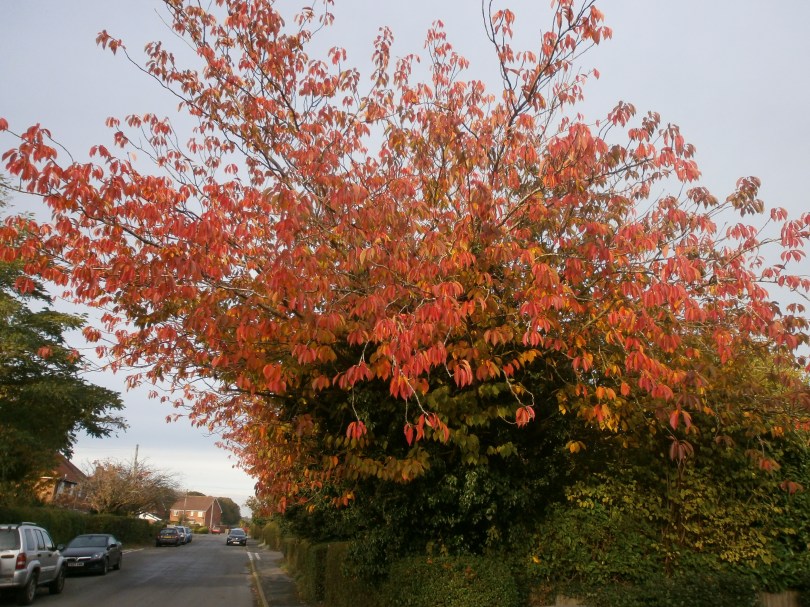
With that, here is “TBT: The Joy of Autumn” (thanks to Pontiac Dreamer for today’s picture!):

Read More »

The Joy of Renaissance Music: Palestrina’s “Pope Marcellus” Mass

It’s another school year, which means another year going through the history of Western music in Pre-AP Music Appreciation.  This week we’re diving into Renaissance music, after spending last week covering the music of the Middle Ages.

Contrary to popular belief, the Middle Ages were not a period of depressing darkness, but rather a lively age.  I certainly wouldn’t want to be a peasant pushing an ox cart full of dung, but that peasant knew his place in the universe, in the sense that he knew he was part of an ordered cosmos with God at both its head and its center.

More on that another time, but I mention it to note that the Renaissance would not have been possible without that long age of faith in the Middle Ages.  Still, the Renaissance Period—variably dated, but starting roughly sometime in the fifteenth century, and extending to the seventeenth century—was a period of increased interest in the art and literature of ancient Greece and Rome, especially the human realism depicted in the art of those great civilizations, both a continuation of and a departure from the Middle Ages.

It also saw the declining influence of the Catholic Church in Europe, especially in the wake of the Protestant Reformation of the sixteenth century.  As Protestantism and other social forces broke the Church’s monopoly on education and its dominance over art and music, Catholicism mounted a Counter-Reformation, aimed at both reducing the influence of Protestantism and reforming real abuses within the Roman Church.

That effort, naturally, involved revisions to music.  Catholic priests denounced the increasingly theatrical nature of church music, decrying it as distracting from the simple message of the Gospel and the sacred Latin text, instead serving as gaudy entertainment for Mass goers.  Much like the megachurch arena rock concerts of today, services had become garish and maudlin, a reflection of the corruption within the Church.

It was in this context that Giovanni Pieluigi da Palestrina composed his greatest works.  According to Roger Kamien in Music: An Appreciation (the eighth brief edition, which I use with my students), Palestrina composed some 104 masses and 450 other sacred works, and his music became, essentially, the gold standard of church music until modern times (“masses” in the musical context are works built around five sung prayers, the Kyrie, Gloria, Credo, Sanctus, and Agnus Dei, not to be confused with the Catholic service).

Read More »

Lazy Sunday CXXIX: Friends, Part I

Back in June, I started a new feature on non-Bandcamp FridaysSupporting Friends Friday.  It’s a small way to highlight and support the works and talents of my various friends, of both the IRL and online variety.

Now that I’ve written several of these posts, it seemed like a good time to look back at them.  The three this week are all good friends I know personally—indeed, they all live within forty-five minutes of me—and we have a musical connection.  The first friend featured is a poet, but we met at local open mic nights.

Happy Sunday!

—TPP

Other Lazy Sunday Installments:

Tip The Portly Politico:  Support quality commentary on politics, education, culture, and the arts with your one-time donation.

***NOTEThis link is NOT a subscription to my SubscribeStar Page; it is for a one-time donation/tip via PayPal. To subscribe to my SubscribeStar page, use this URL:   https://subscribestar.com/the-portly-politico***

TBT: Benjamin Britten’s “The Young Person’s Guide to the Orchestra”

The new year school year is back into full swing, with this week being the first full week of classes.  Needless to say, yours portly is tired, but very much enjoying the academic year so far.

I’m teaching Pre-AP Music Appreciation again this year, so I’m excited to dive back into some of the works we discussed last year—and some new ones!  Of course, we’ve kicked the year off with a listening to “The Young Person’s Guide to the Orchestra,” a favorite for introducing orchestral instruments.

My Pre-AP Music class this year is quite small—just five students—which makes for a more relaxed classroom environment.  We’re able to explore tangents as they arise (and, based on my frequent use of em dashes and parentheses, you can imagine I go off on them frequently), and generally take the time to enjoy the music, which the students seem to be doing.

I don’t have much more to add that I didn’t write a year ago.  Britten ingeniously weaves a whopping thirteen variations on a Henry Purcell theme, featuring nearly every instrument in the orchestra—including the percussion section!—in solo or soli.  Even the neglected double basses get some love with a melody of their own.

With that, here is 31 August 2020’s “Benjamin Britten’s ‘The Young Person’s Guide to the Orchestra’“:

Read More »

Back to School 2021

Well, after starting back to work Monday a week ago, we’re finally back at school today.  We’re one of the latest schools to start back in our area—my county’s school district started back classes last Monday, and Florence County schools resumed on 2 August 2021—but it still seems too soon.  The Florence start date seems insanely early as far as I am concerned, but they’re transitioning to a semi-year-round model, in which the students will get a week off in October and February, as well as some other juicy breaks.

Of course, any time off is never quite enough, is it?  I often find myself thinking, “if I only had one more weekend to finish this up” or “I really need another week of break so I can work on writing.”  That said, during the peak of The Age of The Virus in 2020, when I had virtually limitless free time, I didn’t complete any of the big projects I had set aside for myself.  That puts to the lie the idea that more time necessarily means getting more done.

Indeed, I often find that I am more productive when working against a deadline.  As I’ve gotten older and more experienced—albeit not much wiser—I’ve learned to plan ahead, and to churn out a great deal of work in long stretches of focus, in order to save me some time later.  That’s a necessity with my crazy schedule, and helps keep me from getting caught flat-footed by some unanticipated deadline or task too often.

Regardless, school is starting back today, and things are (mostly) back to normal—no more remote learning, no students tuning in from their cars or bedrooms to class, no more mandatory masks (again, mostly) [update:  we have received word that we are starting the year with masks—nooooo!].  I’m hoping it’s going to be a normal-ish academic year.

Read More »

SubscribeStar Saturday: Schedule Roulette

Today’s post is a SubscribeStar Saturday exclusive.  To read the full post, subscribe to my SubscribeStar page for $1 a month or more.  For a full rundown of everything your subscription gets, click here.

With school starting back in just a few days, I’ve been hammering away at schedules of all sorts.  The school schedule itself seems to be in flux, with an ebb of last-minute changes and adjustments to the all-powerful Master Schedule.  Surprise personnel changes and a surge in enrollment have seen quite a bit of shuffling taking place, though it doesn’t seem quite as chaotic as it has been in past years.

The new academic year also means that I’m scheduling students for private music lessons.  In a normal year, it can be  a little difficult to put together a consistent weekly schedule.  This year, I have so many students, it’s been a Sisyphean task, although I think I nearly have the boulder pushed to the top of the hill.

Or, like Sisyphus, I’m only fooling myself, and the boulder is about to roll backwards, flattening me in the process.

To read the rest of this post, subscribe to my SubscribeStar page for $1 a month or more.

Lazy Sunday CXIX: Summer Camps

Well, my two summer camps for the season are all wrapped up, so the rest of summer vacation is a combination of private music lessons, blogging, gardening, and loafing around the house.  I’ll also get in some family time, and will help schlep my girlfriend’s stuff to Athens.  I hope to get a little fiction writing done in there, too.

With my camps done for the summer, I thought I’d dedicate this Sunday to looking back at some posts about my various summertime endeavors:

That’s it for this Lazy Sunday!  Take a moment to leave a comment about your favorite summer camp.

Happy Sunday!

—TPP

Other Lazy Sunday Installments:

Tip The Portly Politico:  Support quality commentary on politics, education, culture, and the arts with your one-time donation.

***NOTEThis link is NOT a subscription to my SubscribeStar Page; it is for a one-time donation/tip via PayPal. To subscribe to my SubscribeStar page, use this URL:   https://subscribestar.com/the-portly-politico***

Supporting Friends Friday: The Cinematic Compositions of Mason Sandifer

The first two editions of Supporting Friends Friday (highlighting the poetry of Jeremy Miles and the music of Frederick Ingram) have been well-received, particularly by the friends being supported, and it gives me a great deal of joy to showcase their works, albeit from the humble platform of this blog (read by dozens a day!).  As I have written many, manymany times over the last year, making a living through creative work, like writing books and playing music, is difficult, especially in The Age of The VirusBuilding up a community of artists who celebrate one another’s works is an important part of the indie music and publishing business.

It’s also just fun, much like the music of Robert Mason Sandifer, the young composer I’m highlighting today.  Mason, as I call him, is a private student of mine, so this post is perhaps tad self-serving, but even if he weren’t my student, I would adore his music.

Read More »