Supporting Friends Friday: New Works from Robert Mason Sandifer

Two years ago I wrote “Supporting Friends Friday: The Cinematic Compositions of Mason Sandifer” about the composing work of one of my student, Robert Mason Sandifer.  Mason (as I call him) started distributing his music to all the major platforms (Spotify, Apple Music, Amazon Music, YouTube, etc.) earlier this month, and he is directly responsible for inspiring me to put my old instrumental music on the same platforms.

Mason is currently undertaking an ambitious project to compose instrumental music that tells the story of the Bible, from Genesis through Revelations (or, as my friend Steve O would say, “from Genesis through Maps”).  It’s an amazing concept, and he has executed it beautifully so far.

Read More »

Open Mic Adventures XXV: “Venite, exultemus Domino”

A quick blurb before today’s post:  I’ve released my second book, Arizonan Sojourn, South Carolinian Dreams: And Other Adventures.  It’s a collection of travel essays I’ve accumulated over the last four years, and it’s available now on Amazon.

Here’s where you can pick it up:

Pick up a copy today!  Even sharing the above links is a huge help.

Thank you for your support!

—TPP

***

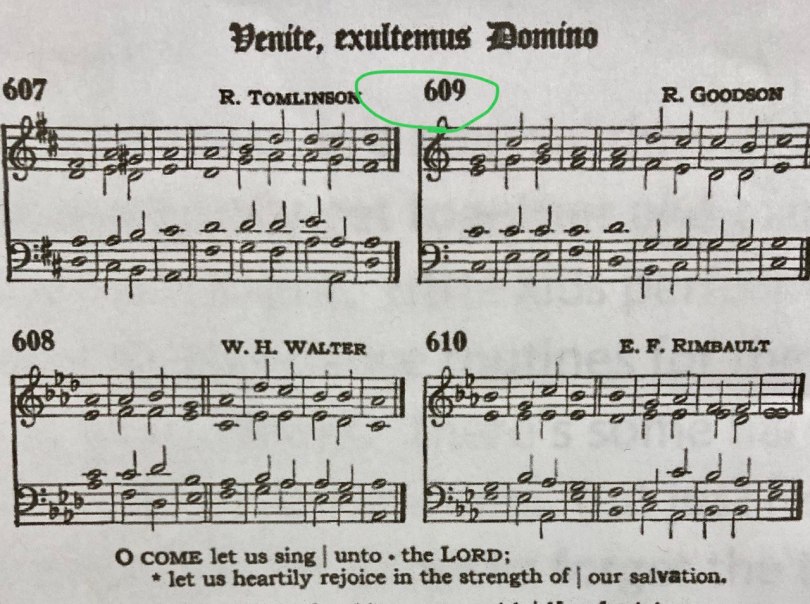
Yours portly is going High Protestant this week.  Readers can thank Audre Myers for that one—she sent me the manuscript for her church’s new chant, “Venite, exultemus Domino,” at some point in the last few weeks, and I’ve been playing around with it on the piano.

Read More »

Supporting Friends Friday: Frederick Ingram’s Christmas Groove

Today is the day of the big Christmas concert at school, and despite some moments of despair earlier in the week, I am feeling cautiously optimistic about the whole thing.  The kids are going to do a wonderful job, I am sure; I’m more worried about getting all of the tech stuff done in time, but it will happen, one way or another.

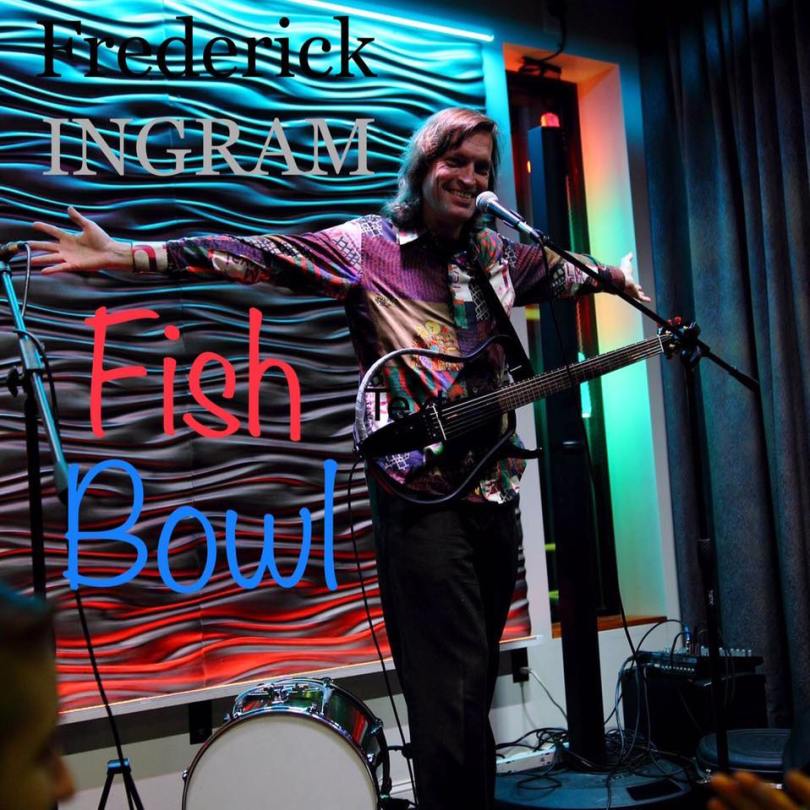
That said, it’s going to be a short Supporting Friends Friday this week—at least for me.  You, dear reader, get to listen to six minutes and twenty-four seconds of an excellent new Christmas track from my good buddy Frederick Ingram.

Read More »

It Came Upon a Midnight Clear

This past Sunday was the first of December, and my first time back at my little church since Thanksgiving.  That meant it was time—finally!—to play some Christmas carols.

We started the service with a rousing congregational singing of “Hark! The Herald Angels Sing,” which is apparently my pastor’s favorite carol.  Our second congregational singing was “It Came Upon a Midnight Clear,” a beautiful little hymn with some interesting harmonies and leaping melodies—typical of carols.

Read More »

The Joy of Renaissance Music: Palestrina’s “Pope Marcellus” Mass

It’s another school year, which means another year going through the history of Western music in Pre-AP Music Appreciation.  This week we’re diving into Renaissance music, after spending last week covering the music of the Middle Ages.

Contrary to popular belief, the Middle Ages were not a period of depressing darkness, but rather a lively age.  I certainly wouldn’t want to be a peasant pushing an ox cart full of dung, but that peasant knew his place in the universe, in the sense that he knew he was part of an ordered cosmos with God at both its head and its center.

More on that another time, but I mention it to note that the Renaissance would not have been possible without that long age of faith in the Middle Ages.  Still, the Renaissance Period—variably dated, but starting roughly sometime in the fifteenth century, and extending to the seventeenth century—was a period of increased interest in the art and literature of ancient Greece and Rome, especially the human realism depicted in the art of those great civilizations, both a continuation of and a departure from the Middle Ages.

It also saw the declining influence of the Catholic Church in Europe, especially in the wake of the Protestant Reformation of the sixteenth century.  As Protestantism and other social forces broke the Church’s monopoly on education and its dominance over art and music, Catholicism mounted a Counter-Reformation, aimed at both reducing the influence of Protestantism and reforming real abuses within the Roman Church.

That effort, naturally, involved revisions to music.  Catholic priests denounced the increasingly theatrical nature of church music, decrying it as distracting from the simple message of the Gospel and the sacred Latin text, instead serving as gaudy entertainment for Mass goers.  Much like the megachurch arena rock concerts of today, services had become garish and maudlin, a reflection of the corruption within the Church.

It was in this context that Giovanni Pieluigi da Palestrina composed his greatest works.  According to Roger Kamien in Music: An Appreciation (the eighth brief edition, which I use with my students), Palestrina composed some 104 masses and 450 other sacred works, and his music became, essentially, the gold standard of church music until modern times (“masses” in the musical context are works built around five sung prayers, the Kyrie, Gloria, Credo, Sanctus, and Agnus Dei, not to be confused with the Catholic service).

Read More »

Lazy Sunday CXXVII: Joy, Part II: Music

The first short week of the new school year is in the books, and assuming I’m still alive when this post pops this morning, I survived!

That’s reason enough to be joyful, but in case my survival of a three-day workweek doesn’t inspire you, here are some more “the joy of” posts of a decidedly musical extraction that might:

That’s it for this weekend’s joyful musings.  Here’s to a musically fulfilling Sunday!

Happy Sunday!

—TPP

Other Lazy Sunday Installments:

Tip The Portly Politico:  Support quality commentary on politics, education, culture, and the arts with your one-time donation.

***NOTEThis link is NOT a subscription to my SubscribeStar Page; it is for a one-time donation/tip via PayPal. To subscribe to my SubscribeStar page, use this URL:   https://subscribestar.com/the-portly-politico***