TBT: Singing Christmas Carols with Kids

December is here, and that means it’s time for Christmas music!  My students and I are prepping for our annual Christmas concert—back after The Age of The Virus—and have been playing and singing quite a bit of Christmas music.

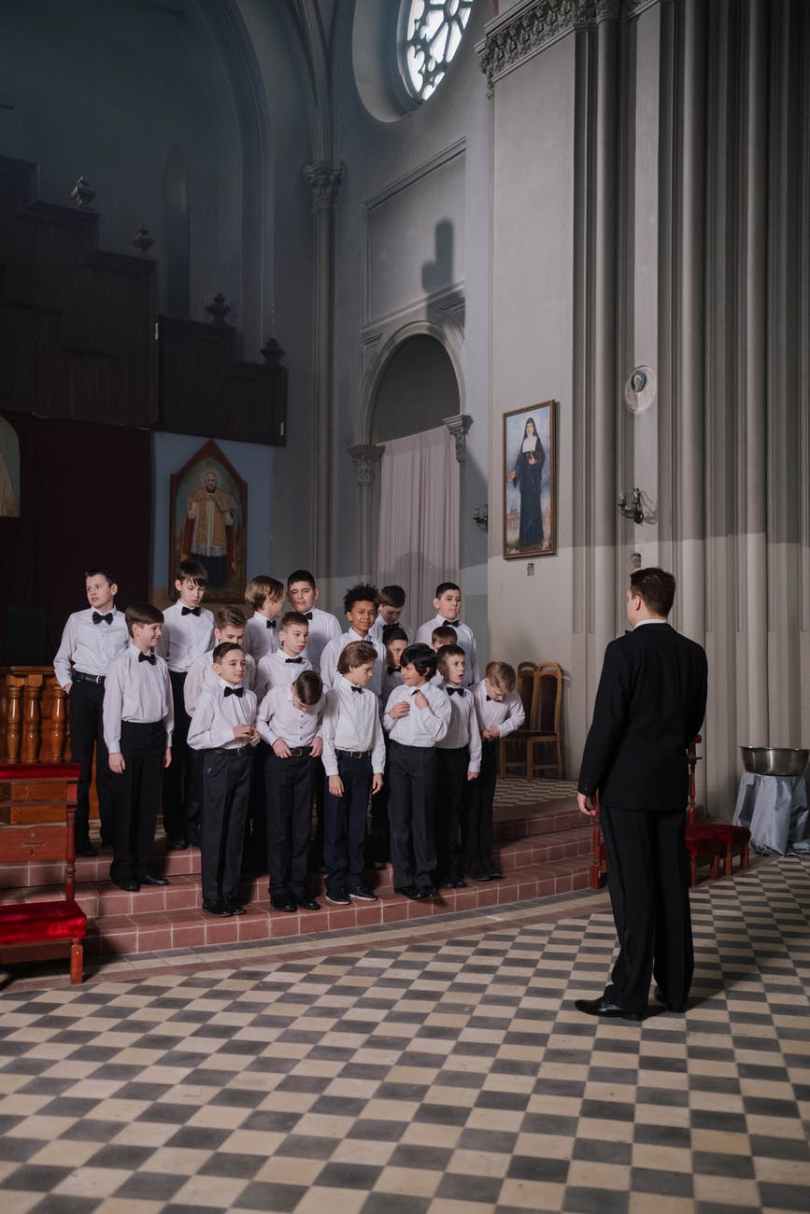
Indeed, my Music Club—a club designed to get students involved in playing and performing music who, for whatever reason, could not get a music class fit into their schedules—met Tuesday to sing some carols, with the idea being that we will spend lunch and break periods next week caroling for the student body.

As their voices came together in sparkling purity, it reminded me of this post from last year.  We started our short rehearsal with “Silent Night,” one of my all-time favorite Christmas songs, and the sweetness and fullness of it with eight or so singers really swelled my heart.  We also sang “Joy to the World,” “Away in a Manger,” “O Little Town of Bethlehem,” “Hark! The Herald Angels Sing,” and one or two others that escape me.

I once heard that singing is good for you, both physically and mentally.  Christmas carols—songs about the Birth of Our Savior, Jesus Christ—surely are good for you spiritually, too.  Sing some today.

With that, here is 4 December 2020’s “Singing Christmas Carols with Kids“:

Read More »

The Joy of Renaissance Music: Palestrina’s “Pope Marcellus” Mass

It’s another school year, which means another year going through the history of Western music in Pre-AP Music Appreciation.  This week we’re diving into Renaissance music, after spending last week covering the music of the Middle Ages.

Contrary to popular belief, the Middle Ages were not a period of depressing darkness, but rather a lively age.  I certainly wouldn’t want to be a peasant pushing an ox cart full of dung, but that peasant knew his place in the universe, in the sense that he knew he was part of an ordered cosmos with God at both its head and its center.

More on that another time, but I mention it to note that the Renaissance would not have been possible without that long age of faith in the Middle Ages.  Still, the Renaissance Period—variably dated, but starting roughly sometime in the fifteenth century, and extending to the seventeenth century—was a period of increased interest in the art and literature of ancient Greece and Rome, especially the human realism depicted in the art of those great civilizations, both a continuation of and a departure from the Middle Ages.

It also saw the declining influence of the Catholic Church in Europe, especially in the wake of the Protestant Reformation of the sixteenth century.  As Protestantism and other social forces broke the Church’s monopoly on education and its dominance over art and music, Catholicism mounted a Counter-Reformation, aimed at both reducing the influence of Protestantism and reforming real abuses within the Roman Church.

That effort, naturally, involved revisions to music.  Catholic priests denounced the increasingly theatrical nature of church music, decrying it as distracting from the simple message of the Gospel and the sacred Latin text, instead serving as gaudy entertainment for Mass goers.  Much like the megachurch arena rock concerts of today, services had become garish and maudlin, a reflection of the corruption within the Church.

It was in this context that Giovanni Pieluigi da Palestrina composed his greatest works.  According to Roger Kamien in Music: An Appreciation (the eighth brief edition, which I use with my students), Palestrina composed some 104 masses and 450 other sacred works, and his music became, essentially, the gold standard of church music until modern times (“masses” in the musical context are works built around five sung prayers, the Kyrie, Gloria, Credo, Sanctus, and Agnus Dei, not to be confused with the Catholic service).

Read More »

Lazy Sunday CXXIX: Friends, Part I

Back in June, I started a new feature on non-Bandcamp FridaysSupporting Friends Friday.  It’s a small way to highlight and support the works and talents of my various friends, of both the IRL and online variety.

Now that I’ve written several of these posts, it seemed like a good time to look back at them.  The three this week are all good friends I know personally—indeed, they all live within forty-five minutes of me—and we have a musical connection.  The first friend featured is a poet, but we met at local open mic nights.

Happy Sunday!

—TPP

Other Lazy Sunday Installments:

Tip The Portly Politico:  Support quality commentary on politics, education, culture, and the arts with your one-time donation.

***NOTEThis link is NOT a subscription to my SubscribeStar Page; it is for a one-time donation/tip via PayPal. To subscribe to my SubscribeStar page, use this URL:   https://subscribestar.com/the-portly-politico***

Lazy Sunday CXXVII: Joy, Part II: Music

The first short week of the new school year is in the books, and assuming I’m still alive when this post pops this morning, I survived!

That’s reason enough to be joyful, but in case my survival of a three-day workweek doesn’t inspire you, here are some more “the joy of” posts of a decidedly musical extraction that might:

That’s it for this weekend’s joyful musings.  Here’s to a musically fulfilling Sunday!

Happy Sunday!

—TPP

Other Lazy Sunday Installments:

Tip The Portly Politico:  Support quality commentary on politics, education, culture, and the arts with your one-time donation.

***NOTEThis link is NOT a subscription to my SubscribeStar Page; it is for a one-time donation/tip via PayPal. To subscribe to my SubscribeStar page, use this URL:   https://subscribestar.com/the-portly-politico***

Supporting Friends Friday: The Cinematic Compositions of Mason Sandifer

The first two editions of Supporting Friends Friday (highlighting the poetry of Jeremy Miles and the music of Frederick Ingram) have been well-received, particularly by the friends being supported, and it gives me a great deal of joy to showcase their works, albeit from the humble platform of this blog (read by dozens a day!).  As I have written many, manymany times over the last year, making a living through creative work, like writing books and playing music, is difficult, especially in The Age of The VirusBuilding up a community of artists who celebrate one another’s works is an important part of the indie music and publishing business.

It’s also just fun, much like the music of Robert Mason Sandifer, the young composer I’m highlighting today.  Mason, as I call him, is a private student of mine, so this post is perhaps tad self-serving, but even if he weren’t my student, I would adore his music.

Read More »

SubscribeStar Saturday: Rock ‘n’ Roll Camp Review

Today’s post is a SubscribeStar Saturday exclusive.  To read the full post, subscribe to my SubscribeStar page for $1 a month or more.  For a full rundown of everything your subscription gets, click here.

This past week I hosted the first of two summer camps I’m putting on in June.  Next week is the ubiquitous, ever-popular Minecraft Camp, but this week saw the first inaugural Rock ‘n’ Roll Camp at my little school.

I’m not sure why I didn’t conceive of this idea sooner.  It’s not an original one, as rock ‘n’ roll fantasy camps have been around for awhile.  I’m not Ted Nugent teaching middle-aged yuppies how to play “Stranglehold” in the woods, but porting that concept to rockin’ out with kids is not difficult to do.

But last summer my headmaster kept forwarding me e-mails from a local country club, which was itself hosting a summer rock camp.  He did not include any commentary or suggestions along the lines of “you should do this camp,” but I got the message.  So when it came time to put together our summer camp catalogue, I tossed Rock ‘n’ Roll Camp into the mix.

My headmaster’s implied suggestion was a good one:  the camp was really wonderful.  Indeed, it exceeded my expectations, in large part because of the small but talented group of campers who attended.  We only had three kids sign up this year, but I’ve had semester-long ensemble classes with that few students, so I knew we could make some musical magic even with a small group.  Indeed, we had the perfect number for a classic garage rock band:  four (including myself).

Here’s some of the details about the camp—how long it lasted, a breakdown of our days, and the songs we played.  Hopefully it will provide a useful blueprint for other music educators looking to host their own camps.

To read the rest of this post, subscribe to my SubscribeStar page for $1 a month or more.

Supporting Friends Friday: The Music of Frederick Ingram

Last Friday’s very first Supporting Friends Friday, which featured the release of Jeremy Miles‘s (read his blog) latest book of poetryHindsight: Poetry in 2020, was quite fun, and at the very least brought delight to Jeremy, and at the most hopefully helped sell a couple of copies of his book.

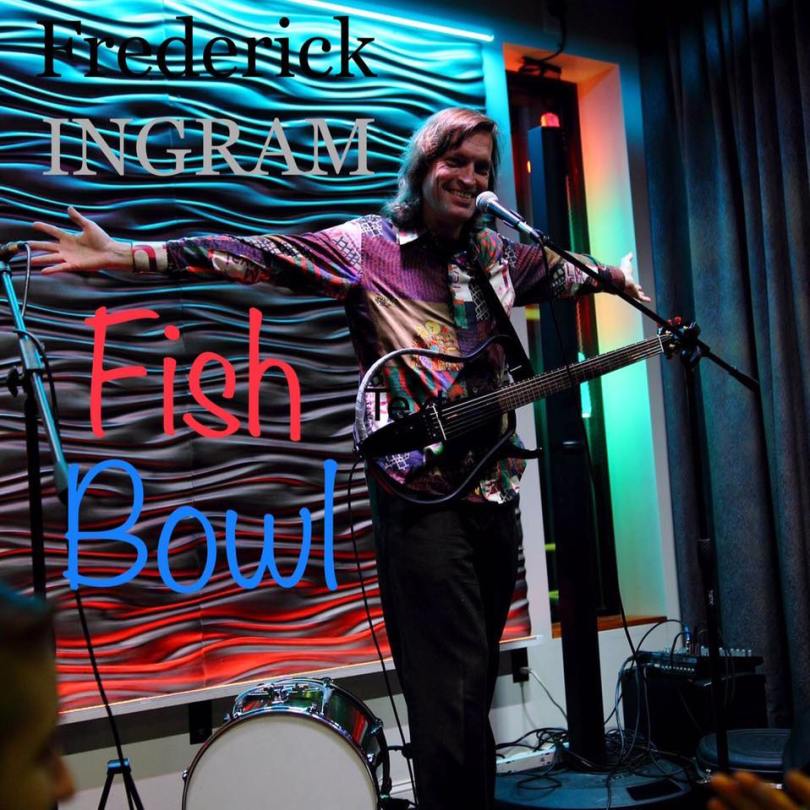
In that spirit, I wanted to dedicate this second installment to the music of my musician buddy Frederick Ingram.  Frederick is a gifted and skilled guitarist, vocalist, and songwriter, and we have played together or on the same bill on a number of occasions.  Frederick also recently made a surprise appearance to the inaugural TJC Spring Jam, and treated us to a three-song set.

Recently, Frederick released the “Funky Margarita Mix” of his ode to open mic nights, “Fish Bowl.”  Frederik wrote “Fish Bowl” some years ago, inspired by a (I believe) now-defunct open mic night once hosted at a groovy little joint in Columbia, South Carolina.  The story, as I recall, is that the venue’s stage had an aquarium as a backdrop, which surely made for any intriguing performance experience.

Read More »

Learning by Doing: Teaching Guitar

One of the truest statements I’ve ever heard is “if you want to learn something, teach it.”  Much of my teaching career has been built upon that premise, and it’s stretched my mind and talents far beyond what I thought I was capable of achieving.

A young education major at the local liberal arts college once told me that it’s unethical to learn on the job when teaching.  As I recall, I laughed in his face, and said, “Kid, the only way to learn how to teach is by learning on the job.”  No one knows everything, especially educators (why do you think we became teachers?).

That’s certainly been the case with teaching guitar.  I’d always struggled to wrap my mind (and hands) around string instruments, and while I picked up bass (one note at a time is much easier than six), I assumed I’d never be able to play guitar.  Indeed, I’m still not very good at playing guitar, and would not consider myself a “guitar player.”

What I discovered is that as I taught guitar lessons—often fumblingly so initially—I was learning to play guitar.

Read More »

TBT: My Musical Philosophy in Song: “Delilah”

Later this month I’m hosting another front porch concert, following the success of my Spooktacular event in October.  I’m quite excited to do another front porch concert, and I’m interested to see how the May date will stack up compared to Halloween.  I’ve also ordered some great t-shirts, which I will have available on my Bandcamp merch page soon.

In preparing for the concert, I thought it might be a good time to look back at a post I wrote one year ago today, about the Tom Jones song “Delilah.”  The first time I truly heard the song was when I heard Bruce Dickinson’s version.  The Iron Maiden singer nailed the performance, and I immediately set about learning the song.

Of course, I wrote all of this a year ago, so I’ll let the original speak for itself.  Here is 6 May 2020’s “My Musical Philosophy in Song: ‘Delilah’“:

Read More »