TBT: Singing Christmas Carols with Kids

December is here, and that means it’s time for Christmas music!  My students and I are prepping for our annual Christmas concert—back after The Age of The Virus—and have been playing and singing quite a bit of Christmas music.

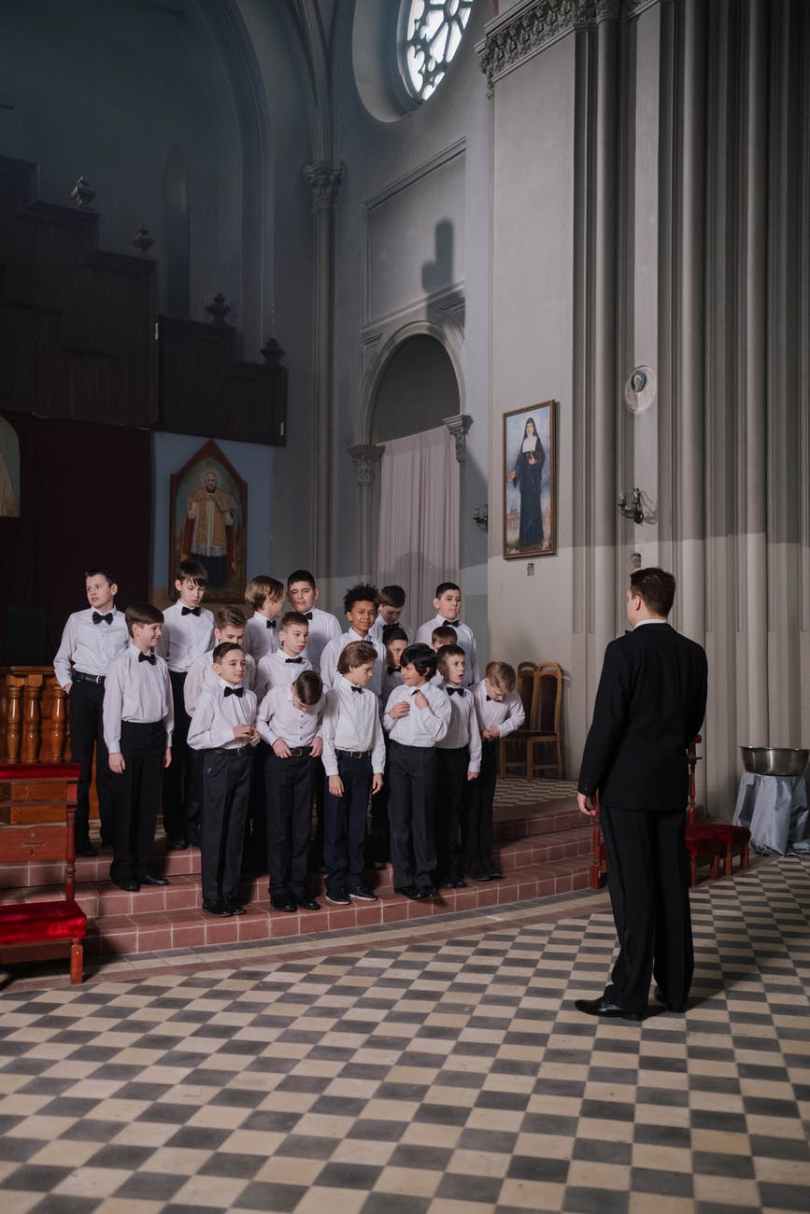
Indeed, my Music Club—a club designed to get students involved in playing and performing music who, for whatever reason, could not get a music class fit into their schedules—met Tuesday to sing some carols, with the idea being that we will spend lunch and break periods next week caroling for the student body.

As their voices came together in sparkling purity, it reminded me of this post from last year.  We started our short rehearsal with “Silent Night,” one of my all-time favorite Christmas songs, and the sweetness and fullness of it with eight or so singers really swelled my heart.  We also sang “Joy to the World,” “Away in a Manger,” “O Little Town of Bethlehem,” “Hark! The Herald Angels Sing,” and one or two others that escape me.

I once heard that singing is good for you, both physically and mentally.  Christmas carols—songs about the Birth of Our Savior, Jesus Christ—surely are good for you spiritually, too.  Sing some today.

With that, here is 4 December 2020’s “Singing Christmas Carols with Kids“:

Read More »

TBT: Hand it to Handel

We’re back in the Baroque Period in my Pre-AP Music Appreciation course this year, though based on the timing of this post, we’re just a few days behind this year.  We’ve watched the excellent BBC documentary on Handel linked below, and just got into his works this week (we also recently viewed, in snippets, Henry Purcell’s opera Dido and Aeneas, which is really great—and, at just under an hour, perfect for classroom viewing).

Regardless, it’s good to see that my pacing from one year to the next is mostly on track.  It’s one of those things that teachers like to see, especially when it’s only the second time running a course.  I guess I am just more long-winded this year.

What’s not long-winded—I hope!—is this post on Handel’s music.

With that, here is 10 November 2021’s “Hand it to Handel“:

Read More »

Mahler’s Composing Shack

While teaching Pre-AP Music Appreciation last school year, I stumbled upon an excellent YouTube channel, Inside the Score, which features videos explaining and analyzing some of classical and Romantic music’s greatest works and composers.  It’s a wonderful resource for exploring famous works in greater depth, and has greatly enhanced my own appreciation for music.

At some point, I ended up on Inside the Score‘s mailing list, and I receive little e-mail newsletters from the site periodically.  These are like delicious, bite-sized treats compared to the longer videos (which themselves are by no means daunting, coming it at around twenty minutes a pop).

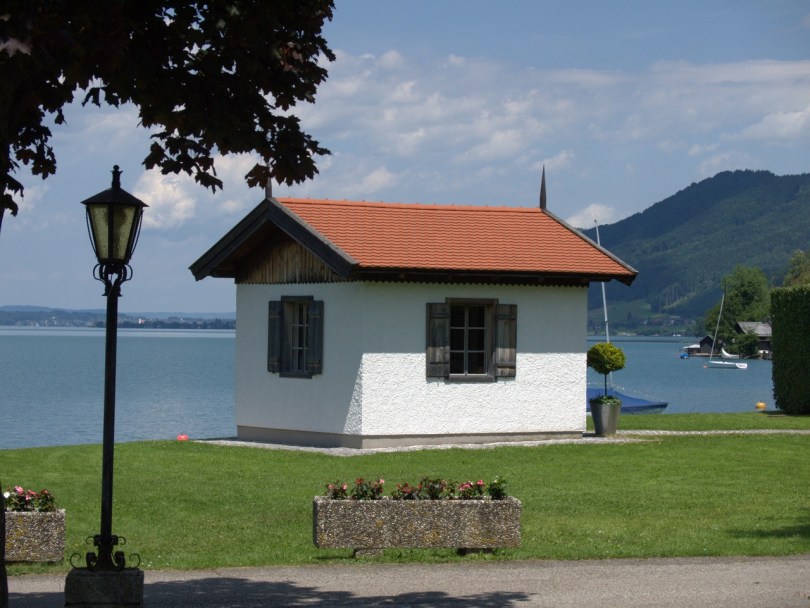
Recently, one of these morsels found its way into my inbox:  a look at Gustav Mahler‘s daily routine.  Mahler wrote incredibly long symphonies—to this day, the single longest piece of music I have ever sat and listened to live is Mahler’s Fifth Symphony, which clocks in at an impressive seventy-five minutes—and did so while touring the world as a conductor.  According to Inside the Score, Mahler had summers off to compose at a little shack on the Attersee in Austria, and stuck to a fairly consistent schedule.

Read More »

The Joy of Renaissance Music: Palestrina’s “Pope Marcellus” Mass

It’s another school year, which means another year going through the history of Western music in Pre-AP Music Appreciation.  This week we’re diving into Renaissance music, after spending last week covering the music of the Middle Ages.

Contrary to popular belief, the Middle Ages were not a period of depressing darkness, but rather a lively age.  I certainly wouldn’t want to be a peasant pushing an ox cart full of dung, but that peasant knew his place in the universe, in the sense that he knew he was part of an ordered cosmos with God at both its head and its center.

More on that another time, but I mention it to note that the Renaissance would not have been possible without that long age of faith in the Middle Ages.  Still, the Renaissance Period—variably dated, but starting roughly sometime in the fifteenth century, and extending to the seventeenth century—was a period of increased interest in the art and literature of ancient Greece and Rome, especially the human realism depicted in the art of those great civilizations, both a continuation of and a departure from the Middle Ages.

It also saw the declining influence of the Catholic Church in Europe, especially in the wake of the Protestant Reformation of the sixteenth century.  As Protestantism and other social forces broke the Church’s monopoly on education and its dominance over art and music, Catholicism mounted a Counter-Reformation, aimed at both reducing the influence of Protestantism and reforming real abuses within the Roman Church.

That effort, naturally, involved revisions to music.  Catholic priests denounced the increasingly theatrical nature of church music, decrying it as distracting from the simple message of the Gospel and the sacred Latin text, instead serving as gaudy entertainment for Mass goers.  Much like the megachurch arena rock concerts of today, services had become garish and maudlin, a reflection of the corruption within the Church.

It was in this context that Giovanni Pieluigi da Palestrina composed his greatest works.  According to Roger Kamien in Music: An Appreciation (the eighth brief edition, which I use with my students), Palestrina composed some 104 masses and 450 other sacred works, and his music became, essentially, the gold standard of church music until modern times (“masses” in the musical context are works built around five sung prayers, the Kyrie, Gloria, Credo, Sanctus, and Agnus Dei, not to be confused with the Catholic service).

Read More »

TBT: Music Among the Stars

It’s been a musical week here at The Portly Politico, so I figured, “why stop now?”

I’ve dedicated more and more space on the blog to musical and cultural matters, especially in the last year.  Among the posts I most enjoy writing—and of which I am most proud—are those I write about music.

This week’s TBT feature, “Music Among the Stars,” is one I really enjoy, and I think (humbly) it’s one of my better posts.  It’s about the golden records aboard the Voyager I space probe, and about the true purpose of music—to worship God.

I’ll let the essay speak for itself.  Here is 8 September 2021’s “Music Among the Stars“:

Read More »

TBT: Benjamin Britten’s “The Young Person’s Guide to the Orchestra”

The new year school year is back into full swing, with this week being the first full week of classes.  Needless to say, yours portly is tired, but very much enjoying the academic year so far.

I’m teaching Pre-AP Music Appreciation again this year, so I’m excited to dive back into some of the works we discussed last year—and some new ones!  Of course, we’ve kicked the year off with a listening to “The Young Person’s Guide to the Orchestra,” a favorite for introducing orchestral instruments.

My Pre-AP Music class this year is quite small—just five students—which makes for a more relaxed classroom environment.  We’re able to explore tangents as they arise (and, based on my frequent use of em dashes and parentheses, you can imagine I go off on them frequently), and generally take the time to enjoy the music, which the students seem to be doing.

I don’t have much more to add that I didn’t write a year ago.  Britten ingeniously weaves a whopping thirteen variations on a Henry Purcell theme, featuring nearly every instrument in the orchestra—including the percussion section!—in solo or soli.  Even the neglected double basses get some love with a melody of their own.

With that, here is 31 August 2020’s “Benjamin Britten’s ‘The Young Person’s Guide to the Orchestra’“:

Read More »

Lazy Sunday CXXVII: Joy, Part II: Music

The first short week of the new school year is in the books, and assuming I’m still alive when this post pops this morning, I survived!

That’s reason enough to be joyful, but in case my survival of a three-day workweek doesn’t inspire you, here are some more “the joy of” posts of a decidedly musical extraction that might:

That’s it for this weekend’s joyful musings.  Here’s to a musically fulfilling Sunday!

Happy Sunday!

—TPP

Other Lazy Sunday Installments:

Tip The Portly Politico:  Support quality commentary on politics, education, culture, and the arts with your one-time donation.

***NOTEThis link is NOT a subscription to my SubscribeStar Page; it is for a one-time donation/tip via PayPal. To subscribe to my SubscribeStar page, use this URL:   https://subscribestar.com/the-portly-politico***

Supporting Friends Friday: The Cinematic Compositions of Mason Sandifer

The first two editions of Supporting Friends Friday (highlighting the poetry of Jeremy Miles and the music of Frederick Ingram) have been well-received, particularly by the friends being supported, and it gives me a great deal of joy to showcase their works, albeit from the humble platform of this blog (read by dozens a day!).  As I have written many, manymany times over the last year, making a living through creative work, like writing books and playing music, is difficult, especially in The Age of The VirusBuilding up a community of artists who celebrate one another’s works is an important part of the indie music and publishing business.

It’s also just fun, much like the music of Robert Mason Sandifer, the young composer I’m highlighting today.  Mason, as I call him, is a private student of mine, so this post is perhaps tad self-serving, but even if he weren’t my student, I would adore his music.

Read More »

TBT: My Musical Philosophy in Song: “Delilah”

Later this month I’m hosting another front porch concert, following the success of my Spooktacular event in October.  I’m quite excited to do another front porch concert, and I’m interested to see how the May date will stack up compared to Halloween.  I’ve also ordered some great t-shirts, which I will have available on my Bandcamp merch page soon.

In preparing for the concert, I thought it might be a good time to look back at a post I wrote one year ago today, about the Tom Jones song “Delilah.”  The first time I truly heard the song was when I heard Bruce Dickinson’s version.  The Iron Maiden singer nailed the performance, and I immediately set about learning the song.

Of course, I wrote all of this a year ago, so I’ll let the original speak for itself.  Here is 6 May 2020’s “My Musical Philosophy in Song: ‘Delilah’“:

Read More »

Sheet Music Burning

The latest target of the woke elites and their braying mobs is—that great symbol of imperialism and Western dominance—sheet music.

Apparently, some Oxford dons are considering removing sheet music and the ability to read traditional notation from its curriculum.  One quotation from The Telegraph article notes that “The Oxford academics went on to pronounce that teaching the piano or conducting orchestras could cause ‘students of colour great distress’ as the skills involved are closely tied to ‘white European music’.”

This latest crusade is the musical equivalent of the effort in English departments across the country to downplay the teaching of grammar.  Sure, one can make plenty of excellent music without knowing how to read notation, but why limit one’s self to tabs or lead sheets?  I can certainly communicate certain ideas without adverbs, adjectives, or even pesky commas, but doing so severely limits the range of expression.

Read More »