Lazy Sunday CXXVII: Joy, Part II: Music

The first short week of the new school year is in the books, and assuming I’m still alive when this post pops this morning, I survived!

That’s reason enough to be joyful, but in case my survival of a three-day workweek doesn’t inspire you, here are some more “the joy of” posts of a decidedly musical extraction that might:

That’s it for this weekend’s joyful musings.  Here’s to a musically fulfilling Sunday!

Happy Sunday!

—TPP

Other Lazy Sunday Installments:

Tip The Portly Politico:  Support quality commentary on politics, education, culture, and the arts with your one-time donation.

***NOTEThis link is NOT a subscription to my SubscribeStar Page; it is for a one-time donation/tip via PayPal. To subscribe to my SubscribeStar page, use this URL:   https://subscribestar.com/the-portly-politico***

Flashback Friday: Christmas and its Symbols

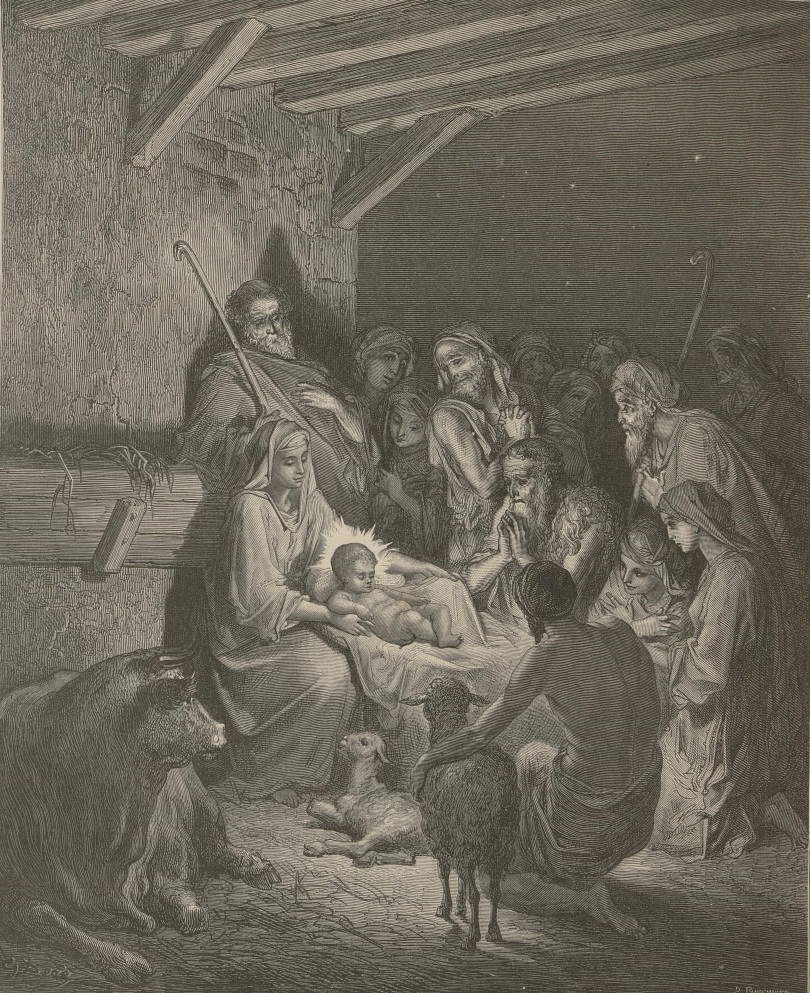
It’s Christmas!  Another magical day to celebrate the birth of our Lord and Savior, Jesus Christ.

2020 was a tough year, but Christ is mightier than The Virus.  Thank God—literally!—for sending His Son.

Have a wonderful, safe, loving Christmas Day.  God Bless all of your for your support and generosity, and for being such amazing readers.

Here’s 25 December 2019’s “Christmas and its Symbols“:

Read More »

Stop Amending the Classics, Bring Back Melody

This time of year, this blog focuses big time on Christmas carolstheir histories, the theory behind them, their compositions, etc.  One of the great joys in my life is playing and singing these carols.  They are sweet but powerful musical retellings of the Birth of Jesus.

One thing I’ve noticed, though, is that churches have taken these classics and, in an attempt to check the “contemporary Christian music” box, added unnecessary and musically-boring codas to them.  This past Sunday, my parents’ church’s praise team was leading the congregation in a stirring singing of “O Come, All Ye Faithful“—and then tacked on a needless extra chorus written in a modern style.  The additional chorus was okay, but it paled in comparison to the majesty and tunefulness of the carol it amended.  The church went from a lusty chorus of socially-distanced congregants to a few people mumbling along to the tuneless new chorus.

Read More »

Hark! The Herald Angels Sing

Last December I dedicated several posts to reviewing and analyzing some of my favorite Christmas carols.  It’s the season for playing and singing them, and the more I dive into their histories, the more I appreciate them.

One carol that escaped my notice last year was “Hark! The Herald Angels Sing.”  It’s one of my favorites, so I’m surprised I didn’t write about it (although it did enjoy the spotlight in my Christmas Day post).

Apparently, my pastor noticed—not that I didn’t write about it on this blog, which I’m certain he doesn’t know exists, but that I didn’t play it at church.  In one of his sermons, he said, “One of my favorite carols is ‘Hark! The Herald Angels Sing.’ I didn’t hear it this Christmas season.  I don’t know why they didn’t play it, but…” and then he went on to make whatever point he wanted to make.  Of course, all he had to do was ask, and I would have played it!

Read More »

Memorable Monday: Away in a Manger

Yesterday marked the first December church service of the year, so I was finally able to whip out some Christmas carols for morning service.  My pastor’s personal favorite carol is “Hark! The Herald Angels Sing,” so that was our first congregational singing.  But he requested an interesting pick for the second singing:  “Away in a Manger.”

“Away in a Manger” is not always top-of-mind for me when it comes to Christmas carols, but it possesses the same sweet simplicity (and triple feel) of “Silent Night.”  It’s also very easy to play, which makes it nice to crack open when practice time is short (“Hark!,” by contrast, is a bit more complicated, especially with its profusion of secondary dominants and moving to minor in the last couple of phrases).  The melody is very sweet, and easily harmonized in thirds.

I’ll be writing about more Christmas carols this season.  I hit most of the high-profile ones last year, so it’s going to be fun to dig into some of the more obscure carols over the coming weeks.  But to ease into Monday, I figured I’d look back to last year’s post on “Away in a Manger” [note:  I’ve cut out the lengthy preamble about the pending impeachment at the beginning of the original post, so as to focus exclusively on the hymn itself]:

Read More »

Lazy Sunday LI: Just for Fun

I got back from my trip to Universal Studios just a few hours ago, so I’m slamming out this week’s Lazy Sunday before midnight so as to appease the WordPress Counter.  In the spirit of the fun-filled trip, here are some fun blog posts:

  • Happy Halloween” – Boy, I sure do love Halloween.  It’s even more exciting that it will fall on a Saturday this year.  What’s more fun than carving pumpkins, dressing up in weird outfits, and eating lots of candy?
  • The Joy of Autumn” – Speaking of Halloween, the whole autumnal feel—sweaters, crisp cool nights, college football, staying indoors—is inspiring and reassuring.  I find the coolness intellectually enlivening, and it’s a welcome break from South Carolina’s oppressive summers.  It’s still hot on Halloween here most years (and, I have found, oppressively muggy), but it’s not too far from the crisp cool nights.
  • Joy to the World” – One of several posts I wrote about Christmas carols, “Joy to the World” is one of my favorite Christmas tunes.  One plan for this summer is to expand my Christmas carol posts into a short eBook, hopefully to be available this fall.
  • Dawn of a Decade” – On the subject of long-term plans, this post kicked off 2020, spelling out my plans for the blog.  Talk about a rapidly-advancing year!  It’s already March 1st, and the year continues to zip along.

Well, that’s it for a hasty installment of Lazy Sunday.  Here’s hoping you have a fun week!

Happy Sunday!

—TPP

Other Lazy Sunday Installments:

Lazy Sunday XLIII: Music, Part II – More Music

Well, it had to come at some point—the end to my glorious Christmas Break.  Sure, sure, summer break is great, but two weeks off at Christmas is just the right amount of time to recharge the batteries.  Plus, it’s not 100 degrees outside, and we get to celebrate the Birth of Jesus!

I wrote a great deal about music in the last quarter of 2019, and I’m kicking off 2020 focused intensely on the performing arts:  I’m going to be in a play this weekend.  That personal detail is somewhat important for the blog, as after today my focus (other than work during the day) will be almost entirely on that production.  As such, posts may be shorter than usual, or a bit delayed in getting up.

Regardless, in keeping with the fine arts, I thought I’d feature three recent pieces I wrote about music.  Enjoy!

  • Milo on Romantic Music” – Readers are probably exhausted of reading about this post, but Milo’s analysis of Romantic music, while certainly contentious, is fascinating.  He might play the role of a melodramatic, catty queen online, but he possesses deep erudition on a variety of topics.  This post was one of “2019’s Top Five Posts” thanks to Milo’s sharing of it.
  • A Little Derb’ll Do Ya: Haydn’s ‘Derbyshire Marches’” – Saturday mornings just aren’t the same with Radio Derb‘s opening music, Haydn’s “Derbyshire March No. 2.”  Nothing makes you feel more sophisticated about pouring coffee in your underwear than the strains of Haydn’s jaunty little march.
  • O Little Town of Bethlehem and the Pressures of Songwriting” – This morning I’ll finally be back to my little Free Will Baptist Church to play piano.  I’m also struggling to remember a huge amount of naturalistic dialogue for the aforementioned play.  The juxtaposition of returning to church piano playing and the pressure of conjuring up untold mental energies in a short span of time made this post a logical choice.  The music for “O Little Town of Bethlehem” was composed in great haste, and completed mere hours before it was performed.  My instincts (and experience) tell me that the play will, much to the director’s chagrin, unfold the same way—incompetence giving way to brilliance the night of the show.

Well, there you have it!  Happy New Year to one and all.  Back to work!

—TPP

Other Lazy Sunday Installments:

Christmas and its Symbols

It’s Christmas!  Imagine “Hark! The Herald Angels Sing” played on an uptempo French horn and a crackling fire.  That’s how I imagine Christmas morning—like a 1970s Christmas variety show.

In all seriousness, it’s truly the most wonderful time of the year.  Christ is born!  It’s a day for celebrating His Birth with family and friends.  Just like the Wise Men of yore, we exchange presents to celebrate (and to stimulate the economy).

Read More »

TBT: The Bull on the Roof

It’s been a cheery, musical mood here at The Portly Politico.  I’ve been tearing through popular Christmas carols, offering up some histories of these beloved tunes, as well as a little musical analysis.  Thanks to Milo sharing my piece “Milo on Romantic Music,” I enjoyed a large surge in traffic that has now settled into a nice daily trickle (nothing huge, but it’s helped).

University of Chicago medievalist Rachel Fulton Brown also linked to the post in a piece on her blog, Fencing Bear at Prayer.  The success of that piece, plus the beauty of Christmas music and the general cheeriness of the season, has inspired me to write more about music.

This week, then, I’ve cast back to this summer, when I wrote a little piece about a whimsical piece of modern classical music, “The Bull on the Roof.”  As I recall, I wrote the piece on my phone—never ideal—while playing with my little niece.  I’d heard the tune on public radio on the drive to my parents’ house, and was so taken with its charm—and lacking any other suitable topic, or the proper conditions to write about them—I jotted out this short piece.

“The Bull on the Roof” is a marvelous example of modern classical music.  And for all I rail against cosmopolitanism, it’s a fine example of the ideal of cosmopolitanism:  a French composer celebrating the vibrant, lively traditions of Brazilian folk music.  That’s the “salt in the stew,” as John Derbyshire calls it—the pinch of cultural diversity that makes the broth more delicious.

Yesterday was spent teaching History of Conservative Thought, painting a classroom floor, and rushing around the Pee Dee region teaching four music lessons, before finally heading out of town for a few days. Needless to say, there wasn’t any time to get a post ready for this morning.

The news has also been light. The first round of Democratic presidential primary debates is tonight, but who cares other than the candidates?

There was a bit of a diplomatic imbroglio with Iran last week, but did anyone really think war was going to break out? Trump handled it Trumpishly; that is effectively, letting the mullahs sweat it out a bit before giving them an out (and signalling to Iranians that he cares more about their lives than the Ayatollah).

That’s why I’ve been sticking to the history and culture posts lately. There just hasn’t been much to say on politics, because there’s so much good happening. Illegal immigration is still a major problem, but otherwise the only “bad” news is that the economy is still growing, just not as quickly as a year ago.

So, brace yourself for another self-indulgent post (this publication is a blog, after all). While driving last night, I hit a classic rock and talk radio dead zone, so I resorted to public radio. I was pleasantly surprised.

The program featured a concert recording of the Greenville (SC) Symphony performing French composer Darius Milhaud’s delightful “Le Bœf sur le toit,” or “The Bull on the Roof.”

Fans of Civilization VI who have played as Brazil will hear some similar themes and styles, as the composition quotes dozens of Brazilian folk songs. The tune is full of Latin-inspired motifs, and it is a charming, fun piece.

Milhaud wrote the piece in 1920 for a silent Charlie Chaplin film that was never made, though the ballet has apparently been staged. I particularly enjoy these kinds of jaunty, popular modern classical pieces (I adore Gustav Holsts’s The Planets because they are pleasing and interesting, but never pretentious). If I’m going to listen to something for nearly twenty minutes, don’t make it a Philip Glassian nightmare experiment in purposeful atonality.

If you have twenty minutes, I highly recommend listening to this piece. It will be a more enjoyable use of your time than watching the Democratic debates.

O Little Town of Bethlehem and the Pressures of Songwriting

Somewhere—I think it was in one of the Civilization games, but I can’t seem to find the exact quotation—I heard a pithy saying, something along the lines of “Genius is a combination of pressure and time.”  It’s one of those expressions that instantly rings true.

Years ago, a coffee shop in a nearby town (it’s now become a hip, upscale dining spot—and it axed the live music) used to host a quirky songwriting competition.  The premise was simple—every month, participants would pay $5 entry fee into a pot, and a “secret judge” would pick a winner, who would win that evening’s pot.  Sometimes there would be a small “second round” of the top three contenders for that evening (I won once, back in January 2014, when I believe I debuted “Greek Fair“; I was surprised, but also thankful that I wouldn’t spend $5 a month for the rest of the year).

Read More »