MAGAWeek2021: Red Meat

This week is MAGAWeek2021, my celebration of the men, women, and ideas that MADE AMERICA GREAT!  Starting today (Monday, 5 July 2021) and running through this Friday, 9 July 2021, this year’s MAGAWeek2021 posts will be SubscribeStar exclusives.  If you want to read the full posts, subscribe to my SubscribeStar page for as little as $1 a month.  You’ll also get access to exclusive content every Saturday.

Is there anything more delicious and American than steak?  Red meat is, perhaps, the finest meat God ever created.  Sure, pork and chicken are wonderful in their own ways—who doesn’t love pulled-pork barbecue?—but nothing beats a good steak.

Indeed, the noble Texas Longhorn is virtually a symbol for the Old West, just like the cowboys that guided him to market on the long drives of the nineteenth century.  The Texas Longhorn, according to Oklahoma State University’s Department of Animal Science, a product of natural selection, meaning the breed is the only beef cattle in the country that is not the product of human-guided animal husbandry or selective breeding.  Instead, the cattle adapted to survive specifically in North America, after cattle brought over by Christopher Columbus and early Spanish explorers made their way into what is now the American Southwest.

The Black Angus—a breed most Americans will recognize from endless restaurant adverts—is the most common beef cattle breed in the United States.  Grilling Black Angus steaks and burgers was no doubt a major part of many Americans’ Independence Day.

It’s no exaggeration to say that beef built the West, and fed the country in the process.

To read the rest of today’s MAGAWeek2021 post, head to my SubscribeStar page and subscribe for $1 a month or more!

Lazy Sunday CXX: Animals, Part II

For some reason that even I can’t even explain, I have suddenly become a big squish when it comes to animals.  For years I just didn’t care about them all that much:  sure, they’re sometimes good companions, but they’re kind of annoying and expensive—like kids, but they can’t grow up to take care of you when you’re inching towards the grave in a senile fog.

Now—inexplicably!—I’ve been torturing myself by looking at animals online at my county’s animal shelter (my lizard hindbrain wants to adopt this guy, but my pragmatic rationality forbids it).  Am I becoming the male equivalent of a thirty-three-year old single white female, trying to fill the void of a childless existent with a canine substitute?

I don’t think so.  I suspect this sudden onset of Francis of Assisi-esque animal loving is because I’ve blessed to spend the last year around really good dogs.  Who wouldn’t want a buddy to loaf around with, and to take on long walks?

That has apparently translated to caring for our slimier friends of the more aquatic variety, too.  I did, after all, make an attempt at building a makeshift frog pond for all the croakers hanging around my house.

That said, this 120th edition of Lazy Sunday is going to the dogs—and whales, pigeons, and frogs:

  • Hard to Swallow” – The story of man spit from the mouth of a humpback whale, which I then relate (predictably) to the remarkable—and, seriously weird—story of Jonah.
  • Release the Pigeons” – 5000—maybe more!—British racing pigeons disappeared during a recent race.  I’m not sure what is the bigger mystery:  how the pigeons disappeared, or how racing pigeons become a niche sport in Great Britain.
  • Adventures in Gardening: Building a Frog Pond” – This post details how I played around in the mud in my garden, and built my first attempt at Frogtopia.  It includes lots of pictures, and even a picture of a German shepherd and me playing with a toad.

That’s it for this extra-fluffy edition of Lazy SundayFind yourself a shelter pet!

Oh—and Happy Fourth of July!

Happy Sunday!

—TPP

Other Lazy Sunday Installments:

Tip The Portly Politico:  Support quality commentary on politics, education, culture, and the arts with your one-time donation.

***NOTEThis link is NOT a subscription to my SubscribeStar Page; it is for a one-time donation/tip via PayPal. To subscribe to my SubscribeStar page, use this URL:   https://subscribestar.com/the-portly-politico***

Adventures in Gardening: Building a Frog Pond

With the unlimited free time of summer, I can finally get some work done in the yard.  I’ve finally transplanted my potted tomatoes and peppers into my flower beds—probably way too late—after getting up weeds this weekend.  I need to get out with the weed trimmer soon to get the edges of the house and around the grapevines and fig tree, but the beds are looking good, if a bit bare.

While pulling weeds Saturday, my girlfriend’s dog started nosing at a little frog—possibly a toad—hopping around in one of the rocky beds along the side of the house (I thought it might be a gopher frog, but now I think it’s more likely a Southern toad; if anyone can tell from the video, please leave a comment):

I get quite a few of our amphibian friends around the house, often hiding out in planters and shady spots in the yard.  After the Spooktacular in October, I found quite a few hunkering down inside of the ceramic and red clay Jack O’Lanterns and votives I had on the porch.

Indeed, one morning I found one chilling on my toilet seat!  I sucked him into my vacuum’s canister and emptied him safely outside.

I have always loved frogs (just not when they’re hanging out in my bathroom), and I’m delighted that so many of them live around my house.  In doing some research on frogs and toads in South Carolina, I stumbled upon a WikiHow article entitled “How to Make a Frog Home in a Garden.”

Given my free time and desire to spruce up the yard, I jumped at the opportunity to put together a small frog pond of my own, which I installed Wednesday.

Read More »

TBT: Albino Giraffes Poached

I’ve had animals on the brain lately, especially dogs.  Perhaps it’s my girlfriend’s sweet German shepherd puppy, or my parents’ photogenic rat terrier; regardless, I realize I am becoming a softy for critters.

Not just the furry, charismatic ones, either:  I’m considering adding a small frog garden to my existing flower beds, as I have a number of toads and frogs that take up residence in my beds and planters already.  Giving them a murky little pond to splash about in would be fun, and might help cut down on some bugs in the yard.

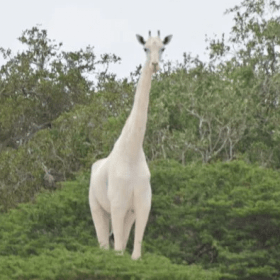
So it is that I’m looking back to this horrible story from March 2020, about the poaching of two rare albino giraffes in Kenya.  In the original piece, I make quite a few wild speculations about the nature of the poachers, even implicating the 50,000 Chinese immigrants to the country.

Given that The Virus originated, most likely, in a Wuhan virology lab—suggesting the Chinese were working on some kind of horrible biological weapon—I’d say mistrust in China’s motives is justified.  It’s also a very weird culture, as the wet markets proved.  The Chinese long believed rhinoceros horn to be an aphrodisiac; how far-fetched would it be to think they would believe something similar about the flesh of an albino giraffe?

For that matter, Africa is still a land filled with many folk beliefs and superstitions.  Albino humans in Tanzania, for example, are the targets of witch doctors, who harvest albinos’ body parts for use in their dark magicGavin McInnes frequently mentions the belief among some African tribes that bald men’s heads are filled with gold.  And there is the horrific practice of AIDS sufferers raping virgins—especially very young children—in the belief that doing so will cure their affliction.

These are terrible things—far more wicked and evil than the murder of two albino giraffes.  But how we treat God’s Creation, even in its lower orders, is a reflection of how we treat one another.  Animal mutilation and murder is a key sign of a future serial killer or sociopath.

With that depressing preamble, here is 24 March 2020’s “Albino Giraffes Poached“:

Read More »

Release the Pigeons

Here’s a weird bit of animal news for you:  around 5000 of 9000 carrier pigeons engaged in pigeon racing disappeared.  The pigeons were part of an obscure sport that races homing pigeons, and it’s unclear why over half of the birds never returned home.

Carrier and homing pigeons aren’t as necessary today as they were even one hundred years ago, what with improvements in communication technology.  When everyone is carrying around a Star Trek communicator with more computing power than the Apollo spacecrafts, the need to maintain a rookery of sky-rats is quite diminished.

That said, the birds are quite remarkable.  Carrier pigeons have saved thousands of lives in various conflicts around the world.  The piece in The Western Journal about the missing pigeons discusses the heroics of Cher Ami, a pigeon that saved the 77th Infantry Division’s “lost battalion” in the First World War “by delivering 12 messages and returning to his roost despite being shot in the leg”  The brave bird died from his injuries in 1919, but “was awarded the Croix de Guerre by France.”

Survivalists and homesteaders might take a particular interest in homing pigeons:  while they’re not particularly useful now, they could be quite useful in the event of a major failure of the power grid, or should the Internet and various cellular services go down.

But what of the missing birds?

Read More »

TBT: Hungry Like the Wolf

After writing about whales yesterday, I thought I’d look back at some animal-related posts.  I stumbled upon this post from last June, in which I waxed scientific on the origins of dogs, and how we are all the descendants of the people the wolves didn’t eat.

My entire perspective on dogs has changed dramatically in the past year.  I used to think dogs were fine, but I didn’t see what all the fuss was about.  After dating a woman who was clearly using her poorly-trained dogs as surrogate children, I swore I would never date a single woman with dogs again.

Indeed, when my current girlfriend and I started dating, she had recently adopted her puppy, a German Shepherd.  According to her, whenever she mentioned the dog, I immediately changed the subject.  That sounds about right.

I was skittish around the dog initially, but now I love that critter.  Sure, I still find it a bit sad when single women approaching The Wall start channeling their unfulfilled maternal instincts into a four-legged fur ball, but I can now appreciate these wonderful creatures for the positive qualities they possess.  As Gavin McInnes—no lover of dogs—often says, we bred dogs to love us unconditionally, so it’s little wonder that they do.

Nevertheless, it’s nice to be loved.

Here is 29 June 2020’s “Hungry Like the Wolf“:

Read More »

Hard to Swallow

A big H/T to Neo at Nebraska Energy Observer for the inspiration for today’s post:  in his latest edition of Sunday Funnies (“Sunday Funnies:  Juneteenth & Other Things“), Neo includes a tabloid-style headline that reads, “I Was Nearly Krilled!: Lobster diver says he was swallowed by humpback whale.”  The pun “krilled’ is circled in orange.

I looked it up, and it’s a real story:  Michael Packard, a fifty-six-year old lobster diver from Massachusetts, was briefly trapped in the mouth of a massive humpback whale.  According to Packard, he was in the mouth of the great beast for about thirty seconds, before the creature surfaced, shook its head back and forth, and spit Packard into the air.

Here is the relevant excerpt of Packard’s account, as quoted at NPR.org:

Packard told WBZ-TV that he was about 45 feet down in the water when he suddenly felt “this huge bump and everything went dark.” He initially feared he had been attacked by a shark.

“Then I felt around, and I realized there was no teeth and I had felt, really, no great pain,” he said. “And then I realized, ‘Oh my God, I’m in a whale’s mouth. I’m in a whale’s mouth, and he’s trying to swallow me.’ “

Packard was still wearing his scuba gear and breathing apparatus inside the whale’s mouth, which he said was completely dark. Fearing he wouldn’t make it out alive, he thought about his wife and sons.

After about half a minute, the whale rose to the water’s surface and began shaking its head from side to side.

“I just got thrown in the air and landed in the water,” Packard recalled. “And I was free, and I just floated there … I couldn’t believe it. I couldn’t believe I got out of that.”

The story sounds incredible—and, according to whale experts, the odds of it happening are extremely rare—but it is within the realm of possibility.  Humpback whales lack teeth, and instead filter feed through baleen, long, hair-like “teeth” that filter out sea water and trap small prey, like shrimp and krill, inside.  Humpback whales often feed using lunge feeding, during which the whales “open their mouths, accelerate and ‘take in 10 SUVs worth of water and fish and then everything else,'” according to Iain Kerr, quoted in the same NPR piece.

Apparently, Packard just happened to be swimming in the wrong place at the wrong time, and the great whale accidentally sucked him up with tiny sea critters.

Read More »

Monsters

Back in May I stumbled upon an online culture journal, The Hedgehog Review, a publication of the Institute for the Advanced Studies of Culture.  I don’t know much about either the publication or the IASC, other than they’re based out of the University of Virginia, so I can’t speak to their degree of implicit Leftist infiltration, but default position is that any organization in 2020 that isn’t explicitly conservative is probably Left-leaning.

It’s sad that I even have to make that disclaimer, because some part of me still clings to the old ideal of a broad, humanistic approach to knowledge—that we should examine ideas on their own merits, not on the politics of the entities espousing them.  I still believe that ideal is worth pursuing; I just also believe it is currently dead, or at least on life-support.

But I digress.  The then-current issue of The Hedgehog Review was dedicated entirely to the theme of “Monsters.”  It being the Halloween season, the time seemed ripe to revisit those pieces, and the idea of “monsters.”

Read More »

TBT: Tarantulas and the Hygge

The weather in the mountains this past weekend was delightfully chilly, and it seems the cold up on Mount Mitchell has blown down into South Carolina.  In short, the weather is perfect—warm afternoons, and crisp, autumnal mornings.  I’ve been taking a cup of half-caff coffee in the afternoons after getting home from work and watering the garden, and it’s been glorious sitting on the porch and enjoying the coolness of the evening.

That first nip in the air is a sign that the hygge—the Danish concept of contented, warm coziness—is near.  It’s a time for bundling up and staying warm in old quilts with good books—and good company!  Food tastes better, coffee seems more satisfying, and my mind feels more alert and alive this time of year.

There’s also college football, which is nice, too—and Halloween!

So it seemed like a good time to look back to a post from March of this year, during South Carolina’s unusually cool—and longspring.  This post, “Tarantulas and the Hygge,” explored what I called “the weird side of the Internet,” traveling “down one of those byways of oddity.”

Read More »

Baby Sea Turtle

I spent this past weekend at Fripp Island—one last hurrah before reality resumes (while teachers start back at my little school next Monday, with classes resuming on the 20th, I’ve been asked to come in to paint some classrooms, as one of our top Buildings & Grounds workers is in the hospital with meningitis).  It was an amazing weekend for many reasons:  family time, excellent seafood, good swimming, etc.

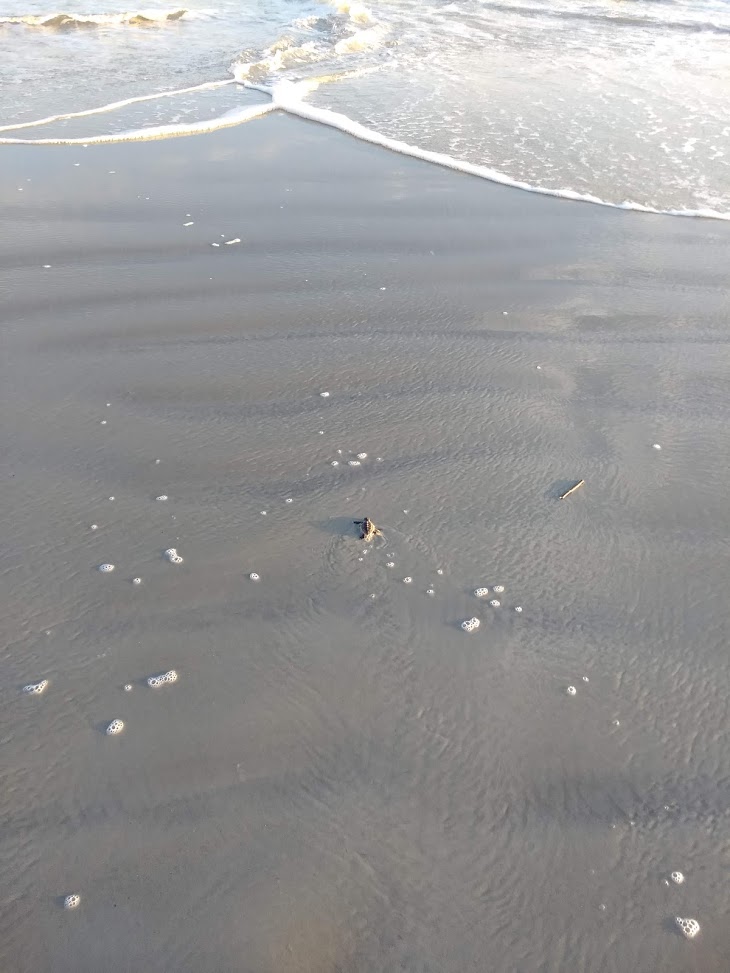
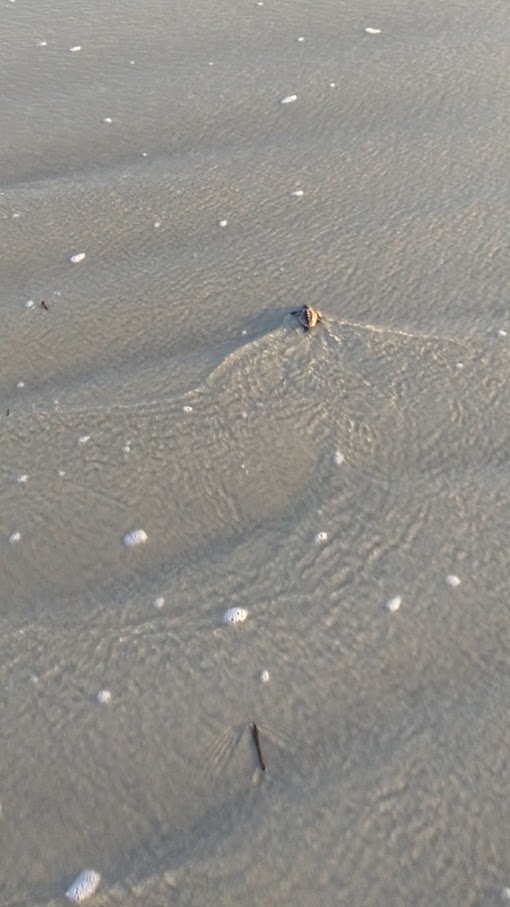
But something magical happened.  Around 7:45 PM EST on 1 August 2020, my girlfriend and I were taking a walk on the beach and saw this little guy:

Sea Turtle at Fripp Island (Video) - 1 August 2020

Yep.  That’s a baby sea turtle, freshly hatched, waddling his way into the ocean.

Readers who grew up, as I did, with constant sea turtle propaganda in schools and beachside signage will appreciate the majesty of this little turtle struggling to reach the mighty sea.  I never thought I would actually see a sea turtle hatchling in the wild.  It’s the real-world equivalent of seeing a unicorn.

Sure, I’d always supposed it was possible, but incredibly implausible.  My girlfriend—a chemist, not a biologist—positively shrieked with surprised joy.

We figured out the little guy had floated down on a current through a small tide pool, as we realized there weren’t others near him.  After he made it into the ocean, we walked up the beach another hundred feet or so and saw people watching another little guy straining seaward.  The lady picked the turtle up and placed him into the ocean, which (per my years of sea turtle propaganda) is a big no-no.  However, we soon realized it was a team of sea turtle conservationists (they had matching Sea Turtle shirts), so we figured they had the clearance to give Mother Nature a little push.

What a joyful happenstance.  Had we waited even a few moments longer to take our walk, we never would have known what we had missed.  God’s Creation is beautiful and wonderful; I am thankful He gave us the opportunity to see one tiny example of His ultimate Creativity.