

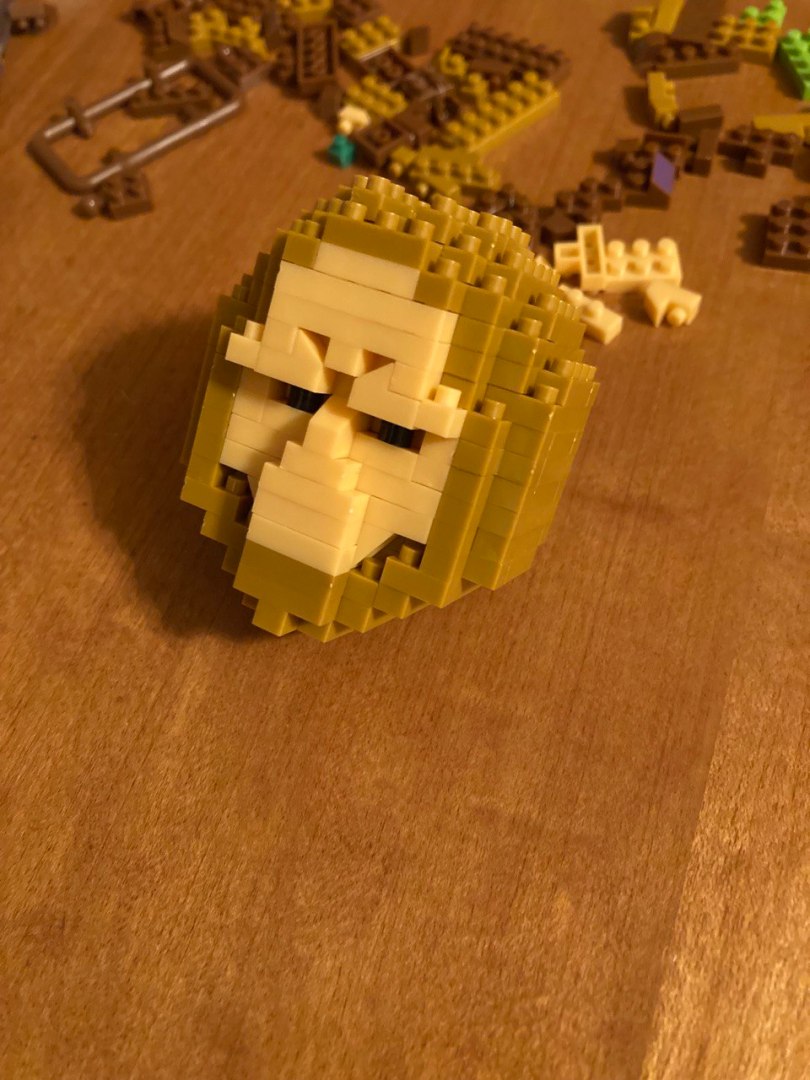
On Wednesday I posted a piece entitled “Cryptid Epistemology,” which was more about academics’ desperate attempt to monopolize “truth” through a campaign against “disinformation” more than it was about searching for Bigfoot. That said, the two topics are intertwined, and the piece is an exploration of why access to information, and the ability to parse and analyze that information, is so important.
What I admire about the more humble and intellectually honest side of the cryptid community is that they are open to the possibility that we don’t know everything. Indeed, they carefully sift through thousands of hours of footage, interviews, blog posts, books, etc., in search of gold. That they often come away with pyrite does not discourage them; instead, they keep looking, gently setting aside the few nuggets they find for further evaluation.
Maybe Bigfoot exists—maybe he doesn’t. What’s important is that these folks, so often dismissed as kooks, are sharpening their minds and engaging in intense analysis of thousands of data points. They are making healthy skeptics of themselves, even as they search for something at which most skeptics would scoff.
Who, I ask, is the real kook? So many self-proclaimed “skeptics” are merely parroting the very same narrative that was spoon-fed to them in a high school history class, or in their freshman philosophy course at college. They often do so with an air of condescension and derision, the sort of know-it-all-ism that derives from an excess of education but a dearth of wisdom.
The older I get, the more I realize how precious little any of us know. Things that were taught to me as inerrant “truth” have turned out to be a vast panoply of lies and half-truths, assembled into a shambolic, Frankensteinian mess for the benefit of the government and corporations.
To give one rather benign but illustrative example, before I turn it over to Audre Myers: as a kid, my elementary school teachers would, it seemed to me, forcefully and a bit angrily insist that the United States was moving to the metric system, and we’d all need to learn it so we could cope in a post-Imperial units world. It was all nonsense, and even as little kids we all kind of knew it was a bit overblown. Had our teachers said, “the metric system is important to learn because it is the standard in scientific research,” it would have been a.) truthful and b.) productive. Instead, they tried to terrify us into thinking we’d all be European, holding our cigarettes like gay men and speaking Esperanto (yes, another lie they told us in elementary school).
To be fair, things that I have taught have turned out to be inaccurate. The more I study history, for example, the more I realize that the narratives I teach—often derived from what my history teachers taught me—are often incomplete or even incorrect. When teachers talk about creating lifelong learners, it is for a reason: we can only get a small fraction of the Truth in our lives, and we should constantly undergo a refining process to purify our knowledge.
But I have overstayed my welcome in this overly long introduction. Audre offers up an excellent continuation of “Cryptid Epistemology,” her own further refinement on the journey towards Truth:
Using Vice President Kamala Harris’ favorite tool, here is the Venn diagram of intersection between The Portly Politico and myself: we overlap (come together) in Christianity, skepticism, and truth.
“Cryptid Epistemology” is probably one of The Portly Politico’s best articles to date – concise, considered, logical, and fully developed. I have a special interest in the topic presented as I am, to the best of my knowledge, the only person submitting articles to The Portly Politico that feature bigfoot – a cryptid. I am in my seventh year of armchair research regarding bigfoot; in that time, I have seen some of the worst fakes you can imagine – so bad, in fact, that small children wouldn’t even believe them – and some photos/videos that push me to the brink of accepting that bigfoot is, indeed, a living, breathing creature of God’s creation.
Port’s assertion regarding ‘wanting to believe’ having an affect on people’s perceptions is accurate. Pareidolia (the tendency to perceive a specific, often meaningful image in a random or ambiguous visual pattern) abounds. Seeing is not necessarily believing. There has to be context, peripheral indicators (foot prints, for instance), source confirmation, etc., in order to make considered opinions when a flesh and blood sample is not available. In other words, we can’t just look at what is immediately in front of us, we have to examine the wider area around what is in focus.
What I’ve learned from doing my research is the ability to apply that method to the world at large, which, for a lot of us, means politics. We look at something in the news today and spend the rest of the day, if not more, checking the periphery – what else is going on around it? who said what, when? who else saw/heard it? Pilate looked at Jesus and asked, “What is truth”. We ask ourselves that question a million times a day.
We can be misinformed, malinformed, dis-informed or what ever else they come up with, but it is our duty to ourselves, our families, our friends to look at the wider field and not just the thing in tight focus. My mama always said there’s three sides to every story – his, hers, and the truth. And that’s how we should determine truth – read, listen, watch and then discern.
 The Portly Politico
Outstanding intro, Port. You must be caught up on your rest.
LikeLiked by 2 people
Haha, yes! I am feeling much more rested and refreshed.
LikeLiked by 1 person
Thanks, Audre. 🙂
I agree. If people by and large took context into consideration, I doubt we’d be at war with each other. Maybe debates, conversation might be more considered, time taken to listen and process the information. As Tyler said the other day, though, context is mainly ignored by the left who would take a split instance to judge without viewing the wider picture and use it to attack. You can’t argue against them, because they have no interest in listening, so you have to paint a picture for the wider public using all the tools at your disposal.
Polarisation in our societies has never been more obvious and that’s because virtually everything has been politicised. For us conservatives, it’s more important than ever that we don’t copy the left in making snap judgements based on one instance but rather take our time and view the wider picture. We’ve always been good at that. It’s what makes us right.
LikeLiked by 2 people
Thank you for being a champion of reasoned discourse, Ponty.
LikeLiked by 2 people
By the way, Tyler, did you receive Frank’s article? He said he would send it over to you.
LikeLiked by 2 people
Yes! I am glad you asked; I’d forgotten about it that quickly, haha. It ended up in my “Spam” folder; otherwise, I would have seen it sooner. I’ll give it a read this morning.
Thank you again for making that request.
LikeLiked by 2 people
I got time to read the intro but I probably won’t read it until later. Looked good though.
One thing you might not know is Frank was a student of and then worked with the late and great Sir Roger Scruton.
LikeLiked by 2 people
Whoa! Super cool. What a great academic pedigree.
LikeLiked by 1 person
Was having a chat with Kath Nel via FB yesterday (2 my time, 7 her’s) and asked about Frank. She likes him very much. I don’t recall ever reading any of his comments.
LikeLiked by 1 person
Small world!
LikeLike
Politics are poison. I hope the date went well!
LikeLiked by 2 people
It was a pleasant evening. I found the facts I was hoping to uncover, haha. As of right now, it’s not going anywhere, but it was good to catch up with her and to engage in some deep conversation.
Heading down to the beach tonight for another one. Looking forward to some seafood!
LikeLiked by 1 person
Have a great time! 😎🍻
LikeLiked by 1 person
Thanks, dude! 🍤
LikeLike
You’re welcome!
LikeLiked by 1 person