Lazy Sunday CCCXLXIII: Empire

It’s been the week of American imperialism here on the blog, and I don’t necessarily mean “imperialism” negatively.  Here are some posts about how the United States is embracing its destiny (and the peaks and pitfalls of doing so):

Happy Sunday!

—TPP

SubscribeStar Saturday: American Imperialism

Today’s post is a SubscribeStar Saturday exclusive.  To read the full post, subscribe to my SubscribeStar page for $1 a month or more.  For a full rundown of everything your subscription gets, click here.

Apologies for the evening post, dear readers; Dr. Wife and I played a key role in balloon arch construction for a friend’s baby shower, and yours portly took an extended nap after overindulging on chicken wings and fried pickles.  Now that all of that succulence has gone straight to fat, I’m slowly rubbing my neurons together to hammer out this post.  —TPP

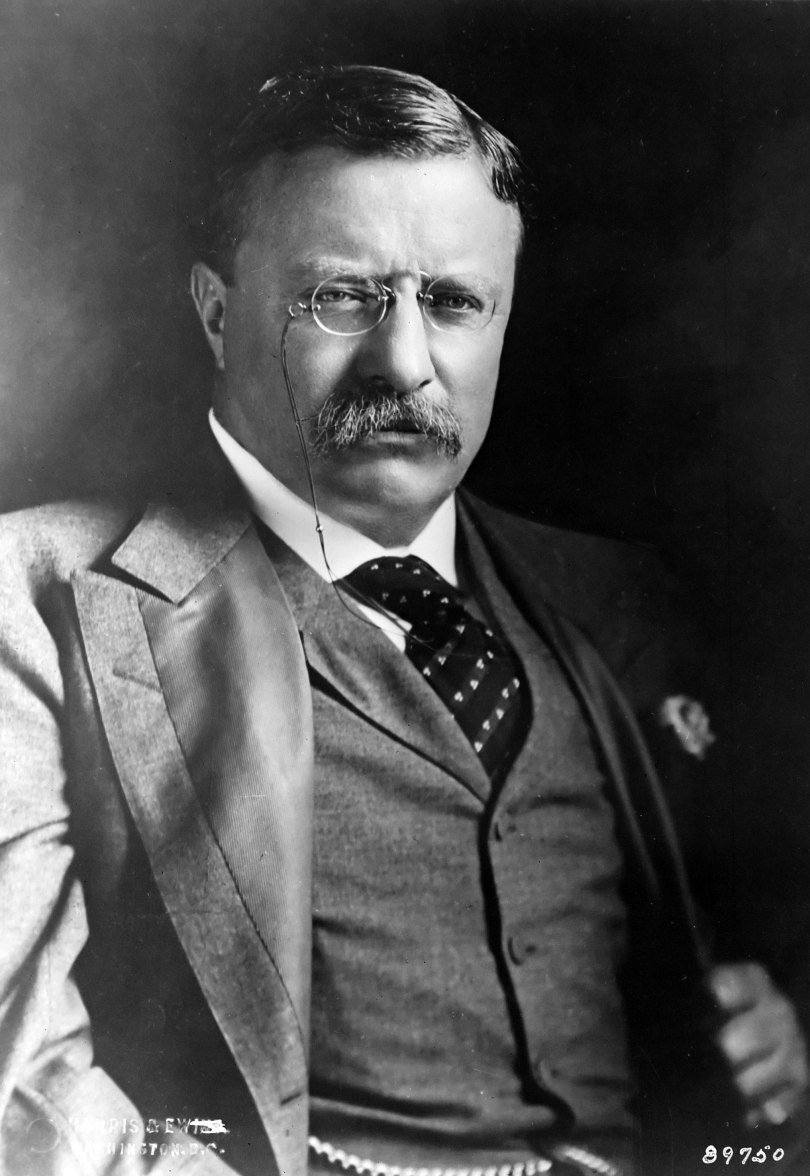
The excellent website Free Speech Backlash ran a lengthy essay of mine this past Thursday, 15 January 2026.  “Trump: Nationalist or Imperialist?” is an attempt to place the Nicolás Maduro arrest in the broader context of American diplomatic history, specifically as it pertains to our hemispheric policy.  That policy dates back to the 1823 Monroe Doctrine, which received an overhaul in the first years of the twentieth century during the presidency of Theodore Roosevelt.  The so-called Roosevelt Corollary to the Monroe Doctrine argued that, in order to prevent European intervention in Latin America, the United States would intervene instead.

President Trump is clearly aware of this history—thus his invocation of the “Donroe Doctrine,” his own revival of the Roosevelt Corollary.  Chinese and Russian influence in the Western Hemisphere is increasing, and The Donald has to take action.  The action in Venezuela was not strictly about securing oil—we have plenty of it—but to prevent China from controlling major oil reserves in the Western Hemisphere.  The United States also sought to prevent China and Russia paying for that oil with their own currencies, as the purchasing of oil in US dollars ensures the dominance of our increasingly devalued currency.

China has also sought to make inroads into Panama, where the Panamanians currently run the canal that Roosevelt took drastic steps to ensure could be built—under American auspices.  One reason Trump wants to reclaim the Panama Canal is precisely because if we don’t, the Panamanians will likely fold to the Chinese.

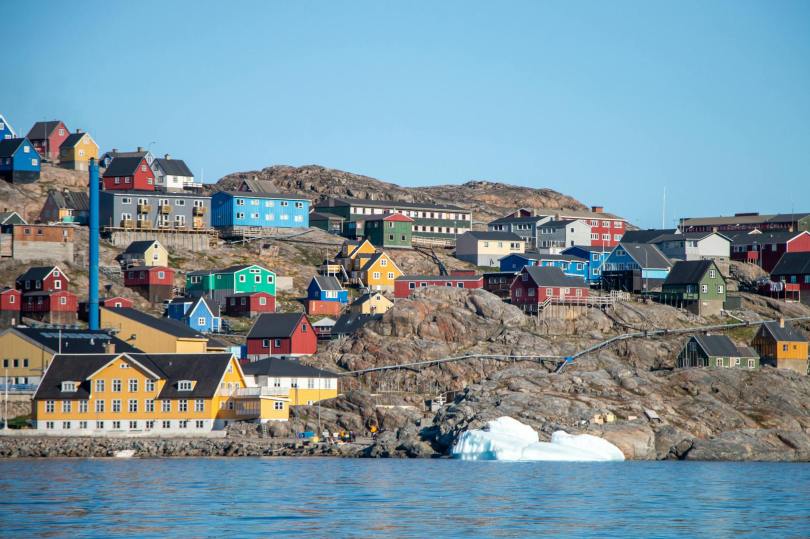
Even Greenland, the most memeable of Trump’s neo-Monrovian ambitions, is an application of the Monroe/Donroe Doctrines.  The Arctic is emerging as a major trade route for global goods—the fabled Northwest Passage now a reality—and China has already made attempts to bring the Danish colony under its thumb.  The Danes lack the will and the capacity to improve and defend Greenland—or even to exploit its vast natural resources effectively—and The Donald sees this island as the key to securing dominance in the Arctic in the Western Hemisphere.

Indeed, it was Greenland that generated the most commentary (and heart-bleeding) in the comments section.  The most common refrain from the opposition was that the Greenlanders have the right to self-determination.  It’s an argument I’m sympathetic with in principle, but in Reality, Greenland has a population of fewer than 60,000 people—only barely double that of the municipal population of my hometown growing up in South Carolina.  If the world were a peaceful place, an independent Republic of Greenland could probably be viable as an extremely small (demographically) nation.  In the world of cutthroat geopolitics, with China and Russia on the rise and the Arctic opening up new strategic challenges and opportunities, an independent Greenland is a costly fantasy.

To read the rest of this post, subscribe to my SubscribeStar page for $1 a month or more.

TBT: Make Greenland American

Yours portly has a lengthy post over at Free Speech Backlash today about Trump, Venezuela, and the intersection between American nationalism (“America First”) and American imperialism (the piece is called “Trump: Nationalist or Imperialist?“).  “Imperialism” is a dirty word, but America is an empire, whether we like it or not.  Indeed, we’ve been an empire since at least 1898, when the United States gained Puerto Rico, Guam, and the Philippines from Spain, and occupied Cuba for several years.  Cuba became nominally independent, but remained a virtual American protectorate until Fidel Castro’s Communist revolution in the 1950s.

Many on the Right are concerned that the Maduro capture is something of a “heel turn,” to use wrestling parlance, for Trump’s foreign policy, and that he’s abandoning America First principles in favor of open-ended American adventurism abroad.  My piece details why Maduro’s arrest is not another quagmire, and how it’s very consistent with traditional American foreign policy dating back to the Monroe Doctrine of 1823.

Similarly, Trump’s desire to annex Greenland, which sounds like a joke or someone playing a True Start Location Earth map in Civilization VI, is quite serious.  Greenland is in the Western Hemisphere, which—whether we like it or not—is America’s hemisphere.  American geopolitical strategy since 1823 has been to dominate this hemisphere to avoid a balance-of-power situation like Europe’s in the nineteenth century.  It is also seeks to prevent foreign intervention into the independent nations of this hemisphere.  One reason for the Maduro operation was to prevent Maduro from selling his country off to the Chinese, which would put America’s primary geopolitical rival in our backyard.

Similarly, China and Russia have designs on the Arctic, with the former particularly attempting to gain influence over the tiny Greenlandic population.  Denmark is entirely too venal to combat foreign intervention in its colony, so greater, more serious powers will do so.  With ice caps receding, the Arctic is the great oceanic chokepoint of the twenty-first century, and America needs Greenland to secure our interests in the Western Hemisphere—and to keep China out.

It’s unpleasant to think about Great Power politics in the twenty-first century, when we’re supposed to be beyond all that foolishness.  But it is the rules-based international order of the 1990s that is the aberration, not the kinds of aggressive power plays we’re seeing today.

Taking Greenland—which the Trump Administration seems intent to do—is part of the broader return to Reality the world is experiencing.  Reality is often hard, but it cannot be ignored.

I wish no violence upon Greenland or Denmark—far from it!  Greenland does not need to be taken by force.  At a certain point, the United States can offer Greenlanders a package so enticing, they cannot refuse.  Denmark should be eager to offload an expensive asset that they are not using—and that the bankroller of their social welfare state is willing to go to great lengths to obtain.

With that, here is 15 January 2025’s “Make Greenland American“:

Read More »

Make Greenland American

We’re just five days away from President/President-Elect Trump’s inauguration, and I’m as giddy as a schoolboy at the candy shop.  There is much to be excited about in a second Trump administration, but lately I’ve been whooping like a silver-backed gorilla (at the candy shop, presumably) over the prospect of purchasing Greenland from Denmark—and taking back the Panama Canal.

The coverage of President-Elect Trump’s desire to take Greenland features a mix of bemusement and alarm, which is pretty on-brand for Trump’s pronouncements.  There is a lot of chest-thumping from the European Union and the Danes, who both vow that the United States will never have Greenland.  President Trump, for his part, seems to be having fun trolling the stuffed shirts in Europe and the hostile American press, especially with his talk of annexing Canada (which is trolling; I think Trump is just having fun at Justin Trudeau’s expense).

What I like about all this annexation talk is that it hearkens back to the presidency of James K. Polk.  It was under Polk that the United States expanded to (mostly) its present borders, at least in the contiguous, lower forty-eight States.  Polk similarly struck an aggressively expansionist tone, proclaiming “Fifty-Four Forty or Fight” in reference to the upper border of the Oregon Territory.

Read More »

Lazy Sunday CXXII: MAGAWeek2020 Posts

In my enthusiasm to for the animal kingdom a couple of weeks ago, I neglected to kickoff MAGAWeek2021 with a Lazy Sunday retrospective of MAGAWeek2020 posts.

Well, better late than never.  Here’s all the goodness from MAGAWeek2020, which went pretty heavy on the first couple of decades of the twentieth century.  Even my post on a contemporary figure, Tucker Carlson, had some Progressive Era ties:  The Tuck is a big fan of Theodore Roosevelt, who enjoyed two separate posts last year.

Remember, these posts are available in full if subscribe to my SubscribeStar page for as little as $1 a month.  I’ve included links to the preview posts here on the blog, as well as the direct links to the full posts on my SubscribeStar page.

With that said, enjoy!

  • #MAGAWeek2020: Theodore Roosevelt, Part I” (post on SubscribeStar) – This first post on Theodore Roosevelt details his early life:  his childhood illness and his strenuous efforts to overcome it; the death of his mother and wife one the same day; his move to the Dakotas; and his command of the Rough Riders during the Spanish-American War.
  • #MAGAWeek2020: Theodore Roosevelt, Part II” (post on SubscribeStar) – This second post on TR examines his presidency in greater detail.  TR was a trailblazing president of the Progressive Era, and while some of his notions would rankle conservatives today (as they did at the time), he was, perhaps, the greatest populist president since Andrew Jackson.
  • #MAGAWeek2020: The Tuck” (post on SubscribeStar) – Speaking of populists, this profile celebrates the elitist who wants leaders to care about the people they govern.  Tucker Carlson is the only major voice in the mainstream media who advocates for an American First, pro-nationalist, pro-populist message.  He’s not the only such voice, but he’s the only one currently with the legitimacy of the mainstream press behind him—even as the National Security Agency is spying on him!  But, as I always say, you can’t cuck The Tuck!
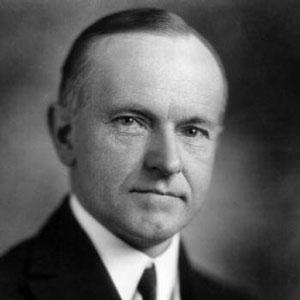
  • #MAGAWeek2020: Calvin Coolidge” (post on SubscribeStar) – Calvin Coolidge has enjoyed a bit of a revival in recent years as a stand-in for the tax reform debate.  In many ways, he was the antithesis to Theodore Roosevelt’s gutsy, activist style of leadership.  Coolidge took the role of president seriously, chiefly the idea that he was merely presiding over the country, not lurching into towards reform.  His steady, quiet, hands-off leadership allowed the country to flourish, and he holds the distinction of being the only president to shrink the size of the federal budget by the time he left office.

Well, now you’re all caught up.  Lots of good stuff to read—and just for $1 a month!  You can’t beat that, eh?

Happy Sunday!

—TPP

Other Lazy Sunday Installments:

Tip The Portly Politico:  Support quality commentary on politics, education, culture, and the arts with your one-time donation.

***NOTEThis link is NOT a subscription to my SubscribeStar Page; it is for a one-time donation/tip via PayPal. To subscribe to my SubscribeStar page, use this URL:   https://subscribestar.com/the-portly-politico***

#MAGAWeek2020: Calvin Coolidge

This week is , my celebration of the men, women, and ideas that MADE AMERICA GREAT!  Running through this Friday, 10 July 2020, this year’s posts will be SubscribeStar exclusives.  If you want to read the full posts, subscribe to my SubscribeStar page for as little as $1 a month.  You’ll also get access to exclusive content every Saturday.

Americans have come to expect action-packed, robust presidents, those like Theodore Roosevelt, who enjoyed two parts in (here and here).  We want our presidents to be like Harrison Ford in Air Force One:  ready to take down the terrorists, saving his family and his country, single-handedly.

Part of that is a symptom of the aggrandizement of federal and executive power at the expense of States’ rights and legislative authority.  Indeed, Theodore Roosevelt is to blame, in part, for that centralization, though certainly not alone (his cousin Franklin did far more damage in that regard).  He’s also responsible—again, in part—for our vision of the president as a man of action.

So today’s feature provides a counterpoint to the charismatic, blustering force of TR.  He is a president who, to paraphrase historian Amity Shlaes, resisted the calls to “do something,” and instead did “nothing.”  He is largely forgotten today, although his connection to tax cuts brought him back to popular attention in 2017.

Today, celebrates the life and presidency of a man of few words, but of great significance:  Calvin Coolidge.

To read the rest of today’s post, head to my SubscribeStar page and subscribe for $1 a month or more!

#MAGAWeek2020: Theodore Roosevelt, Part II

This week is , my celebration of the men, women, and ideas that MADE AMERICA GREAT!  Running through this Friday, 10 July 2020, this year’s posts will be SubscribeStar exclusives.  If you want to read the full posts, subscribe to my SubscribeStar page for as little as $1 a month.  You’ll also get access to exclusive content every Saturday.

Yesterday featured Part I of this two-part biography of President Theodore Roosevelt.  Part I dealt largely with Roosevelt’s life and achievements outside of the presidency; today’s post will examine his accomplishments as President of the United States.

Upon the death of William McKinley—a great, if now neglected, president in his own right—the young Theodore Roosevelt ascended to the presidency.  Old Guard Republicans had sought to smother Roosevelt’s career in national politics with a long, dull tenure as Vice President.  Now—thanks to the tragedy of an assassin’s bullet—Roosevelt took the “bully pulpit.”

Roosevelt was a Progressive, in the context of the time—he embraced a number of ideas Progressive reformers pushed—but he was also fundamentally conservative.  Roosevelt sought to conserve America’s promise of a “square deal to every man,” a promise that was seriously threatened.

To read the rest of today’s post, head to my SubscribeStar page and subscribe for $1 a month or more!

#MAGAWeek2020: Theodore Roosevelt, Part I

This week marks the beginning of , my celebration of the men, women, and ideas that MADE AMERICA GREAT!  Starting today (Monday, 6 July 2020) and running through this Friday, 10 July 2020, this year’s posts will be SubscribeStar exclusives.  If you want to read the full posts, subscribe to my SubscribeStar page for as little as $1 a month.  You’ll also get access to exclusive content every Saturday.

It’s that time of year again—a week of posts!  This year, I’m kicking off the festivities with America’s youngest and most dynamic president, Theodore Roosevelt.

Roosevelt’s presidency, like that of the similarly charismatic and action-packed Andrew Jackson, is a source of controversy among conservatives.  He was very clearly a Progressive Republican, and pushed for some of the measures that have created so many difficulties for conservatives and our nation today.  He used the power and influence of his office—his “bully pulpit”—to intervene in the economy, primarily by busting up “trusts,” major monopolistic companies with immense economic and political influence.

In light of the current dominance of Big Tech oligarchs and officious technocrats in the government and private sector, however, conservatives would do well to reassess Teddy Roosevelt’s presidency.  While conservatives typically abhor excessive federal activity and intervention, Roosevelt’s robust execution mitigated the worst excesses of the Gilded Age robber barons and renewed the promise of a “Square Deal” for every American.  For that reason and more, he should be celebrated for Making America Great Again.

To read the rest of today’s post, head to my SubscribeStar page and subscribe for $1 a month or more!

Post-Trump America

Well, the craziness of yesterday has subsided, and I’m almost finished with report cards.  Student-musicians apparently did quite well at their Music Festival, and life is (hopefully) about to calm down a bit before getting insane all over again in about five or six weeks.

All that said, I’m still pretty worn-out today.  Fortunately, my good blogger buddy photog, proprietor of Orion’s Cold Fire, wrote a post yesterday, “Building on Trump’s Revolt,” which raises some interesting questions.  Foremost at the back of every Trumpist’s mind:  who takes over after Trump?

Read More »