

After a long couple of weeks, I’m finally easing into Spring Break, a much-needed respite from mind-molding. I thought that a little rendition of “Heavenly Sunlight” might be what the Great Physician ordered.

After a long couple of weeks, I’m finally easing into Spring Break, a much-needed respite from mind-molding. I thought that a little rendition of “Heavenly Sunlight” might be what the Great Physician ordered.
Last night was my student’s big Spring Concert, which I am sure I will write about soon, but because of that concert—and the busy weekend preceding it—I’m actually writing this blog a full week early. Ergo, I’ll likely have some footage from that concert for the next installment of Open Mic Adventures.
For this one, however, I’m sticking to my recent bout of pianistic noodling videos. This week’s installment pulls from the Alfred’s Basic Piano Library Complete Level 1: For Late Beginners book. It’s the book my one-eyed Aunt Cheryl used to teach me to play piano, and it’s the one I use with my own piano students.
The piece is near the end of the book, and is called “Sonatina.” “Sonatina” literally means “a little sonata,” but there is no fixed definition for what constitutes a sonatina. They are usually light in nature, even amusing, and often meant to reinforce some technique (like an etude, which literally means “study”).
A quick blurb before today’s post: I’ve released my second book, Arizonan Sojourn, South Carolinian Dreams: And Other Adventures. It’s a collection of travel essays I’ve accumulated over the last four years, and it’s available now on Amazon.
Here’s where you can pick it up:
Pick up a copy today! Even sharing the above links is a huge help.
Thank you for your support!
—TPP
***
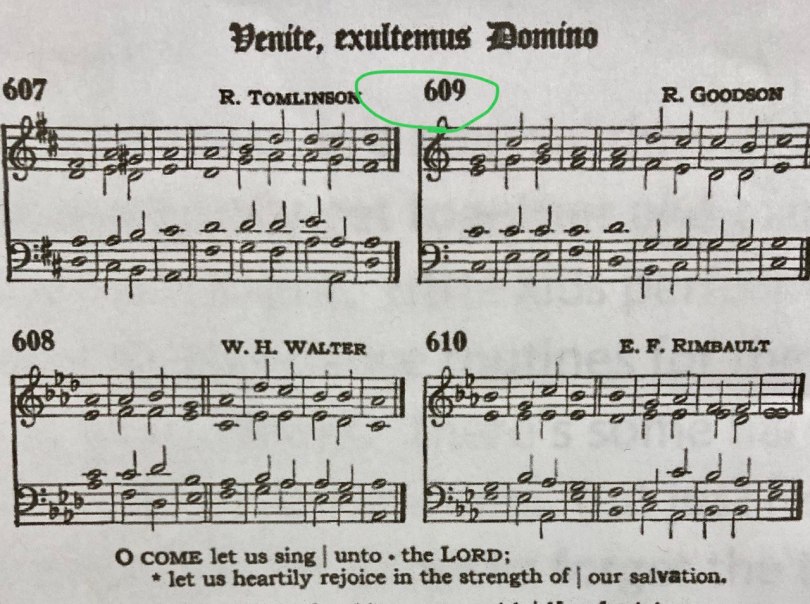
Yours portly is going High Protestant this week. Readers can thank Audre Myers for that one—she sent me the manuscript for her church’s new chant, “Venite, exultemus Domino,” at some point in the last few weeks, and I’ve been playing around with it on the piano.
I’m back in the hymnbook for this edition of Open Mic Adventures, which at this point is pretty much “anything I play anywhere, in any context, that I happen to record.” But that makes for an unwieldy title.
Inaccurate labels aside, I played “Softly and Tenderly” for my church’s Sunday morning service on Sunday, 12 March 2023. It was the invitational (the “altar call” piece, for the rest of you Pentecostals out there), but this recording was made before service. You can hear some chit-chat in the background, but not as much as the recording in “Open Mic Adventures XXII: ‘Blessed Assurance’.”
I’m a tad pressed for time this week, what with the big Music Festival coming up for my students on Thursday. It’s a flurry of activity for yours portly, so I have a very short little snippet for this week’s edition of Open Mic Adventures.
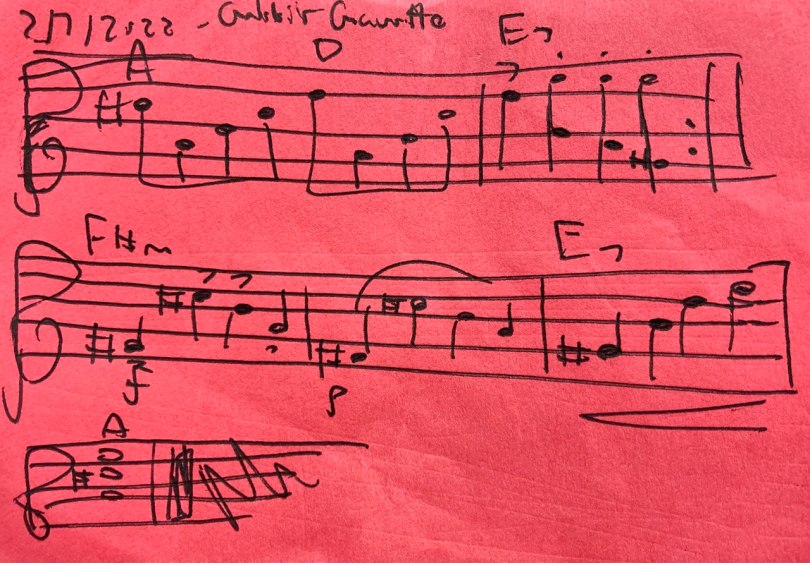
Regular readers will know of my red tardy slip composing project. My students have largely been showing up to school on time lately—drat!—so I haven’t had occasion to pen many more miniatures, but I do have a short one that is a bit lively and fun.
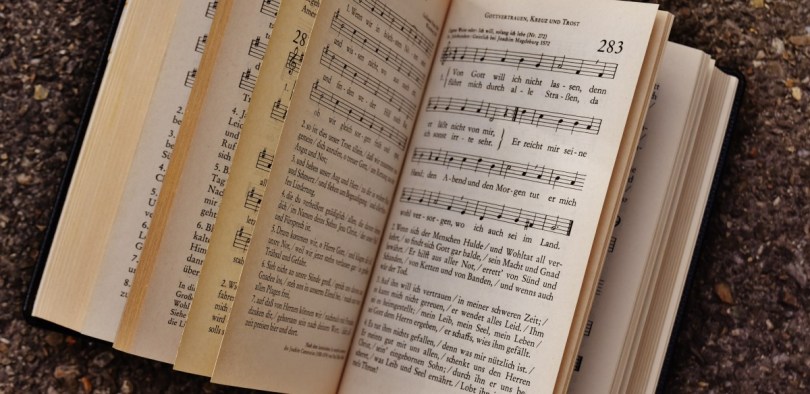
One of my favorites hymns is “Blessed Assurance,” the beloved tune from blind lyricist Franny Crosby and pianist Phoebe Knapp. They wrote the hymn in 1873. Knapp played the melody on the piano and asked Crosby what the melody “said,” and she said, “Blessed Assurance, Jesus is mine.” Thus, history was born.
I love playing this hymn, and had the opportunity to play it with our congregation this past Sunday. I decided to take a quick recording before service.

On Valentine’s Day I took a few moments from a morning planning period to do a cheeky cover of Styx’s “Come Sail Away.” My High School Music Ensemble students are performing it as one of the selections for our big Spring Concert (coming in March!), and I thought it would be a fun tune to play for Open Mic Adventures.
I often perform it live, and usually sing it in a higher register, slipping into my falsetto when necessary. The song is in C major, which I find is a key that easy to play (no sharps or flats!) but sometimes difficult to sing due to my vocal range (I’m more comfortable around A major).
Due to a bit of congestion, I decided to try singing it in a much lower baritone-bass register, and I’m pleased with the results. It’s not quite as powerful as Dennis DeYoung’s nasally, stratospheric, Broadway-influenced vocals, but I think it came out pretty well.

Readers will know that I have been featuring pieces from my modern classical piano project, Péchés d’âge moyen, which I released on 4 March 2022. I’ve finally begun a new, albeit amorphous, composing project, based on the kind of quirky premise you folks have come to expect from yours portly.
My school gives students little red tardy slips to bring to class, typically when they turn up late to the first period class. My High School Music Ensemble meets in the morning, so it’s not unusual to have a few students—especially the ones that can drive—show up late.
I hit upon the idea of composing very short musical themes or motifs based on the tardy students’ personalities (at least loosely).
The very first such composition was all of two measures. I’ve expanded them a bit since then, but they’re all fairly short—typically fewer than eight measures. I love the piano miniature format (the flash fiction of music!), and it’s fun to jot these down, and then play them back to the amusement of the tardy student.
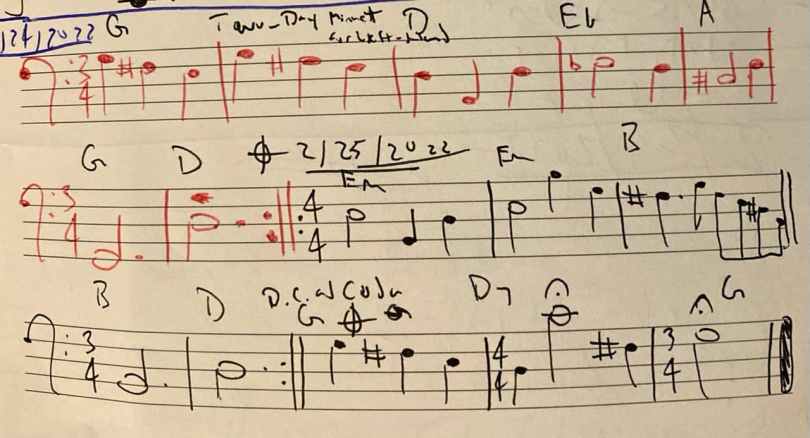
With Bandcamp Friday rapidly approaching, I’m diving back into 2022 and pieces from my modern classical piano project, Péchés d’âge moyen, which I released on 4 March 2022. This week, I’m featuring the final track from the collection, “Two-Day Minuet for Left Hand.”
The title is a bit on the nose—uh, I should write, the hand: I wrote it across two days, and the melody is in the left hand. See?
The first section, composed on 24 February 2022 (and in red pen, no less!) is in 3/4 time and consists of a slightly irregular seven-phrase theme. The second section, composed (you guessed it!) on 25 February 2022, is in 4/4 time. It’s an even more irregular five-phrase section, which shifts to 3/4 for the last two bars.
It ends with a little multimetered coda. On the manuscript, I forgot to make the final note a dotted half note, so technically it’s an incomplete measure of 3/4 time. D’oh!

For the second consecutive edition of Open Mic Adventures, I’m diving back into 2022 and pieces from my my modern classical piano project, Péchés d’âge moyen, which I released on 4 March 2022. This week, I’m featuring one of my favorite pieces, “Satiean Motion.”
 The Portly Politico