

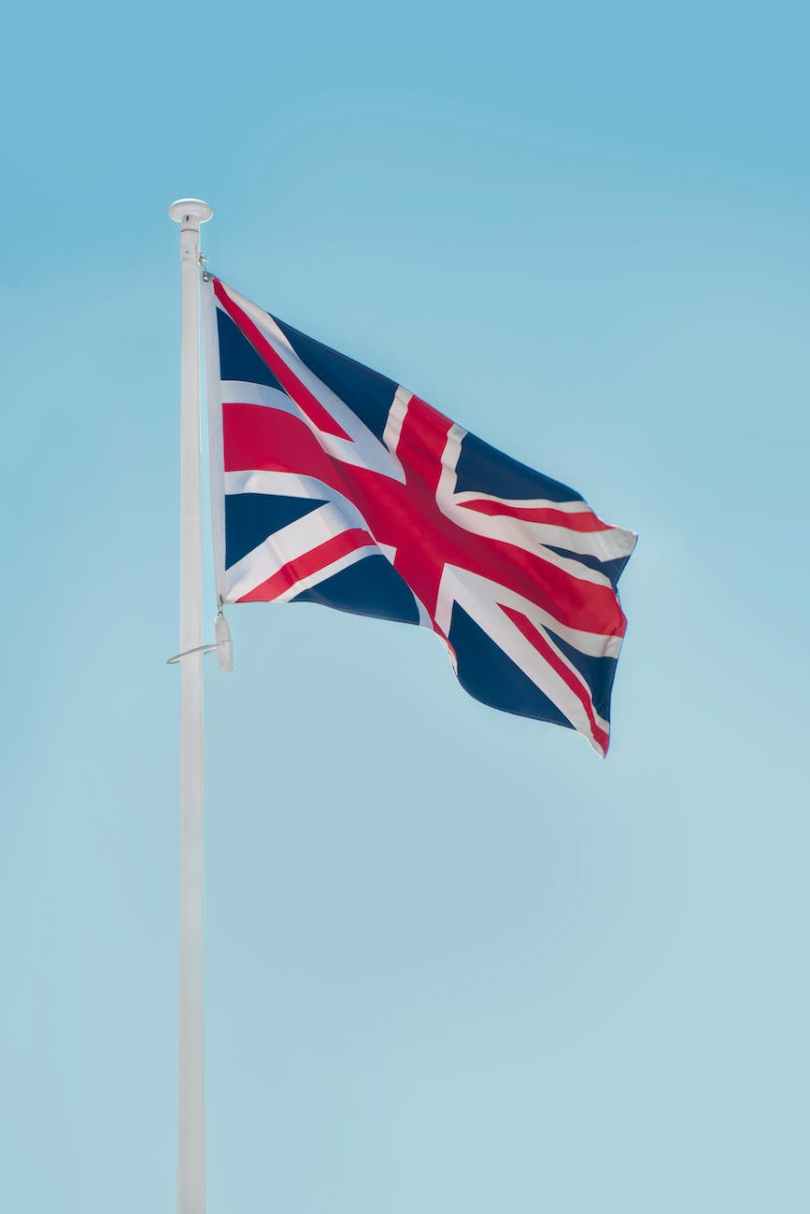
As a natural conservative, not merely a political one, I have always felt an affinity for the British monarchy, and never bought into the excessively utilitarian (and inherently radical) arguments that favor the abolition of the monarchy. After weeks of listening to videos from The People Profiles about the monarchy, I am even more convinced in the necessity of the British monarchy as a cultural and political force.
To be clear, I do not advocate for monarchy of any form in the United States. The reader might ask, “if it’s so beneficial to our British cousins, with whom we share quite a bit of history and culture, why isn’t it good for us?” The answer is simple: we’ve never had one! Monarchy is something almost completely foreign to Americans, at least since 1776. Our Founding was explicitly anti-monarchical, even if there were Americans willing to submit to a kingship under George Washington.
The British—and, more specifically, the English—however, have possessed a monarchy for over 1000 years, with the exception of that Cromwellian unpleasantness from 1648-1660, ending with the restoration of the Stuarts with Charles II. That is a great deal of tradition, custom, and ceremony to toss out merely to save a few bucks on maintaining the Royal Family.
Indeed, even with the somewhat squishy King Charles III on the throne, I would argue that the monarchy is even more important today than it has been in many decades. In a world of mass migration and woke identify politics, perhaps the only constant, consistent link with Britain’s past is the monarchy. The Royal Family is a symbol of Englishness, traditionally understood, and while they have roots in Germany, they nevertheless represent the essential English spirit.
Americans love the monarchy, and even though we would never wish any form of monarchy on ourselves—even a rather weak constitutional one—I think we have a certain respect of and yearning for the pageantry and pomp that go with it. We certainly have our American forms of pageantry, pomp, and ceremony, and they are no less stirring than the British varieties. But there is something powerful, something ancient, about the British monarchy that captures our imaginations and stirs us. For a nation built, in part, on perpetual (albeit fundamentally conservative) revolution, there is something deeply appealing about an institution that has endured for a millennium—and a rather eventful millennium, at that!
Similarly, I think the British need this link to their past. The Royal Family is a reminder of Britain’s greatness, and perhaps could serve as an inspiration for the British to become great again. There is no returning to the glories and civilizing influence of the British Empire, but the constant, living reminder of Britain’s impressive, almost boyish, dominion over much of the world is surely a source of pride and inspiration.
The arguments against the monarchy essentially boil down into three categories: financial, political, and revolutionary. Each of these have serious flaws.
Financially, the argument is made that maintaining the monarchy is expensive, and that money could be better spent elsewhere. This argument seems sensible, but it misses the point of the monarchy entirely. It smacks of the disciples who scolded Jesus for letting the prostitute pour the expensive oil on His Feet—“we could have sold it to help the poor!” Jesus Noted that there will always be poor among us. Similarly, why pour out this beautiful legacy just for the government to blow the money on another boondoggle?
Politically, the argument is that the Royal Family no longer serves any practical purpose, that they do not exercise any real, hard power. Certainly that is the case, although new Prime Ministers must go to the king and ask to form a government. Besides the intriguing possibility of a monarch saying, “no”—which would probably never happen, because Parliament would likely ignore it and proceed anyway—the king does not wield much direct power over the function of government. But he is a living embodiment of the English people and the British Commonwealth, and his utterances can influence policy, albeit very subtly. There is still a role for the monarch to play, but it is, of necessity, a quiet one. I doubt seriously that Charles III will make major proclamations on issues of public or even foreign policy, but his behind-the-scenes influence could be immense if wielded with a soft touch.
Revolutionarily, there are those who simply wish to rip up the monarchy, root and branch. These types see it as a relic of a disgraceful past, and that Britain should become a full-fledged republic. While the monarchy does not wield much practical power, ripping it up would simply create a substantial soft power vacuum. It would be like tearing out one’s own Conscious. The monarchy serves as an exemplar of the British “stiff upper lip,” of quiet resolve and determination in the face of adversity. I doubt seriously that Sadiq Khan could convey Britishness quite so well or enduringly, and not just because he’s a Paki.
Again, constitutional monarchy is not ideal for every people. It would never work here in the United States. Mexico shouldn’t have a king. But Britain should. Indeed, it needs a king. I would go so far as to argue that Americans need Britain to have a king, as a reminder that we defeated one, but also to remind us that we, too, respect the past, and that the world is older and more complex than 247 years of very recent history.
God Save the King!
 The Portly Politico
I’m still reading this but I wanted to get to the financial aspect of your piece.
The monarchy is expensive, yes, but much of its money comes from Crown estates, money which isn’t a drain on the public purse. Secondly, it would cost far more to entertain a republic than a monarchy (what with salaries for a president, other politicians and an extended civil service) and at least with the latter, there is little to no power involved; a monarch can speak out on various issues but has no power to enact them. A president, however, would have power and the opportunity to influence. The last thing we need is more politicians in this country. Personally, I think we already have too many politicians here and for each new mayor created or council separated, that means more civil servants. The cost is already too much. With a republic it would be astronomical.
LikeLiked by 2 people
jonolan did the legwork on the cost of the monarchy that I *should* have done. Turns out it brings in vastly more than it expends.
That is an intriguing point about the sheer costs for administration of a republic. I can say that the costs of multiple levels of government are, indeed, unwieldy. Serving on Town Council, we’re paid $150 a month (with, for some reason, two checks in December, for an annual total of $1950 a year in salary). At $1950 a year for four councilmembers, that’s $7800—and that doesn’t include the mayor, who is paid a bit more (I can never remember how much, but it’s closer to $3000, I think). In short, we’re sitting at over $10,000 a year just for elected officials, much less day-to-day town employees—in a town of 950 people! That’s $11.37 per person per year (roughly)—not much, but it’ll buy you a pizza!
Spin that out over the width and breadth of our great nation, and the costs are pretty staggering. That said, I don’t think consolidation of local governments is the answer (although it makes sense for school boards, which don’t really have any local power anymore, anyway); we need loads of subsidiarity/federalism in a nation as big as ours, and the more localized the decision-making, the better!
But in a country like England, where you can motor from the North Sea to the Irish Sea in, what—an hour?—a monarchy makes way more sense.
LikeLiked by 1 person
Interesting article with some salient points.
First off, America never defeated a king. Britain was unfortunate at that time to have the mad King George on the throne. With a different monarch, America might have had to wait a few years (or decades) more for their independence.
Secondly, I (and Tina) am still a monarchist despite King Charles III’s very Woke leanings. He will get involved because he always has; as Prince, he always had a lot to say and as King, he won’t change that. I’d have hoped he’d learned a few things from his mother, God rest her soul, who was, in my opinion, the best monarch we have ever seen. She could have taught diplomacy to politicians, such was her ability to woo those who politicians have made no secret of despising, like Putin and Trump. She made them feel welcome, spoke with them on all manner of subjects and didn’t, at any point, upset the apple cart by forcing them towards another point of view. It’s a shame that her diplomatic mastery never rubbed off onto the people who sat with her most, like the long list of terrible PMs we’ve seen over the last 2 or 3 decades.
That said, I’d rather see a monarchy over an expensive and vastly influential republic any day of the week. This monarch may not be good for the country, same with William, but at least it does not have the power to rule. A republic would be devastating for this country.
LikeLiked by 2 people
Very good article, Port. I’m reminded of a funny scene from the tv series, West Wing. A Congresswoman advises Josh Lyman (Deputy Chief of Staff) that she is going to present a bill making the president a king because the president spends so much time at store openings and such.
For those of us of a certain age, Queen Elizabeth ll was the embodiment of England. She WAS England. When she passed, we cried like we’d lost a family member. I miss her still.
England and America are like siblings: the older sibling went one way (parliament) and the younger sibling went another (constitution) and they are both ok with that. But don’t come against one or the other because you’ll have both to deal with!
God save the King.
LikeLiked by 2 people
Of a certain age? Her Majesty, Queen Elizabeth II was Queen Regnant of the United Kingdom and its sovereign states (up to 32 during her life and 15 at her death) for 70 years! That between 2 – 3 generations! For over 70% of the people in the world today, she was the only English monarch.
LikeLiked by 1 person
You misunderstand my point – when I said people of a certain age, I was referring to those of us alive long enough to have appreciated and respected her, both as a woman and as the Monarch. There will never be another Queen such as she. Nonpareil.
LikeLiked by 1 person
God Save the King!
LikeLiked by 1 person
Charles III should avenge his namesake and have all the MPs hung.
LikeLiked by 1 person
That would actually be kind of awesome. It would certainly shake things up!
LikeLiked by 1 person
To clarify, the arbitrary violence would be terrible, but *something* massive and decisive like that would shake the Western world out of its lazy complacency.
LikeLike
I suspect deep down we all want a Patriot King.
LikeLiked by 1 person
Check out jonolan’s point on the remaining powers of the monarch. Quite interesting. It would be controversial but intriguing to see the king exercise those prerogatives. I wonder, though, if in doing so, he’d risk losing them entirely from a resistant parliament?
LikeLike
A couple out of order points:
1) The British government spends approximately 0.01% of its gross receipts on supporting the Monarchy, with about 50% of that just being upkeep on Buckingham Palace and other Royal properties (All of which are also historical properties) Yeah, £107.5 million a year sounds like a lot… until you compare it to the £1,017 billion that the UK government brings in.
Also, the Crown brings in around £1.70 billion in additional revenues to England each year, far more than offsetting the costs of their upkeep.
2) As for what power the Crown has – More than you think by law. The Monarch could refuse Royal Assent to any proposed bill, thereby preventing it from ever being an Act of Parliament. It hasn’t been done since the early 1700s, but it could be.
Also, simply put, the Crown can simply dissolve Parliament and appoint a Prime Minister of their unilaterally choosing. Again, not something that has been unilaterally, but possible under the law.
Finally, it is the Monarch who formally recognizes the very existence of Foreign Powers. Think about that. Charles III decides a nation doesn’t exist and, by UK law, it doesn’t for any legal purpose, e.g., treaties or trade agreements.
And these are just glaring examples of all the legal powers – admittedly, not or rarely exercised unilaterally – under Royal Prerogative.
LikeLiked by 1 person
Thank you for doing the legwork I should have done in my post, jonolan. I’ve never bought the argument that “the monarchy should be abolished because it’s expensive,” but your evidence confirms what I always believed via instinct.
I was not aware the monarchy still retained so many powers. I’m not thrilled about the current guy—the Charleses don’t seem to have an easy go of it in that position—but it would be thrilling to see him exercise some of these unilateral powers. Perhaps years of disuse have left them rusty and unwieldy, but it might be time for some royal sharpening of the tools of state.
LikeLike
Just saw your comment below. Those powers are important in legal theory but in practice a dead letter. The monarchy has a lot of goodwill and support but very little hard power. It would take a massive crisis for a British King to exercise it. There are examples: in living memory Juan Carlos put down a right-wing military revolt in Spain after the death of Franco, but he acted decisively on behalf of bad government and liberalism not his own prerogatives as king. I suspect because he was mostly interested in sailing and womanizing and didn’t want to bother with running a country.
LikeLiked by 1 person
How is this for odd? In England, they refer to the anti-monarchy group as Republicans.
LikeLiked by 1 person
Makes sense—they don’t want a monarchy (Monarchists), they want a republic (Republicans).
The names of our two modern political parties come from Thomas Jefferson’s old Democratic-Republican party. It became the Democratic Party under Andrew Jackson. When disaffected Whigs and anti-slavery factions sought to create a new party in the 1850s following the death of the Whigs (properly the “National Republicans”), they sought to pull from Jefferson as well, and opted for the name “Republican.” They called themselves the “Grand Old Party” (GOP) to suggest a lineage with Jefferson’s original Democratic-Republican party.
Two different parties, one common founder. The modern GOP is probably much closer to Jeffersonian Democratic-Republicanism than the Democrats, but both would be difficult for Jefferson to countenance, I imagine.
LikeLiked by 1 person
Well that, my friend, is a reply worthy of Neo! Brilliant. Thank you.
LikeLiked by 1 person
High praise, indeed! Thank you, Audre.
LikeLiked by 1 person