

SubscribeStar Saturday: Malfunctioning Robots

Today’s post is a SubscribeStar Saturday exclusive.  To read the full post, subscribe to my SubscribeStar page for $1 a month or more.  For a full rundown of everything your subscription gets, click here.

After two years under the befuddlingly tyrannical rule of a mentally-impaired geezer, our electoral standards have slid to meet the lowered expectations of our time.  Now a mentally-impaired greaseball wants to be the United States Senator for Pennsylvania, and until a disastrous debate performance that was impossible to ignore, it seemed that Pennsylvanians were willing to vote for him.

To be clear, I take no pleasure in the profound illness of another person.  John Fetterman suffered a stroke—a terrible thing—but he is still pursuing public office.  As much as Henry Clay disliked Andrew Jackson in the 1824 presidential election, he wasn’t going to throw his support behind Secretary of Treasury William Crawford of Georgia (the election was thrown to the House of Representatives; Crawford was in third, but had suffered a major stroke and would pass away soon afterwards, with Clay giving his support to John Quincy Adams).

But we’ve grown accustomed to power-hungry wives and political parties propping up brain-dead puppets in public office.  Indeed, the historians of the distant future will no-doubt look back at our time and think of it as The Age of The Impaired.  We celebrate every manner of impairment—transgenderism, paralysis (both moral and physical), gluten intolerance, etc.—as some kind of special mark of holiness.

Of course, we should treat such people with compassion, but we shouldn’t be electing them to public office, no matter how good it makes us feel about ourselves to do so.  Public service is hard, even for the able-bodied and clear-minded.  Being a United States Senator is exceptionally difficult—and a position with incredible amounts of power and prestige.

What we saw with Fetterman—much like Marco Rubio’s glitching out in 2016—was an Establishment robot malfunctioning on live television.  I’m only being mildly hyperbolic—Fetterman can only process incoming sounds via a computer.  That’s a miraculous bit of technology, but do we want a cyborg serving as one of the 100 men and women of the US Senate?  Even if we did, would we want one that was constantly breaking down in stressful situations?

To read the rest of this post, subscribe to my SubscribeStar page for $1 a month or more.

SubscribeStar Saturday: The Great Coarsening

Today’s post is a SubscribeStar Saturday exclusive.  To read the full post, subscribe to my SubscribeStar page for $1 a month or more.  For a full rundown of everything your subscription gets, click here.

A perennial saw of the conservative pundit is the decline of public morality.  Indeed, it is so well-worn that the ignorant use it as evidence that, because people have always complained about “kids these days,” it must mean that we’re just fuddy-duddies who are painfully out of touch.  Why, elders have always complained about their kids!

Of course, that’s not true.  The idea of a “generation gap” is a relatively modern phenomenon.  For most of human history, children grew up to be very much like their parents (indeed, I would argue that is still the case, just with the addition of angsty, extended adolescence tossed into the mix).  Yes, humans have always recognized the folly of youth—Proverbs frequently refers to children and young people as “fools,” or taken with folly—but it wasn’t considered to be either virtuous or some massive, unbridgeable gap.

But in a world with no connection to the past, one which exists in an eternal Present, it is little wonder that we witness—even encourage!—such a separation from our ancestors.  The United States particularly suffers from the pedestalization of youth:  we have come to believe that youngsters possess all wisdom, being spared the corruption of Reality—of real life.

The opposite, of course, is true.  Yes, there is something admirable about the energy and certitude of youthful moral righteousness, but it is often a quite short-sighted self-righteousness.  That’s not the fault of young people—they are, after all, young and inexperienced—but the traditional expectation was that they would grow out of that sunny idealism as Reality and Truth taught their hard lessons.  We should remain optimistic and thankful in the midst of adversity, but true foolishness comes from ignoring these hard-taught lessons.

That’s all a very long preamble to get to the thrust of this piece:  we are witnessing The Great Coarsening of civil and social life, in every arena:  politics, culture, art, manners, customs, etc.  How often do we hear the F-word dropped casually in everyday conversation—the way Nineties Valley Girls used the word “like”?  As a schoolteacher, I overhear this word frequently, as students and adults treat it as, essentially, a sentence enhancer.

Here is where the charges of fuddy-duddiness are most frequently leveled: “Oh, come now, Port, who cares about some word?”  It’s not the word itself, per se—although that word is exceptionally foul—but what it represents.

Or, rather, what it’s ubiquity represents:  the aforementioned Great Coarsening.

To read the rest of this post, subscribe to my SubscribeStar page for $1 a month or more.

SubscribeStar Saturday: Busybodies

Today’s post is a SubscribeStar Saturday exclusive.  To read the full post, subscribe to my SubscribeStar page for $1 a month or more.  For a full rundown of everything your subscription gets, click here.

In casting about for a topic for this weekend’s edition of SubscribeStar Saturday, The Z Man’s latest podcase served as inspiration.  Entitled “Thinking About Athens,” the episode is an extended thought experiment on the nature of Athenian democracy, and the problem of generating consensus in a true democracy.  The problem becomes increasingly intractable the larger the group of participants becomes, to the point that “consensus” breaks down entirely, as everyone realizes that the groups that complain the most and take the firmest stances against compromise end up getting their way in order to maintain the “consensus.”  Yikes!

I often use the analogy of ordering pizza when illustrating this point to my students (usually in the context of the Articles of Confederation, America’s first governing document, which required unanimous consent of all States—each of which had an equal vote—to amend the Articles):  there is almost always at least one student who will not anything but plain cheese pizza.  Some students will only eat pizza with toppings.  Rarely, a student will not eat pizza at all.  But if found ourselves in a world in which ordering one kind of pizza were mandatory, the outcome would either be a.) ordering no pizza at all or b.) capitulating to the lame person who just wants a plain cheese pizza.  In either case, almost no one gets what they want.

Even if someone attempts to “opt-out” of the system, that is a threat to the consensus itself.  By attempting to abstain, those who demand conformity with the “consensus” react with suspicion—why won’t this weirdo eat pizza with us?  It’s not enough that someone might just want to do something else; we must be forced to be free.

I touched upon this topic in an essay from 27 February 2021, “Authoritarian Creep.”  To quote liberally from myself:

Something with which I struggle to wrap my mind around is the authoritarian impulse.  I’m not pretending I’m immune to this impulse—this desire to tell others how to live their lives, backing it up with the threat of force for non-compliance—but the older I get, what little appeal the tendency held continues to diminish.

What I struggle to comprehend is the apparent need to boss people around.  I understand needing to be authoritative with children and students—setting clear boundaries, understanding actions have consequences, molding the child to become a self-governing adult—but this desire to boss around perfect strangers is increasingly foreign to me.

This impulse manifests itself in virtually every facet of our lives.  It creeps in bit by bit.  Modest policy proposals and laws suddenly becomes weaponized Karenism, empowering authorities and otherwise normal people to swagger about with impunity, assured of the righteousness of their cause du jour.

Why do we want to control one another so much?

To read the rest of this post, subscribe to my SubscribeStar page for $1 a month or more.

Gnostic Mysteries

There is something appealing about possessing some bit of secret knowledge or trivia that is unknown to everyone, save a select few “initiates” fortunate enough to partake in the mysteries.  The seductive allure of secret knowledge—or of just being “in-the-know” about some microniche subculture—seems to be a part of human nature.

We’d like to think in our modern age that we’re not superstitious sorts, but we are haunted everywhere.  Scientists have elevated themselves to the level of priests in a cult of scientism, worshipping the emptiness of nihilistic materialism just as the pagans worshipped lifeless idols.  Both are made of stuff—hard, material, unfeeling, insensate stuff—and both are equally empty.

But we here on the Right can fall prey to Gnostic fantasies as well.  The Libertarian dreams of a utopia in which everyone engages in frictionless free exchanges and all uncomfortable disputes are settled with cash and self-interest.  He’s as materialist and deluded as the mask-wearing mandatory vaxxer preaching loudly from the Church of Scientism.  The hyper-nationalist dreams of some impossible ethnostate that never really existed in the first place.  And so on.

Still, it’s seductive, the idea that we can possess the knowledge of good and evil, of true Reality.  After all, that’s the original sin, isn’t, it?  Eve, then Adam, could not resist the allure of being—so they were told, dishonestly—like God.  But even—perhaps, especially–Christians can fall into this trap.

Read More »

SubscribeStar Saturday: Martha’s Migrant Crisis

Today’s post is a SubscribeStar Saturday exclusive.  To read the full post, subscribe to my SubscribeStar page for $1 a month or more.

Apologies for the delayed post this morning, readers.  After a particularly grueling (but productive!) week and around three hours of sleep, I wasn’t prepared to write a post Friday night, and instead dozed off on the couch watching a Spanish-language horror movie.  —TPP

The big news this week is that Florida Governor Ron DeSantis sent a few dozen illegal immigrants to an upscale island vacation destination on the taxpayers’ dime.  Normally, I’d see this move as what these things usually are:  another example of scofflaws getting rewarded while the law-abiding foot the bill.

But these are not normal times, and the cost to Florida taxpayers was well worth the message sent:  if you progressive elites like illegal migrants so much—often at the expense, in terms of treasure and blood, of the naturalized and native-born citizens you’re sworn to protect—then surely they won’t mind a few dozen border hoppers lounging around Barack Obama’s palatial estate.

For conservatives out there concerned about the cost of these illegal immigrant vacation junkets, think of it as part of the State of Florida‘s advertising budget:  instead of spending money warning people to look out for cyclists or some other wasteful public service announcement, Floridians are getting a major return on their advertising dollars.  The speed with which the Martha’s Vineyarders (Vineyardians?) expelled the dusky hordes from their sleepy progressive utopia is an object lesson in how little elites really believe anything they say.  It’s also a pretty effective way of highlighting, on a small scale, what border towns experience every day, and to a far greater magnitude.

To read the rest of this post, subscribe to my SubscribeStar page for $1 a month or more.

SubscribeStar Saturday: Unreality

Today’s post is a SubscribeStar Saturday exclusive.  To read the full post, subscribe to my SubscribeStar page for $1 a month or more.
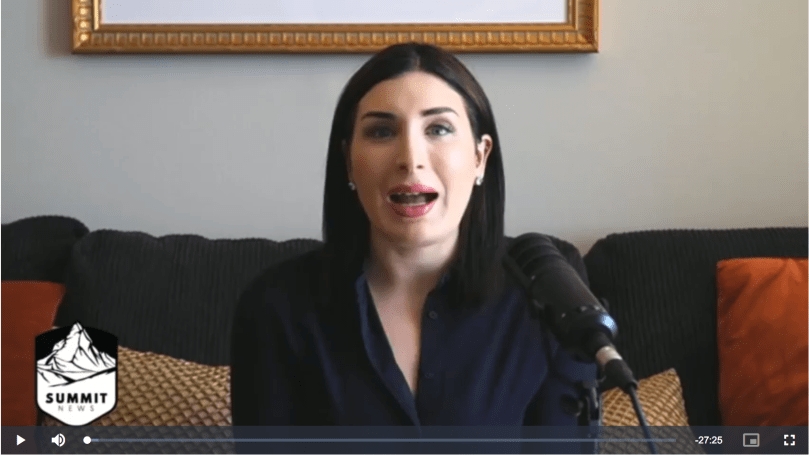
There is a distinct sense of unreality hovering over the West lately.  I don’t know if anyone else has experienced this sensation—if you have, please leave a comment—but the Zeitgeist of our age seems to be a sense of alienated disconnection from Reality itself.  We’re living in a profoundly unserious time, led by unserious people, debating unserious problems.

Men can have babies.  Children can choose their gender.  Everything is just a social construct, after all; in such a world, anything imaginable is possible.  And while there is no fixed morality, we’re told, questioning the social construction that everything is a social construction is an assault on a truth that doesn’t exist—but it’s still bad, so don’t do it!

The pretzel logic of nihilistic relativism twists us into macabre perversions of ourselves.  Such is the consequence of embracing the unreal and rejecting Truth and Reality.

But Truth and Reality are there, whether we accept it or not.  And they hit hard.

This post is a SubscribeStar Saturday exclusive.  To read the full post, subscribe to my SubscribeStar page for $1 a month or more.

Ponty’s Friday Morning Video Game Review: Canis Canem Edit (Bully)

I’m blessed with many contributors to this site, and their efforts have really lightened my load, especially as school has resumed.  One of my most regular contributors is the indefatigable Pontiac Dream 39, also known as Always a Kid for Today.  Here, we call him “Ponty.”

Like myself, Ponty is a gamer.  I don’t have much time for games these days, but I do enjoy the occasional round of something fun with friends—or just playing casually alone.  So it was a pleasant surprise to receive this review from him.

I actually pitched the idea of making Friday video game reviews a regular/semi-regular feature, but Ponty demurred.  That said, I’m hoping he’ll continue contributing video game reviews (he wrote a good review of a game developer for the site some time ago), although as we’re about to kick off our competing lists of the Top Ten Best Films, he may need a bit of a break from all this scribbling!

I never had the pleasure of playing this game, which was released here in the United States as, simply, Bully, before the usual band of moral scolds got the name changed to Canis Canem Edit, Latin for “dog eat dog.”  I do remember seeing it advertised, and finding the premise—a boy fighting against all the hierarchies, social and institutional, of a boarding school—an intriguing premise for a semi-sandbox-style game in the mold of Grand Theft Auto.  Based on Ponty’s review, it sounds like I missed out!

With that, here is Ponty’s review of Canis Canem Edit, or Bully:

Read More »

TBT^4: Back to School with Richard Weaver

We’re back into the swing of things with the new school year, and as of the time of this writing, I have not yet made my annual dip into the introduction to Richard Weaver’s Ideas Have Consequences.  That’s due in part to my morning Bible study, which has taken precedence over other, non-work-related reading, and because I’m weary with how accurate Weaver’s prophetic scribblings are.

I’m by no means black pilled, though.  Sure, things are not good at the moment, but life goes on and God Is in Control.  The solution is not to embrace the black pill, but to take the Christ Pill.

Regardless, we can take some joy in our daily lives while recognizing the real dangers facing liberty and civilization.  Being a Christian shouldn’t have to mean accepting the erosion of religious liberty and the secularization of our culture.  Indeed, we’ve probably been too complacent, especially on the latter point.

As such, Richard Weaver’s insights are still worth pondering today.  Studying the diagnosis could suggest a cure, or at least a course of treatment.

With that, here is 20 August 2020’s “TBT^2: Back to School with Richard Weaver“:

Read More »

Loomer and Liz

Today Laura Loomer—the most censored woman in America—is taking a stab at the Republican nomination for her congressional district in Florida, which includes The Villages, the massive retirement community.  She’s running against incumbent Daniel Webster, who skipped the Trump impeachment vote and is therefore, according to Loomer, complicit in it, as well as some swarthy nobody who might get a couple of percentage points.

Laura Loomer’s election—if she wins the primary, she’ll very likely win the very pro-Trump Florida 11th congressional district—would be a major boon for the America First movement, and would be yet another repudiation of the Establishment Republicans who are content to fiddle about an “insurrection” while the nation burns.

That very same Establishment suffered a major defeat last week, when busybody and daddy’s princess Liz Cheney fell to a Trump-endorsed candidate in the Republican primary for Wyoming’s single congressional district.  Cheney’s defeat was a drubbing of epic proportions:  she only garnered 28.94% of votes cast, with her opponent Harriet Hageman winning with 66.33% of the vote.  Talk about a “repudiation of the Establishment Republicans,” am I right?

It’s a tale of two candidates.  Liz Cheney represents the ossified, corrupt, dynastic, moralistic, staid, boring, ineffectual, kabuki theatre style of politics that has haunted our dear Republic for the last century.  Loomer, on the other hand, is the bold, persecuted, spicy, fun, energetic, bombastic future.

If she wins today, it’s icing on the cake of Cheney’s defeat.

Read More »

Midweek Myers Movie Review: The Jolson Story (1946)

We’re nearly through the end of the our lengthy countdown of the worst films ever.  With Ponty’s pick in the books, there’s just my pick to go on Monday.

Fortunately, Audre Myers is back again with some midweek levity and positivity, moving away from the acerbic wit of negative reviews.  The object of her praise this week is 1946’s The Jolson Story, the slightly fictionalized account of the life of Al Jolson and his insatiable appetite for applause.  There’s also a poignant love story, one that doesn’t quite turn out as we’d hope.

But I’ll leave that to Audre.  Here is her review of The Jolson Story (1946):

Read More »