

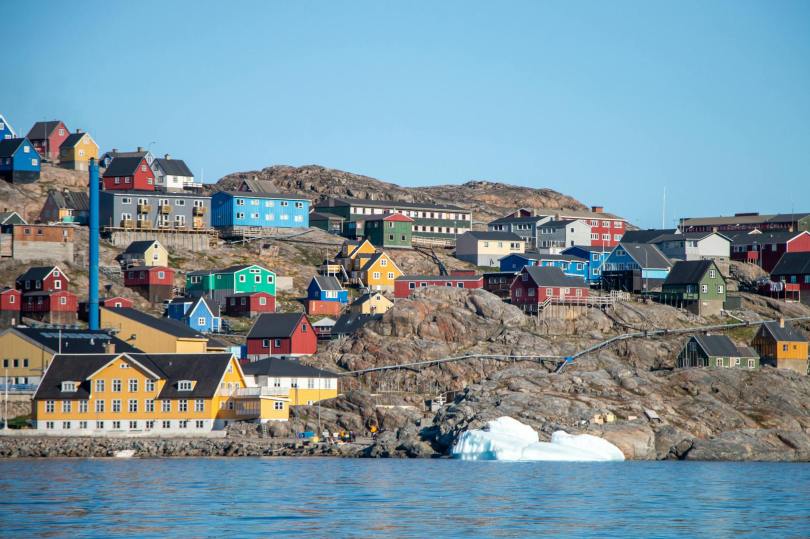
Yours portly has a lengthy post over at Free Speech Backlash today about Trump, Venezuela, and the intersection between American nationalism (“America First”) and American imperialism (the piece is called “Trump: Nationalist or Imperialist?“). “Imperialism” is a dirty word, but America is an empire, whether we like it or not. Indeed, we’ve been an empire since at least 1898, when the United States gained Puerto Rico, Guam, and the Philippines from Spain, and occupied Cuba for several years. Cuba became nominally independent, but remained a virtual American protectorate until Fidel Castro’s Communist revolution in the 1950s.
Many on the Right are concerned that the Maduro capture is something of a “heel turn,” to use wrestling parlance, for Trump’s foreign policy, and that he’s abandoning America First principles in favor of open-ended American adventurism abroad. My piece details why Maduro’s arrest is not another quagmire, and how it’s very consistent with traditional American foreign policy dating back to the Monroe Doctrine of 1823.
Similarly, Trump’s desire to annex Greenland, which sounds like a joke or someone playing a True Start Location Earth map in Civilization VI, is quite serious. Greenland is in the Western Hemisphere, which—whether we like it or not—is America’s hemisphere. American geopolitical strategy since 1823 has been to dominate this hemisphere to avoid a balance-of-power situation like Europe’s in the nineteenth century. It is also seeks to prevent foreign intervention into the independent nations of this hemisphere. One reason for the Maduro operation was to prevent Maduro from selling his country off to the Chinese, which would put America’s primary geopolitical rival in our backyard.
Similarly, China and Russia have designs on the Arctic, with the former particularly attempting to gain influence over the tiny Greenlandic population. Denmark is entirely too venal to combat foreign intervention in its colony, so greater, more serious powers will do so. With ice caps receding, the Arctic is the great oceanic chokepoint of the twenty-first century, and America needs Greenland to secure our interests in the Western Hemisphere—and to keep China out.
It’s unpleasant to think about Great Power politics in the twenty-first century, when we’re supposed to be beyond all that foolishness. But it is the rules-based international order of the 1990s that is the aberration, not the kinds of aggressive power plays we’re seeing today.
Taking Greenland—which the Trump Administration seems intent to do—is part of the broader return to Reality the world is experiencing. Reality is often hard, but it cannot be ignored.
I wish no violence upon Greenland or Denmark—far from it! Greenland does not need to be taken by force. At a certain point, the United States can offer Greenlanders a package so enticing, they cannot refuse. Denmark should be eager to offload an expensive asset that they are not using—and that the bankroller of their social welfare state is willing to go to great lengths to obtain.
With that, here is 15 January 2025’s “Make Greenland American“:
We’re just five days away from President/President-Elect Trump’s inauguration, and I’m as giddy as a schoolboy at the candy shop. There is much to be excited about in a second Trump administration, but lately I’ve been whooping like a silver-backed gorilla (at the candy shop, presumably) over the prospect of purchasing Greenland from Denmark—and taking back the Panama Canal.
The coverage of President-Elect Trump’s desire to take Greenland features a mix of bemusement and alarm, which is pretty on-brand for Trump’s pronouncements. There is a lot of chest-thumping from the European Union and the Danes, who both vow that the United States will never have Greenland. President Trump, for his part, seems to be having fun trolling the stuffed shirts in Europe and the hostile American press, especially with his talk of annexing Canada (which is trolling; I think Trump is just having fun at Justin Trudeau’s expense).
What I like about all this annexation talk is that it hearkens back to the presidency of James K. Polk. It was under Polk that the United States expanded to (mostly) its present borders, at least in the contiguous, lower forty-eight States. Polk similarly struck an aggressively expansionist tone, proclaiming “Fifty-Four Forty or Fight” in reference to the upper border of the Oregon Territory.
For context, the Oregon Territory consisted of modern-day Washington State, Oregon, and British Columbia, and the United States and Great Britain shared joint control of the territory. Polk was demanding all of the territory come under exclusive American control. Ultimately, the 49th-degree North parallel—the traditional border with Canada west of the Great Lakes—was extended to the Pacific Ocean, and Great Britain retained British Columbia as part of Canada.
However, Polk’s forcing of the issue—and his demand for the entire Oregon Territory—sparked negotiations with Great Britain that resulted in the United States getting what Polk (and Americans) really wanted: full control of the areas south of the 49th-degree parallel. He was engaging in something that President Trump does well: anchoring. In other words, Polk was making a wild demand—all of the territory—knowing that the Brits, out of desperation and consternation over what this reckless expansionist might do, would come to the negotiating table and meet Polk halfway—which is exactly what happened.
Similarly, Trump is playing the same game with Greenland. He knows that Greenland is likely a drain on Denmark (which spends billions in subsidies to the island’s largely indolent, welfare-addicted population each year), but represents an important strategic asset for the United States, as the Arctic Ocean becomes an increasingly important geopolitical region. Denmark is not likely to take advantage of Greenland’s strategic position in the Arctic Ocean, but it is very important to America’s national security.
Further, Greenland possesses potentially large reserves of rare earth metals and other mineral wealth, resources that the United States depends largely upon China to provide. Being able to mine our own rare earth metals for our electronic devices would be a major boon to the United States, and reduce our dependence on China—a key goal of the Trump administration.
Also, Greenland is in the Western Hemisphere. Since the days of the Monroe Doctrine, the United States has declared hegemony in this hemisphere. Existing European possessions can stick around, but there are to be no new European (or Chinese) colonies in this hemisphere. That said, the spirit of the Monroe Doctrine is to reduce any Old World colonial presence. Acquiring Greenland certainly fits with that goal.
Some will object that we have more pressing concerns here at home, and that purchasing Greenland—which Denmark so far has seem loathe to do—will be prohibitively expensive. We certainly have major problems to contend with here, but those problems do not preclude purchasing Greenland, which could benefit the United States in the long-term. As for the expense, well, our currency is largely theoretical at this point; while we’re burning money, we might as well obtain massive amounts of real estate in the process.
Besides, the United States has a rich tradition of acquiring cold, desolate lands on the cheap. Alaska turned out to be a major boon, with massive amounts of coal, oil, gold, and other precious minerals. And owning Greenland could provide many young men and women with an opportunity they desperately desire: the chance for adventure on the frontier.
As for the Panama Canal, I am fully onboard with taking it back from Panama as well. Chinese influence in Latin America—a blatant violation of the Monroe Doctrine—makes the Canal’s independence perilous. The Panamanian government has done an admirable job maintaining the Canal—so far. But, ultimately, the United States built it and paid for it. Panama as a nation would not exist had the United States not desired to build the Canal (President Theodore Roosevelt infamously recognized Panama’s independence from Colombia because he believed the Colombian Senate was gouging him for more money during negotiations for the Canal Zone).
And Canada? I’m not sure I want to take on the burdens of their ludicrously, cringe-inducingly multicultural society, but let’s face it—they’d be better off as States than as an independent nation electing incompetent pretty boys to run their socialist paradise.
At least we’d have poutine.
 The Portly Politico
Your post over at FSB has brought in some good debate and has been well received. Needless to say, on this matter, you and I are at odds. Have a mosey at the comments and see what you think.
LikeLiked by 2 people
No worries, old chum. One day you, Tina, Dr. Wife, and I will be summering in Nuuk and enjoying the Old-Timer Burger at the new Chili’s.
LikeLiked by 1 person
Tyler, regarding your statement “the United States can offer Greenlanders a package so enticing, they cannot refuse,” Yes, we can, but will we? We’ll see.
I found and read your lengthy post at Free Speech Backlash. That’s an interesting site. I didn’t read anything else there, just sort of browsed through the writers / articles to see what it’s like. I subscribed.
Years ago my husband Tim and I were quite involved in local and state politics, as you may already know. We were both officers in the GOP, I was first vice chairman of the SC GOP, and Tim was the executive committeeman for Florence County. Our views were well known; very pro-life, very conservative (members of Christian Coalition and Citizens for Life).
One day I was set to be on Tom Kinard’s radio program to promote something or other political, and going down the hall I met the previous guest, a man I knew slightly. As we passed, he did something quite surprising to me… he called me “Nazi” in an ugly tone of voice and kept on walking. I was stopped in my tracks for a minute. I couldn’t figure that out. We had always been cordial to one another. What was his problem?
I’m sure that Tom had mentioned on the air that I was to be his next guest, he usually did. Had that man heard my name and automatically thought something evil? I never did find out.
Through the years Tim and I learned that taking a prolife stand in public can be (pick one: “fun,” “challenging,” “hazardous,” “enlightening,” or all of the above). I had my own radio program for several years on WOLS, “Talk With Bette,” where I interviewed guests from many spheres, political, educational, business, state agencies, Christian organizations, etc. We didn’t invite only those we knew would be friendly to us; but we were always cordial, whether we agreed with their stances or not.
Thanks for being my friend, Tyler. Have a blessed day!
Bette
(P.S. I love your adventures with the koi. 😊)
LikeLiked by 2 people
Thanks, Bette, for your comment! I had no idea you once had a radio show. So cool! That’s my dream.
Thank you for your friendship, too! God Bless! More koi updates to come.
LikeLike
Great comment Bette, very interesting. You’ll be very welcome at FSB, and I’ll try to encourage folk to pop over to PP, so we can cross-fertilise.
LikeLiked by 1 person
Bette is a phenomenal writer in her own right—and has lived a fascinating life!
Here is her most recent blog post from her blog Esther’s Petition: https://estherspetition.wordpress.com/2026/01/05/write-write-what/
Thanks for the cross-fertilization, my friend! I’ve been loving he back-and-forth over at FSB this morning. : D
LikeLike