

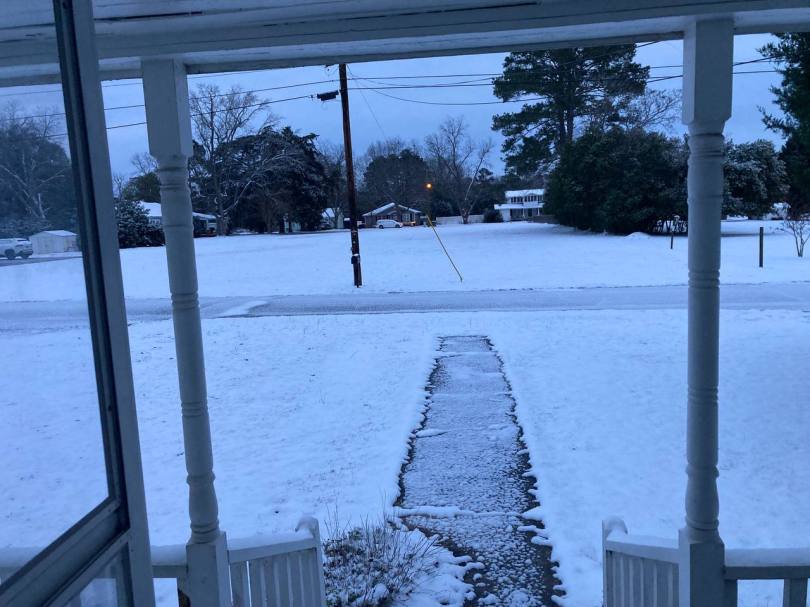
Last Wednesday, 22 January 2025, we had a rare snow day in South Carolina. It turned into two (as of the time of writing) days of virtual/distance learning, so yours portly got to enjoy a couple of quiet days working from home (something that the schlubs at the federal government won’t get to do anymore—ha!).
When The Age of The Virus first began, I really welcomed virtual learning, mainly because I was experiencing an extreme level of burnout. For the first time in my career, I felt like I could focus simply on teaching, instead of fulfilling all of the tedious little other requirements of the career. Even if kids were tuning out online, they were doing that anyway during class, and it was a welcome reprieve from what was becoming a very overwhelming profession.
Now, I am far more skeptical about virtual learning. A small minority of students thrive with the self-paced, independent, self-motivating nature of it; most students, however, struggle with that kind of latitude.
Aside from the damage distance learning can to do to young learners, however, there’s another, less tangible side effect: the death of the snow day.
During my classes Wednesday morning, when the snow still lay fresh upon the ground, I encouraged my students to go out and play in the snow after completing my super easy assignments. I especially urged my young Middle School Music Ensemble students to experience the snow. I opined to them—perhaps Boomerishly—of how “back in my day” when it snowed, we actually got to go out and enjoy it. Because of distance learning, we never have a true snow day anymore.
Granted, I imagine most of my colleagues went easy on the kids, so I’m sure they had some time to frolic in the frosty wonderland of ice and snow. Still, the onerous weight of school was still there, looming, casting its desultory shadow over the white brightness of wintry fun. In some ways, the kabuki theatrics of distance learning—“we’re still having school, this is just as good as actual school!”—make it even worse: there’s the pretense that some actual learning is happening, when really we’re just forcing children to check off a bureaucratic box before allowing them to build snowmen and have snowball fights and go sledding and all that.
For my readers who don’t live in the southern United States, some perspective might be in order: snow is rare for us. When we get it, it’s a treat. Yes, it’s inconvenient, too—icy roads and closures and what not—but it’s so unusual, we can actually enjoy it, especially in the small amounts we typically get (an inch or two, maybe three). So snow means fun. It’s also really, really pretty:

Of course, the argument is, “if we have a virtual day, we don’t have to make it up!” That is compelling—I don’t want to lose part of my Spring Break or—God Forbid!—summer vacation due to a snow day—but as I explained to my students, in the old days the governor would always pardon the day if it was just one or two. Sure, he’d play coy a little bit, but we’d almost always get the day excused.
So, I say, bring back the snow day. Southern kids have an extremely limited opportunity to go out and enjoy the snow when it does fall. If we’re lucky it’ll stick for more than a day (most of mine had melted by the end of the day Wednesday, other than shady spots), but that’s rare. The window of wintry fun is tiny; kids need to be running around in it, their cheeks flush with the cold, their little knit caps and gloves covered in a frosty rime.
Make Snow Days Great Again!
 The Portly Politico