Mississippi Meanderings

At the tail end of 2020—and into the New Year—I visited the small town of Lucedale, Mississippi, to meet my girlfriend’s family.  I flew in last Wednesday and we drove back Saturday.

I’ve driven through Mississippi before, and was in Jackson a couple of years ago for a friend’s wedding.  This time I was much further south, as Lucedale—located in George County—is very close to the Gulf Coast, and about fifty minutes from Mobile, Alabama.  It reminded me a great deal of my dear South Carolina—pine trees and deciduous forests; ample farmland; small, rural communities flung across open land between larger municipalities.  In many ways, it felt like my home, just with small regional variations.

For example, my girlfriend’s family eats black-eyed peas on New Year’s Day, like any good Southerner does (for them, the black-eyed peas represent good luck; for us, they represent pennies and wealth), but instead of collard greens (also for wealth—they’re the dollars), they ate coleslaw.  I suspect that’s because none of her family liked collard greens, but the difference goes further:  my girlfriend’s father had never heard of Hoppin’ John.  For my Yankee readers, Hoppin’ John is a mixture usually consisting of black-eyed peas, tomatoes, and okra, and served over white rice.  It’s good.

Other than a world without Hoppin’ John, Mississippi also had some local chains I’d never heard of before.  My girlfriend’s mother kept raving about Dirt Cheap, which I think is like a Lowe’s-meets-Ollie’s that sells mostly “dirt cheap” home improvement supplies.  There’s also a regional chain called Foosackly’s, which is essentially a smaller-scale Zaxby’s with clever advertising and a hilariously bizarre name.  My girlfriend quickly became annoyed with my fascination with this obscure chicken joint.

One highlight of the trip was building a fire with my girlfriend’s dad.  He is a man of few words, clad in suspenders, and incredibly resourceful—he maintains much of their land himself, and has built several sheds and garages.  He also has added to their home, which has been in the family at least two generations, and will stay there (his mantra:  “never sell land”).
Read More »

Lazy Sunday XCIII: 2020’s Top Five Posts

It’s the last Sunday of 2020, so in keeping with last year’s tradition, today’s Lazy Sunday is dedicated to reviewing the Top Five posts (in terms of views) for 2020.

The posts below are not the top five in terms of views all-time.  Instead, I’m featuring the top five published in 2020.  Indeed, there were several posts from 2019 that blew these out of the water (all view totals are at the time of writing, 22 December 2020):  “Tom Steyer’s Belt” (2864 views), “Napoleonic Christmas” (295 views), “Christmas and its Symbols” (212 views), and others.

So, again, these are the Top Five Posts of 2020, published in 2020.  All numbers are as of 22 December 2020, so there could be some shifts:

1.) “The Cultural Consequences of the American Civil War” (254 views) – This post was adapted from a lengthy comment I made on a post at Nebraska Energy Observer, “What Do You Think?” by Audre Myers.  The comment sparked some good feedback, so I made it into a post.  Rachel Fulton Brown shared the post on her Telegram chat and her personal Facebook page, which really boosted the numbers.  The post discusses the oft-forgotten cultural and spiritual consequences of the Confederate loss to Yankee materialist imperialism.  I’m no closeted Neo-Confederate, but I tried to offer up a nuanced take on the downside to Union victory, and what was lost when the South fell.

2.) “Thalassocracy” (201 views) – This post really surprised me with its success.  I wrote it mostly as an after-thought—the situation with many posts when I’m churning out daily material—but the topic interested me.  Based on the limited search term information WordPress gives me, it turns out that many people were searching the unusual term for the same reason I was:  the video game Stellaris.  In searching for the meaning of “thalassocracy,” I stumbled upon a lengthy essay on the fragility of thalassocracies—nations and empires that build their fortunes on naval prowess, rather than substantial ground forces.  It’s an interesting (and long) essay, but hopefully my humble post sums it up well enough.

3.) “You Can’t Cuck the Tuck III: Liberty in The Age of The Virus” (87 views) – As you can see from the numbers, the posts begin dropping off a bit in views from here on out, though I consider anything over fifty views pretty solid for this humble blog.  This piece explored the destruction of liberties in The Age of The Virus, something that I find has occurred with shocking ease, and which continues to ever more ludicrous extremes.

4.) “Big Deal” (78 views) – This post was about Joe Rogan’s move to Spotify, and his own implicit sell-out to social justice cuckery.  I can’t account for its mild popularity, other than it was a timely post that touched on a widespread sentiment on the Right.

5.) “The God Pill, Part II” (76 views) – This piece reviewed former pick-up artist Roosh V’s dramatic conversion to Orthodox Christianity (covered in “The God Pill“; read the whole series here), and his decision to unpublish his bestseller, Game.  That decision has really cost him financially—he recently took a gig doing construction work in Alabama for a few weeks, and is apparently back living with his parents in Maryland—but it was the right move spiritually.  Many thought Roosh was converting as a way to reinvent himself to make an extra buck, but he really seems to be putting his faith first.  Kudos to him.

That’s it!  It’s hard to believe another year is in the books.  Thanks to everyone for reading, and for your ongoing support.  It can be difficult to maintain the pace of posting at times, but your feedback and comments really keep me going.

God Bless—and Happy New Year!

—TPP

Other Lazy Sunday Installments:

Tip The Portly Politico

Support quality commentary on politics, education, culture, and the arts with your one-time donation.

$1.00

Flashback Friday: Christmas and its Symbols

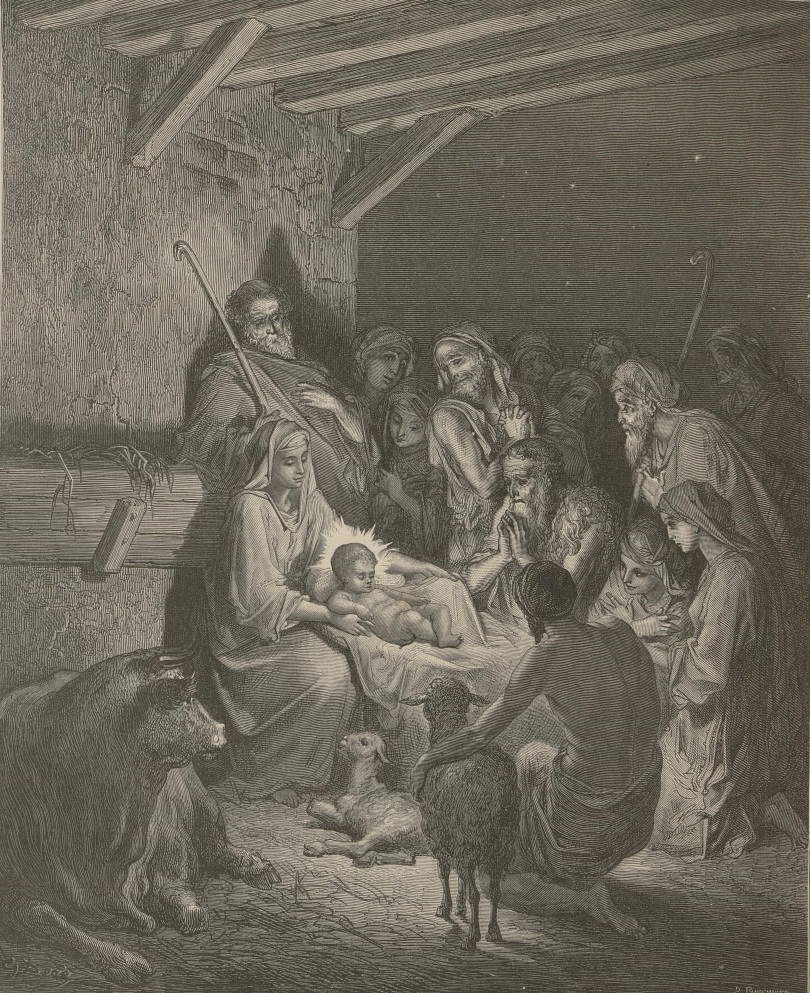
It’s Christmas!  Another magical day to celebrate the birth of our Lord and Savior, Jesus Christ.

2020 was a tough year, but Christ is mightier than The Virus.  Thank God—literally!—for sending His Son.

Have a wonderful, safe, loving Christmas Day.  God Bless all of your for your support and generosity, and for being such amazing readers.

Here’s 25 December 2019’s “Christmas and its Symbols“:

Read More »

TBT: Christmas Eve

Here we are—another Christmas Eve.  It’s a night full of magic, mysticism, and wonder—the Light and holy version of Halloween, when the tenuous division between our corporeal existence and the supernatural world is thin.

Last year I wrote of my family’s Christmas Eve traditions, which are changing up a bit again this year.  In lieu of the usual evening candlelight service, we’re going to an afternoon service at a church in my younger brother’s neck of the woods.  Afterwards, we’ll be enjoying Chinese food—a newer tradition for us—and some fondue, a tradition from my sister-in-law’s side of the family.  We’re beginning to sound like 1970s Jews on Christmas.

Here’s wishing you and yours a very Merry Christmas tomorrow—and some Christmas Eve merriment tonight!  With that, here is 24 December 2019’s “Christmas Eve“:

Read More »

Midweek Movie Review: Fatman (2020)

Being Christmastime, it seems like the season for reviewing holiday classics. That said, I’ve never been one for Christmas movies in general, with the exception of off-beat films related to the holiday.

For example, I consider Die Hard (1988) a Christmas movie—perhaps the best Christmas movie—as well as Gremlins (1984).  But other than It’s a Wonderful Life (1946), of which I have fond memories of watching at my late grandfather’s house late one Christmas night as a child, I don’t tend to go for sappy Hallmark Channel Christmas movies (sorry, Dad).

There is now a new addition to that list:  2020’s Fatman, starring Mel Gibson as a jaded Santa Claus with business problems—and a price on his head.

Read More »

Where the Right Goes From Here

Lest I be cast as a “doomer”—one who has given up on President Trump’s noble attempt to win the re-election that is rightfully is—it seems likely that our ruling elites will assure Biden wins the presidency.  I still believe that Trump is the rightful victor; that the election was stolen from him; and that the evidence of widespread voter fraud is compelling enough to throw, at the very least, the election to the House of Representatives.

Remember, we live in a world that still argues that John F. Kennedy’s campaign did not manipulate vote totals in Cook County, Illinois to flip the State away from Nixon in 1960, thereby assuring Kennedy’s victory.  What we saw in 2020 was the Cook County strategy writ large.  We should fight that manipulation to ensure the integrity of future elections, but I fear the damage is done.

Again, I hold out hope that Trump will be vindicated and that justice will be served.  Nevertheless, as conservatives, we should adopt the distinctly conservative course of preparing for what comes next.  Even if our dream scenario comes to fruition, it only buys conservatives time.  Either way, we’ve got to consider seriously where we’re going, and our place in a society that increasingly rejects us and our interests.

Read More »

What is Civilization?

This morning while getting ready for work I listened to a fascinating discussion between Milo Yiannopoulos and “groypers” Steven Franssen and Vincent James.  I don’t know much about Franssen and James, other than that they are fairly prominent figures on the Dissident Right, but the discussion (which is available at Censored.TV to subscribers—I highly recommend forking over the $10 a month for a subscription) covered a broad range of topics, from 9/11 to the future of America and traditionalism.

Out of that far-ranging discussion came a brief debate between Milo and his guests near the end of the exchange.  The gist of it boiled down to the question “what is civilization?”  Milo’s contention—an interesting one—is that by abandoning our cities, we are, essentially, abandoning our greatest cultural products:  our art, our architecture, our institutions.  These cultural artifacts took the blood, sweat, toil, and ingenuity of the American people to build, so we’re capitulating to the Leftist mobs when we flee our cities instead of fighting for them.

In true Milo fashion, it’s a compellingly contrarian argument:  why surrender what we fought so hard to build?  I am a big advocate of normal, decent folks abandoning the cities in search of a better life in the country (to the point I think we should consider subsidizing families in rural areas), but makes a strong case.  If we want to preserve our heritage, we shouldn’t hand it over to looters.

Read More »

Lazy Sunday LXXIX: Forgotten Posts, Volume III

Lazy Sunday is rolling on with some more “Forgotten Posts” (check out Volume I and Volume II).  Again, the criteria for selection is pretty loose—I scroll through my archives and find posts I don’t link to very often, or which I’ve largely forgotten that I wrote.  Even that’s not a hard-and-fast rule.

This week’s selections come from June 2019.  The summer is always a slow month for new; ergo, it’s a slow month for blogging.  But with a self-imposed daily post requirement, I’ve gotta come up with something.  Here’s a taste of those somethings:

There’s another Lazy Sunday in the books.  Speaking of books, I’ll be cracking them pretty hard this week, as school resumes this Thursday.  It’s going to be an interesting year.  Wish me luck.

In the meantime, enjoy your Sunday!

—TPP

Other Lazy Sunday Installments:

TBT: Ideas Have Consequences – Introduction

Yesterday was the last session of the Summer 2020 History of Conservative Thought course.  This summer marks the second run of the course, and it was a fantastic class.  I had three young men enrolled, all quite eager to dive into the material.

I try to avoid lengthy lectures in HoCT, giving the basic background information and scaffolding necessary to put the readings into context.  I want the works to speak for themselves, and for the students to the do the heavy lifting of sussing out meaning and the author’s ideas.  Each week students wrote a short essay or answered a few different guided questions, then we would come in and discuss the material.

With this summer’s group, that model worked very well, as two of the young men in particular loved to plunge into discussions and ask questions.  One of the students was concurrently taking a colleague’s popular Terror and Terrorism course, which leads off each summer with the French Revolution.  That always dovetails nicely with our discussion of Edmund Burke, as we read several excerpts from his Reflections on the Revolution in France.  Burke comes on the heels of our discussion of Russell Kirk’s conservative principles, and helps frame the early portion of the course in the Burkean tradition.

In July, we left the nineteenth century and began looking at the modern conservative movement, with a heavy emphasis on William F. Buckley, Jr., and the notion of fusionism.  Buckley’s National Review catches a good bit of flack on the Right these days, including from this blog, but it truly shaped conservatism in the second half of the twentieth century.  Before National Review, conservatism was a disorganized, disunited hodgepodge of various ideologies, movements, and issues—it was, as Lionel Trilling put it, a “reactionary impulse,” a grumpy attitude about the way things were, but without a cohesive understanding of how to combat the dominance of New Deal liberalism.

For all its noodle-wristed hand-wringing and desperate virtue-signalling today, National Review created the modern conservative movement by giving conservatives their voice, their publication.  It also gave conservatism a politically viable platform of issues that could win in national politics.  That focus on nationalism certainly cuts against the Kirkean/Burkean mold of organic, ordered liberty, but it was the reality of post-war American political life.

We ended with another mid-century conservative, but one fitting far more into the spiritual and moral mold of Burke and Kirk, and far less in the neoliberal and materialist mold of Buckley-style fusionism:  Richard Weaver’s seminal Ideas Have Consequences, which I consider one of the greatest books ever written.  Indeed, I’m a bit of a Weaver fanboy, as he’s been featured twice on my Summer Reading Lists, first in 2016 for Ideas Have Consequences, and again in 2020 for his collection of Southern Essays.

For the course, we just read the “Introduction” to the book, which I try to read every August before school resumes.  It reminds me why I teach, and what is at stake.  Reading Ideas Have Consequences—first published in 1948—today reads like prophecy fulfilled.  Weaver’s core focus on William of Occam as the source of modernity and its related ills might seem a bit far-fetched, but that’s merely the germ from which the analysis of modernity’s fallen view of the world grows.

The real heart of Ideas Have Consequences is the abandonment of the transcendental—of God—in favor for navel-gazing particularism, a constant focus on lower, material concerns.  Unbound from any obligation to or belief in a transcendental moral order, men are left adrift in a world full of isolation, alienation, confusion, and meaninglessness.

I’ll let the rest speak for itself.  Here is 29 July 2019’s “Ideas Have Consequences – Introduction“:

Read More »

Richard Weaver in the Age of The Virus

In the Age of The Virus, we’re beginning to reevaluate the way we live.  I’ve written quite a bit about distance learning, and photog has a piece up on his blog predicting a larger shift to remote work.  That transition would threaten micromanaging middle managers everywhere, though, and one doesn’t become a micromanaging middle manager without a knack of occupational self-preservation.

I’ve also been interested in the potential cultural impact.  Already there seems to be a minor revival in interest in gardening.  Part of that is prudent:  we need to have some food to fall back on should the supply chains face further disruption.

But I also suspect some of it is spiritual.  Modern man has become divorced from his roots in the soil—in Creation.  Modernity has liberated us from the constant fear of want, but that liberation came with a price:  we traded the liberty of the soil for the chains of comfort.  Growing a little vegetable garden, however meager, is a way to reconnect with the land, and with the beauty of God’s Creation.

Read More »