Gardening II: Late Winter Plantings

After what seemed like two weeks of rain, we finally had a warm, sunny weekend here in South Carolina, with temperatures in the upper-seventies and clear skies.  South Carolina tends to go directly from the depths of winter to a hot spring (or cool-ish summer), and this sudden leap in temperature and climate corresponded with a sudden change in mood.  Instead of bundling up sleepily watching horror movies, the warm weather inspired some spirited outings.

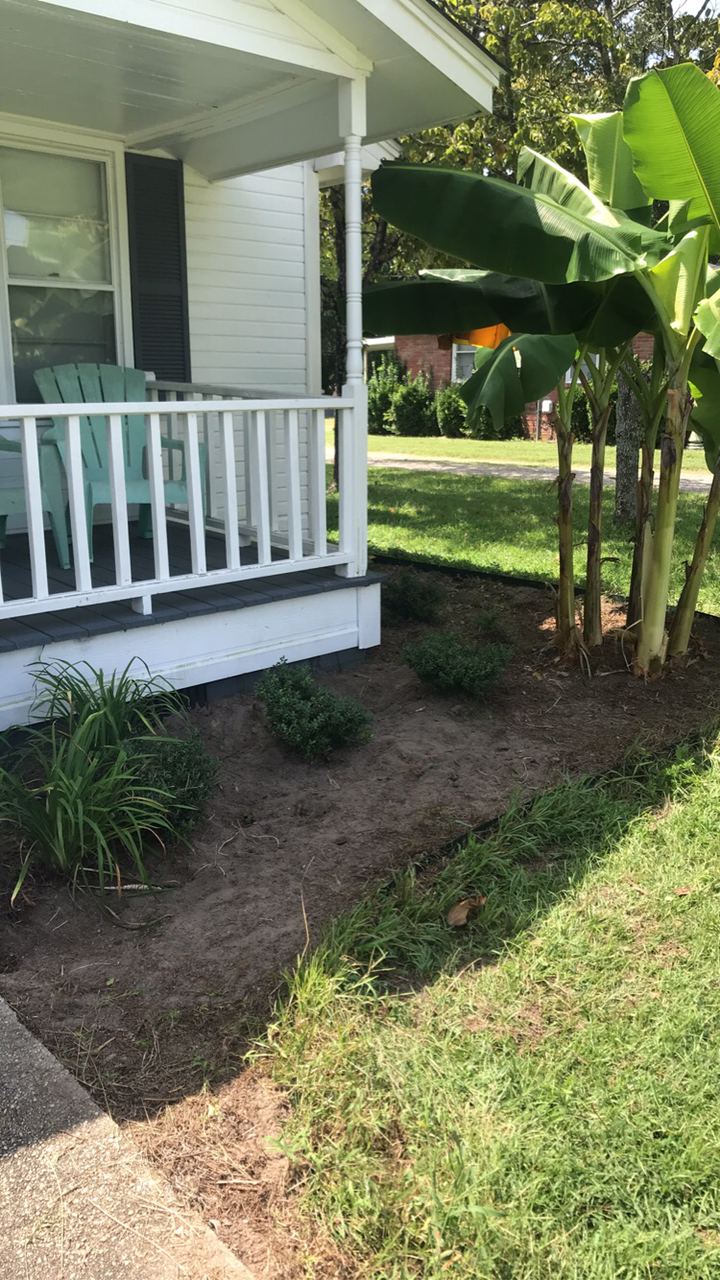
Aside from a rather adventurous, muddy trip to Lee State Park (more on that in tomorrow’s post), my girlfriend and I dedicated Sunday afternoon to doing some late winter plantings (in keeping with my desire to homestead more on my property).  Growing season for most garden-variety plants begins much earlier here in South Carolina than other parts of the country, so we took advantage of the warm water to pot some edible plants, and put two directly into the ground.

Read More »

Friday Rundown (18-22 January 2021)

It’s been an eventful week, so I figured an extra post today running down the posts from the past few days would be worthwhile.  Also, I’m a slave to the WordPress daily streak counter, and when I scheduled this morning’s post on Wednesday, WordPress for some reason immediately e-mailed a preview; ergo, I want to make sure I get the daily post streak.  Gotta keep the streak alive!

 So, here is a quick rundown of this week’s posts:

Enjoy!

—TPP

TBT: Gardening

A post on gardening might be a strange pick for TBT in the dead of winter, but my mind has been on the topic more and more lately, both as a beautiful outdoor hobby and as a means of sustenance—even survival.  There’s also a spiritual element to feeling one’s own soil between one’s fingers.  I get a sense of deep satisfaction after pawing through the richness of my own land.

Perhaps I’m being overly Romantic, but planning and planting a garden is a wonderful experience.  I’m not very good at it, mind you (unlike my mother, who can make anything grow in any conditions, it seems), but I enjoy tackling the flower beds (just not enough to keep them free of weeds consistently).

As I noted Tuesday, I’ve become increasingly interested in investing in a solid cultivator and turning some my lawn into beds for vegetables.  A buddy of mine is keen on the idea, and has offered to help with his labor and some funds in exchange for a share of the crops (would that make him a sharecropper, essentially renting my land and giving me some of the fruits of his labor?).  I think it would be a fun, albeit time-consuming, project, but one worthwhile.

Another friend of mine has been slowly turning his postage stamp backyard into a thriving organic garden for years now.  He’s been growing without fertilizer so that the soil can build back up essential nutrients and fertility.  Apparently, fertilizer yields great resorts in the short-term, but it doesn’t help the soil replenish its fertility.  He’s taking the long, slow approach, but he’s gradually turning that Midlands Carolina clay into rich topsoil.

There’s so much I don’t know about this process, but at the same time, my thought is, “dig in.”  I already buried last year’s Jack O’Lanterns and seeds near my grapevines—why not?  Maybe I’ll get lucky and get some pumpkins.  Worst-case, my grapevines get some more nutrients.

Or it could all just be an expensive boondoggle.  We’ll see.  My results this past Labor Day weekend were pretty good, so I’m feeling optimistic.

With that, here is 2019’s “Gardening“:

Read More »

Inauguration Day 2021

The day has arrived—the briefly delayed third term of Obama’s presidency.  In the years since Obama left office, the progressive Left has become even more insane.  After a four-year reprieve under Trump, the radical progressives aren’t going to let another opportunity pass to transform the country completely.

Things are going to get worse before they get better, which is why I’m encouraging my fellow conservatives, Christians, and traditionalists to think and act locally in the years to come (H/T to historian Brion McClanahan for that pithy phrase).  Now is the time to attend town/city and county council meetings, to run for local and State offices, and to build up communities.  While we can do some of that online, we’ve got to get out and meet people—join Bible studies, form local clubs, revive forgotten civic organizations, etc.  Heck, even play at an open mic!

Read More »

Lamar Town Council Special Election Results 2021

Well, the results from yesterday’s election are in—and I won!  At some point (soon, I hope) I’ll be sworn in as a member of Lamar Town Council.

I don’t have photographs of the final print-out, so I don’t the breakdown by precinct, but I hope to obtain that information soon.  I got the results from the election workers as they pulled the receipt from the voting machine shortly after 7 PM EST last night:  121 for Cook, 69 write-in.

Read More »

Mask Mandates Come for Lamar

I know, I know—everyone wants to read and talk about the storming of our metaphorical Bastille.  I’m going to cover that in-depth in this weekend’s SubscribeStar Saturday post, not because I know it is the event of the decade—and will therefore crassly milk it for subscribers—but because my own observations are so tantalizingly spicy, I have to hide them behind a paywall.  Believe it or not, $1 is apparently a major hurdle.

Instead, I’m going to focus on a bit local draconianism that I will hopefully soon be able to address head-on:  my small town of Lamar has adopted a mask ordinance.  Given our current Town Council, I’m surprised it took this long.

The ordinance, dated 14 December 2020 and effective 4 January 2021—but only received in water bills on 7 January 2021—is entitled “REQUIRING INDIVIDUALS TO WEAR FACE COVERINGS IN RETAIL AND FOODSERVICE ESTABLISHMENTS, AND MATTERS RELATED THERETO.”  It features a number of “WHEREAS” justifications, mostly the “recommendations of public health experts.”  It then lists the “Use of Face Coverings” in Section 1, detailing that face coverings must be worn indoors at stores and restaurants, etc., with plenty of opportunities to not wear a mask listed in Section 2, “Exemptions”—religious reasons, dental cleanings, etc.

The penalties for infractions—detailed in Sections 3 and 4—are $25 for individuals and $100 for businesses that fail to require employees to wear masks.  Section 3 seems laughably unenforceable in a town that has maybe three police officers—and just a recipe for another unpleasant interaction between otherwise law-abiding citizens and police.  Section 4 is particularly onerous, though, as it forces private companies to force their employees to wear masks, or face daily $100 fines.

Granted, most business establishments have already bent the knee and have bought into the mask hysteria.  In my mind, though, that makes the mask mandate even more unnecessary:  if Dollar General is making me wear a mask to buy a $1.26 loaf of bread-based loaf product anyway, why does the Town Council need to ladle an extra dollop of self-righteous scolding?

Read More »

Building Community

The outcome of the 2020 election is still up in the air, but whether we’re enduring President Biden (and then—Heaven help us—President Harris) in a couple of months or still partying under President Trump‘s second term, it’s important for conservatives and traditionalists to consider what comes nextAnother four years of Trump would be an extension of our current reprieve from progressives dominating the executive, but there’s no guarantees that a Republican will hold the White House after 2024.

As such, we need to begin planning and preparing for the worst immediately.  Indeed, many Americans have already done so, and I’ve spoken with many conservatives who believe the worst is yet to come.

Aside from stockpiling and gardening—and generally moving towards greater degrees of self-sufficiency—one important aspect to consider is community building.  By that I do not mean the kind of Leftist, Obama Era pabulum in which we’re all “community organizers” mobilizing nihilistic welfare queens into a low-information progressive voting bloc.  Rather, I mean genuine community building—the formation of those multitudinous, invisible bonds that bind a people together.

Doing so may very well be the most important step Christians, conservatives, and traditionalists can take to survive for the long-term.

Read More »

Gardening

We’re back into the full swing of things after the glorious three-day weekend.  As I noted in various weekend posts, I spent much of the Labor Day holiday gardening.  My house was starting to look haunted, the weeds were growing so high:

Flower Beds - Before

My girlfriend took the weeding with gusto, while I raked out pine straw and debris.  I also pulled and cut some gargantuan weeds from my woefully neglected grapevines (which are, nevertheless, producing big, fat grapes).  After a couple of hours the beds were much improved:

Flower Beds - During

As with many home improvement projects, there’s the tedious part—in this case, weed-pulling—and then there’s the fun part.  For us, the fun part was going to Home Depot and Lowe’s to find plants to beautify the beds.  Over the course of two days, we found some beautiful options, including some colorful mums.

Read More »

Lazy Sunday LXXVII: Rural America

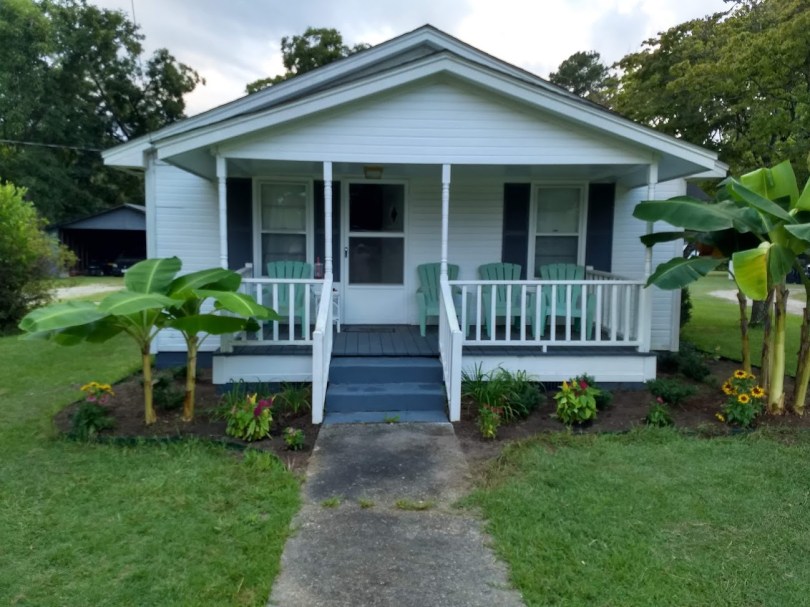
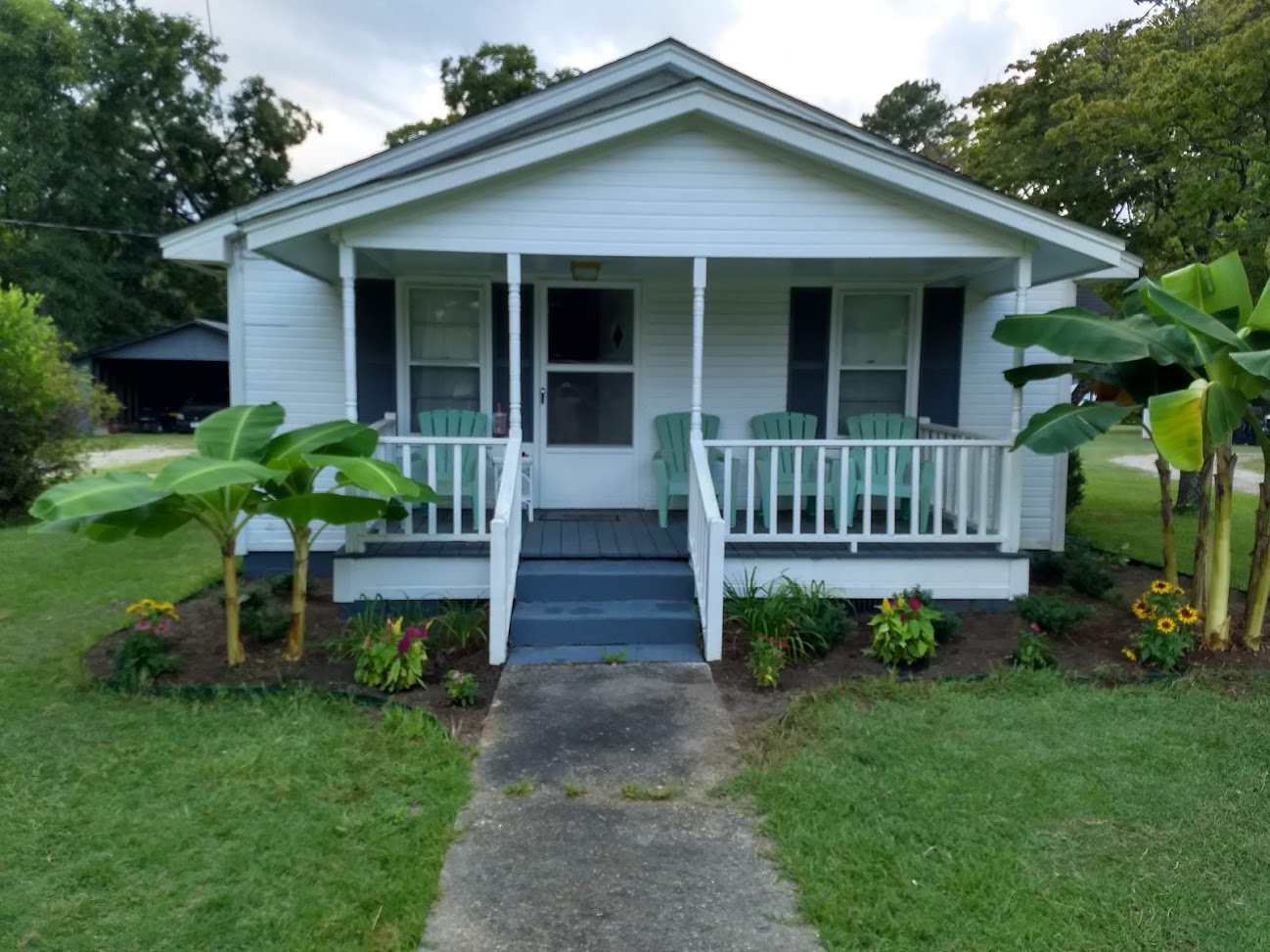
After a week of incredibly hot weather here in South Carolina, Saturday brought a blessed drop in both the temperature and humidity—a foretaste of autumn.  My girlfriend and I spent Saturday weeding my disgracefully overgrown flower beds, which were mostly weeds strangling the life out of everything but the hardiest of perennials (and my robust banana trees).  We then did some new plantings (with a few more to put in, as well as some mulch).  The results were pretty good:

Lamar House - After Planting, 5 September 2020

It felt good to get our hands (and clothes, and faces) dirty, digging through the dirt and nurturing plant life.  My mother is an expert gardener, so I’ve picked up a few simple techniques from her; otherwise, we just bought flowers we liked and plopped ’em in with some in-ground bedding soil and a some water.  Fingers crossed that everything survives.

My mind has been on the soil lately, and our connection to it.  I have a fondness—perhaps a tad romantic—for country life.  With current trends in the cities—rising home prices, rising property taxes, and rising urban violence—country life seems like an attractive, even inevitable, alternative.

As such, I thought I’d dedicate this week’s Lazy Sunday to some pieces about rural America:

  • TBT: Rustics Have Opinions, Too” – This piece dates way back 2009, when the blog was in its first iteration on Blogger, and I was still enthralled with “Randian-libertarian economic” philosophy.  Such are the follies of youth.  However, I did notice even then the deep disdain of limousine liberals for the rest of us here in “flyover country,” a disdain that, at least in part, accounts for the TEA Party movement and the Trumpian revolt of 2016.
  • High-Tech Agrarianism” – When The Virus hit, people were in a tizzy about having enough toilet paper and food.  People gained a renewed interest in gardening as a source of sustenance, not just beauty.  In this post, I mused about a possible return to small-scale homesteading, coupled with our advanced information technology.  Essentially, I posited a world in which people still work, albeit increasingly from home and on more flexible hours, and can use their time to tend to small crops to supplement their diets.
  • SubscribeStar Saturday: The Future is Rural” – One of two recent posts on the lure of rural America and small town life, I argue here that life in the country offers many attractive incentives for working families.  Not only are cities pushing people away with high prices and crime; the country is ready to take in telecommuters who earn good money but want a low cost of living in a safe, healthy environment.
  • SubscribeStar Saturday: Small Town Natalism” – The second post in my Saturday series about small town and rural living, this post is a preliminary sketch of a policy proposal:  applying nationalistic, pro-birth natalist policies to the small town context.  Instead of wasting money on seldom-used public facilities, local governments could offer a stipend to married families with children to encourage increased birth rates.  That would grow towns organically and attract new residents, thereby broadening the tax bases in often distressed rural areas.

That’s it for this week.  The garden is calling to me.  Time to put down some mulch!

—TPP

Other Lazy Sunday Installments:

Small Town Natalism

Today’s post is a SubscribeStar Saturday exclusive.  To read the full post, subscribe to my SubscribeStar page for $1 a month or more.  For a full rundown of everything your subscription gets, click here.

Last Saturday I argued that “The Future is Rural.”  With the rise in urban violence (that seems to turn up every presidential election year) and unsustainable living costs, coupled with the spread of telecommuting and improved Internet access, I predict that more and more Americans will flee to the countryside.

Even with the tide turning in favor of rural and small town life, local and county governments can take some proactive steps to attract residents.  If the goal is to attract working families consisting of committed parents, localities need to get creative.

The usual approach to building up revenue in small towns is to spend lavishly on parks and sports fields.  Large cities famously subsidize the NFL with billions in stadium construction, but small towns routinely fall into these construction boondoggles.  The premise is that new softball fields will bring in summer travel leagues, generating local tourism dollars, which is always how new ball fields are sold to the public.  Of course, the maintenance of these facilities are added into a locality’s annual budget, becoming recurring expenses, on top of the initial cost of production, which is often debt-financed.

Rather than spend public money on baseball diamonds and—even worse—soccer fields, small towns hoping to attract working families should use that money for something far more precious:  children.

To read the rest of this post, subscribe to my SubscribeStar page for $1 a month or more.

Donate to The Portly Politico

Support quality commentary on politics, education, culture, and the arts with your one-time donation.

$10.00