TBT^2: Remarkable Animals

After years of misspent youth, during which time I considered animals little more than fleshy, occasionally cute, robots, yours portly has learned the error of  his ways and become an animal lover.

Don’t get wrong—I love to eat animals as much as I enjoy keeping them as pets, and I possess a realistic view of animals:  they exist to serve us, not the other way around.  I love Murphy, and I’ll make sure she is fed, watered, and (when appropriate) medicated.  But the day that the vet says, “we can keep her alive another two weeks with this $4000 experimental canine chemotherapy,” it’ll be time to give the old girl a heartfelt goodbye.  By comparison, I’d sell my left kidney to the gay mafia if it’d add one day to the life of one of my family members or Dr. Fiancée.

All that said, I now very much see animals as a gift from God.  Every child in Sunday School knows that the first job of the first man was to name the animals; God Spared the animals along with humanity when He Commanded Noah to build an ark.  Clearly, our relationship with animals is meant to be a fruitful and productive one.

Further, anyone who has ever owned a dog (or even a cat) knows that these creatures have personalities.  Sure, I imagine jellyfish don’t lead rich inner lives, but it’s wild and amusing to me how dogs can possess such a range of personalities.  Murphy is aloof and anxious, but very much the queen of her domain.  Dr. Fiancée’s three-legged mutt is sweet and loving, but has her sassy moments like Murph.  My parents’ two rat terriers are cousins and/or half-brothers of some kind (I think they share a grandparent), but despite their genetic similarity, their personalities are nearly opposite (much like human siblings at times).

Do I think dogs have souls?  Perhaps not in the way that humans do.  But there is a life and intelligence behind the eyes of a dog.  Even the most forlorn, neglected mutt possesses something of a shimmer behind his sad eyes.  The fact that the eyes can even express emotions suggests there is something deeper there.

Of course, the evolutionist wags will snarkily remark, “we just bred them to reflect qualities we like.”  Perhaps.  Nevertheless, I’m struck by how human dogs can be, while also being something quite different—in some ways, something even better.

All points worthy of speculation, idle or otherwise.  What do you think, dear readers?

With that, here is 12 September 2024’s “TBT: Remarkable Animals“:

Read More »

TBT: Remarkable Animals

The older I get, the more I appreciate animals.  My parents have just taken in two precious kittens—a brother and a sister—and watching their cantering and playing is adorable.  It’s also a good reminder of the playfulness of youth, in both humans and animals, and how enjoying that playfulness keeps us young, even if we’re not as spry as we used to be.

God Created some amazing stuff.  The sheer biodiversity of our world is awe-inspiring, and demonstrates that our God Is Awesome.  We serve an amazing Lord.

With that, here is 15 September 2023’s “Remarkable Animals“:

Read More »

SubscribeStarSaturday: Hiking the Florence Nature Preserve

Today’s post is a SubscribeStar Saturday exclusive.  To read the full post, subscribe to my SubscribeStar page for $1 a month or more.  For a full rundown of everything your subscription gets, click here.

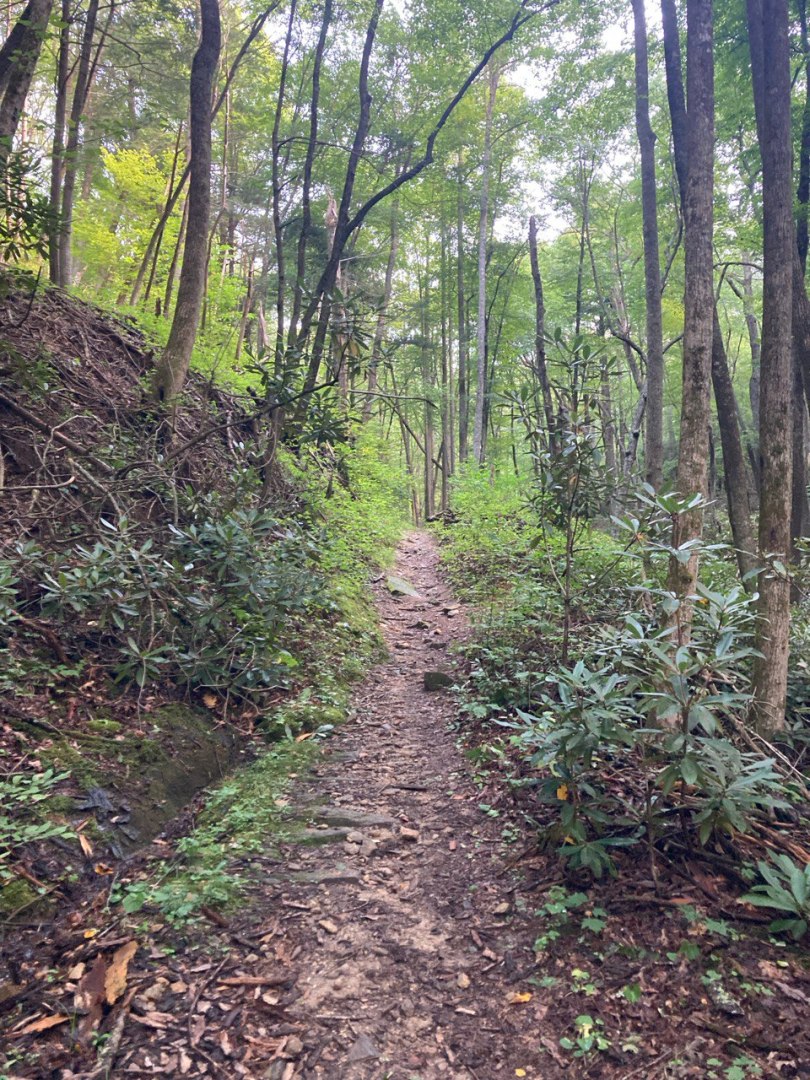
On Saturday, 3 August 2024 my friend Ashley and I went hiking in the Florence Nature Preserve, accessible via the Upper Hickory Nut Gorge Trailhead, just outside of Gerton, North Carolina and down the road from Chimney Rock.

Ashley had proposed the trip a couple of months earlier, with the inviting question “do you like hiking?”  I couldn’t respond to that query quickly enough, and within minutes we had planned the broad outline of our excursion to the trailhead.

We left right around 6 AM that morning in Ashley’s sweet 2021 Ford Bronco, which she was eager to road test on winding mountain roads, and after a couple of missed GPS turns due to the distraction of conversation, we made it to the trailhead around 10:15 AM.  By 10:30 AM we were lathered up in sunscreen and on the trail.

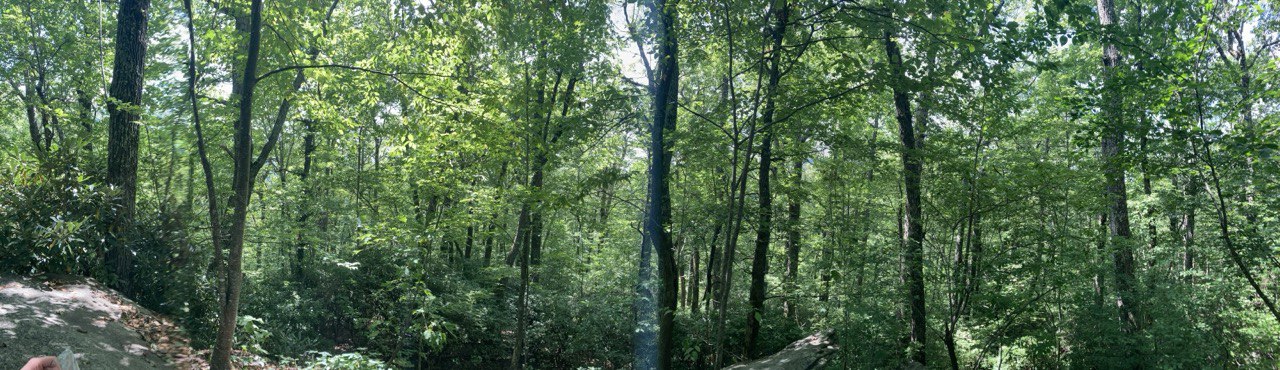
By noon we were drinking in this beautiful view at Tom & Glenna Rock over some peanut butter and jelly sandwiches:

Panoramic View of Lookout - FNP

The entire trail is roughly five miles up and back, but there are various side trails and alternative routes available that can reduce the trek depending on experience level and time constraints.  We opted for a modified version of the “blue” trail rather than the whole loop, which would have taken us pretty much the entire day to complete.

Here’s a map of our route (I’ve used the map from the Conserving Carolina website and added our route in pink):

Florence-Nature-Preserve-Map - Route with Ashley in Pink

According to some rough math based on the interactive map for the trail, Ashley and I hiked around 3.82 miles in total.  Naturally, roughly half of that was uphill, so coming back down the trail was a bit quicker.  We also paced ourselves heading up, as Ashley was documenting our hike via video for her mother.  That deliberate pace was smart, because we did not wear ourselves out on the hike.

The trail is rated as “challenging” and/or “strenuous,” and after my “Summer of George” I was a tad concerned about my ability to huff and puff up a mountain, but yours portly performed admirably.

To read the rest of this post, subscribe to my SubscribeStar page for $1 a month or more.

Remarkable Animals

My local newspaper, the Darlington News & Press, ran an excellent column entitled “Until one has loved an animal” by Dr. Bill Holland, a Christian pastor and theologian.  His column runs regularly in the paper, and he always offers up some interesting insights into faith and biblical Truth.

Until one has loved an animal

The piece is about the remarkable humanness that animals can sometimes possess.  It’s easy for us to anthropomorphize animals’ behaviors, but anyone who has owned a dog knows that they share something with us that other animals lack.

Specifically, it’s about the remarkable spelling horse Beautiful Jim Key.

Read More »

TBT: Baby Sea Turtle

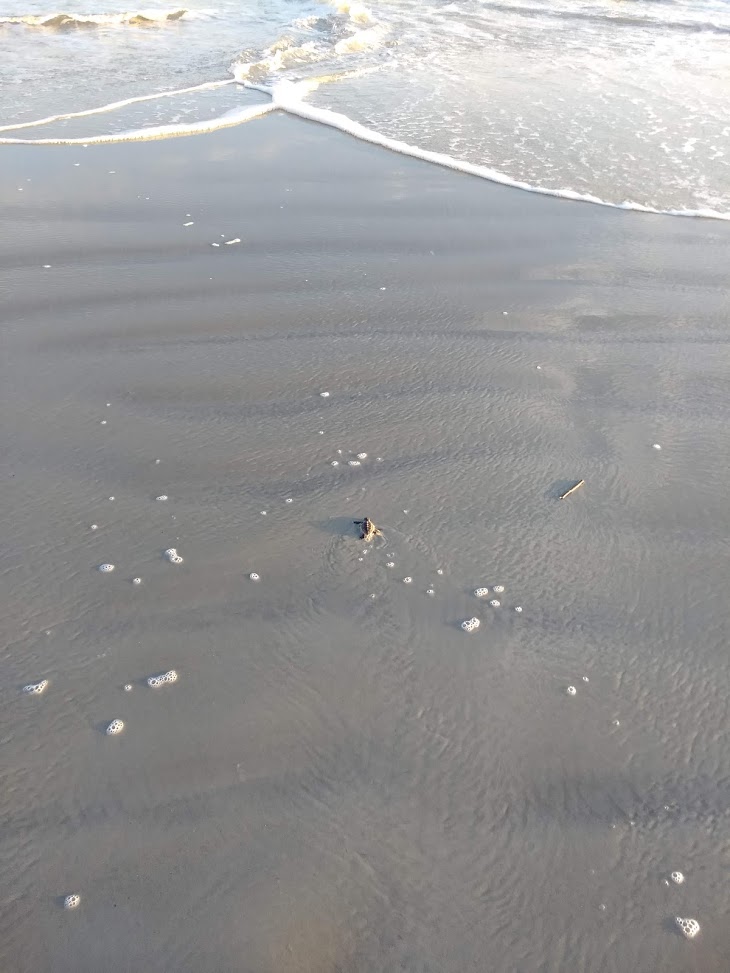
It’s the last quiet week of summer vacation before returning to school.  It’s been a good summer, with a trip to Universal Studios; a grueling but successful move; and getting a dog.  The one thing I didn’t do this summer is see a baby sea turtle take its first, adorable steps into the sea.

But I did get to see that last summer!

There’s something magical and miraculous about witnessing a baby sea turtle leave his little egg and waddle into the ocean.  I thought I’d never see it in my lifetime unless I was specifically trying to see it.

Adding to the magic was that it was totally unplanned—wonderful happenstance.

With that, enjoy this treacly little post, 3 August 2020’s “Baby Sea Turtle“:

Read More »

TBT: Albino Giraffes Poached

I’ve had animals on the brain lately, especially dogs.  Perhaps it’s my girlfriend’s sweet German shepherd puppy, or my parents’ photogenic rat terrier; regardless, I realize I am becoming a softy for critters.

Not just the furry, charismatic ones, either:  I’m considering adding a small frog garden to my existing flower beds, as I have a number of toads and frogs that take up residence in my beds and planters already.  Giving them a murky little pond to splash about in would be fun, and might help cut down on some bugs in the yard.

So it is that I’m looking back to this horrible story from March 2020, about the poaching of two rare albino giraffes in Kenya.  In the original piece, I make quite a few wild speculations about the nature of the poachers, even implicating the 50,000 Chinese immigrants to the country.

Given that The Virus originated, most likely, in a Wuhan virology lab—suggesting the Chinese were working on some kind of horrible biological weapon—I’d say mistrust in China’s motives is justified.  It’s also a very weird culture, as the wet markets proved.  The Chinese long believed rhinoceros horn to be an aphrodisiac; how far-fetched would it be to think they would believe something similar about the flesh of an albino giraffe?

For that matter, Africa is still a land filled with many folk beliefs and superstitions.  Albino humans in Tanzania, for example, are the targets of witch doctors, who harvest albinos’ body parts for use in their dark magicGavin McInnes frequently mentions the belief among some African tribes that bald men’s heads are filled with gold.  And there is the horrific practice of AIDS sufferers raping virgins—especially very young children—in the belief that doing so will cure their affliction.

These are terrible things—far more wicked and evil than the murder of two albino giraffes.  But how we treat God’s Creation, even in its lower orders, is a reflection of how we treat one another.  Animal mutilation and murder is a key sign of a future serial killer or sociopath.

With that depressing preamble, here is 24 March 2020’s “Albino Giraffes Poached“:

Read More »

Hard to Swallow

A big H/T to Neo at Nebraska Energy Observer for the inspiration for today’s post:  in his latest edition of Sunday Funnies (“Sunday Funnies:  Juneteenth & Other Things“), Neo includes a tabloid-style headline that reads, “I Was Nearly Krilled!: Lobster diver says he was swallowed by humpback whale.”  The pun “krilled’ is circled in orange.

I looked it up, and it’s a real story:  Michael Packard, a fifty-six-year old lobster diver from Massachusetts, was briefly trapped in the mouth of a massive humpback whale.  According to Packard, he was in the mouth of the great beast for about thirty seconds, before the creature surfaced, shook its head back and forth, and spit Packard into the air.

Here is the relevant excerpt of Packard’s account, as quoted at NPR.org:

Packard told WBZ-TV that he was about 45 feet down in the water when he suddenly felt “this huge bump and everything went dark.” He initially feared he had been attacked by a shark.

“Then I felt around, and I realized there was no teeth and I had felt, really, no great pain,” he said. “And then I realized, ‘Oh my God, I’m in a whale’s mouth. I’m in a whale’s mouth, and he’s trying to swallow me.’ “

Packard was still wearing his scuba gear and breathing apparatus inside the whale’s mouth, which he said was completely dark. Fearing he wouldn’t make it out alive, he thought about his wife and sons.

After about half a minute, the whale rose to the water’s surface and began shaking its head from side to side.

“I just got thrown in the air and landed in the water,” Packard recalled. “And I was free, and I just floated there … I couldn’t believe it. I couldn’t believe I got out of that.”

The story sounds incredible—and, according to whale experts, the odds of it happening are extremely rare—but it is within the realm of possibility.  Humpback whales lack teeth, and instead filter feed through baleen, long, hair-like “teeth” that filter out sea water and trap small prey, like shrimp and krill, inside.  Humpback whales often feed using lunge feeding, during which the whales “open their mouths, accelerate and ‘take in 10 SUVs worth of water and fish and then everything else,'” according to Iain Kerr, quoted in the same NPR piece.

Apparently, Packard just happened to be swimming in the wrong place at the wrong time, and the great whale accidentally sucked him up with tiny sea critters.

Read More »

TBT: The Creation of Culture

The theme of this Spring Break Week is short stories, but more deeply it’s that of culture generally.  Indeed, The Portly Politico has dedicated itself increasingly towards cultural, filmic, musical, and literary matters far more over the past few months than ever before, for a reason:  creating culture is far more powerful and interesting than largely meaningless squabbles over minute points of policy.  That’s not to say that politics aren’t important—at the local level it’s very important—but there’s not much we can do in a practical sense to sway the indifferent national government at this point.

Culture, on the other hand, is something we can proactively create and promulgate.  A major push on the traditional Right as of late has been to do just that:  create a compelling (counter?)culture to the prevailing popular culture of nihilism and materialism.  Rachel Fulton Brown’s Centrism Games: A Modern Dunciad, the product of her excellent Telegram chatroom Dragon Common Room, is one exquisite effort at creating (and reviving) a rich literary culture on the Right.  The collaborative nature of the work—RFB is the editor, with sections of the epic poem composed by different members of the chat—further highlights the proactive act of creation among like-minded individuals, each mixing their unique voices into a scathingly satirical blend.

My own book, The One-Minute Mysteries of Inspector Gerard: The Ultimate Flatfoot, is my own meager contribution to this new culture—a work so honestly reflective of my teenaged self, I didn’t even fix some of my collegiate typos!  It’s a bit postmodern and absurdist, but it at least gives a glimpse into the gradual transformation of one young creator (in this case, me!).

My music, too, is a humble contribution to cultural creation.  I’ve always thought of The Four Unicorns of the Apocalypse, in particular, as an eschatological statement of sorts.  At the very least, it attempts, musically, to reflect a civilization‘s fall into decadence and nihilism, before the cycle repeats.

But I digress.  For this week’s edition of TBT, I thought I’d do something I’ve never done before:  bring a post from my SubscribeStar page out from behind the paywall.

The occasion for writing this post—“The Creation of Culture“—was the release of my friend Jeremy Miles‘s collection of poetry, A Year of Thursday Nights.  Jeremy is no Right-wing traditionalist, but his collection is the result of a year of attending open mic nights and performing his (very entertaining) poems.  In essence, he created culture out of a vibrant community of artists and musicians, both chronicling and enhancing the performances that took place at a local coffee shop’s open mic night over the course of 2019.

But I’ve gone long enough in this rambling preamble (a “preramble?”).  Here is 25 January 2020’s “The Creation of Culture” (on SubscribeStar):

Read More »

TBT: Climate Hysteria Robs Us of Joy

In casting about for a good TBT this week, I stumbled upon this post—which really should have ended up in one of my “Forgotten Posts” editions of Lazy Sunday—about the foolishness of climate hysteria, and the arrogance of thinking we can really have a concrete impact on the environment at the macro-level.

Don’t get me wrong:  I enjoy God’s Creation, and I think stewardship of His Creation is incredibly important.  We shouldn’t go around adopting baby sea turtles.  But driving to work everyday isn’t going to affect the environment or the climate in any discernible way.

In fact, it’s funny—climate change doesn’t even seem like a serious issue anymore (who even remembers Greta Thunberg now?).  As soon as the elites went hard for The Virus hysteria, they immediately had us using disposable plastic crap and Styrofoam containers again.  Even the whole message of The Age of The Virus was “Consume”—stay home, eat takeout, watch trash TV.

That puts the lie to the climate change nonsense.  I’ll repeat my admonition from one year ago today:  “Eat, drink, and be merry—and have lots of babies.”

Here is 22 October 2019’s “Climate Hysteria Robs Us of Joy“:

Growing up, I received my fair share of public school climate indoctrination.  My generation cut its teeth on Captain Planet, the eco-propaganda cartoon that, among other things, scolded Americans for using too many resources and having too many babies.  Fast forward to today, and those arguments are mainstream.

In fact, I remember my dad telling me that Captain Planet was Ted Turner‘s ham-fisted attempt at indoctrinating kids—one of the first times I vividly remember learning that the elites were lying to us.  The finger-wagging, puritanical nagging of environmentalists further pushed me away from eco-hysteria.

Still, we were always taught that the oceans were dying, that fresh water was scarce, etc.  Well, thanks to Quora, some easy math shows us that God’s Creation is abundant enough.

Quora user posed the question (to paraphrase):  if everyone drank a glass of water from the ocean (let’s assume it’s been desalinated), how would it affect the sea level?

One poster’s answer goes through the math:  if everyone—including babies! (around 7.7 billion people)—took a twelve-ounce glass of water from the ocean simultaneously, “the water level would drop by 0.0000000075 meters, or about 7.5 nanometers. That’s about 1/1000 the size of a red blood cell.”  Another contributor, Vilmos Shepard, writes that this scenario “would lower the ocean by less than a wavelength of light.”

As the contributor writes in his response, “within a day or two, we’d all sweat, breathe and urinate that water back out, and it would eventually end up back in the oceans. The water cycle is a hard thing to beat.”  Indeed.

The more I learn about Creation, the more I appreciate that there’s not much we can do to affect or alter the macro-level environment.  We can make tweaks and marginal improvements—such as improving desalination of sea water, transporting water more efficiently, picking up trash, etc.—but it’s foolish to think we alone can break or fix the environment.  Creation is incredibly abundant and robust.

Barring massive nuclear warfare, our everyday actions are not going to destroy the planet.  I’m not saying we should casually throw our old tires into the river—we should be good stewards of Creation—but it’s wasted effort to agonize over our carbon footprint.  If the enviro-cultists and eco-hipsters really cared, they’d live in the country, instead of cramming themselves into energy-guzzling urban hellscapes.

Eat, drink, and be merry—and have lots of babies.  Don’t curtail your enjoyment of the bounty of God’s Creation just because Ted Turner and Greta Thunberg are insane and deluded.  Yes,  yes—dispose of your old electronics and used motor oil properly (we’re trying have a society here), but we shouldn’t lose sleep over eating a steak.

Tip The Portly Politico

Support quality commentary on politics, education, culture, and the arts with your one-time donation.

$1.00