Flashback Friday^2: Christmas and its Symbols

Okay, okay—it’s not Christmas.  But, hey, close enough, right?

There will be an actual Christmas post tomorrow morning, though it’s going to be very short.  But I couldn’t pass up the opportunity to turn “Flashback Friday” into “Flashback Friday^2,” angering mathematicians and calendar enthusiasts everywhere.

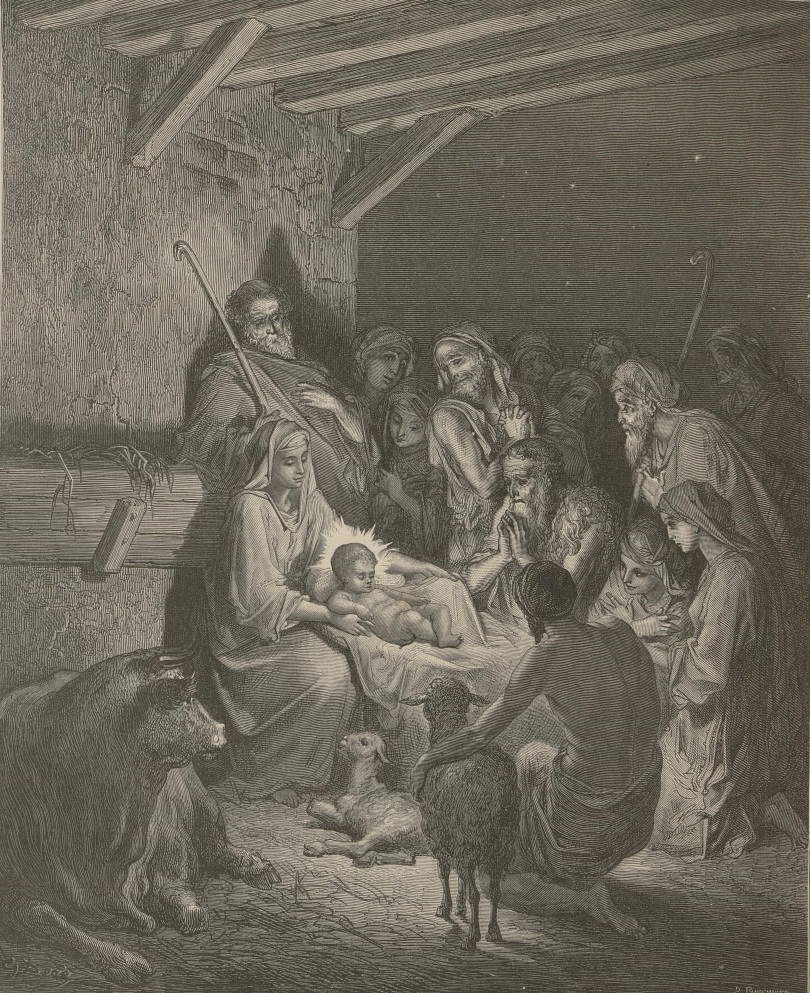
The original post in this “series,” “Christmas and its Symbols,” contains some excellent Christmas wisdom.  So often we hear Christmas denounced as a secretly “pagan” holiday because we hang wreaths, put up trees, and dangle mistletoe.  But as one meme I’ve seen recently put it (to paraphrase), “Yes, I love to display the trophies of my vanquished foes.”

Christianity sure did kick—and continues to kick—some butt.  We could probably do with some more warrior-monks running around with maces and clubs.

For this weekend and beyond, though, Jesus—as He always does—will do.

With that, here is “Flashback Friday: Christmas and its Symbols“:

Read More »

TBT^2: Christmas Eve

Well, it’s not exactly Christmas Eve—more like Christmas Eve Eve, which probably has some liturgical significance that my Southern-fried Protestantism doesn’t know or appreciate—but given the way Christmas is falling this year, as well as my own laziness, I thought it’d be worth looking back at this classic Christmas Eve post, with my timeless “Christmas and Its Symbols” post for Flashback Friday tomorrow.

That scheduling also lets me do my beloved “^2” addendum with the titles, adding another layer of Talmudic-esque commentary onto my past scribblings:  the ultimate in authorial self-indulgence.

Of course, the season isn’t about my half-baked musings about Christmas, Christmas Eve, or the rest.  It’s about the Birth of Our Savior, Jesus Christ.  As I wrote last year, Christmas Eve seems to perfectly capture the spirit of mystery of that night, “a night full of magic, mysticism, and wonder.”  Christmas Day is a flurry of activity:  opening presents, yelling at parents to wake up, cleaning up piles of wrapping paper.  Christmas Eve, especially Christmas Eve night, has always seemed more mystical, more reflective—the true celebration of Christ’s Birth.

It was also the night my Aunt Cheryl—the best one-eyed piano player in Aiken County—used to throw her big, bodacious Christmas Eve bash, featuring her incredible lasagna.  So maybe that’s why it fills my heart with a warm, fuzzy feeling (these days, it’d be a welcome dose of heartburn—totally worth it for a thick section of her lasagna).

This year, I think I’ll be spending Christmas Eve with my niece and nephews, waking up at their house Christmas morning for the second year in a row.  That’s always a fun way to spend the season.  Here’s hoping there’s some Christmas Eve Chinese food thrown into the mix.  God Bless General Tso—he was a bloodthirsty dictator, but his chicken is delectable.

With that, here is “TBT: Christmas Eve“:

Read More »

It Came Upon a Midnight Clear

This past Sunday was the first of December, and my first time back at my little church since Thanksgiving.  That meant it was time—finally!—to play some Christmas carols.

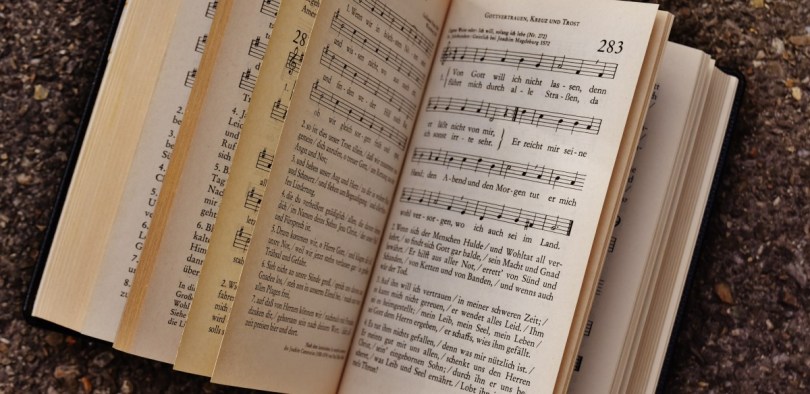
We started the service with a rousing congregational singing of “Hark! The Herald Angels Sing,” which is apparently my pastor’s favorite carol.  Our second congregational singing was “It Came Upon a Midnight Clear,” a beautiful little hymn with some interesting harmonies and leaping melodies—typical of carols.

Read More »

TBT: Singing Christmas Carols with Kids

December is here, and that means it’s time for Christmas music!  My students and I are prepping for our annual Christmas concert—back after The Age of The Virus—and have been playing and singing quite a bit of Christmas music.

Indeed, my Music Club—a club designed to get students involved in playing and performing music who, for whatever reason, could not get a music class fit into their schedules—met Tuesday to sing some carols, with the idea being that we will spend lunch and break periods next week caroling for the student body.

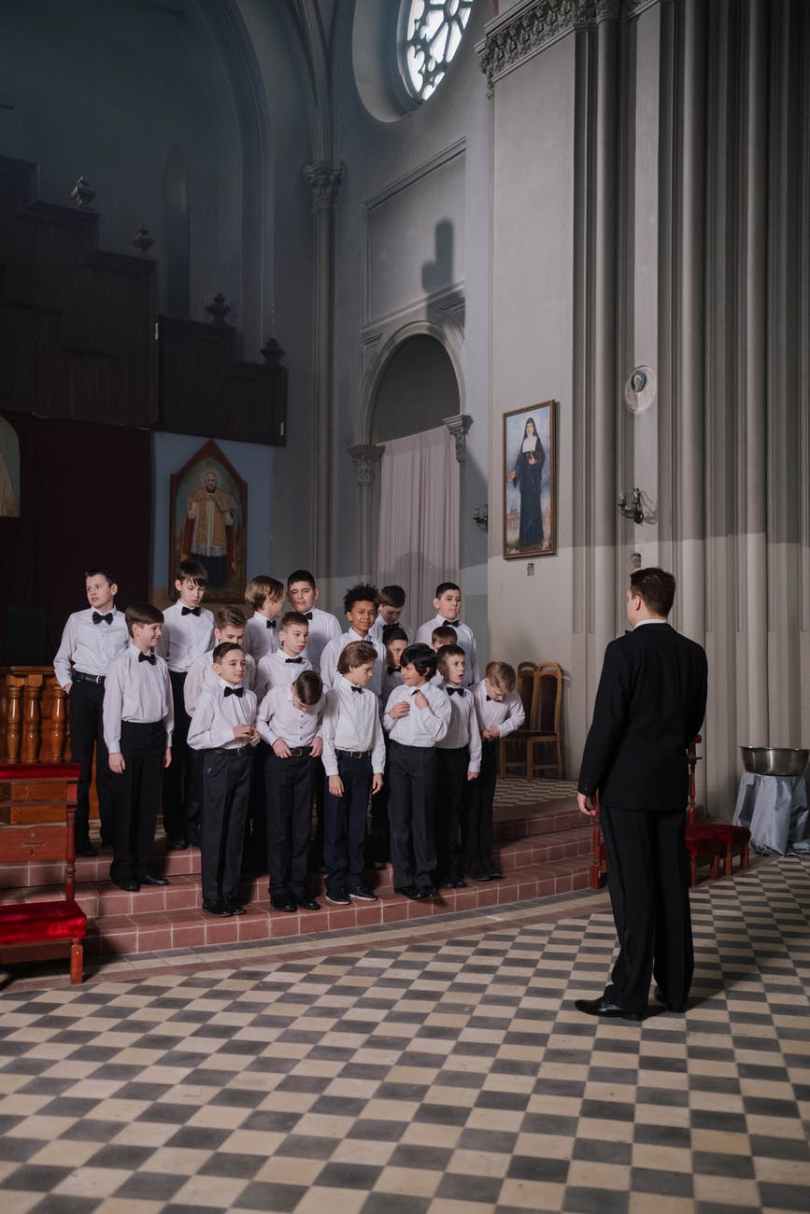
As their voices came together in sparkling purity, it reminded me of this post from last year.  We started our short rehearsal with “Silent Night,” one of my all-time favorite Christmas songs, and the sweetness and fullness of it with eight or so singers really swelled my heart.  We also sang “Joy to the World,” “Away in a Manger,” “O Little Town of Bethlehem,” “Hark! The Herald Angels Sing,” and one or two others that escape me.

I once heard that singing is good for you, both physically and mentally.  Christmas carols—songs about the Birth of Our Savior, Jesus Christ—surely are good for you spiritually, too.  Sing some today.

With that, here is 4 December 2020’s “Singing Christmas Carols with Kids“:

Read More »

Supporting Friends Friday: Audre’s New Blog

In hindsight, it seems inevitable, but somehow, Audre Myers went all this time writing without a blog of her own.  She’s long been a contributor to Nebraska Energy Observer and the comment sections of The Conservative Woman (and this blog), but to my knowledge, she never hosted a blog of her own.

Well, that’s all changed.  This past weekend she launched her own blog, Words on the Word.  It’s a Biblical commentary blog in which Audre posts a section of Scripture and provides her analysis of it, and how it pertains to our lives.

As Audre puts it:  “The plan is, I’ll write my thoughts as they pertain to the day’s New Testament reading for Morning Prayer.”

Read More »

The War on Halloween

Today’s post is a SubscribeStar Saturday exclusive.  To read the full post, subscribe to my SubscribeStar page for $1 a month or more.  For a full rundown of everything your subscription gets, click here.

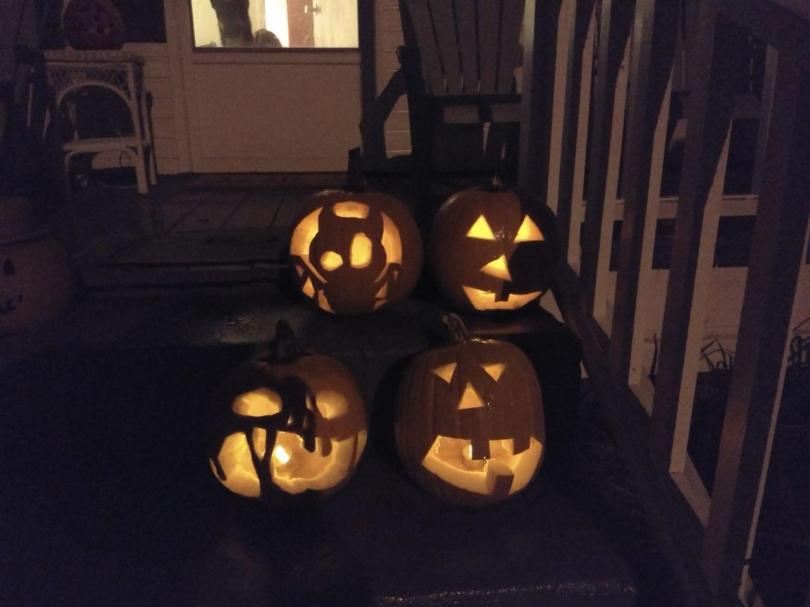
It has long been the position of this blog that Halloween gets a bad rap, especially from the Christian Right. The holiday’s association with deviltry, witchcraft, and the occult is, of course, difficult to deny, but the holiday’s name is an abbreviation of “All Hallow’s Eve”; that is, the evening before All Saints’ Day on 1 November.

Granted, the Internet atheists will claim the roots of Halloween in Samhain, the Gaelic festival of the harvest. They are not wrong, per se—the influx of Irish immigrants into the United States in the nineteenth and twentieth centuries brought a peculiarly Celtic flavor to the holiday. But the holiday is a Christian, specifically a Catholic, one—the Irishmen bringing tales of Jack O’Lantern and his carved turnip (it would only later become a pumpkin) were not ancient pagans, but among the most devout believers in Europe.

Certainly the medieval Catholic Church had a habit of taking pagan holidays and replacing them with Christian observances. For some reason, Internet atheists always use these replacements as examples of Christianity’s secretly pagan roots. The argument is ludicrous.

When Hernan Cortez destroyed the Aztec temple at Tenochtitlan and built a cathedral in its place, was he honoring the bloodthirsty Aztec gods? Or was he symbolically noting that The Holy Trinity had displaced the false gods and idols of the Aztecs? It is almost certainly the latter. Similarly, when Christians took existing pagan observances and replaced them with Christian ones, they were symbolically and practically demonstrating the victory of Christ and His Church over pagan gods.

Indeed, much of the American Protestant objection to Halloween must have been due to its associations with the Papists, rather than the Devil. The mischievousness of the holiday in the twentieth century, especially the concept of trick-or-treating, probably has more to do with its more sinister modern associations.

But the latest assault on Halloween is coming from a different quarter.  No longer are conservative Christians alone in hedging their bets on the holiday.

To read more of this post, subscribe to my SubscribeStar page for $1 a month or more.

The Joy of Renaissance Music: Palestrina’s “Pope Marcellus” Mass

It’s another school year, which means another year going through the history of Western music in Pre-AP Music Appreciation.  This week we’re diving into Renaissance music, after spending last week covering the music of the Middle Ages.

Contrary to popular belief, the Middle Ages were not a period of depressing darkness, but rather a lively age.  I certainly wouldn’t want to be a peasant pushing an ox cart full of dung, but that peasant knew his place in the universe, in the sense that he knew he was part of an ordered cosmos with God at both its head and its center.

More on that another time, but I mention it to note that the Renaissance would not have been possible without that long age of faith in the Middle Ages.  Still, the Renaissance Period—variably dated, but starting roughly sometime in the fifteenth century, and extending to the seventeenth century—was a period of increased interest in the art and literature of ancient Greece and Rome, especially the human realism depicted in the art of those great civilizations, both a continuation of and a departure from the Middle Ages.

It also saw the declining influence of the Catholic Church in Europe, especially in the wake of the Protestant Reformation of the sixteenth century.  As Protestantism and other social forces broke the Church’s monopoly on education and its dominance over art and music, Catholicism mounted a Counter-Reformation, aimed at both reducing the influence of Protestantism and reforming real abuses within the Roman Church.

That effort, naturally, involved revisions to music.  Catholic priests denounced the increasingly theatrical nature of church music, decrying it as distracting from the simple message of the Gospel and the sacred Latin text, instead serving as gaudy entertainment for Mass goers.  Much like the megachurch arena rock concerts of today, services had become garish and maudlin, a reflection of the corruption within the Church.

It was in this context that Giovanni Pieluigi da Palestrina composed his greatest works.  According to Roger Kamien in Music: An Appreciation (the eighth brief edition, which I use with my students), Palestrina composed some 104 masses and 450 other sacred works, and his music became, essentially, the gold standard of church music until modern times (“masses” in the musical context are works built around five sung prayers, the Kyrie, Gloria, Credo, Sanctus, and Agnus Dei, not to be confused with the Catholic service).

Read More »

TBT: Things That Go Bump in the Night

Despite my griping about South Carolina weather in yesterday’s post, the first day of September was surprisingly cool and overcast, giving the slightest taste of the crisp autumnality to come.  This time of year always gets me thinking about Halloween and spooky stuff, especially as everything feels more magical.

Our modern minds have diminished and dismissed the supernatural as mere superstition, often accompanied with attempts to explain away supernatural phenomena with explanations that themselves require faith to believe.  That “faith” is in scientism, a counterfeit “religion” built purely on a material understanding of the world.

We see but through a glass darkly.  There is more to our world than meets the eye—more to it than what we can observe.  God tells us much of what is there—at least, what we need to know—and Scripture seems to suggest we shouldn’t go looking for things beyond Him and His Son.

Seems prudent to me.  With that, here is 2 September 2021’s “Things That Go Bump in the Night“:

Read More »

Supporting Friends Friday: Audre Myers

I’ve been on a roll featuring blogger buddies on Supporting Friends Friday as of late, notably with my feature of photog last week.  If photog is my avuncular ally in the world of under-the-radar right-wing blogging, then today’s featured friend, Audre Myers of Nebraska Energy Observer, is probably the doting aunt who “likes” every post and almost always leaves some kind of feedback and encouragement on the blog.

She’s also brought new readers to my blog, such as 39 Pontiac Dreamer, whose comments this past week have really enlivened the blog (and inspired Wednesday’s post).  I’ve also noticed that since bringing 39PD to the blog’s comment sections, my page views have skyrocketed, thanks to the raucous back-and-forth between Audre, 39PD, Neo, and myself (feel free to join in, dear readers, and enjoy the fun!).

Audre’s encouragement and recommendations have shaped my own blog profoundly.  Many of the film reviews on the site over the past two months have been from Shudder, and Audre is to thank—she and a colleague both recommended the service heartily, and it’s become pretty much the only streaming content I consume besides YouTube videos.  Indeed, my review of The Man Who Killed Hitler and then the Bigfoot (2018) is a direct consequence of Audre mentioning the film!

More importantly, Audre is a skilled writer and thinker in her own right, though, not just a cheerleader and booster of my rambling scribblings.  She brings a warm, almost motherly perspective to the issues of the day, without descending into hyper-feminized sentimentality (something I am probably more likely to do than her, truth be told).  She employs literary and filmic allusions to highlight her points, making them easier to understand, without falling into the trap of the Harry Potter kids who use the popular book series as their entire frame of reference for understanding the world.

In short, Audre’s writing is fun, entertaining, and lively, while still retaining a sense of seriousness about the issues facing the world today.

Read More »