Lazy Sunday LXXXVI: Questions, Part I

With the major networks calling the election for Joe Biden, a number of questions are swirling about, chiefly—“what comes next?”  photog and I have been hashing this question out in the comments of his posts “The Question Has Been Answered” and “Camaraderie is Key.”

I don’t think the election is over—not by a long shot—as recounts are still be done, and the voter fraud is so blatant, it can’t help but lead to legitimate legal challenges.  But even if these mysterious early-morning ballots for Biden are thrown out and President Trump is duly re-elected, the whole debacle suggests that conservatives need to wake up to the folly of depending upon purely electoral solutions to our problems.  Winning elections is just one facet of the larger culture wars in which we find ourselves.

To that end, I’m dedicating a few editions of Lazy Sunday to going back through old posts that, in their titles, pose some kind of question.  These posts range from the philosophical to the political to the cultural, but also cover some fun stuff (like whether or not Saturn is the creepiest planet).  I’ll look at three or four posts every Sunday, which should take several weeks to get through (so we might take a break with some Christmas Lazy Sundays in the middle).

That said, here’s our first round of Questions:

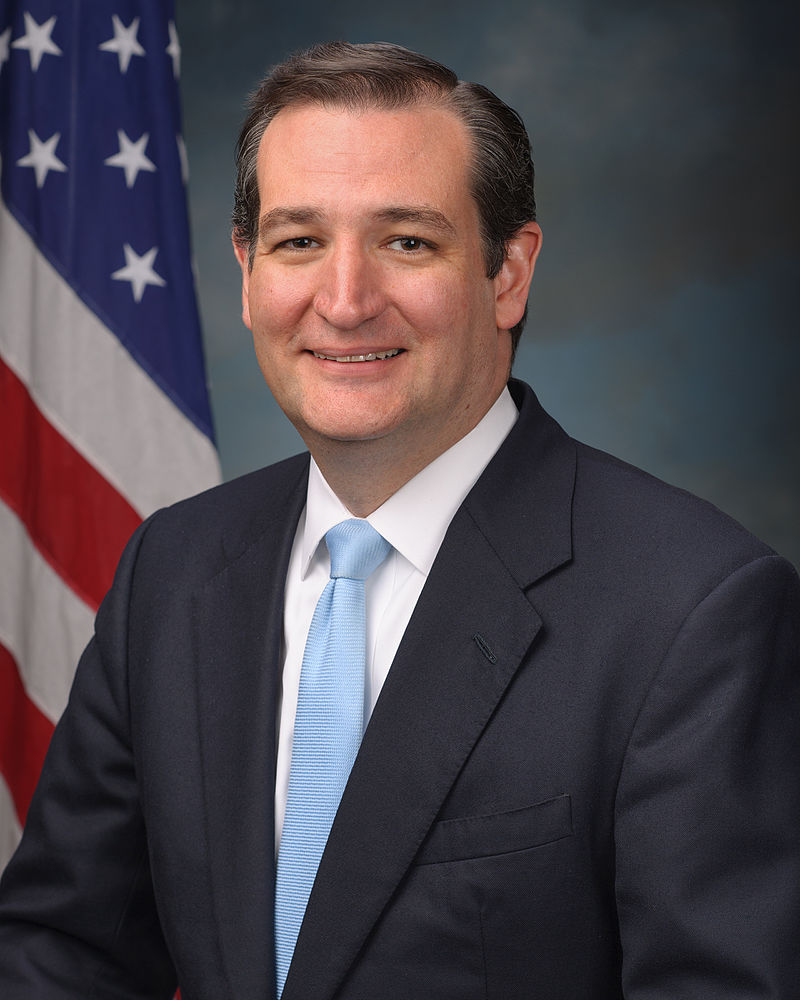
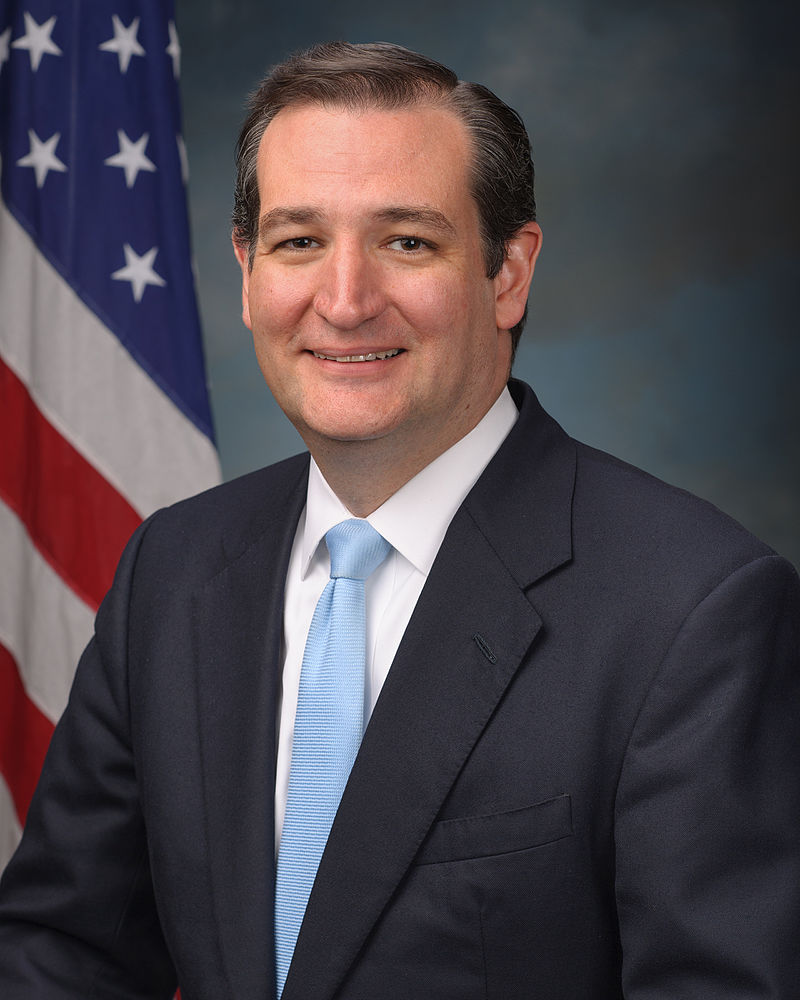
  • TBT: Ted Cruz – Conservative Hero, or Traitor to His Party?” (originally at the old TPP Blogspot Page) – Back during the 2016 RNC, Senator Ted Cruz refused to endorse candidate Trump explicitly in his convention speech, which earned him jeers and scorn.  At the time, there was still real tension between clear-cut Trumpians (I was moving in that direction, but was a Cruz man myself) and the rank-and-file Republicans, never mind the Never Trumpers.  Cruz went on to be one of President Trump’s staunchest supporters and defenders, and even seemed to be a contender for a SCOTUS position.  One thing that’s clear, though, is that Democrats will back their candidate to the hilt, even if they don’t like him, but Republicans will scatter at the least whiff of controversy around a candidate.  Hopefully Trump has changed that to some extent.
  • Fire Furloughed Feds?” – Remember the much-ballyhooed government shutdown in early 2019?  Looking back on it, it seems like a big missed opportunity for President Trump to clear the decks and do some swamp draining.
  • TBT: Transformers 2: Conservatives in Disguise?” (originally at the old TPP Blogspot Page) – I wrote this post way back in 2009, when I was a very different (and much, much portlier) man.  It’s amazing what eleven years of working and living will beat into you.  Anyway, the post looks at what I perceived to be some pro-military and pro-limited government messages in the second Transformers film, in which a meddling government bureaucrat retards the fruitful cooperation between American military personality and powerful transforming space robots, which ultimately helps the bad transforming space robots.  There’s a similar plot device in Ghostbusters, in which an EPA functionary releases a bunch of contained ghosts into Manhattan because he thinks the Ghosbusters’ containment unit is an environmental hazard.  Yeesh!

That’s it for this Sunday.  More questions—and, perhaps, answers?—to come.

Happy Sunday!

—TPP

Other Lazy Sunday Installments:

Tip The Portly Politico

Support quality commentary on politics, education, culture, and the arts with your one-time donation.

$1.00

Slam into SCOTUS

With the death of Justice Ruth Bader Ginsburg last Friday, the political world was thrown into hysterics.  Democrats are threatening to set the Supreme Court building and the White House ablaze if President Trump attempts to nominate a replacement for the Notorious RBG before the November election.

Even if they were serious about their histrionic, treasonous threat, President Trump should do it, and Senate Republicans should act speedily to confirm his nominee.  For that matter, President Trump should appoint the most stridently right-wing, pro-life, socially conservative, religious justice possible.

If the Kavanaugh hearings taught us anything, the Left will pillory any mildly conservative nominee to the Court.  Kavanaugh is a Beltway Dudley Do-Right, and he was treated as a de facto stand-in for every unpleasant interaction a woman has ever had with a man.  If the Left treated him so shabbily, why not go for broke and get the second coming of Antonin Scalia, or a young Clarence Thomas clone?

When I first heard the news, I remembered President Obama’s Merrick Garland appointment, and how Senate Majority Leader Mitch McConnell refused to hold confirmation hearings.  That was entirely constitutional, both for the president to nominate, and for the Senate to decline to confirm.  McConnell’s rationale was that the Senate should not confirm a nominee during a presidential election year, so as to give the people a chance to vote for new leadership first.

My initial reaction was, “Well, screw it—just slam in a nominee and control SCOTUS for generations.”  The Senate isn’t bound by an unwritten rule or custom, and the Left has broken so many rules (including threatening to impeach Trump for performing his constitutional duty to make an appointment), it’s time for us to do so to win.

But then my younger brother informed me that a confirmation at this time would not be a breach of senatorial custom.  The rule that McConnell invoked in 2016 only applies when the President is one party, and the Senate is controlled by the opposing party.  Presidents who have attempted nominations in those conditions during election years have failed.  Ted Cruz covers it beautifully in a short YouTube video:

Of course, McConnell warned then-Senate Majority Leader Harry Reid in 2009 when the Senate got rid of its requirement that sixty Senators were necessary to confirm Supreme Court nominees that it would one day come back to haunt the Democrats.  The price of their political expediency could very well be—let us pray!—a conservative-controlled Court.

Sadly, it seems that the Democrats will keep moving the goal posts, as usual.  The cry now is that if Trump gets his nominee before the election, the Democrats will engage in court-packing should they win the presidency and Congress; in other words, they’ll add Supreme Court seats to dilute the conservative majority.

Congress has the authority to alter the number of Supreme Court seats (when the Constitution was first ratified, the Court only had six justices, rather than the present-day nine).  However, the last infamous example of court-packing—Franklin Roosevelt’s ham-fisted attempt to inflate the Court to fifteen justices from nine—was met with severe push-back from even his own party, which saw it for the transparently naked power-grab it was.  Democrats nearly ninety years later are all too eager to engage in that power grab.

Therefore, even if President Trump gets his nominee confirmed before the 3 November election, it could all be undone with a Biden win and a “blue wave” seizing control of the Senate.  That’s why it’s all the more imperative—especially in swing States—to get out and vote for Trump.  The Supreme Court pick will be meaningless if Democrats take control of the levers of power again.

Nevertheless, Senate Republicans need to confirm—speedily—whoever President Trump puts forward as his nominee (hopefully Amy Coney Barrett).  That decisive action could rally millions of conservatives to get out to vote for Trump (and vulnerable Republican Senators) in November.

More importantly, it will—barring progressive court-packing—secure the Court for conservatives for at least a generation, and possibly beyond.  If President Trump is reelected and Republicans maintain the Senate, it may then be advisable—as much as I hate to suggest it—for Justice Thomas to step down, thereby allowing Trump to appoint a younger conservative who can maintain the conservative majority for another thirty or forty years.

Big things are afoot.  The Republicans and Trump may just have one last shot to save the Republic.

Donate to The Portly Politico

Support quality commentary on politics, education, culture, and the arts with your one-time donation.

$5.00

Election Season 2020: Iowa Caucuses

After all the anticipation, it’s finally here—the proper beginning of the 2020 presidential election.  The Iowa caucuses kick off tonight, and there’s no telling how it’s all going to shake out (although it looks like Bernie is on track to have a good night).

The Iowa caucuses work differently than the primaries in other States.  Scott Rasmussen’s Number of the Day today explains the process succinctly.  Essentially, if a candidate does not receive 15% of the votes at a precinct, his or her supporters must recast their votes for one of the remaining candidates.  That means that, while a candidate always wants to be a voter’s first choice, being the second choice can still work well.  It also makes it possible to see where support will go if a candidate drops out.

Read More »

Ted Cruz on Ben Shapiro

It was a glorious weekend at Casa de Portly, deep in the heart of Dixie.  It was the kind of weekend that saw a lot of non-blog- and non-work-related productivity; in other words, I loafed a great deal, then did domestic chores around the house.

In case you missed it, on Saturday I released my Summer Reading List 2019.  If you want to read the whole list—and it’s quite good—you have to subscribe to my SubscribeStar page at the $1 level or higher.  There will be new, subscriber-exclusive content there every Saturday, so your subscription will continually increase in value.

Anyway, all that loafing and cleaning meant that I was unplugged from politics.  I did, however, manage to catch the Ben Shapiro Show “Sunday Special” with Texas Senator Ted Cruz.

I was a big fan of Cruz in the 2016 Republican presidential primaries, and I voted for him here in South Carolina.  Cruz intuited the populist mood of the electorate the way that President Trump did, and combined it with policy innovation and constitutionalism.

There’s a reason Cruz hung in there as long as he did against Trump:  he’s a canny political operator, but he also knew how to pitch a conservative message that was appealing to many voters.  I sincerely believe that had he clinched the nomination, he would have won the 2016 election (and, perhaps, by an even wider Electoral College margin than did Trump).

Cruz catches a lot of flack because he’s a little dopey and looks odd—a whole meme emerged in 2015-2016 claiming that Cruz was the Zodiac Killer—but he’s been an influential voice in the Senate.  He possesses a supple, clever mind, and has urged Republicans to make some bold, innovative reforms to the Senate (he vocally champions and has proposed a constitutional amendment for congressional term limits).

The hour-long interview with Ben Shapiro—which opens with a question about his alleged identity as the Zodiac Killer—shows how affable and relaxed Cruz really is.  I’ve never seen him appear more relaxed and genuine (and I never took him for a phony—I’ve seen him speak live at least once at a campaign rally in Florence, and spoke very briefly to him afterwards) than in this interview.

Granted, it’s friendly territory—Shapiro was a big supporter of Cruz in the primaries—but Cruz spelled out some important ideas, as well as his projections for 2020.  If you don’t have a full hour, fast forward to about the forty-minute mark for his discussion of Trump’s reelection prospects.

To summarize them briefly:  Cruz thinks it all comes out to turnout, and that Democrats will “crawl over broken glass” to vote against Trump.  He even points out that his own race against Democrat Robert Francis “Beto” O’Rourke was as close as it was because Beto ran against Trump more than he did against Cruz.  He also thinks Joe Biden is going to flame out, and one of the more radical, progressive Dems will clinch the nomination, making the prospect of a truly socialistic administration terrifyingly possible.

That said, Cruz is optimistic.  Discussing his own narrow victory over Beto in 2018, he points out Beto’s massive fundraising and staffing advantages (Cruz had eighteen paid staffers on his campaign; Beto had 805!), but explains that a barn-burning bus tour of the State of Texas pulled out conservative and middle-class voters in a big way for his reelection.

That points to one of Trump’s strengths:  the relentless pace with which he campaigns.  Trump held three and even four rallies a day in key battleground States in the final days of the 2016 election, which likely made the difference in Michigan, Wisconsin, and the Great White Whale of Republican presidential elections since the 1980s, Pennsylvania.  If Trump can get his pro-growth, pro-American message out there as effectively in 2020 as he did in 2016 and can excite voters who want to protect their nation and their prosperity, he could cruise to reelection.

Cruz’s optimism, tempered by practical challenges ahead for Republicans, really came through in the video.  Really, the entire interview reminded me why I liked Ted Cruz so much the first time.  I’d love to see him remain a major presence throughout the next five years, and to see him run for the presidency again in 2024 (him, or Nikki Haley).

Regardless, I encourage you to listen to this interview.  Take Cruz’s warning to heart:  don’t get complacent, because the Democrats aren’t.

TBT: Ted Cruz – Conservative Hero, or Traitor to His Party?

Given Mitt Romney’s perfidious WaPo op-edit seemed germane to look back to a seemingly forgotten moment from the 2016 Republican National Convention:  Ted Cruz’s convention speech in which he did not endorse (or, as I noted, not not-endorsed) nominee Donald Trump.  While Senator Cruz has become a steadfast supporter of President Trump’s agenda, at the time it was unclear where the conservative firebrand stood on Trump’s candidacy.

Cruz’s speech in 2016, however, was different in tone, tenor, and emphasis than Senator Romney’s traitorous op-ed.  Cruz fought a grueling series of primaries and caucuses against Trump.  Trump had insulted Cruz’s wife’s looks—a point Cruz made to a group of angry Texans who questioned why the Senator had not endorsed the candidate outright.  And Cruz largely aligned, in practice, with Trump’s policies, albeit in a more conventionally Conservative, Inc. way.

Romney, on the other hand, reeks of the kind of Jeff Flake/Bob Corker Republican who will undermine Trump’s agenda given the slightest chance, in exchange for the fleeting applause of the mainstream media.

Much of the analysis below assumed a stronger, more enduring Never Trump movement within the Republican Party, as well as a less successful Trump presidency.  Trump, fortunately, has exceeded expectations.  His successes on tax cuts, foreign policy, the judiciary, and elsewhere have taken the wind out of neocon sails, and energized the populist-nationalist conservative movement.

With that, here is my lengthy analysis of Senator Cruz’s fateful, mostly forgotten, speech:

On Wednesday, 20 July 2016, Texas Senator Ted Cruz delivered a speech at the Republican National Convention in Cleveland, Ohio, in which he congratulated his primary opponent and Republican presidential nominee Donald Trump on his victory, then urged voters to “vote your conscience” in November.  Boos filled the arena.

What convention delegates were booing was not the admonition to vote their conscience–for many of them, that means voting for Donald Trump–but the lack of an explicit endorsement from Senator Cruz to endorse Trump.

Ted Cruz – not the Zodiac Killer, but almost in as much trouble.
(Image Source:  By Frank Fey (U.S. Senate Photographic Studio) – Office of Senator Ted Cruz, Public Domain, https://commons.wikimedia.org/w/index.php?curid=25195114)

Immediately, two camps formed:  the majority pro-Trump camp, and the dwindling minority of Never Trumpers.  Within the former there are, broadly, two groups:  die-hard Trump fans, who have supported the candidate since last summer; and more tepid supporters who have given their support to Trump because they support their party’s nominee, they won’t support Hillary Clinton, they support elements of Trumpism, or some combination of the three.

The latter camp–I suspect–will continue to lose momentum now that the nomination process is complete.  Some of those voters will reluctantly vote for Trump for fear that a Clinton presidency will irrevocably shift the Supreme Court toward constitutional adaptavism and judicial activism.  Some will vote third-party, probably for Libertarian candidate Gary Johnson, or not vote at all.  A very small minority will vote for Clinton.

The kerfuffle highlights well the tensions inherent in party politics:  when does loyalty to party overcome adherence to principles, and vice-versa?

How these two groups have interpreted Cruz’s speech is predictable.  For the pro-Trump/party unity crowd, they see Cruz’s non-endorsement as a traitorous, duplicitous swipe at the nominee and his supporters, someone who went back on his word to endorse the winner of the primary process.

For the anti-Trump side, Cruz is a hero who stands on principle, even in the face of overwhelming pressure from his party to support explicitly the GOP nominee.  They argue that his pledge to support the candidate became null and void when the Trump campaign attacked Cruz’s wife, Heidi, and insinuated that his father was involved in the Kennedy assassination.

The kerfuffle highlights well the tensions inherent in party politics:  when does loyalty to party overcome adherence to principles, and vice-versa?  To what extent should a voter temper his principles for the sake of political advantage, expediency, or compromise?

These are difficult questions, and they did not start with the 2016 election cycle.  Movement conservatives were frustrated, for example, with the 2008 and 2012 GOP nominees.  They perceived Arizona Senator John McCain and Massachusetts Senator Mitt Romney, respectively, as being inconsistently conservative.  Some conservatives refused to vote for those candidates; many did.  Some voted for them enthusiastically, reasoning that their flaws were better than accepting the progressivism of President Barack Obama, or changing their thinking to align with the candidates.  Others did so more reluctantly.

***

(Full disclosure–and a disclaimer:  I voted for Senator Cruz in the 2016 South Carolina GOP primary.  The analysis to follow does not represent an endorsement or criticism of Senator Cruz’s speech or positions, but rather is an attempt–as fully as possible–at an objective analysis of the reasons for his position, and the consequences of it.  Angry advocates of both sides take note.)

So, which is it?  Is Ted Cruz a hero of the conservative movement, standing on principle at the expense of party unity?  Or is he an opportunistic traitor to the Republican Party?

It’s a tricky question, and both sides have merit.  The pro-Trump majority is broadly correct that, having committed to endorsing the ultimate nominee, Cruz should hold up that endorsement, as many other Republicans have done, if reluctantly.  Take, for example, Speaker of the House Paul Ryan, who has endorsed Trump, but also been quick to criticize the nominee when his statement’s violated Ryan’s principles.

“…while Cruz didn’t outright endorse Trump, he didn’t not endorse him, either, and in no way maimed Trump.  If anything, he mostly hurt himself.”

On the other hand, Cruz in no way denigrated Donald Trump, or even suggested that voters should not vote for him.  Given in any other context, his speech would have received uproarious applause and plaudits from conservatives.  It did not explicitly fulfill his pledge to support the nominee, but it did not seek to criticize or harm the nominee overtly.

Lost in this debate–and in media coverage of the Cruz incident–was one of the best moments of party unity and statesmanship, which came when former Speaker of the House Newt Gingrich started his speech by saying, essentially, that Senator Cruz had encouraged voters to vote their conscience for the candidate most likely to uphold the Constitution.  As Gingrich put it, the only viable candidate for president who would plausibly do so is Trump.

Some may object that Newt’s entreaty was a neat verbal trick, or point out the possibility of voting third-party (though Gary Johnson isn’t viable), but it demonstrated his ability to think on his feet and his skills at diplomacy.  He was able to restore some sense of decorum and unity to the proceedings.

In short, while Cruz didn’t outright endorse Trump, he didn’t not endorse him, either, and in no way maimed Trump.  If anything, he mostly hurt himself.

***
That gets to another question, one that I think is equally interesting:  what, if anything, did Cruz hope to gain from this speech?  Some will say it was free of any political motivation, but that seems unlikely.  Call me a cynic, but I think Cruz has his eye on the future.
I suspect–and, naturally, I could be very wrong–that Cruz is setting himself to win over the support of conservatives who either won’t vote for Trump, or will vote for him with deep misgivings.  He’s also looking for those voters who are becoming more enthusiastic about Trump, but have lingering feelings that they’ve had to talk themselves into liking the candidate a bit too much.  If anything goes majorly wrong in a Trump presidency, these voters may turn to Cruz in four or eight years.
Whether Hillary Clinton or Donald Trump wins in November, Cruz will cast himself as the principled conservative who took a stand when the overwhelming force of his party’s opinion pressured him to do otherwise.  In the event of a Clinton victory, Cruz will attempt to win the GOP nomination in 2020.  In the event of a Trump victory, Cruz is betting on Trump making enough mistakes that enthusiasm for him sours, and in their hour of need, Republicans will say, “this was the man with the wisdom to resist.”  That’s a much tougher path, as it is extremely difficult to challenge successfully an incumbent president for his party’s nomination.
In both cases, it’s assuming an awful lot, and if the reaction at the Quicken Loans Arena Wednesday night is any indication, Cruz miscalculated badly.  But politics is a fickle mistress, and the political scene could look very different in four years.
***
Will Cruz’s speech galvanize the dwindling Never Trump forces?  Or will he spur more conservatives to support the party as a rallying cry against him?  Will he be blamed for splitting the party if Clinton wins?  Or will his gambit pay off, with voters of some distant election year seeing in him a man of principle?
These are interesting questions; ultimately, they are for the voters to decide.