SubscribeStar Saturday: The Future is Rural

Today’s post is a SubscribeStar Saturday exclusive.  To read the full post, subscribe to my SubscribeStar page for $1 a month or more.  For a full rundown of everything your subscription gets, click here.

In case you missed itThe Portly Politico is now theportlypolitico.com!  Thanks to subscriber support (and a 50% off flash sale), TPP is now a premium WordPress site.  If you want to help advance strong conservative commentary on politics, culture, history, religion, and art, consider a $1 or $5 a month subscription—or more!

The roiling waves of urban riots this summer could be the death knell of urban living.  Even smaller cities are falling victim to progressive insanity and destruction.  It was one thing when Seattle and Portland were ablaze, and Americans wrote off Detroit years ago.  But now Kenosha, Wisconsin is the hotbed of disorder and chaos?

The story of “white flight” from urban centers is a Leftist favorite, and—of course—progressives blame the plight of inner city blacks on the fact that white people took their tax dollars and fled tot he suburbs.  Never mind that riots in the 1960s destroyed white- and black-owned businesses, and that the current wave of riots destroys millions of dollars in black-owned property.  The Leftist narrative also implies that blacks aren’t capable of succeeding without substantial financial and institutional support from whites, a clear example of progressivism’s bigotry of low expectations.

As is often the case with Leftist canards, there is a kernel of Truth among the popcorn ball of misleading disinformation:  people did flee urban centers in the 1960s, precisely because they were so dangerous.  As the respectable, middle-class civil rights movement gave way to the militant black nationalism of SNCC and the Nation of Islam, sane people ran for the suburban hills.

Now we’re in a similar moment, in which progressive grievance-mongering and racial malfeasance gin up BLM and Antifa criminals, eager to fight imaginary “Nazis” in the streets.  While these riots are a tragedy for our nation and for the rule of law, there is a silver lining:  it could prove to be a boon for rural America.

The rest of today’s post might be a tad delayed; I am proctoring the SAT this morning, and then am hitting the road for a family celebration.  My apologies in advance.

To read the rest of this post, subscribe to my SubscribeStar page for $1 a month or more.

TBT: Remembering 1519

We’ve been back at school for one week now, and so far things seem to be going well, albeit very busy.  We’re slowly settling into a groove with our various safety protocols, and most of the schedule changes are solidified.  That should make for much smoother sailing going forward.

I’m mostly teaching music courses this year, but I still have a couple of sections of Honors US History.  That means it’s another year of telling the “grand narrative of American history.”  My main goal as a history teacher is to make sure students receive a balanced, analytical telling of our great nation’s history.  That means that while I point out the atrocities of, say, the Spanish conquistadors, I also discuss the wickedness of the Aztecs, who engaged in daily human sacrifices.  That the Spanish built a cathedral atop the old Aztec altar to their false gods is a fitting bit of divine judgment.

Of course, as an American I’m more interested in English colonization and settlement in British North America—what would become the United States—than I am in the vast empire of New Spain.  We should be getting into Roanoke, Jamestown, and Plymouth Rock today or tomorrow, and I’m quite excited about that.  For me, that’s when the story really starts cooking.  Naturally, the clash of Spanish conquistadors and Aztec and Inca warriors is cool, but those first saplings of a free country stir my heart.

All that said, this week’s TBT looks back at those cool conquistadors.  Here is 3 September 2019’s “Remembering 1519“:

Read More »

RNC Night 1 Highlight: Tim Scott

The 2020 Republican National Convention kicked off last night, and I missed all of it.  However, while drifting off to sleep after a long day of mind-molding, my younger brother and dad were blowing up my phone about Senator Tim Scott’s speech.

Tim Scott is South Carolina’s junior Senator, and enjoys immense support here in the Palmetto State.  His story is inspiring:  the product of a single-parent household, he overcame bad grades and learned the value of hard work while working at Chick-Fil-A.  He came to understand that profits don’t hurt people, but create jobs and build communities.  He’s also the first black Republican Senator from the South since Reconstruction.

While I sometimes think Senator Scott is a bit hasty to take sides against law enforcement amid ginned up race controversies, his overall instincts are solidly conservative.  He’s affable and easy-going, as well as eloquent and measured.  It’s little wonder that he’s a rising star in the Republican Party.

Read More »

TBT^2: Back to School with Richard Weaver

Today marks the first day of school for the 2020-2021 school year:  The Year of The Virus, if we were to affix a Chinese Zodiac-style name to it.  It’s going to be the most unusual school year any of us have ever experienced, I imagine.  Please keep teachers, students, administrators, and staff in your prayers.

As I’ve noted often, I reread at least the introduction to Richard Weaver’s Ideas Have Consequences every school year.  The introduction offers a strong diagnosis of modernity’s ills, and it reminds me why teaching is so important—not just the accumulation of random facts into worldly knowledge, but to inculcate deeper knowledge and virtue—what we might call “wisdom.”

Here is “TBT: Back to School with Richard Weaver“:

Every year I try to reread the introduction to Ideas Have Consequences, Richard Weaver’s masterful work of analysis and prophecy.

With school starting back in just FOUR DAYS—may God have mercy on us all—it seemed germane to bring back this post from 2018, itself a contextualization of a Facebook post from 2014.

Here is “Back to School with Richard Weaver“:

Every year, I try to sit down and re-read at least the introduction to Richard Weaver’s seminal Ideas Have Consequences, probably the most powerful book I’ve ever read.  I tend to undertake this re-reading around the time school resumes, as it helps remind me why I teach.

In addition to Ideas Have Consequences, Weaver wrote some of the most eloquent essays on the South—and what it means to be Southern—in the twentieth century.  In 2014, I posted the following quotation on Facebook; I will allow it to speak for itself[:]

I’m undertaking my annual baptism in the works of Richard Weaver to focus my philosophical thinking for a rapidly approaching school year, and, as always, I’m presented with an embarrassment of riches. Few thinkers cram so many nuggets of truth into so little space. Every paragraph of Weaver’s writings yields insights that speak to the very heart of humanity.

Read More »

Loomer for Congress

Today marks the 100th anniversary of the ratification of the 19th Amendment, which granted women the right to vote.  The record of women’s suffrage has been dubious, but our nation has enjoyed its share of qualified and exceptional female politicians, such as South Carolina’s own Nikki Haley.

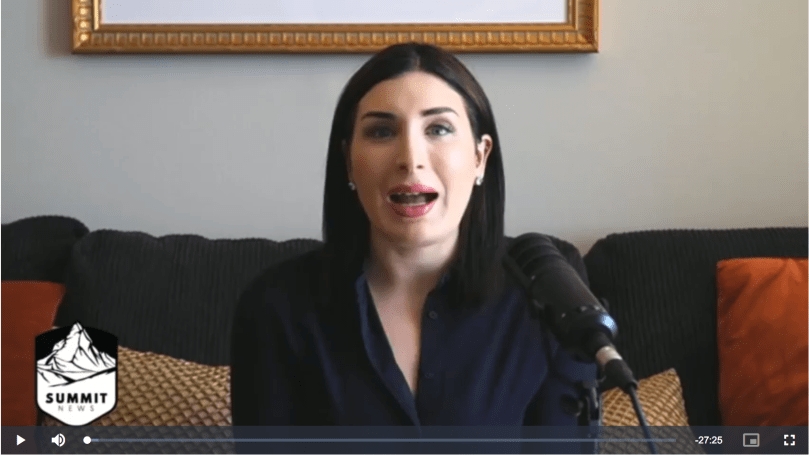
One woman to add to that group is Laura LoomerLoomer, 27, is running for Congress in President Trump’s home district in south Florida.  Today is the Republican primary, and The Portly Politico sincerely hopes Ms. Loomer wins.  If she does, she’ll go on to compete against Democrat Lois Frankel, who has represented Florida US House District 21 since 2013.

Loomer is the most-censored woman in America—probably the most censored person, period.  Her crime:  bucking the establishment orthodoxy.  Loomer gained notoriety a few years ago when she crashed a production of Julius Caesar that placed President Trump in the title role (remember, the Roman Senators stabbed Caesar), allowing for some macabre wish fulfillment among the well-heeled progressives in attendance.  She also handcuffed herself to Twitter headquarters to protest their double standards—banning the Right for the mildest of rhetoric, but upholding Leftist calls for violence against conservatives.

Loomer is so banned—she can’t use PayPal, Twitter, Facebook, Uber, etc.—that Comcast-Xfinity blocked her congressional campaign from sending texts and making calls to potential supporters!

Read More »

Lazy Sunday LXXIX: Forgotten Posts, Volume III

Lazy Sunday is rolling on with some more “Forgotten Posts” (check out Volume I and Volume II).  Again, the criteria for selection is pretty loose—I scroll through my archives and find posts I don’t link to very often, or which I’ve largely forgotten that I wrote.  Even that’s not a hard-and-fast rule.

This week’s selections come from June 2019.  The summer is always a slow month for new; ergo, it’s a slow month for blogging.  But with a self-imposed daily post requirement, I’ve gotta come up with something.  Here’s a taste of those somethings:

There’s another Lazy Sunday in the books.  Speaking of books, I’ll be cracking them pretty hard this week, as school resumes this Thursday.  It’s going to be an interesting year.  Wish me luck.

In the meantime, enjoy your Sunday!

—TPP

Other Lazy Sunday Installments:

SubscribeStar Saturday: Returning to School in The Age of The Virus

Today’s post is a SubscribeStar Saturday exclusive.  To read the full post, subscribe to my SubscribeStar page for $1 a month or more.  For a full rundown of everything your subscription gets, click here.

This past Monday teachers returned to work at my small private private school.  We start classes this Thursday, 24 August 2020.  We’ll be holding classes in-person and on-campus, with a number of new safety and sanitation protocols to attempt to limit the spread of The Virus.

It is in times like these that I’m glad I have been teaching for a decade.  My heart goes out to the new and first-year teachers, who are entering the classroom for the first time in highly atypical—indeed, unprecedented—conditions.  Building and planning out courses is a heavy enough load for a first-year teacher; doing so while enforcing various mask and social-distancing policies on rowdy youngsters is a Herculean task.

Needless to say, school is going to look a bit different this year.  Most of the changes are fairly doable, but it’s going to take consistent enforcement to implement them, and it’s really going to require a culture change at our school.  Our formerly informal but professional culture among teachers, administrators, and students is likely to become far more regimented.

A note to subscribers:  I finally caught up on tardy posts.  “Universal Studios Trip No. 2” and “Family Fun Time” are complete and available for $1 and higher subs.  Thank you for your patience!

For $5 subs, earlier in the week I posted “BONUS Doodles I“—one of several random perks for $5 and up subs.

To read the rest of this post, subscribe to my SubscribeStar page for $1 a month or more.

Trump’s Pages of Accomplishments

Looking at national polls and predictions, it’s easy to get discouraged about President Trump’s reelection prospects.  Even with Joe Biden losing his mind, and the pick of a radical, authoritarian Kamala Harris as his running mate, “Sleepy Joe” is managing to stay up by hunkering down.

On our side there’s grumbling that Trump hasn’t done enough—on immigration, on law and order—and those aren’t entirely warrantless grumbles.  Republicans squandered—perhaps intentionally—an opportunity to fund the construction of the border wall while they controlled both chambers of Congress.  John McCain pompously and vindictively voted to keep the odious Affordable Care Act in place, a clear parting shot at Trump.  Trump did not seem to offer a robust response to the CHAZ/CHOP fiasco, but is now belatedly defending federal property in Portland, Oregon.

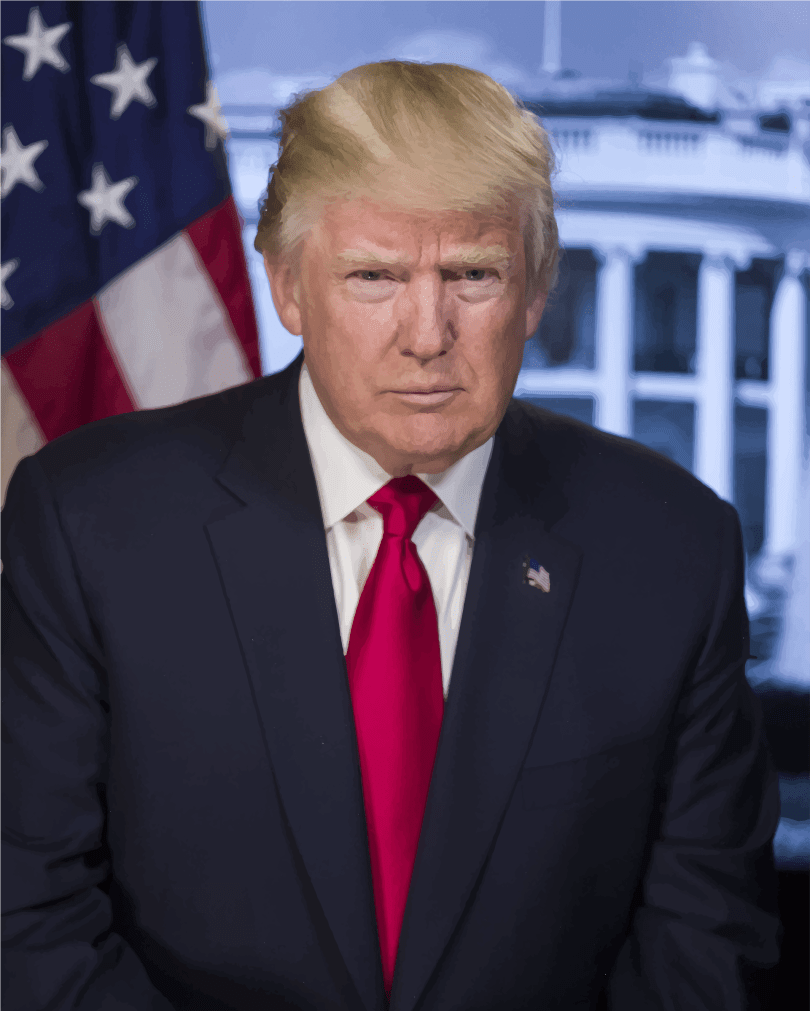
Those critiques aside, it’s worth remembering what Trump has accomplished—and he wants you to be reminded.  That’s why he gave Breitbart a six-page document of his achievements.  They are substantial—and make him one of the greatest presidents of the last fifty years.

Read More »

TBT: Lazy Sunday XXIV: Education

The school year starts back in one week, and it’s a flurry of activity to prepare for students returning to school, especially in The Age of The Virus.  I’m slowly readjusting to returning to work on a daily basis, after enjoying the short-lived fantasy life of summer.

It’s going to be a difficult transition with all the new Virus-related restrictions, which I will write about more this weekend.  “Culture shock” is probably the best term for it.  Enforcing mask-wearing, constant cleaning between classes, and other new protocols are going to be an additional, wearying task atop the many others teachers and students are already required to navigate.

I’ve written quite a bit about education over the past year, especially as the last academic year was particularly trying.  The posts featured below were all written before that difficult year, which really affected some of my attitudes and personal theories about teaching.  The profession is not getting any easier, and with the latest revival of woke social justice, it’s also getting less tolerable ideologically.

This week’s TBT is, as far as I can recall, a first:  I’m throwing back to an old Lazy Sunday.  This one is pretty meaty, as it links to quite a bit of my writing about education.

With that, here is August 2019’s “Lazy Sunday XXIV: Education“:

The school year is back in full swing, and I am already beat.  It looks like it’s going to be a good year, and I have some very bright students, but my teaching load is substantially busier than last year, and my private lesson empire continues to grow.  Those are all blessings, but it means a lot more work for yours portly.

That’s all to say that I thought this Sunday’s edition of Lazy Sunday would be perfect for looking back at my education-related posts:

  • Lincoln on Education” – a little post consisting of remarks I made to the Florence County (SC) Republican Party back in September 2018 (actually, it may have been October—one of my “Historical Moments” was skipped in the program accidentally, so I reused it the following month).  I looked at the education—and the views thereon—of President Abraham Lincoln.  He was an avid learner, and saw education as the means by which he could improve himself.  Apparently, it worked!
  • Teachers Quitting in Record Numbers – Reflections on Education” – this lengthy post outlines my own observations about why teachers quit the profession—and some of its major problems.  My main idea was “flexibility”:  in pay, in lesson plans, and in certification.  Public education is a great deal for bad teachers—they coast along, cashing a paycheck no matter how well they do—but a poor one for good teachers.  Private education is great, but it can’t compete, at least in the rural South, with public education in terms of teacher pay and benefits.But the biggest concern is what I elegantly dubbed “administrative bullcrap.”  Teachers get loaded down with all of these duties that are only distantly related to their alleged jobs:  molding young minds.
  • The State of Education” – this post details the travails of a New York City French teacher, a good teacher whose experiences in multiple schools illustrate how public education is a bad gig for good teachers.  The stories are jaw-dropping, but hardly surprising now:  zero administrative support for discipline, a “talent show” that nearly devolves into a sweaty orgy, violent outbursts from animalistic students, etc.  Terrifying stuff.
  • Sailer and Spotted Toad on Education” – this post was a bit “meta”—it’s an overview of a review of a book.  That makes my post tertiary commentary at best.  The post looks at demographer Steve Sailer’s review of blogger Spotted Toad’s book 13 Ways of Going on a Field Trip: Stories about Teaching and Learning a narrative memoir detailing Toad’s decade teaching in public schools in the Bronx.  I’ve picked up the book but still haven’t read it (I’m working through Milo’s Middle Rages: Why the Battle for Medieval Studies Matters to America; review coming soon), but it looks to be an interesting read.
  • SubscribeStar Saturday:  The State of Education Update” – this post is an update of “The State of Education,” written nearly on the eve of my return to this present school year.  As SubscribeStar Saturday exclusive, you’ll have to subscribe to my SubscribeStar page for $1 a month or more to read it.  Tantalizing, no?

So, there you have it.  Now to fulfill my obligation to my wonderful SubscribeStar subscribers and get their delayed post done.

Happy School Year!

–TPP

Passing of Bernard Bailyn

Last week, legendary historian of colonial America Bernard Bailyn passed away at the age of 97, making his own voyage into the next life.  Blogger buddy Gordon Sheaffer at Practically Historical wrote a brief but effective tribute to Bailyn earlier this week.

As Sheaffer wrote Monday:

No other scholar impacted the study of the American Revolution more than Bailyn. His masterwork, The Ideological Origins of the American Revolution, continues to challenge readers 50 years after it was published. Bailyn was able to express the unique qualities of American civilization without politicizing the history with talk of exceptionalism.

I have not read—to my great shame and discredit—The Ideological Origins of the American Revolution, but I have read Bailyn’s The Peopling of British North America: An Introduction, a much shorter work that serves as an introduction to a larger study on the settlement of British North America.  The book is so good, and gives such a flavor for the various peoples that settled in the original thirteen colonies, I once assigned it as summer reading for my very first AP US History class back in 2011.  It’s an accessible book, but it was a bit much for rising high school sophomores.

That said, I’ve been searching for my copy this morning in my classroom, without any luck.  Hopefully it will turn up soon.  My dad and I were talking about Bailyn’s death, as there was a small bit about it in the newspaper, and he expressed interest in reading it.  I also wouldn’t mind rereading it, as I haven’t done so in nearly a decade.

Even so, bits of it stick out to me.  Near the end of the book, Bailyn briefly explores the odd religious sects, mostly German, that came to the colonies.  I distinctly recall him writing about a self-proclaimed prophet or sage living in a cave in Pennsylvania.  There were multiple sects and utopian movements and cults and denominations popping up in British North America during the First Great Awakening, which reached its peak sometime in the 1740s and greatly influenced the American Revolution.

In an age of toppling statues and lurid efforts to erase our national history and faith (to be replaced with… what?), Bailyn’s works take on increased importance.  Let us hope he isn’t summarily cancelled like everything else that is good, decent, and doesn’t inherently hate America.