TBT^18,446,744,073,709,551,616: Happy Birthday, America!

It is wild looking back at the past year’s posts, and seeing how liberty keeps rallying to victory every time it seems near to death.  A year ago, the future seemed uncertain; today, it seems as though a light is shining through the fog.  Yes, America still has problems—lots of them—but we’re finally experiencing competent leadership that—gasp!—puts Americans first.

So it is that, at 249-years-old tomorrow, it seems that, at long last, America is back.

With that, here is 4 July 2024’s “TBT^4,294,967,296: Happy Birthday America!“:

Read More »

TBT^4,294,967,296: Happy Birthday, America!

Today the United States celebrates its 248th birthday.  Things seem to be looking up from a year ago.  The Usurper Biden short-circuited during last week’s presidential debate, while President Trump came across as a restrained but effective pugilist.  As I told my neighbor, one of the two came across as presidential; it’s pretty clear which one.

Tucker Carlson’s ouster from Fox News has been a Godsend for open discourse and dialogue.  Not only did he interview Vladimir Putin—perhaps the most important interview of the century—he’s hosted dozens of guests from all across the political spectrum and from all over the world, many of whom would have been too spicy for Fox News to touch.

Across the pond, Nigel Farage is shaking up an otherwise dull parliamentary election with his revitalized Reform Party.

History doesn’t repeat itself, but it does rhyme.  It’s starting to feel a lot like 2016 again—and a lot like 1776.

With that, here is 6 July 2023’s “TBT^65,536: Happy Birthday, America!“:

Read More »

TBT^65,536: Happy Birthday, America!

On Tuesday, American celebrated its 247th birthday.  We’re now just three years away from the “Bisesquicentennial,” or whatever the word is for “250th.”  That’s going to be a big one, for sure.

Since last year’s Independence Day post, things seem about the same.  The culture war rages on, but everything feels like it’s in a weird sort of stasis.  Yes, Trump has been indicted on (pardon the expression) trumped up charges.  Yes, Tucker got the boot from Fox News.  But even those events—which are major turning points—don’t feel all that consequential.  I mean, they are, but in a world where we’re constantly passing through one looking glass after another, crossing one Rubicon after the other, even the momentous has become mundane.

It probably doesn’t help that we all know the Trump indictments are a political witch hunt and are utterly meaningless in any legal sense, and that we all knew Fox News was going to defenestrate The Tuck sooner or later.  That doesn’t diminish the importance of those events, but they’re not exactly shocking, either.  Persecution of popular and effective figures on the Right is now just part of the new normal.

Such is the danger of the banality of evil—we come to suffer them, while still sufferable, because the alternative could be worse.  Jefferson wrote as much in the Declaration of Independence (emphasis added):

Prudence, indeed, will dictate that Governments long established should not be changed for light and transient causes; and accordingly all experience hath shewn, that mankind are more disposed to suffer, while evils are sufferable, than to right themselves by abolishing the forms to which they are accustomed.

Of course, these evils are far less sufferable than the tyranny the American colonists faced in 1776—and which they were already fighting against, starting with Lexington and Concord in April 1775.  Indeed, the colonists were pushing back as early as 1765 and the Stamp Act Crisis; Lexington and Concord were just when Americans were shooting at the British (they started shooting at us in 1770 at the Boston Massacre).

Today, we have hundreds of Americans held indefinitely without trial because they moseyed through the Capitol Building with a police escort serving as tour guides.  Never mind that Leftists and myriad other groups have “stormed” the Capitol Building on multiple occasions, also disrupting the government’s business; they’re the beautiful people, right?

Perhaps it would do us well to reflect upon the Spirit of 1776.

With that, here is “TBT^256: Happy Birthday, America!“:

Read More »

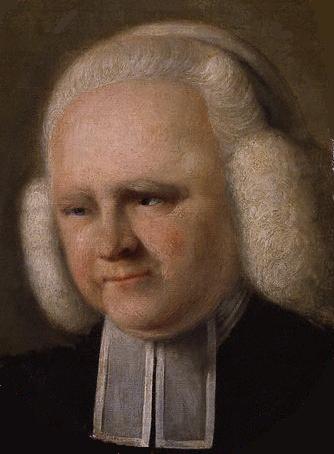
MAGAWeek2023: George Whitefield

This week is MAGAWeek2023, my celebration of the men, women, and ideas that MADE AMERICA GREAT!  Starting Monday, 3 July 2023, this year’s MAGAWeek2023 posts will be SubscribeStar exclusives.  If you want to read the full posts, subscribe to my SubscribeStar page for as little as $1 a month.  You’ll also get access to exclusive content every Saturday.

America is a Christian nation.  At least, it was.  The Christian roots of the nation run deep, not just to the Founding (if we take “The Founding” to be in or around 1776), but far back into the colonial period.  Most readers will know the well-worn story of the Pilgrims—a group of Puritan Separatists who, while not seeking religious freedom for others, at least sought it for their own peculiar version of Christianity—and their arrival in Massachusetts in 1620 (the Southerner in me will be quick to note that, despite the Yankee supremacist narrative, permanent English settlement began in 1607 with the founding of Jamestown in Virginia—the South; the earlier, albeit failed, attempt to settle Roanoke was also in the South, in what is now North Carolina, in 1585).

But there is more to the history of Christianity in America than the Puritans—much more.  The colonies of British North America struggled through some fairly irreligious times (colonial Americans were much heavier drinkers than we are), and while denominations abounded—Tidewater Anglicans, Scotch-Irish Presbyterians and Catholics, New England Puritans, and Mid-Atlantic sects of various stripes—the fervor of American religiosity was at a low ebb in the late 1600s.  Economic prosperity following difficult years in the 1670s—King Philip’s War in New England, Bacon’s Rebellion in Virginia—led many to move away from the church.  In Puritan New England, where voting rights and citizenship required church membership (and church membership was not as easy to obtain as it is today; it required proof of one’s “election”), the Puritan-descended Congregationalist churches began offering “half-elect” membership, as there were so few citizens who could prove their “election.”

Into this void stepped the revivalists of the First Great Awakening.  In the 1730s and 1740s (give or take a decade or two), a series of religious revivals swept throughout England and British North America (the colonies).  These men—Charles Wesley, John Wesley, Jonathan Edwards, and George Whitefield, among others) took difficult, strenuous tours throughout England and the colonies to deliver the Gospel in a powerful, compelling way.

Their impact was immense:  preaching salvation and a personal relationship with Christ, these men united the profusion of denominations and theologies in the colonies with the universal message of Christ’s Gospel.  Granted, denominational and theological differences persisted—indeed, they proliferated, with John Wesley’s Methodism among the plethora of new denominations—but the grand paradox of the First Great Awakening is that, even with that denominational diversity, Americans across the colonies developed a unified identity as Christians.  Protestant Christians, to be sure, and of many stripes.  But that tolerance of denominational diversity, coupled with the near-uniformity of belief in Christ’s Saving Grace, forged a quintessentially American religious identity.

Most readers will be quite familiar with the Wesley Brothers, especially John, and we probably all read Jonathan Edwards’s powerful sermon “Sinners in the Hands of an Angry God” in high school.  But most Americans know precious little about the revivalist George Whitefield, whose prowess as a speaker and evangelist brought untold thousands to the Lord.

To read the rest of today’s MAGAWeek2023 post, head to my SubscribeStar page and subscribe for $1 a month or more!

MAGAWeek2022: John Paul Jones

This week is MAGAWeek2022, my celebration of the men, women, and ideas that MADE AMERICA GREAT!  Starting Monday, 4 July 2022, this year’s MAGAWeek2022 posts will be SubscribeStar exclusives.  If you want to read the full posts, subscribe to my SubscribeStar page for as little as $1 a month.  You’ll also get access to exclusive content every Saturday.

As MAGAWeek2022 rolls on, it’s my pleasure to feature the indefatigable John Paul Jones as the third entry.

Yes, with his hypnotic bass lines, workmanlike studio skills, and steady reliability, John Paul Jones provided the backbone for Led Zeppelin’s bluesy, protometal sound.

Wait, wait—not that John Paul Jones!  Although he is an amazing bassist, I’m dedicating today’s edition of MAGAWeek2022 to an even greater John Paul Jones:  Captain John Paul Jones of the American Continental Navy (and Rear Admiral in the Russian Imperial Navy).

To read the rest of today’s MAGAWeek2022 post, head to my SubscribeStar page and subscribe for $1 a month or more!

MAGAWeek2021: Washington’s Miraculous Escape from New York City

This week is MAGAWeek2021, my celebration of the men, women, and ideas that MADE AMERICA GREAT!  Starting Monday, 5 July 2021 and running through today (Friday, 9 July 2021), this year’s MAGAWeek2021 posts will be SubscribeStar exclusives.  If you want to read the full posts, subscribe to my SubscribeStar page for as little as $1 a month.  You’ll also get access to exclusive content every Saturday.

On Wednesday of this MAGAWeek2021 I wrote about the Battle of Sullivan’s Island, a key early victory for the Americans in our Revolution that protected coastal South Carolina from British occupation for four years, diverting the Redcoats to the North.  An unfortunate side effect of that victory was the increased concentration of British troops in and ships off the coast of New York.

Soon, General George Washington and the Continental Army found themselves besieged in Brooklyn Heights, New York.  The British General Howe had Washington’s forces surrounded and outgunned.  Facing total annihilation—or, even worse, surrender of the Continental Army just six weeks after the signing of the Declaration of Independence, Washington made the decision to evacuate his men across the East River onto Manhattan Island on the night of 28 August 1776.

At daybreak, only about half of the Continental Army had made it across.  Defeat seemed imminent, even after the daring river crossings in the dead of night.

But then, something miraculous happened.

To read the rest of today’s MAGAWeek2021 post, head to my SubscribeStar page and subscribe for $1 a month or more!
MAGAWeek2021: The Battle of Sullivan’s Island

This week is MAGAWeek2021, my celebration of the men, women, and ideas that MADE AMERICA GREAT!  Starting today (Monday, 5 July 2021) and running through this Friday, 9 July 2021, this year’s MAGAWeek2021 posts will be SubscribeStar exclusives.  If you want to read the full posts, subscribe to my SubscribeStar page for as little as $1 a month.  You’ll also get access to exclusive content every Saturday.

For all the talk of the American Revolution’s origins in Massachusetts with Lexington and Concord in 1775, the war was largely won in the South.  Indeed, Cornwallis’s forces surrendered to Washington at Yorktown, Virginia, in 1781.  Washington was able to trap Cornwallis at Yorktown, however, due to earlier victories in South Carolina and North Carolina.

One of the earliest such victories was mere days before the signing of the Declaration of Independence, the Battle of Sullivan’s Island.  Fought on 28 June 1776, the battle is well-known to South Carolinians, as spongy palmetto logs were used to construct the fort.  British cannonballs harmlessly socked into the logs, and the treacherous sandbars forced some British ships aground.

This battle secured South Carolina against British invasion until 1780.  The victory routed the British naval assault, leading the British to move their fleet northward, to New York.

The battle also immortalized the palmetto tree as a symbol of South Carolina, which joined the liberty crescent on the Moultrie Flag.

To read the rest of today’s MAGAWeek2021 post, head to my SubscribeStar page and subscribe for $1 a month or more!

SubscribeStar Saturday: The Spirit of 1776

Today’s post is a SubscribeStar Saturday exclusive.  To read the full post, subscribe to my SubscribeStar page for $1 a month or more.  For a full rundown of everything your subscription gets, click here.

Disclaimer:  I do not endorse violence as a means to achieving political ends in normal circumstances.  That said, I reject the claim that “violence never solves anything.”  The vast annals of human history suggest the opposite is largely the case—violence has been the resort—sometimes final, sometimes not—to resolve any number of problems.  Our entire political system rests on the implicit use of violent force towards upholding the common good—and protecting those unable to protect themselves.  Jesus Christ died—quite violently!—for our sins, offering us ultimate salvation forever.

Further, our entire nation is founded on a last-resort to violence to secure American liberty:  the American Revolution.  Brave men pledged their lives, fortunes, and sacred honors to secure liberty and to defend their rights.  Over 4000 did make the ultimate sacrifice—and many, many more since then—to win and secure our freedom.  Sometimes some turbulence is necessary—as the Left has told us all of last year as BLM destroyed cities—to secure liberty.

That’s an uncomfortable concept—I don’t necessarily like it, and I am sad to see it has come to that—but it’s the foundation of our Republic.  I sincerely pray for reconciliation and healing, as did John Dickinson prior to the American Revolution, but I am not optimistic given Democratic control of the organs of power.  The storming of the Capitol will be used as a pretext—it already is—to oppress and imprison conservatives.  At such a point, the remaining options begin to vanish.

I am not calling for or advocating violence in any form—but I’m afraid it’s coming nevertheless.  Please pray with me for reconciliation—true reconciliation, not the dictator’s peace of bending the knee to Leftist insanity—and prepare for troubled times ahead.

Read More »

SubscribeStar Saturday: The Conservative Revolution

Today’s post is a SubscribeStar Saturday exclusive.  To read the full post, subscribe to my SubscribeStar page for $1 a month or more.  For a full rundown of everything your subscription gets, click here.  NEW TIER: $3 a month gets one edition of Sunday Doodles every month!

Friday’s post, “The Cultural Consequences of the American Civil War,” has enjoyed more traffic than my usual posts thanks to a.) the controversial topic of the American Civil War (gasp!—someone’s not denouncing the South!) and b.) and Dr. Rachel Fulton Brown graciously sharing the post far and wide.  Thanks, Doc!

It’s put me in a bit of a historical mood.  In history, the important points—the Truth—is often in the details, but I’ve always appreciated the contemplation of the philosophical implications of historical events.  Thus, my mini-essay on the American Civil War focused more on the cultural and political costs of the war than the nitty-gritty details.

The costs were, of course, considerable.  Historians of a conservative bent will sometimes refer to “reconstitutions” in United States history, with the Progressive Era and its immediate offspring, the New Deal, often cited as a major “reconstitution.”  The 1964 Civil Rights Act, which elevated anti-racism and social justice above the freedom of association, was another such reconstitution.

Similarly, the American Civil War, as I detailed yesterday, resulted in a reconstitution of the Constitution, as it served to centralize more power in the hands of the federal government, curtailing States’ rights in the process.

An observant reader will note that each of these “reconstitutions” reflected some revolutionary fervor or upheaval:  the horror of war, the agitation of Progressive reformers, the privations of the Depression, and the struggle for equal rights.  They almost all resulted in an increase in federal power, too, often to intrusive degrees.  In each instance, the ratchet turned towards more centralization and fewer liberties overall.

But the American Revolution—which made the Constitution possible—is nearly unique in the annals of modern history—much less American history—in that it was a conservative revolution.  That is, it was a revolution that sought to conserve—or, perhaps more accurately, to preserve—a set of traditions and privileges, rather than to tear them up, root and branch.

To read the rest of this post, subscribe to my SubscribeStar page for $1 a month or more.