

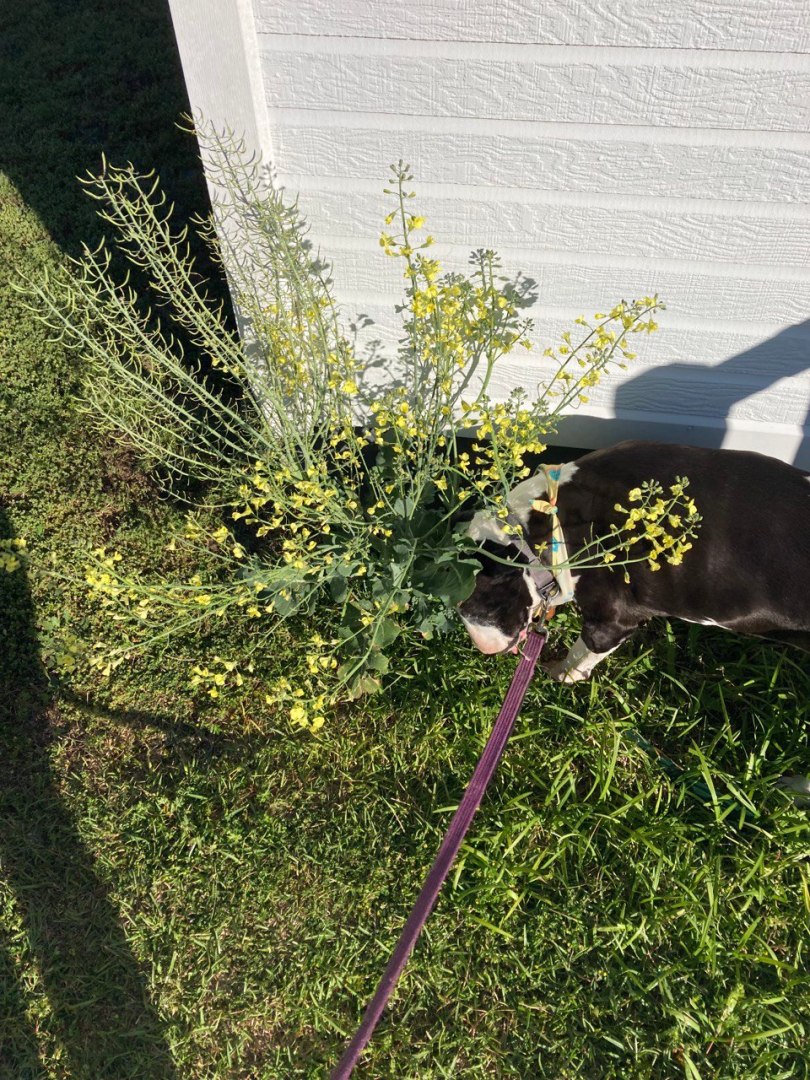
Recently, I had the opportunity to catch up with an old friend of mine from college. He has turned the backyard of his cookie-cutter suburban house into a veritable Garden of Eden—or, at least, an impressive little homestead. He’s managed to grow everything from blueberries to squash to melons and more, to the point that he can substantially impact his grocery bill—and that’s with three energetic sons! The boys have already stripped the blueberry bushes clean.
He takes great joy in being able to feed his sons and his wife from his garden. Sure, they still have to buy groceries, but they enjoy delicious, fresh fruits and vegetables throughout the year. My friend also takes particular care to save seeds for future plantings, and has an impressive compost pile in a dark corner of the yard. He tells me that about once a year he’ll dig to the bottom of the pile and find pure, black, nutrient-rich soil.
He even raises his own worms! He tells me it’s incredibly easy to do, a “low effort, high reward” project that helps to keep his garden’s soil rich and aerated. His young sons also love helping out in the garden, and the worms are a fun, crawly project for them all. They even have a dill plant with monarch butterfly caterpillars, which he has had to cover with netting so the birds don’t gobble up the beautiful larvae.
It’s truly inspiring seeing this kind of backyard agriculture first-hand, and my friend’s dedication to preserving heirloom varieties while also feeding his family is impressive. He gave me some corn kernels for planting, which I’ll save for next spring.
I did not arrive empty-handed, though. The broccoli plants that I so disgracefully let wither managed to survive! I had one, impressive, beautiful plant return. Rather than gobbling it up, I let it flower. The little buds we see on supermarket broccoli will, if left to grow, blossom into gorgeous yellow flowers. Over time, seed pods will develop after the petals fall; those pods and their stems turn brittle, and eventually fall to the earth. Either the second broccoli I planted made a comeback, too, or I have had a new plant rise up from fallen seeds.
Regardless, broccoli produce tons of seeds, and I was able to take my friend a bag full of them. As for my plant, I’m going to let nature take its course and see what happens next.
Here’s to letting a thousand broccoli flowers bloom!
With that, here is 11 August 2022’s “TBT: Preserving Old Varieties“:
On Saturday I wrote a bit about an arrangement my neighbor and I have regarding my fig trees and grapevines: I grow them, he picks them—and makes them into delicious preserves. He’s also provided me with heirloom broccoli plants, which I shamefully think have largely died (though two stalks have somehow soldiered on through the hot summer months; I’m surprised they survived the heat!), and he grows an impressive garden himself.
So when casting about for this week’s TBT feature, this post about the Bradford watermelon—a variety thought lost to the world—fit neatly with what was already fresh on my mind.
There is so much variety out there compared to what the supermarkets put on offer. We’d probably all be a lot happier and a good bit healthier if we tried some of these old varieties.
With that, here is 24 August 2021’s “Preserving Old Varieties“:
My local paper, the Darlington New & Press, features a number of editorial writers typical of the kind that get gigs writing human interest pieces for tiny small town papers: local pastors writing brief devotionals; a guy griping about the things we all gripe about; an astronomer. They all write in a similar, mildly folksy manner, which I’m sure appeals to the more advanced age of the paper’s readership.
One of their writers, Tom Poland, wrote a fascinating piece last week about rare heirloom vegetables, “Long-lost treasures and heirloom seeds.” The piece tracks down the Bradford Watermelon, a watermelon variety thought to be extinct, but which survived on the land Nat Bradford inherited from his family. The watermelon variety dwindled in popularity in spite of its sweet, superior flavor because the rind was too thin to survive bulk shipping.
After years of research into arcane newspaper clippings and agricultural history, Bradford discovered that the melons growing on his ancestral farm are, indeed, the legendary Bradford Watermelons.
To quote Poland quoting Bradford:
In Nat’s words, “The greatest watermelon to have come from the great age of watermelon breeding fell out of cultivation. Lost to the world, the melon lived on in the Bradford family farm fields. The last seeds on the planet of this wonderful melon were in a couple of mason jars.”
What a remarkable legacy—and a fortuitous one. Heirloom varieties of many plants are enjoying increased interest lately as part of the current homesteading movement, as these varieties are often tastier than their supermarket, genetically-modified alternatives.
I suspect, too, that there is a certain joy in knowing that by planting these forgotten seeds, you are directly contributing to the survival of a variety. There is a link to the past, and the agricultural experiments of our forebears.
I’ve thought about this idea more lately, as I’ve been growing my own feeble garden. My dog, Murphy, has also gotten me to consider breeds, varieties, etc. The bull terrier was bred initially as a fighting dog, but then was re-bred into the distinctive, dinosaur-snouted breed it is today by John Hinks, who sought to turn the creature into a gentleman’s companion.
Outside of massive agribusiness research departments, do people breed, cultivate, and develop varieties and new breeds any more? I know that Jackie Clay-Atkinson, a regular contributor to Backwoods Home Magazine, started a seed business to help preserve a variety of squash. But is anyone cultivating new varieties from heirloom seeds?
For that matter, are there new breeds of dogs being raised? There is the goldendoodle, of course, a mix between golden retrievers and poodles. I also recently discovered the bullmatian, a Dalmatian-Bulldog mix. From what I have read, almost all of the established breeds were bred to do some kind of job: hunt for pests, guard and guide sheep, protect their homes, and the like. In an age of exterminators, supermarkets, and home security systems, there’s not quite the same need for working dogs as there was even one hundred years ago.
Still, I’m curious: is anyone out there trying to create the next breed of dog? Are there any modern Mendel’s cross-pollinating peas?
I suspect there are. If so, we should celebrate their efforts. I’m not opposed to genetically-modified organisms, per se—we’ve been genetically-modifying plants and animals since settled living began—but I like knowing there are varieties in existence beyond what imposing industrial farms are making. Those industrial GMOs have fed millions and produce massive yields, but they are also highly dependent upon a cocktail of fertilizers, pesticides, and all other manner of chemicals and machinery to grow correctly.
That’s all fine, but what happens when it all collapses? Preserving and maintaining some hardy, delicious, ancient varieties seems prudent.
It also seems like a great deal of fun, and a hands-on way to honor our ancestors, whose gardening ingenuity sustained us in less abundant times.
 The Portly Politico
I love the energy, intentionality, and dedication to a home garden that so many folks have today. I think what was once a hobby is now a direct result of the increasingly bad news across all fronts, as we see each day in the newsfeeds and such. Very much enjoyed this article.
LikeLiked by 1 person
Gardening, which I have done for many, many years – even the nigh on 20 I lived in Brooklyn, is one thing that has kept me within sight of sanity. And the old varietals – what they call Heritage – are my favorites when it comes to fruit and vegetables. (I’m way more ecumenical about most flowers).
Parks, Richters, and more recently, Eden Brothers are the staple suppliers for my household.
LikeLiked by 1 person
I’m so jealous. I was born with two black thumbs. Sigh. My mom could, and my younger sister can, grow anything. I just grow … older. LOL! I envy you.
LikeLiked by 2 people
And wiser, Audre—you grow wiser.
LikeLike
Your kindness is boundless.
LikeLiked by 1 person
If I get another seed harvest from my broccoli plant, I’ll send you some seeds. It’s a heritage/heirloom, I believe.
LikeLike