I purchased a new vehicle a couple of weeks ago. Since then, I’m seeing Nissan Versa Notes everywhere (and they are not terribly common). We’ve all experienced this sensation before: we learn a new word, for example, and suddenly we hear it spoken frequently, when before it went unheard.
I’ve listened to a lot of Molyneux’s videos. He’s not my favorite commentator, and he can be a bit rambling (not that I can judge him too harshly for that), but his demeanor and style are endearing, and his output is insanely prolific. Within hours of a major news event, he’ll have a detailed, lengthy video breaking down the relevant information. On top of all that, he hosts a live call-in show, from which he’ll derive videos that often ninety minutes in length. It helps that his callers often have entertainingly tragic problems.
Regardless, your daily chum will continue in the vein of last Friday’s post, but with even less loving care. In essence, I’m going to let you watch two talented individuals say important, insightful things.
It’s the blogging equivalent of pulling out that old media cart at school. Everyone gets excited when the usual windbag kicks back and that tiny CRT television gets rolled out, its blue screen promising an hour of a grainy VHS tape.
It’s been a brutalworkweek for yours portly. “Brutal” is perhaps a bit of an overstatement, but it’s been busy, with a lot of late nights and early mornings. Fortunately, I’ve been a painting dynamo, and all those music lessons and extra work are reaping dividends.
My planned post summarizing and analyzing the introduction to Richard Weaver‘s seminal Ideas Have Consequences, then, is going to wait until Monday, when I have a bit more mental energy to spare. My students in History of Conservative Thought are writing an essay about the introduction to that book for their final class session, which is Tuesday. It’s a dense read for high school students, so that post will help break down some of the main ideas for them.
Instead, this evening’s posts will be a rare “Phone if in Friday” featuring some pieces that crossed my transom today. Enjoy!
Thanks to my brother for this nocturnal news update: Gavin McInnes’s new subscription-based service, FreeSpeech.TV, is ready to launch. Listeners to the excellent, hilarious Get Off My Lawn podcast know that Gavin has been planning this platform for some time now, so it’s exciting to see the lineup. The most exciting part of that schedule: the twice-monthly sit-downs with Milo Yiannopoulos to talk about the news. Talk about throwing gasoline onto a raging fire of awesomeness.
The service is $10 a month, or $100 a year, which is on par with Steven Crowder’s Mug Club or Ben Shapiro’s subscription. I just don’t think it comes with a Leftist Tears Hot-or-Cold Tumbler, much less a far superior hand-etched mug. But with McInnes’s crazy, controversial, humorous observations about life and culture, I can live without a drinking vessel tossed in (although it would be hysterical to drink coffee from a mug made to look like McInnes’s bearded mug).
Because of constant censorship from techno-elites and their ever-shifting “terms of services,” conservative and Dissident Right voices have fewer and fewer options to raise funds. Some sites, like immigration patriot website VDare.com, can’t even use PayPal anymore. As such, more and more content creators are turning to alternative or free-speech-friendly services, or undertaking the cost of creating their own infrastructure, so they can continue to get their work to fans.
I am definitely a small fry in this game of commentary, but that’s why I’ve setup a page with SubscribeStar. My goal isn’t too live off of subscriptions, but just to supplement my income slightly to make blogging more on a daily basis more feasible (and to reinvest some of the funds into maintaining and improving the experience).
In a better timeline, McInnes would be hosting Red Eye. But he’s a fighter, and I have no doubt his new service will continue to deliver the laughs.
Free speech isn’t free. Support creators like McInness, Crowder, Shapiro, and Milo to the best of your ability to keep their content alive.
If you’d like to support MY content, consider signing up for a subscription to my SubscribeStar page. New, exclusive content every Saturday, starting at just $1 a month.
It was a glorious weekend at Casa de Portly, deep in the heart of Dixie. It was the kind of weekend that saw a lot of non-blog- and non-work-related productivity; in other words, I loafed a great deal, then did domestic chores around the house.
In case you missed it, on Saturday I released my Summer Reading List 2019. If you want to read the whole list—and it’s quite good—you have to subscribe to my SubscribeStar page at the $1 level or higher. There will be new, subscriber-exclusive content there every Saturday, so your subscription will continually increase in value.
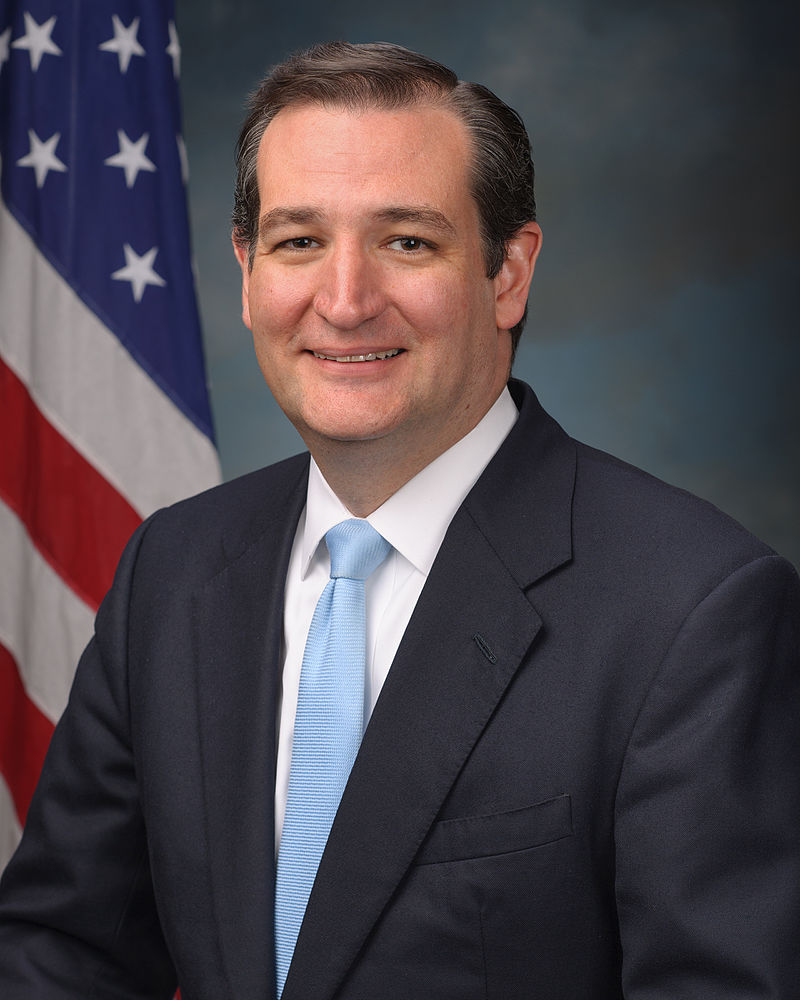
I was a big fan of Cruz in the 2016 Republican presidential primaries, and I voted for him here in South Carolina. Cruz intuited the populist mood of the electorate the way that President Trump did, and combined it with policy innovation and constitutionalism.
There’s a reason Cruz hung in there as long as he did against Trump: he’s a canny political operator, but he also knew how to pitch a conservative message that was appealing to many voters. I sincerely believe that had he clinched the nomination, he would have won the 2016 election (and, perhaps, by an even wider Electoral College margin than did Trump).
Cruz catches a lot of flack because he’s a little dopey and looks odd—a whole meme emerged in 2015-2016 claiming that Cruz was the Zodiac Killer—but he’s been an influential voice in the Senate. He possesses a supple, clever mind, and has urged Republicans to make some bold, innovative reforms to the Senate (he vocally champions and has proposed a constitutional amendment for congressional term limits).
The hour-long interview with Ben Shapiro—which opens with a question about his alleged identity as the Zodiac Killer—shows how affable and relaxed Cruz really is. I’ve never seen him appear more relaxed and genuine (and I never took him for a phony—I’ve seen him speak live at least once at a campaign rally in Florence, and spoke very briefly to him afterwards) than in this interview.
Granted, it’s friendly territory—Shapiro was a big supporter of Cruz in the primaries—but Cruz spelled out some important ideas, as well as his projections for 2020. If you don’t have a full hour, fast forward to about the forty-minute mark for his discussion of Trump’s reelection prospects.
To summarize them briefly: Cruz thinks it all comes out to turnout, and that Democrats will “crawl over broken glass” to vote against Trump. He even points out that his own race against Democrat Robert Francis “Beto” O’Rourke was as close as it was because Beto ran against Trump more than he did against Cruz. He also thinks Joe Biden is going to flame out, and one of the more radical, progressive Dems will clinch the nomination, making the prospect of a truly socialistic administration terrifyingly possible.
That said, Cruz is optimistic. Discussing his own narrow victory over Beto in 2018, he points out Beto’s massive fundraising and staffing advantages (Cruz had eighteen paid staffers on his campaign; Beto had 805!), but explains that a barn-burning bus tour of the State of Texas pulled out conservative and middle-class voters in a big way for his reelection.
That points to one of Trump’s strengths: the relentless pace with which he campaigns. Trump held three and even four rallies a day in key battleground States in the final days of the 2016 election, which likely made the difference in Michigan, Wisconsin, and the Great White Whale of Republican presidential elections since the 1980s, Pennsylvania. If Trump can get his pro-growth, pro-American message out there as effectively in 2020 as he did in 2016 and can excite voters who want to protect their nation and their prosperity, he could cruise to reelection.
Cruz’s optimism, tempered by practical challenges ahead for Republicans, really came through in the video. Really, the entire interview reminded me why I liked Ted Cruz so much the first time. I’d love to see him remain a major presence throughout the next five years, and to see him run for the presidency again in 2024 (him, or Nikki Haley).
Regardless, I encourage you to listen to this interview. Take Cruz’s warning to heart: don’t get complacent, because the Democrats aren’t.
To celebrate “pride”—which I take to mean loudly proclaiming who you like to sleep with while wearing ass-less chaps in public—this week’s Lazy Sunday looks back at the influence of gay stuff on our body politic. Enjoy!
“Gay Totalitarianism” – This post discussed the prevalence of homosexual hate-crime hoaxes, the most ubiquitous being Empire actor Jussie Smollett’s claim that a couple of white Trump supporters assaulted him with bleach and nooses in a tony, largely gay Chicago neighborhood early in the morning. I linked to Pedro recent piece for American Greatness, “Our Queer Decline,” which deftly analyzed this phenomenon: if homosexuals really faced persecution, they wouldn’t feel safe lying to the authorities about being attacked. Instead, they know they’ll have the full support of and sympathy from the government, corporations, and the media.
As the Smollett case showed, agents within the government would simply refuse to enforce the law via prosecution. The issue here is not that gays are receiving legal protection—like all Americans, they should be protected from assaults on their persons—but that there is a dual-standard at play. Jussie Smollett received egregious preferential treatment in part because he is gay (and, presumably, because he’s black and connected to the Obamas).
“Buttigieg and Buchanan: Redefining Morality” and “Bland and Gay” – These twin screeds explore South Bend, Indiana Mayor Pete Buttigieg’s appeal to voters—and his ungodly misinterpretation of Scripture regarding his homosexual lifestyle. The former essay pulls heavily from a piece Pat Buchanan wrote for Taki’s Magazine about Buttigieg’s radical redefinition of Christian teaching on homosexuality (essentially, Buttigieg’s argument is “God made me this way, so I’m supposed to ignore His teachings on homosexuality”).
The latter essay attempts to explain Buttigieg’s appeal to voters, which seems to be waning a bit. At the time, I argued that Buttigieg’s popularity was due to his blandness—he speaks largely in indefinable generalities, a la Barack Obama’s “Hope and Change” slogan—mixed with the mildest splash of exoticism—his homosexuality. Now that same-sex marriage is legal and homosexual behavior is largely normalized in the United States—but still, we all tacitly acknowledge, abnormal—Buttigieg’s gayness offers the slightest frisson of excitement for voters. The thought process seems to be “oh, he’s a safe, non-offensive, boring white guy, but I can virtue-signal on the cheap because he’s gay!”
“First They Came for Crowder” – This piece covered the demonetizing of conservative comedian Steven Crowder, all because a flamboyant “journalist” at Vox pitched a hissy-fit. If that’s not proof that being gay aligns you with the full power and influence of big corporations and our techno-elites, then there’s no convincing you.
There you have it! Some celebratory reading for Pride Month 2019. Here’s hoping your Sunday is as fabulous as Milo Yiannopoulos.
Maza argued that Crowder had “bullied” him in a series of sketches lampooning the sassy Latina’s emphatic videos for Vox. As such, Maza demanded YouTube demonetize Crowder’s videos on its site. When YouTube refused, Captain Canines led progressive journalists on a crusade against YouTube, claiming it didn’t do enough to protect LGBTQ2+etc. creators.
Please. As Will Chamberlain writes in a piece on Human Events, Maza is one of the most privileged people on the planet: he’s a flamingly gay Hispanic journalist. Few people enjoy greater access to the full might and rancor of the progressive press (but I repeat myself) than this guy.
Crowder, on the other hand, has to hawk humorous t-shirts and hand-etched mugs to create a source of non-YouTube funding in order to keep his show going. He’s been urging fans to subscribe to Mug Club for years for precisely this reason: YouTube could pull the rug out at any moment (use promo code “Free Speech” for $30 off an annual subscription—that’s an incredible bargain).
YouTube brought in users with the promise of using their platform to make a living. Now that they have a monopolistic market share of viewer eyeballs, they murkily shift their guidelines like a witch’s cauldron, booting conservatives for the slightest perceived offense.
Conservative content creators need reliable sources of funding to fight against the progressive media machine. Steven Crowder needs your support.
The explosive news Monday was that tech giants Facebook, Spotify, YouTube, and Apple banned Alex Jones and Infowars from their respective platforms. While Jones is a controversial figure who peddles in rumor, conspiracy, and innuendo, the concerted action from separately-owned and -managed Silicon Valley entities is unsettling.
Historian Victor Davis Hanson wrote a piece for National Review arguing that Silicon Valley giants should be regulated—or even busted up—to prevent monopolistic and anti-competitive practices, drawing parallels to the muckraking reformers of the early twentieth century who brought down Standard Oil. I’m wary of such solutions-by-government, but Hanson was anticipating a problem that has become all-too familiar: the massive social and cultural clout the unmoored tech giants wield.
Steven Crowder of online late-night show Louder with Crowder often pokes fun at—and complains loudly about—the various murky “terms and services” and “community guidelines” rules that are ever-shifting in continuously updated apps and platforms. A slight change in a Facebook algorithm—or a Twitter employee having a bad day—can lead to massive reductions in traffic for a YouTuber or blogger. Reduced—or eliminated—traffic means less revenue. YouTubers like Crowder who helped build the platform now find their videos demonetized for the most mysterious of reasons.
Candace Owens was kicked from Twitter because she rewrote recent New York Times hire and anti-white racist Sarah Jeong’s tweets by replacing disparaging uses of “white” with “black” or “Jew.” Razorfirst posted a video some months ago of him literally just talking about nonsense for five minutes… and it was immediately demonetized.
Now Alex Jones is banned across multiple platforms from multiple platforms—which is absolutely chilling. Jones is certainly not without controversy, and I wouldn’t take his ramblings to heart without a heaping helping of salt, but just because he’s a kinda nutty conspiracy kook who enjoys ripping his shirt off doesn’t make his situation any less terrible. If we write off Jones because he was “asking for it” by being kooky, then we’re missing the whole point of free speech.
And, yes, the usual objections are inevitable: “but, TPP, the First Amendment speech protections only apply to the government! Companies can set whatever guidelines they want! You can use some other platform! He still has his website.” Yes, yes, yes, and yes—all true. Nevertheless, the arbitrary power we’ve voluntarily—if unwittingly—yielded to these tech elites is staggering. And this preponderance of power may be where Hanson has a point.
Is not the function of the government to protect the rights of its citizens from threats and violations, both foreign and domestic? In this case, arbitrary bans—particularly these coordinated attacks on controversial figures—seem to be a powerful means of preventing an individual and/or entity from delivering his message in the public square. Like the street corner doomsayer, Alex Jones has a right to be heard, even if he’s sometimes insane (for me, the jury is out on Jones; I enjoy the entertainment value of his commentary, and I think he’s probably right about 80% of the time, but then he veers off into crisis actors, etc.—the danger of a man who is charismatic and convincing).
Today, it’s a relatively buffoonish character like Jones. Tomorrow—who knows? Do we really want to find out? “Hate speech” is a code word for silencing conservatives. It’s better to publish one racist screed from a lonely nut (not referencing Jones here, to be clear) than to muzzle millions because their innocuous, mainstream conservative viewpoint might been interpreted as a “dog-whistle.”
Sunlight is the best disinfectant, and it’s often better to give madmen the rope with which to hang themselves. When we try to silence them, they only gain in credibility (indeed, when I read the news, I immediately went… to Infowars!).







 The Portly Politico