Trump Up in Polls

Yesterday’s post looked at blogger photog’s musings about the radical implosion of the Democratic Party.  photog surmised that either the Democrats will tone down their ultra-progressive rhetoric, or they will continue to double-down on—and let President Trump bait them into—their death’s embrace with socialism.  My money is on the latter.

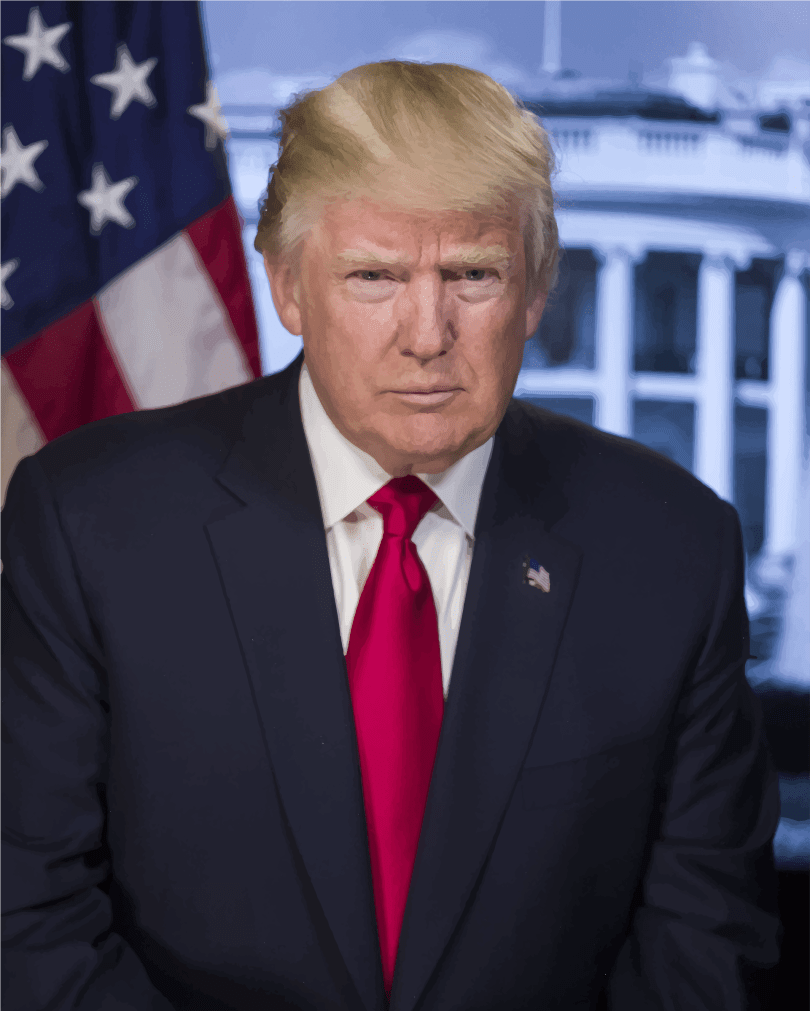
Shortly after that post went to press, I read a National Review blurb about Trump’s record-high approval ratings.  Trump has hovered around 35-40% in most approval polls, with a solid base of support.  Democrats and Never Trumpers have been banking on Trump not gaining substantially beyond 40% approval ratings (never mind that the 2016 polling was egregiously far off).  If we figure that some poll respondents simply aren’t confessing that they like the president or will vote for him, we could probably add 3-5% to that support.

Read More »

Lazy Sunday XVIII: SubscribeStar Posts

For the past few weeks I’ve been pushing my SubscribeStar page more regularly, as readers have no-doubt noticed.  I’ve picked up one subscriber; naturally, I hope more will sign up!

Here’s the pitch:  I post a new, original essay exclusively to my SubscribeStar page every Saturday.  I also made #MAGAWeek2019 a SubscribeStar exclusive—that’s four posts about people or ideas that made America great (this year’s listJohn Adams, Alexander Hamilton, President Trump’s Independence Day Speech, and fast food).  For just $1/month, you get access to these essays.

To put that in perspective:  I’ll probably buy a pizza today for $12.  That’s what a one-year subscription to my SubscribeStar page will cost.  That’s at least fifty-two (52) original pieces, not including bonus content and current and future posts.

Even if you can’t read them on the Saturday they’re released, they will always be there!  And with new content every week, your subscription gains value with each post.  Right now there are ten SubscribeStar exclusive posts, including the #MAGAWeek2019 ones, and that number will continue to grow.

I’ll also post additional special content from time-to-time, in the vein of the #MAGAWeek2019 posts.  The long-contemplated Portly Politico Podcast, should it ever launch, will also be exclusive to SubscribeStar.

With all that said, this week’s edition of Lazy Sunday is dedicated to looking at the great SubscribeStar Saturday posts that are already on the site (excluding the #MAGAWeek2019 posts, which were the subject of last week’s Lazy Sunday).

  • The Portly Politico Summer Reading List 2019” – The long-awaited successor to “The Portly Politico Summer Reading List 2016,” this list of recommended summer reads will give you plenty of conservative brain food to feed your mind and your soul.  I give detailed reviews of my four recommendations.
  • Asserting Conservatism” – This essay argues for defining conservatism in positive—that is, on its own—terms, rather than as merely against the Left.  Standing athwart history, shouting “STOP” was a necessary step in the Buckleyite days of old-school National Review, when international Communism threatened to infiltrate and topple our institutions.  Culture Marxists have accomplished what Soviet Marxists could not, and it’s time to push back, not merely stem the tide.  Doing so will require a vigorous articulation and defense of conservatism—and a willingness to fight against Leftists.
  • Christians Protect Other Faiths” – Christianity gets a bad shake, considering it built Western civilization (with an alley-oop from ancient Greece, Rome, and Israel).  The tolerance Christianity teaches is a boon to believers of other faiths, as Christ teaches conversion through persuasion, and the basic dignity of all people, Jew and Gentile.
  • Immigration and Drugs” – This piece pulls from a couple of posts at VDARE.com, which linked illegal immigration from south of the United States border to the opioid crisis.  One solution from the author:  bomb the poppy fields in Mexico, not just Afghanistan.
  • Mid-Atlantic Musings” – During #MAGAWeek2019, I was in New Jersey.  This post is a reflection of my visit (spoiler alert:  I very much enjoyed it).  It also details my one-day trip to Coney Island, which is basically Myrtle Beach in Brooklyn.
  • The Real Color of Environmentalism is Red, Not Green” – Yesterday’s post, in which I compare Congresswoman Alexandria Ocasio-Cortez’s ludicrous Green New Deal to President Franklin Delano Roosevelt’s original New Deal.  Both rely on excessive federal and executive power, and the Green will ruin the economy and our nation just the way the original one did.

So, there you have it!  There’s a lot of great material, with more coming every Saturday.  Please consider subscribing to my SubscribeStar page for just $1 (or more!) per month to gain access to these and other essays.

Happy (and Lazy!) Sunday!

–TPP

Other Lazy Sunday Installments:

SubscribeStar Saturday: The Real Color of Environmentalism is Red, Not Green

Today’s post is a SubscribeStar Saturday exclusive.  To read the full post, subscribe to my SubscribeStar page for $1 a month or more.

Environmentalism is an easy target for the Right, but radical environmentalists are dogmatic and effective at advancing their anti-humanity agenda. “Climate change”—and before that, “global warming” and “global cooling”—have been tools for advancing Marxism and statism for over fifty years.

Environmentalism is one of the many gods in the polytheistic pantheon of pagan progressivism. It fits in nicely with some of the other deities in Leftism’s cosmology, such as Abortion and Open Borders: “don’t procreate because babies use up too many resources and there are starving children in Guatemala—bring them in instead!”

To read the rest of this post, subscribe to my SubscribeStar page for $1 a month or more.

TBT: Progressivism and Political Violence

It’s another late post today, as my post-New Jersey schedule is still a bit wonky.  I just got done with a twelve-hour stint of uncling, so there was barely time to eat lunch, much less write a blog post—even a quick TBT feature.

Given the recent attacks on conservative journalist Andy Ngo, it seems apropos to dedicate this week’s to one of my classics of the modern, TPP 3.0 era:  “Progressivism and Political Violence.”  I wrote this essay back in June 2018, and I’ve probably linked to it more than any other post I’ve ever written, because it touches upon so much of the Left’s pathos.

I wrote at the time that, if the Left lost all the arms of the government, they would use extreme violence to accomplish their ends.  That was before I fully appreciated how extensive and pervasive the Deep State truly is—the Left is so entrenched, it can never really be out of power in the current state of play.

Read More »

#MAGAWeek2019: President Trump’s Independence Day Speech

It’s #MAGAWeek2019 here at The Portly Politico.  Each day’s post will be a SubscribeStar exclusive.  For a subscription of $1/month, you gain exclusive to each day’s posts, as well as exclusive content every Saturday throughout the rest of the year.  Visit my SubscribeStar page for more details.

I was not planning on writing about President Trump’s incredible Independence Day speech as part of , mainly because I try to keep these posts historical.  The speech was so powerful, though, and so educational in a historical sense, it and President Trump have earned a spot (alongside the president’s favorite food) as part of my annual celebration of American greatness.

Read More »

SubscribeStar Saturday: Christians Protect Other Faiths

There’s been a debate raging on the Right between David French and Sohrab Ahmari that is ostensibly about civility in the political arena.  What it’s really about is a struggle for who will dominate conservatism:  the plucky culture warriors of the populist, Trumpian Right, or the hand-wringing sellouts of Conservatism, Inc.

That’s a story for another SubscribeStar Saturday, but is relevant to this topic.  Ahmari and other First Things writers signed their names to a manifesto in March detailing their resistance to and struggle against the prevailing liberal-progressive orthodoxy.  In his controversial follow-up piece, “Against David French-ism,” Ahmari soundly rejects hyper-individualism (and the kind of weak-willed ineffectualism of libertarian solutions to political and social problems) and vaguely calls for a state more attuned to Christian principles.

Critics are accusing him of advocating for a Catholic theocracy, which is, of course, completely unworkable in the pluralistic United States.  But I don’t think that’s precisely what Ahmari has in mind (although it’s a bit unclear).  He is correct that the United States was founded to be an implicitly Christian country.

To read more, subscribe to my SubscribeStar page for $1 a month or higher.  Surely you want to read how I support such a sweeping claim, yes?

TBT: [Four] Years of Excellence

President Trump officially kicked off his 2020 reelection campaign earlier this week, and it’s been almost exactly one year since the post below.  I’ve been quite impressed with President Trump, who has governed far more conservatively than I and many other conservatives could have ever hoped.  While there is still much to be done on immigration—border crossings have accelerated due to misguided progressive policies that encourage child trafficking—and the wall seems to be more an abstraction than a concrete reality, Trump has slashed taxes, created jobs, and strengthened national security.

Trump has also stacked the federal courts with conservative-leaning judges and justices.  And that’s in the face of progressive aggression and Deep State coup attempts.

His record speaks for itself.  President Trump has taken the reins of the Republican Party and has done much to shore up the Republic.  Here’s looking to four more years—and to Keeping America Great!

Father’s Day—16 June 2018—marked three years since President Donald Trump’s now-legendary descent down the golden escalator at Trump Tower, following by his controversial but true-to-form announcement that he would be seeking the Republican Party’s nomination for President.

I was, initially, a Trump skeptic, and I voted for Texas Senator Ted Cruz in the South Carolina primaries the following February.  When Trump first announced, I wrote him off—as so many others—as a joke.  I appreciated his boldness on immigration, but I still thought the PC Police and the campus Social Justice Warriors were firmly in control of the culture, and that no one could speak hard truths.

I also remembered his brief flirtation with running in 2012, and thought this was just another episode in what I learned was a long history of Trump considering a presidential bid.  At the South Carolina Republican Party’s state convention earlier in 2015, I asked two young men working on Trump’s pre-campaign (this was before The Announcement) if he was reallyserious this time.  The two of them—they looked like the well-coifed dreamboat vampires from the Twilight franchise—both assured me that Trump was for real, and I left with some Trump stickers more skeptical than ever (note, too, that this was before the distinctive but simple red, white, and blue “Trump” lawn signs, and definitely before the ubiquitous “Make America Great Again” hats).

I even briefly—briefly!—considered not voting for Trump, thinking that he was not a “real” conservative.  I still don’t think he’s a conservative in the way, say, that a National Review columnist is (although, the way they’ve gotten so noodle-wristed lately, that’s a good thing; I’ve just about lost all respect for David French’s hand-wringing, and Kevin Williamson went off the deep-end), but rather—as Newt Gingrich would put it—an “anti-Leftist.”  That’s more than enough for me.

But my conversion to Trump came only belatedly.  I can still find a notebook of notes from church sermons in which I wrote, “Ted Cruz won the Wyoming primary.  Thank God!” in the margins.

Then something happened—something I predicted would happen on the old TPP site—and I couldn’t get enough of the guy.  It wasn’t a “road to Damascus” epiphany.  I started listening to his speeches.  I read up on his brilliant immigration plan (why haven’t we taxed remittances yet?).  I stopped taking him literally, and began taking him seriously.

And I noticed it happening in others all around me.  Friends who had once disdained the Republican Party were coming around on Trump.  Sure, it helped that Secretary Hillary Clinton was a sleazebag suffused with the filth of grasping careerism and political chicanery.  But more than being a vote against Hillary, my vote—and the vote of millions of other Americans—became a vote for Trump—and for reform.

Trump made politics interesting again, too, not just because he said outrageous stuff on live television (I attended his rally in Florence, South Carolina before the SC primaries, and I could feel his charisma from 200 feet away; it was like attending a rock concert).  Rather, Trump busted wide open the political orthodoxy that dominated both political parties at the expense of the American people.

Take trade, for example.  Since World War II, both Democrats and Republicans have unquestioningly supported free trade.  Along comes Trump, and suddenly we’re having serious debates again about whether or not some tariffs might be beneficial—that maybe it’s worth paying a little more for a stove or plastic knick-knacks if it means employing more Americans.

That’s not even to mention Trump’s legacy on immigration—probably the most pressing issue of our time, and one about which I will write at greater length another time.

Regardless, after over 500 days in office, the record speaks for itself:  lower taxes, fewer regulations, greater economic growthgreater security abroad.  At this point, the only reasons I can see why anyone would hate Trump are either a.) he’s disrupting their sweet government job and/or bennies; b.) they don’t like his rhetorical style, and can’t get past it (the Jonah Goldbergite “Never Trumpers”—a dying breed—fall into this group); or c.) they’re radical Cultural Marxists who recognize a natural foe.  Folks in “Option B” are probably the most common, but they’re too focused on rhetoric and “decorum”—who cares if he’s mean to Justin Trudeau if he gets results?  The folks in “Option C” are willfully ignorant, evil, or blinded by indoctrination.

As the IG report from last Thursday revealed—even if it wouldn’t come out and say it—the Deep State is very, very real.  That there were elements within the FBI willing to use extralegal means to disrupt the Trump campaign—and, one has to believe, to destroy the Trump presidency—suggests that our delicate system of checks and balances has been undermined by an out-of-control, unelected federal bureaucracy.  Such a dangerous threat to our republic is why we elected Trump.

President Trump, keep draining the swamp.  We’re with you 100%.

Deportemal II: Trump Vows Mass Deportations

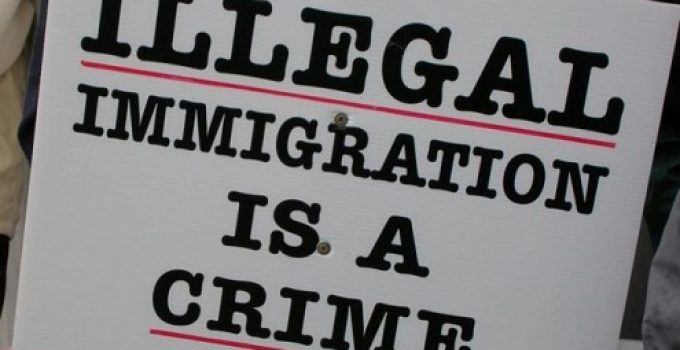
On Monday, President Trump announced the deportation of millions of illegal aliens beginning “next week,” vowing that ICE agents would remove such aliens “as fast as they come in.”

Here are the two pertinent tweets from the president:

Critics and supporters alike are asking for details on how Immigration and Customs Enforcement will process the millions here illegally.  As I write this post, I’ve just listened to part of Ben Shapiro’s podcast on the announcement; he argues that a surgical, case-by-case approach is preferable, as some illegal aliens possess skills we would want in the United States.

While I appreciate Shapiro’s measured response, I can’t agree.  As I wrote in “Deportemal,” the time for half-measures has passed.  A lengthy review process of the millions of illegal aliens—which could be anywhere from 11 to 33 million (PDF; that document shows an illegal population of 12 million as of 2015), and maybe higher (that no one can know for sure is a major part of the problem)—would bog down for years, if not decades.  Another visa process ladled on top of inherent law-breaking will merely exacerbate the problem.

Consider:  our current catch-and-release system—migrants show up to one court date, get a temporary visa and orders to report back to court, then disappear into the countryside, never darkening an immigration court again—already gives migrants an easy in.  Essentially, touching American soil is like tagging home base:  once you’re here, you’re in.

Now, imagine adding an individual review process to that.  First, you’d have to assume good-faith on the part of illegals in the country.  They have virtually no incentive to come to another hearing.  Yes, they have the opportunity to be absolved of their illegal status (I’m assuming that’s what Shapiro is proposing), but if they think they don’t, they’ll avoid the process.

Second, a whole cottage-industry of gaming the individual amnesty system will emerge.  Lawyers skilled in the ins-and-outs of this fresh bureaucratic hell will profit at the expense of their countrymen and poor illegals.  Appeals—and you know with the federal government there would be a lengthy appeals process—would linger on for months, even years, further adding to the administrative load of ICE and our courts.

If we were dealing with a few thousand people, we could demonstrate some mercy and approach this issue with a lighter touch.  Unfortunately, we’ve failed to enforce our border laws for so long that we’ve allowed this crisis to metastasize, to the detriment of American citizens and potential immigrants alike.

Republicans squandered a golden opportunity to make some real strides on immigration reform during the 2017-2019 congressional session.  President Trump has moved mountains since then via constitutional executive orders and international diplomacy, particularly his threat of slapping hefty, incremental tariffs on Mexico.  Increased enforcement of Mexico‘s southern border has, according to Shapiro, already eased the number of arrests on the American border.

In the wake of President Trump’s massive 2020 reelection campaign launch last night in Orlando, Florida, it is imperative for immigration patriots to run (and win!) in 2020, and for Americans to support Trump’s reelection.  It’s our best hope to resolve this crisis, to the benefit of Americans and the world.

For more of my writing on immigration, check out “Lazy Sunday XIII: Immigration.”

Consider supporting the blog at my SubscribeStar page.  $1/mo. gets you exclusive access to new posts every Saturday.

History of Conservative Thought Update: Edmund Burke

A bit of a delayed post today, due to a busier-than-usual Monday, and the attendant exhaustion that came with it. The third meeting of my new History of Conservative Thought class just wrapped up, and while I should be painting right now, I wanted to give a quite update.

Last week, we began diving into the grandfather of modern conservatism, Edmund Burke. Burke prophetically saw the outcome of the French Revolution before it turned sour, writing his legendary Reflections on the Revolution in France in 1789 as the upheaval began. Burke argued that the French Revolution ended the greatness of European civilization, a Europe that governed, in various ways, its respective realms with a light hand, and a sense of “moral imagination.”

To quote Burke reflecting on the Queen of France:

“I thought ten thousand swords must have leaped from their scabbards to avenge even a look that threatened her with insult. But the age of chivalry is gone. That of sophisters, economists, and calculators, has succeeded; and the glory of Europe is extinguished forever. Never, never more, shall we behold that generous loyalty to rank and sex, that proud submission, that dignified obedience, that subordination of the heart, which kept alive, even in servitude itself, the spirit of an exalted freedom. The unbought grace of life, the cheap defence of nations, the nurse of manly sentiment and heroick enterprise is gone! It is gone, that sensibility of principle, that chastity of honour, which felt a stain like a wound, which inspired courage whilst it mitigated ferocity, which ennobled whatever it touched, and under which vice itself lost half its evil, by losing all its grossness.”

What a powerful excerpt! The “sophisters, economists, and calculators,” indeed, reign in the West. What Burke was driving at here was that the rationalistic, abstract bureaucrats who would abandon tradition in their quest for a perfect society would sacrifice everything that made their country great, and life worth living.

Burke was also arguing that there is more to obedience to a government or king than the mere threat of power. People are invested in their country and society—and willing to submit to authority—because of organic culture from which it grows. Uprooting the great tree of tradition in favor of abstract foundations merely destroys the tree, and plants its seedlings in shallow ruts of stone. What grows will be anemic and pitiful by comparison.

Volumes could and have been written about Burke, but I’ll leave it here for now. Next week we’re getting into the development of Northern and Southern conservatism, which should make for some pre-Independence Day fun.

TBT: Reality Breeds Conservatism

Yesterday’s post, “Conservative Inheritance,” explored the deep grounding of conservatism in hard-won experience.  Rather than existing as an ideology–a framework built upon abstract principles derived in a rationalistic vacuum—per se, conservatism is the product of concrete, empirical observation.

As I’m teaching my summer course, The History of Conservative Thought, I’m delving deeper into this understanding of conservatism.  Last week I wrote about the Russell Kirk’s six characteristics of conservatism, which my students and I discussed (and which they’re writing about for today).  While preparing that lesson, I was struck by the assertion that conservatism is not an ideology.

For so long, I’d been conditioned to think of it that way—and to think of our cultural and political battles as fundamentally ideological.  I still think there is a great deal of truth to that, as the modern Right battles against a progressivism imbued with a Cultural Marxist teleology (apologies, philosophy majors, if I’m misusing that word).  But conservatives must be aware that, by playing by the Left’s rules, we’re implicitly accepting the Left’s frame.

Regardless, all of these ideas and debates were circulating in my mind as I considered this week’s feature.  I landed, finally, on a piece entitled “Reality Breeds Conservatism” from last June.  The piece is not so much about ideological battles, but about a study (linked below) that argued that fewer risks made people more “liberal”—more willing to take risks—while greater risks made people more “conservative”—less willing to take risks.

Great insights there, Washington Post.  Yeesh.

Anyway, here is June 2018’s “Reality Breeds Conservatism“:

There’s a piece in the Washington Post about how progressives (“liberals,” as the article puts it) and conservatives think differently.  Like many such pieces, it essentially reduces conservatives to being more fearful, and touts that, in the absence of fear, conservatives become liberal.

I don’t entirely disagree with the basic findings of the Yale researchers; beloved Canadian psychologist Jordan Peterson makes similar claims.  Peterson argues that progressives are risk-takers, the ones who explore over the mountain or innovate new businesses, while conservatives are the managers (and conservators) of the new institutions that arise from innovation.

Obviously, this basic analysis is a generalization, a reduction that makes it a little easier to understand the world around us.  As such, there are broad exceptions:  we all know conservatives who fight hard in the culture wars, who build new businesses, and who support new ideas or techniques—many at great personal, financial, and political risk.

Meanwhile, progressives politically are still clinging to the same failed ideas that have motivated their policy proscriptions for decades—increasing the minimum wage, expanding the welfare state, pushing identity politics.

That said, the article linked above—which chillingly says “we conducted an experiment to turn conservatives into liberals” in the title—points to the fear factor as the key to determining conservative vs. progressive viewpoints.  In doing so, it points to said experiment, which is deeply flawed at its core.

To wit:  researchers conducted an online poll (a bit iffy) of 300 U.S. residents, only 30% of whom were Republicans.  Two-thirds of the survey-takers were women, and 75% were white, with an average age of 35.  This collection isn’t exactly heavy on conservatives to begin with, and it’s unclear who was offered the opportunity to take the survey, which itself has a verysmall sample size.  I’m picturing a group of undergraduate psychology chicks posting a link to a SurveyMonkey survey on Facebook, which is about the amount of rigor I would expect from the “academic” social sciences these days.

Besides the small sample size and lack of diversity, the core flaw is the methodology.  Those surveyed were asked to imagine a scenario in which they were given one of two superpowers:  half were granted the power to fly, the other half granted the power “to be completely safe, invulnerable to any harm.”  The participants then completed the aforementioned survey.

What they found was not all that surprising, although the researchers feign as such:  it turns out that, in the absence of physical harm, conservatives become much more progressive, which—in the context of this study—basically means that they’re more open to people or situations that are different from them, and therefore inherently riskier.

Well, duh—in the absence of objective reality—to be free of any risk of physical harm, broadly-defined—I would partake in all sorts of risky activities that I would be reluctant to attempt when the threat is real.  That’s because I wouldn’t bear the costs of any of those risky actions (and as someone who broke a wrist falling from a ladder last fall, I can say that those costs are very high).

The late Kenneth Minogue wrote an essay in 2001 entitled “The New Epicureans,” in which he pointed out that, historically, only the very wealthy—the aristocratic elites of society—could afford to partake in risky behaviors, things like casual sex, drug abuse, and the like—while the rest of us plebes had to adopt a more Stoical approach to life—avoiding undue risk, living life cleanly and simply, dutifully serving our families and communities.

With broadly-spread wealth and widely-available contraceptives, however, modern chumps can mitigate the risks of a “live fast, die young” lifestyle in the same way ancient elites could—to an extent. What used to be the self-indulgent indolence of a very small group (the hated 1%!) has now become the self-destruction of a majority of modern Westerners.  And, of course, it doesn’t work out well, as most folks don’t have the means to pay for their immoral-but-convenient choices.

While we might be able to avoid more of the consequences of our actions—and, therefore, participate more eagerly in the temptations of a hedonic existence—there are still consequences, often dire ones.  I’ll write about some of these in my upcoming eBook, Values Have Consequences:  Why the West Needs Social Conservatism, but take one lethal example:  abortion.

What could more self-destructive, for more selfish ends, than to snuff out a human life?  Looking at this in the most dispassionately, economic way possible, it boils down to a calculation:  do I buckle down and adopt the Stoic lifestyle necessary to provide for this new life, thereby sacrificing my own personal enjoyment, or do I get rid of this “clump of cells” and avoid the huge costs and time-commitments of childrearing?  The major legal hurdles being removed via the disastrous Roe v. Wade ruling—and in the absence of a deep-rooted moral framework—many women, sadly, have opted for the latter option (which many, sadly, come to regret).

So, yes, if you strip away external costs and the threat of pain, people of any political or temperamental persuasion will indulge in more risk-tasking, for good and for ill, and might be more welcoming of strangers or alternative lifestyles.

But a healthy dose of Stoic skepticism about life is not detrimental.  We should not live our lives in fear, but we should govern sensibly—for example, by enforcing our national borders.  In short, conservatism is rooted profoundly in reality—it responds to real threats, prepares for real dangers, and seeks to build a life that, rather than relying on vague abstractions, grows organically from the nature of things as they are.

***

One final note:  the study found that, when witnessing acts of physical violence or hearing about one group or another causing trouble, liberals will become more conservative, even if temporarily.  This was true of the original “neocons” in the 1960s and 1970s, who were “mugged by reality.”

I believe it also holds true for those soft-liberals and centrists who saw the electoral chicanery, cultural division, racialized politics, and violent tactics of the Left in the 2016 election; having been “mugged” once again, they voted for a safety and reform.

Thank God Trump is a risk-taker.