TBT: What is Conservatism?

I’m still struggling with fever and migraines, although both seem to be improving and growing milder.  Fortunately, I received word today that I do not have The Virus.  So now I have to get to the bottom of whatever malady plagues me.

Yesterday I launched the Summer 2020 session of History of Conservative Thought online; you can read about our discussion here.  As such, it seemed a good time to look back 2019’s What is Conservatism?,” the first post from the Summer 2019 run.

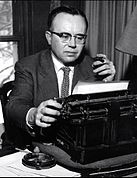
The post here details Russell Kirk’s “Introduction” to The Portable Conservative Reader, which has also been repackaged as “Ten Conservative Principles.”  It’s an important essay that details the general principles and attitudes of the conservative as he attempts to make sense of the world.

It’s influential, too, though Kirk’s influence has suffered somewhat versus Buckley-style fusionism.  The Z Man dedicated an entire podcast to the essay a few weeks ago.

It’s well worth a read.  But for now, here’s my summary of it in “What is Conservatism?“:

Today I’m launching a summer class at my little private school here in South Carolina.  The course is called History of Conservative Thought, and it’s a course idea I’ve been kicking around for awhile.  Since the enrollment is very small, this first run is going to be more of an “independent study,” with a focus on analyzing and writing about some key essays and books in the conservative tradition.  I’ll also be posting some updates about the course to this blog, and I’ll write some explanatory posts about the material for the students and regular readers to consult.  This post will be one of those.

Course Readings:

Most of the readings will be digitized or available online at various conservative websites, but if you’re interested in following along with the course, I recommend picking up two books:

1.) Richard Weaver‘s Ideas Have Consequences ($6.29):  this will be our “capstone” reading for the summer.
2.) The Portable Conservative Reader (edited by Russell Kirk):  we’ll do some readings from this collection, including Kirk’s “Introduction” for the first week.

Course Scope:

I’ll be building out the course week-to-week, but the ultimate goal is to end with 2016 election, when we’ll talk about the break down of the postwar neoliberal consensus, the rise of populism and nationalism in the West, and the emergence of the Dissident Right.

After the introductory week, we’ll dive into Edmund Burke, then consider the antebellum debates about States’ rights.  I haven’t quite worked out the murky bit during the Gilded Age, but we’ll look at the rise of Progressivism in the early twentieth century, then through the conservative decline during the Great Depression and the Second World War.

After that, it’s on to Buckley conservatism and fusionism, as well as the challenges of the Cold War and international communism.  Paleoconservatives like Pat Buchanan and (if I’m feeling edgy) Sam Francis will get shout-outs as well.

Week 1:  What is Conservatism?

That’s the basic outline.  For the first day, we’re going to look at the question in the title:  what is conservatism?  What makes one a conservative?  Feel free to comment below on your thoughts.

After we see what students think conservatism is, we’ll begin reading through Russell Kirk’s “Introduction” in The Portable Conservative Reader.  It’s an excellent overview of the question posed.  The first section of the lengthy “Introduction” is entitled “Succinct Description,” and it starts with the question, “What is conservatism?”

Not being one to reinvent what others have done better—surely that is part of being a conservative (see Principle  below)—I wanted to unpack his six major points.  Kirk argues that though conservatism “is no ideology,” and that it varies depending on time and country, it

“may be apprehended reasonably well by attention to what leading writers and politicians, generally called conservative, have said and done…. to put the matter another way, [conservatism] amounts to the consensus of the leading conservative thinkers and actors over the past two centuries.”

Kirk condenses that grand tradition into six “first principles,” derived largely from British and American conservatives.  To wit:

1.) Belief in a Transcendent Moral Order – conservatives believe there is higher authority or metaphysical order that human societies should build upon.  As Kirk puts it, a “divine tactic, however dimly descried, is at work in human society.”  There is a need for “enduring moral authority.”  The Declaration of Independence, for example, draws on the concept of “natural law” to complain about abuses of God-given rights.  The implication is that a good and just society will respect God’s natural law.

2.) The Principle of Social Continuity – Kirk puts this best:  “Order and justice and freedom,” conservatives believe, “are the artificial products of a long and painful social experience, the results of centuries of trial and reflection and sacrifice.”

As such, the way things are is the product of long, hard-won experience, and changes to that social order should be gradual, lest those changes unleash even greater evils than the ones currently present.  Conservatives abhor sudden upheaval; to quote Kirk again:  “Revolution slices through the arteries of a culture, a cure that kills.”

3.) The Principle of Prescription, or the “wisdom of our ancestors” – building on the previous principle, “prescription” is the belief that there is established wisdom from our ancestors, and that the antiquity of an idea is a merit, not a detraction.  Old, tried-and-trued methods are, generally, preferable to newfangled conceptions of how humans should organize themselves.

As Kirk writes, “Conservatives argue that we are unlikely, we moderns, to make any brave new discoveries in morals or politics or taste.  It is perilous to weigh every passing issue on the basis of private judgment and private rationality.”  In other words, there is great wisdom in traditions, and as individuals it is difficult, in our limited, personal experience, to comprehend the whole.

It’s like G. K. Chesterton’s fence:  you don’t pull down the fence until you know why it is built.  What might seem to be an inconvenience, a structure no longer useful, may very well serve some vital purpose that you only dimly understand, if at all.

4.) The Principle of Prudence – in line with Principles and , the conservative believes that politicians or leaders should pursue any reforms only after great consideration and debate, and not out of “temporary advantage or popularity.”  Long-term consequences should be carefully considered, and rash, dramatic changes are likely to be more disruptive than the present ill facing a society.  As Kirk writes, “The march of providence is slow; it is the devil who always hurries.”

5.) The Principle of Variety – the “variety” that Kirk discusses here is not the uncritical mantra of “Diversity is Our Strength.”  Instead, it is the conservative’s love for intricate variety within his own social institutions and order.

Rather than accepting the “narrowing uniformity and deadening egalitarianism of radical systems,” conservatives recognize that some stratification in a society is inevitable.  Material and social inequality will always exist—indeed, they must exist—but in a healthy, ordered society, each of these divisions serves its purpose and has meaning.  The simple craftsman in his workshop, while materially less well-off than the local merchant, enjoys a fulfilling place in an ordered society, one that is honorable and satisfying.  Both the merchant and the craftsmen enjoy the fruits of their labor, as private property is essential to maintaining this order:  “without private property, liberty is reduced and culture is impoverished,” per Kirk.

This principle is one of the more difficult to wrap our minds around, as the “variety” here is quite different than what elites in our present age desire.  Essentially, it is a rejection of total social and material equality, and a celebration of the nuances—the nooks and crannies—of a healthy social order.  “Society,” Kirk argues, “longs for honest and able leadership; and if natural and institutional differences among people are destroyed, presently some tyrant or host of squalid oligarchs will create new forms of inequality.”

Put another way:  make everyone equal, and you’ll soon end up with another, likely worse, form of inequality.

6.) The Principle of the Imperfectibility of Human Nature – unlike progressives, who believe that “human nature” is mutable—if we just get the formula right, everyone will be perfect!—conservatives (wisely) reject this notion.  Hard experience demonstrates that human nature “suffers irremediably from certain faults…. Man being imperfect, no perfect social order ever can be created.”  An Utopian society, assuming such a thing were possible, would quickly devolve into rebellion, or “expire of boredom,” because human nature is inherently restless and rebellious.

Instead, conservatives believe that the best one can hope for is “a tolerably ordered, just and free society, in which some evils, maladjustments, and suffering continue to lurk.”  Prudent trimming of the organic oak tree of society can make gradual improvements, but the tree will never achieve Platonic perfection (to quote Guns ‘n’ Roses:  “Nothing lasts forever, even cold November rain”).

Conclusion

Kirk stresses in the rest of the introduction that not all conservatives accept or conform to all of the six principles again; indeed, most conservatives aren’t even aware of these principles, or may only dimly perceive them.

That’s instructive:  a large part of what makes one conservative is lived experience.  “Conservatism” also varies depending on time and place:  the social order that, say, Hungary seeks to preserve is, of necessity, different than that of the United States.

Conservatism, too, is often a reaction to encroaching radicalism.  Thus, Kirk writes of the “shop-and-till” conservatism of Britain and France in the nineteenth century:  small farmers and shopkeepers who feared the loss of their property to abstract rationalist philosophers and coffeeshop radicals, dreaming up airy political systems in their heads, and utterly detached from reality.

If that sounds like the “Silent Majority” of President Richard Nixon’s 1968 and 1972 elections—or of President Trump’s 2016 victory—it’s no coincidence.  The great mass of the voting public is, debatably, quietly, unconsciously conservative, at least when it comes to their own family, land, and local institutions.  Those slumbering hordes only awaken, though, when they perceive their little platoon is under siege from greater forces.  When they speak, they roar.

But that’s a topic for another time.  What do you think conservatism is? Leave your comments below.

–TPP
Trump Takes Action on Big Tech

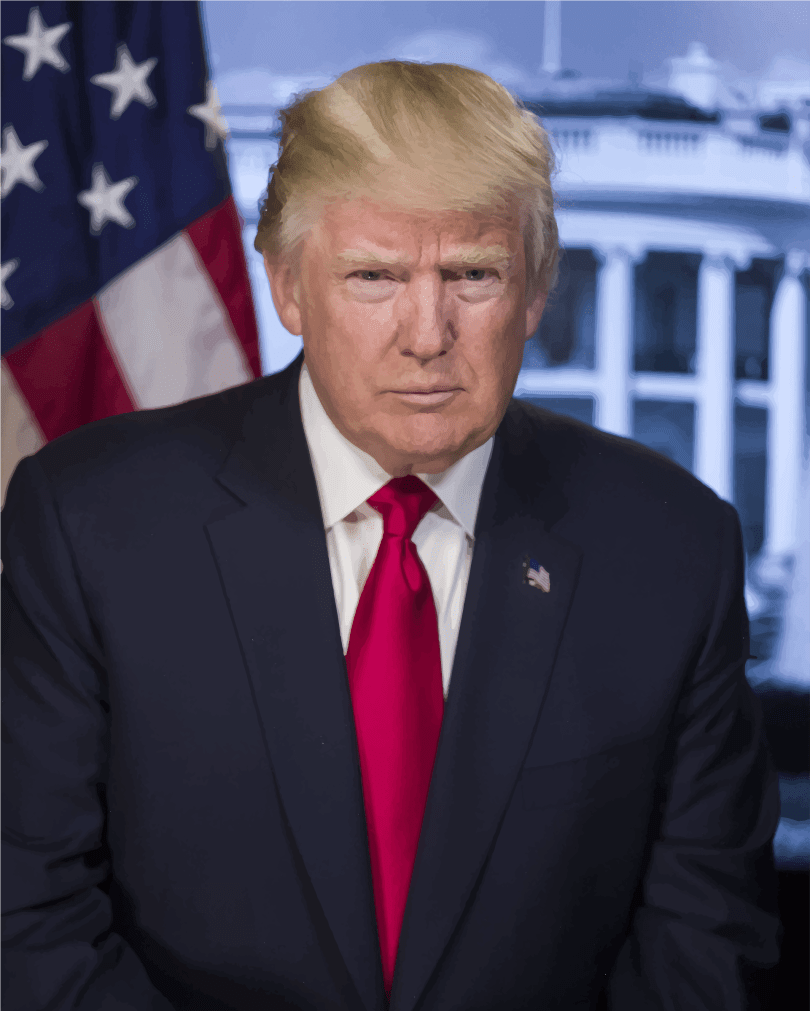
President Trump finally did it—after years of calls from blackballed conservatives, GEOTUS signed an executive order yesterday removing liability protections for social media companies that censor users based on their political views.

Here is a lengthy excerpt from Fox News‘s reporting:

The president’s order, which also cuts federal funding for social media platforms that censor users’ political views, came just two days after Twitter took the unprecedented step of slapping a “misleading” warning label on two of Trump’s tweets concerning the fraud risks of nationwide mail-in balloting. The move immediately backfired: Experts disputed that Trump’s tweet was actually misleading, in part because mail-in balloting has been linked to ongoing fraud; Twitter’s fact-check itself contained false statements; and Twitter failed to apply the standard of review to other users.

At Thursday’s signing ceremony, Trump called the fact-check “egregious,” and held up a photo of Twitter executive Yoel Roth, who heads up the site’s fact-checking and rules-making operation. Fox News reported on Wednesday that Roth has mocked Trump supporters, called Trump’s team “ACTUAL NAZIS,” slammed “scary trannies” in New York City, and called GOP Senate Majority Leader Mitch McConnell a “bag of farts.” (In a statement, Twitter did not dispute Fox News’ reporting, but called it “unfortunate.”)

“My executive order calls for new regulations under Section 230 of the Communications Decency Act to make it so that social media companies that engage in censoring any political conduct will not be able to keep their liability shield,” the president said.

Essentially, social media platforms have always had a choice:  either act as a publisher, in which case you’re liable for what users post, but you can remove and censor content as you see fit; or act as a neutral platform, in which case you’re protected from liability for what users post.  Twitter, Facebook, et. al., are trying to have the best of both worlds—ban political posts and users with which they disagree under the companies’ “Terms of Services,” while disclaiming responsibility for everything else.

Read More »

The Cultural Consequences of the American Civil War

On Wednesday, 13 May 2020, blogger Audre Myers posted a piece at Nebraska Energy Observer entitled “What Do You Think?”  The piece prompted readers to answer the question “Would we be the America we are if the Civil War had never been fought?”

Below is my response, which you can also view here.  The TL;DR summary of my answer is that, while it was good that the Union was preserved and that slavery was abolished, it came with some heavy fees—the expansion of federal power (and the loss of liberty inverse to federal expansion), the erosion of States’ rights, and—most importantly—the triumph of Yankee progressivism over Southern traditionalism.

The temptation is always to reduce the American Civil War to being ONLY about slavery.  Slavery was, obviously, a huge part of the Southern economy and culture, and motivated a great deal of Southern politics at the national level.  But slavery was not the be-all, end-all of the “Lost Cause.”  There were legitimate constitutional questions at play.  Indeed, an open question—one the American Civil War closed by force of arms—was that, having opted into the Constitution, could States later opt out?  John Randolph of Roanoke, among others, seemed to believe this question was legitimate, and such an exit was allowed—even acknowledged.

Of course, the slavery narrative serves modern progressive ends.  It allows for throwing the baby—States’ rights—out with the bathwater.  Suddenly, States’ rights becomes “code,” in the progressive mind, for justifying slavery or segregation.  Yes, States’ rights was invoked to support wicked things.  Nevertheless, it is fully constitutional—just ask the Tenth Amendment.

Nullification and secession were dangerous doctrines, but the loss of them also meant that the federal government could expand with far fewer limits on its power.  The States lost the nuclear option, so to speak, of bucking unconstitutional acts (although, to be fair, States can challenge such acts more peacefully through lawsuits against the federal government—even if those cases are heard in federal courts).  Seeing as we’re living in times when a peaceful separation between fundamentally opposed ideologies may be the most attractive option for the future of our nation, it’s worth reviewing the history of these ideas.

Well, that’s enough preamble.  After two days of self-indulgent, girly navel-gazing, it’s time for some substance:

Read More »

SubscribeStar Saturday: Liberty and Safety

Today’s post is a SubscribeStar Saturday exclusive.  To read the full post, subscribe to my SubscribeStar page for $1 a month or more.  For a full rundown of everything your subscription gets, click here.  NEW TIER: $3 a month gets one edition of Sunday Doodles every month!

Every liberty-loving American can recall Benjamin Franklin’s famous quip that “Those who would give up essential Liberty, to purchase a little temporary Safety, deserve neither Liberty nor Safety.”  It’s become also cliched to quote Franklin, but those words bear repeating, cliched or not, in The Age of The Virus.

The response to The Virus has been something akin to mass social and economic suicide, coupled with plenty of scorn for those not willing to go along with the kabuki theatre of our national hara-kiri.  It seems that the early attempts at “flattening the curve” have worked at preventing hospitals from turning away afflicted patients, so much so that our hero nurses and doctors are staging elaborate Internet dance routines (and yet will also be the first to urge us to take their advice to shut everything down forever).

What I’m beginning to realize is that people truly fear The Virus.  I don’t just mean they’re worried about getting it—I certainly don’t want to succumb to it—they’re worried about dying from it.  That’s not an unrealistic concern for the elderly or those with preexisting health conditions, but I think that fear runs deeper.

Consider:  the people most hysterically concerned with The Virus, in general, are deep progressives.  Progressivism, at bottom, is a materialist philosophy:  it can only conceive of existence in this realm.  That’s not to say it isn’t a religion; rather, it’s a religion without an afterlife.  That’s why progressives spend so much time attempting to create Heaven on Earth—to immanentize the eschaton, as William F. Buckley, Jr., warned us not to do.

It’s an ideology that constantly sacrifices the good to the perfect, because anything less than perfection isn’t paradise.  And because there is no life after this one, the fear of death takes on a terrifying new dimension.  Coupled with progressives’ lust for power and perpetual revolution, and you have half of the population ready to sacrifice everything—including liberty—to appease The Virus.

To read the rest of this post, subscribe to my SubscribeStar page for $1 a month or more.

TBT: Rudyard Kipling’s “The Mother Hive”

This week I’ve been highlighting some of my Spring Break reading recommendations (Part I, Part II, and Part III).  I’ve been reading quite a bit in the horror genre, as I love weird tales and ghost stories.

In that spirit, I thought I’d use this week’s TBT as another Spring Break recommendation—the chilling tale of a progressivist wax-moth infiltrating an unsuspecting hive of busy, but declining, bees.  I stumbled upon it while teaching my History of Conservative Thought class last summer, and immediately was taken with this macabre, yet hopeful, tale (which you can read in full here).

Literary short stories offer us many opportunities for exploring the human condition—even with bees.  One reason, perhaps, for our general social and cultural decline is that we usurped the literary canon—which sought to expose students of English literature to the best representative works—with the wax-moths of identity politics and watered-down standards.

Even my brightest students struggle to write grammatically, much less to write well.  And some of the canonical works I read in high school are conspicuously absent from the curriculum (although, of course, some of the greats still remain).  Summer reading has more or less become “read whatever you want” (a not entirely ignoble idea), rather than “read these excellent, challenging works” (why not some combination of the two?).

But I digress.  I’m treading into waters that are not, as history and music teacher, my own.  Nevertheless, I would encourage readers to seek out the best of what has been said or done, if for no other reason than to keep the wax-moths at bay.

With that, here is July 2019’s “Rudyard Kipling’s ‘The Mother Hive’“:

To start yesterday’s History of Conservative Thought class, I had students skim through Rudyard Kipling’s 1908 short story “The Mother Hive.”  I stumbled upon the reading in our class text, Russell Kirk’s The Portable Conservative Reader.

It is a grim little fable that warns about the perils of progressivism infiltrating a proud but weakened nation.  In the story, a deadly wax-moth sneaks into a large but bedraggled beehive during a moment of confusion.  She quickly steals away to the cell of the youngest bees, who have yet to take their first flight.  There, she fills their impressionable heads with gentle words and promises of a glorious future, all while covertly laying her eggs.

One young bee, Melissa, who has just returned from her first flight, is suspicious of the beautiful stranger’s soothing words, but the wax-moth plays the victim and insists that she’s only spreading her “principles,” not the eggs of her hungry future children.

The infiltration of the young bees’ minds pays lethal dividends.  When an old guard asks the young bees to construct pillars of wax to protect the entrance to the hive, they complain about the work, saying that pillar-building is a form of provocation, and that if they just trust the wax-moths, the wax-moths will return the favor.  When they reluctantly begin to build the pillars, they refuse to use chew the hard wax, and insist only on the finest, softest wax—and even then they balk at completing their work!

Needless to say, disaster is quick in coming.  The wax-moth’s eggs hatch and begin to devour the precious honey stored in the hive.  As they burrow weird, cylindrical tubes—an innovation that takes eight times the wax as a hexagonal cell—they expose the bee pupae to deformations.  Increasing numbers of bees are born as “Oddities”—missing legs, blind, unable to fly, half-breeds, etc.

As the number of lame bees are born, the dwindling number of “sound bees” must shoulder greater amounts of work to feed themselves, the aging Queen, the Oddities, and the wax-moth and her brood.  Sound bees work themselves to exhaustion as the Oddities sing merry working songs, unable to complete any work of their own.  The Oddities insist there is plenty of honey, saying it comes from the Hive itself.  One Oddity claims that each bee need only work 7.5 minutes per day to feed everyone, but those calculations—not surprisingly—come out to be overly optimistic.

Ultimately, the beekeeper—the “Voice behind the Veil”—finds his old, neglected hive in ruin.  He and his son break apart the hive panel by panel, revealing how weakened the structure has become due to the wax-moths’ infiltration.  The lame Oddities fall to the grass after struggling to ride on the remaining healthy “sound bees.”  Melissa, her old friend, and a secretly-birthed Princess—the dying act of the old Queen—along with the other sound bees escape to a nearby oak tree, where they witness the destruction and burning of their old hive.

One of the wax-moth offspring flies up, explaining that the promised, glorious “New Day” that was promised was miscalculated.  The proud new Princess boldly proclaims that it was the wax-moths, catching the old hive in a moment of weakness, that destroyed them, but that the bees will rebuild.

I was surprised that I had not heard of this little fable before this morning, while idly flipping through Kirk’s reader.  The parallels between the wax-moth and the social justice, Cultural Marxist progressives of today are stunning, considering Kipling wrote this tale about English Liberals and socialists 111 years ago!

Note the wax-moths beeline (no pun intended) for the younglings.  Having never seen even the bending of flowers in the breeze, these impressionable youngsters are already theorizing about the nature of the world and reality.  At that tender moment, the insidious outsider fills their heads with tales of her own morality, all the while laying her hungry eggs.

The sound bees are slow to act.  They’re tired and worn out, as the hive has grown large, and there are many bees to feed.  When the old Queen calls for a “swarm” to leave the hive, no one heeds her royal decree—why should they leave their comfortable lives?

There are two points here:  good people, especially when overworked, are slow to act (and, indeed, can get careless—the wax-moth slipped in when the Guard bee fusses at Melissa due to his frayed nerves from an overly long watch at the hive’s gate).  They are willing to give others the benefit of the doubt, and to ignore their own nagging gut instincts that something is amiss.

The other point is that good times and plenty made the bees soft and comfortable.  They are loathe to leave their comfort, and have come to believe that nothing bad could ever befall them.  Indeed, the wax-moth convinces the young bees that wax-moths never infiltrate beehives, and that such a notion is a fear-mongering myth.

The young bees come to resent and shirk off their work, preferring instead to theorize and hold rallies.  One young bee gives an impassioned, contradictory speech about the greatness of the hive, while also condemning the manufacturers of it.  Even as he contradicts  himself, the other bees—wanting to appear “in the know” and cool—cheer lustily.  He doesn’t even know what he’s said, but he enjoys the applause and the cheap accolades his fiery rhetoric brings.

The Oddities become an increasing burden on the hive, but the good, healthy bees continue to feed them.  I don’t think Kipling is making some point about unhealthy or deformed people here being a drain on society.  I think he’s employing the Oddities as metaphors for people with unhealthy or unnatural habits or worldviews, the people that project their derangement onto the world around them and expect a handout.  While it wasn’t an issue when he wrote this story in 1908, I couldn’t help but think of the various transgender and “alternative” weirdos that attempt to normalize their mental disorders, while expecting society to bend over backwards to accommodate them.

As for Kipling, it seems he’s using the Oddities as a stand-in for shirkers, Communists, and other forms of social leeches.  Their deformities are the result of the unhealthy hive and the twisted influence of the wax-moth infestation.  Similarly, the social justice thugs of the modern West are the result of Cultural Marxist infiltration—they are the bad fruit sprung from poisonous seeds.

Reading this short story was disturbing, but also a reminder that we must be ever vigilant to remain truly free.  That freedom only comes from discipline and order.  Further, good people must be willing to acknowledge that evil exists around them, and must be willing to confront it.

If we don’t, we’ll be the ones on the ash heap of history.

The Tyranny of Experts

A couple of years ago, the bees were dying.  Readers may recall the alarmist news coverage:  soon, we were told, the mass extinction of our buzzy little pollinators would destroy agriculture globally, resulting in widespread famines.  We must save the bees!

Meanwhile, I can’t walk to my car without fat, furry bees hovering around, ensuring the giant Sasquatch before them is just getting into his sensible subcompact hatchback, and not coming for their precious hive.  My yard is a dream for bees (especially before I got the winter weeds mowed up)—they particularly love the azalea bushes—and they seem to be doing fine.

The point is, had you listened to the expert apiarists, you’d think that civilization itself rested on the gossamer wings of black-and-yellow insects.  Sure, there probably is a problem with bee populations declining due to exposure to advance insecticides.  But the intense focus of apiarists in their field blinded them to other considerations.  They saw bee populations declining, and nothing else.

Experts know their fields so well, at times they can’t see the hive for the bees.  The dire prophecies of global bee deaths and the resulting famines never came, and we didn’t declare a national emergency over the decline in bee populations because there are a million other priorities.  We didn’t shut down industrial-scale agriculture to save the bees from insecticide, because to do so would result in millions of lost human lives.  The bees would have to figure it out on their own (indeed, as bee populations fell, beekeepers turned a tidy profit renting their hives to farmers, and that incentive encouraged the cultivation of more bees).

You can see where I’m going with this extended bee metaphor.  In the current coronavirus pandemic, we’ve leaned so heavily on the advice of medical professionals, we’re not considering the broader trade-offs.  The old expression “the cure is worse than the disease” is particularly apt here:  while social distancing and government-sanctioned “shelter-in-place” orders will surely slow the spread of infection and save lives, they will also result in massive economic destruction.

Read More »

Phone it in Friday XI: Coronavirus Conundrum, Part IV: Liberty in the Age of The Virus

The Age of The Virus is unprecedented.  Well, not entirely—major plagues and pandemics have swept the world before.  What’s unprecedented this time is the wholesale closure of the most commerce, along with rigid governmental and social admonitions to “social distance” and “shelter-in-place.”  Tin-pot municipal tyrants and State governors are engaged in a virtue-signalling race to see who can curtail liberties more rapidly and completely.

Pointing out this reality opens one to social scorn.  It’s amusing—and a bit frightening—to see the earnestness with which some Americans cling to their new mantras, the articles of faith handed down from the CDC and various government apparatchiks.  Even as our knowledge of The Virus seems to change daily, these public health acolytes cling to the every pronouncement from so-called “experts.”

Please don’t misunderstand me.  Yes, we should be vigilant about washing our hands and avoiding the accidental infection of one another, especially the elderly.

What concerns me is how quickly so many of us have been willing to accept greater degrees of control over our lives in the name of combating an invisible threat.  But now it feels like we’re living in the episode of Sliders called “Fever,” in which a totalitarian CDC cracks down on Los Angeles because, in that universe, penicillin was never discovered.

We’re not at Sliders levels—yet—but with that acquiescence has come an expansion of government power at nearly every level. I am not a libertarian, and I fully expect a robust federal response to a difficult international situation (remember, The Virus came from CHI-NA).  But that doesn’t mean local, State, or even federal authorities can simply hand-wave away the Constitution.

The Framers surely knew disease and death in their time.  When the Constitution was drafted in 1787, there was no capability for directing society with relative efficiency; even if there were, though, they would not have wanted to use it to suspend liberties.  The Framers surely knew there would be plagues and sickness in the United States, yet they included no clause such as “in the event of widespread sickness, these Articles contained heretofore in are, and of right to be, suspended until such time as the Congress shall deem suitable for public safety and the common welfare.”

Yet we see officials at the lowest levels of government telling people not just to stay home, but threatening to shut down churches and other assemblies.  Doesn’t that violate the First Amendment protections of freedom of religion and freedom of assembly?  Again, the prudent approach is for churches to accommodate the health of their congregants with remote services or other workarounds, but shouldn’t they be allowed to hold traditional services if they so choose?

The critics and medical scolds by now are howling with rage.  “What do these gossamer rights mean when we’re dead?”  Is that all anyone cares about?  What happened to Patrick Henry’s fiery cry of “Give me liberty, or give me death?”  What’s worse:  death from worshiping the Lord, or life in a soulless, gutless, freedom-less world?

I’m not alone in my assessment here.  Bill Whittle ripped into New York City Mayor Bill de Blasio earlier this week, arguing that His Dishonor’s promise to shut down churches that continue to congregate would represent a high-handed assault on the First Amendment.  Even Whittle’s colleague Scott Ott thought Whittle’s defense of the Constitution was a bit rich, basically arguing that the Constitution can take a break during this outbreak.

I’m perceiving similarly expedient arguments among others on the Right.  It’s disgusting how many folks on our side are running like slavering dogs to lap up the crumbs of authoritarianism.  Whittle in the video above makes the compelling point that the Constitution functionally means nothing if any government official at any level can simply ignore its protections.  He also correctly points out that these rights are God-given, part of our very human nature.  No government can legitimately deprive us of them.

Another one of the saner voices is RazörFist, who also sees a great deal of big government chicanery in this pandemic (warning, Razör’s videos often contain strong language):

https://www.youtube.com/watch?v=mQvIMj176J4

Z Man has also expressed skepticism about The Virus—or, at least, our draconian responses to it—and has received his share of scorn and dismissal.  But in his post Wednesday, “Fermi’s Paradox,” he made an interesting allusion to E.M. Forster’s novella “The Machine Stops,” originally published in 1909.  That short story (which I highly recommend you read—it has the same chilling effect as Kipling’s “The Mother Hive”) details a world in which humanity exists in a state of mindless, perpetual comfort, its every need attended to by The Machine.

In the story, humans have become so accustomed to cloistering in their little cells that they abhor face-to-face interaction, instead communicating via blue discs across great distances.  They are so dependent upon The Machine, they come to worship it (an interesting development, as their society has “advanced” beyond the “superstition” of religious belief—another subtle point from Forster).  They only travel on rare occasions, and avoid it unless absolutely necessary.

Eventually, The Machine deteriorates, with disastrous results; I will likely write about the story in more detail next week.  For our purposes, it sounds eerily like our current society:  shelter-in-place, “Stay at Home” (as digital signs on the Interstate tell me, implicitly scolding me for being on the highway), watch Netflix, #AloneTogether, etc., etc.—we’re told to be comfortable and to crave safety and comfort above all else.  They are the highest goods.

We’re through the looking glass here.  I’ve been pessimistic that we’re even living under the Constitution anymore, especially after the intelligence agencies attempted to overthrow a sitting President.  Vestiges and scraps of it still reign, but they seem to be the exception.  And most Americans don’t seem to care, so long as they can watch TV, the WiFi is working, and there is pizza.

We’re no longer the Roman Republic, but we’re not the Roman Empire in the 5th century, either.  We’re more like the Roman Empire in the 2nd or 3rd centuries:  coasting along on the remnants of a functioning system, with a play-acting Congress shadowing the motions of republicanism.

I hope I’m wrong.  Regardless, wash your hands.

High-Tech Agrarianism

The coronavirus situation—which I am convinced is both quite serious, but also inspiring some huge overreactions—has created a world that feels almost entirely different than it did even a few days ago.  This time last week, I was convinced that the whole thing was way overblown, and that life would largely continue apace, minus some school closures here and there.

By Friday evening I was growing more concerned, as everything began to get closed or cancelled.  I proctored the SAT Saturday morning and even went out of town that evening.  At that point, I thought the risk of my school closing was greater than it had been even two or three days before, but I still figured it was a relatively remote possibility.

Then Governor McMaster announced the closure of all South Carolina public schools (I teach at a private school, but we always follow gubernatorial closures)—and a bunch of other stuff shut down.  I picked up dinner at a Hardee’s in Florence, South Carolina Monday evening after a guitar lesson, and it was surreal—everything was gone from the front, and the cashier had to give me a lid and straw according to their new cleanliness guidelines.

(Let’s take a moment to thank all those service industry folks and long-distance truckers who are continuing to work and risking exposure; they are unsung heroes.  Also, spare a thought to people in those industries that are out-of-work at the moment.  They need our love and charity now more than ever.)

That’s all to say that, in a remarkably short period of time, the United States has undergone a major paradigm shift.  The world of Saturday, 14 March 2020 at 2 PM—when I emerged from the cocoon of extended time SAT testing—was a different than the world of Wednesday, 18 March 2020 at 9 PM (when I’m writing this very belated blog post).

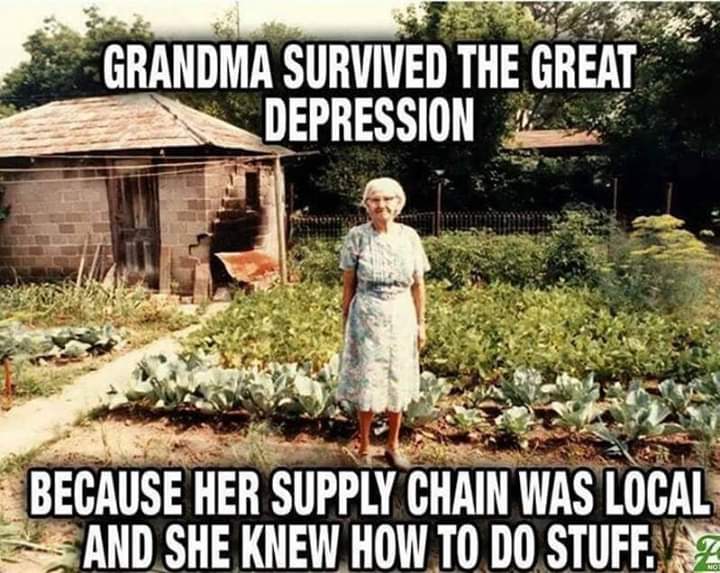
One trend—that I think will be positive if it endures—is the implicit rejection of globalism.  People are suddenly awakening, dramatically, to the manifold downsides of open borders and excessive global economic integration.  Suddenly, localism is back in vogue.

Read More »

SubscribeStar Saturday: Moral Outrage about Moral Outrage

Today’s post is a SubscribeStar Saturday exclusive.  To read the full post, subscribe to my SubscribeStar page for $1 a month or more.  For a full rundown of everything your subscription gets, click here.

Teaching is a profession that attracts complainers.  Teaching requires some risk-tasking, but it’s fundamentally a job for folks that want great degrees of stability.  When that stability is disrupted, teachers, being creatures of habit and order, get ornery.

That might explain, in part, the high turnover in the teaching profession.  We live in an increasingly disordered world, even in the classroom.  Part of that disorder is the assumption that children are somehow wiser and more morally pure than their elders.

That’s a notion that goes back at least to the counterculture movement of the 1960s (not to blame, pedantically and predictably, all of our problems on that misguided, suicidal decade):  the youth a moral vanguard, crusading against the long-established order and its absurdities.  The outraged shrieking of a youngling carries with it, the culture suggests, greater weight than the elderly master with decades of experience and accumulated wisdom.

To read the rest of this post, subscribe to my SubscribeStar page for $1 a month or more.

TBT: Election Results 2019

We’re in the midst of primary season—the most wonderful time of the year, until you realize that one of these jokers could become president—so I thought I’d look back to the results from the 2019 elections.  That’s an off-year election, but there are some important lessons from then.

The post below, “Election Results 2019,” largely focused on the Lamar Town Council elections.  My strategy was to vote for the two challengers, because the town government really dropped the ball on doing routine DHEC water tests (although our mayor—bless her heart—has been trying to resolve the issue).  I also intuited that one of the challengers would likely be a Republican/conservative, for reasons too politically incorrect to write here.

The big takeaway from the 2019 election is that if you let Democrats gain a monopoly on power, they will abuse it immediately.  That’s been the story of Virginia, a once-deep-red State that has gone quite blue, due to the preponderance of progressive population poured into Northern Virginia.

The legislature wasted little time in promising to ban and confiscate guns en masse.  That act of totalitarian pique may very well turn the State red in November, as the Trumpian masses have been jolted from their slumber.

We shall see.  But the moral is clear:  don’t give progressives power.  And we have to assume that every Democrat is a progressive.  A conservative Democrat is a unicorn in 2020.  This message is for those squishy suburban moms and “decorum” obsessed NeverTrumpers who think they’ll enjoy political moderation under a Democratic regime.

Don’t make the same mistake twice.  Vote Republican/Trumpian/populist/nationalist/conservative/immigration patriotic this November.  Your country is counting on you!

Yesterday Lamar, South Carolina held elections for Town Council.  Since our local paper doesn’t seem to be putting the results online, I thought I would post them here.

I drove by Town Hall last night to check the results, but they were still working on finalizing the results when I drove by, and I lacked the will to drag myself out of the house again.  But I swung by this morning and photographed the official receipt from the machine, as well as the handwritten results (akin to a student council election), which were posted to the front door:

My strategy of voting for the challengers in a “Jacksonian spirit of rotation in office” failed, as the two incumbents sailed to reelection.  As such, Town Council is unchanged.

Nationally, Republicans dominated races in Mississippi and Kentucky, except for the Kentucky governor’s race, which the Democrats won in a squeaker.  They won in part due to the incumbent governor’s unpopularity, but also because of the Libertarian spoiler, who siphoned enough votes away from the Republican to cost conservatives the election by about 5000 votes.  Thanks a lot, Libertarians—you cost conservatism a gubernatorial election (which the Dems will hold up as proof that Trump is losing support) for… what?  Getting John Hick’s name in the papers?  We’re at war with progressives, and all you care about is smoking weed naked.

Unfortunately, Virginia has fallen completely to the Democrats.  That’s not too surprising, given the swamp creatures in northern Virginia, but it’s sad to see the ancient bastion of Southern liberty fall to big government apparatchiks.

That’s it for today—a quick public service post.  Hopefully the good folks of Lamar can get the results without having to drive downtown now.