March 2024 Bandcamp Friday; Epistemology Out Today!

The future of Bandcamp Friday is a bit up in the air, but we’re living in the present here at The Portly Politico, and today is Bandcamp Friday!  That means Bandcamp waives their share of any purchases made on my Bandcamp page today (Friday, 1 March 2024), so it’s the best possible time to buy my music if you want to support yours portly.

Even better:  I have a new album out today!  You can pick up Epistemology for $5.  It’s ten tracks of original instrumental music.  Your digital purchase includes not just the music, but also full scores for every song; music videos for each piece; handwritten manuscripts for most of the pieces; and exclusive artwork (including artwork to accompany every piece on the album).

There’s a lot to dig into in this release.  The title track, “Epistemology,” is a multipart suite for clarinet, bass clarinet, and piano exploring various philosophical theories about how we know what we know.

If you’re feeling generous and want my entire catalog of fourteen releasesmy entire discography is half-off.  That’s fifteen releases for $28.39, or $1.89 per release.

Tight on cash?  No worries—you can listen to Epistemology on any streaming platform (except for Spotify), and all the tracks are on my YouTube page (you should subscribe to that, by the way—it’s free!).

I’m excited about this release, and I appreciate your support.

Happy Listening!

—TPP

SubscribeStar Saturday: “Epistemology” Preview

Today’s post is a SubscribeStar Saturday exclusive.  To read the full post, subscribe to my SubscribeStar page for $1 a month or more.  For a full rundown of everything your subscription gets, click here.

Last Saturday I spent pretty much the entire day working on music.  It started with an extensive composing session to write “Epistemology,” the title track of my next release, Epistemology, which hits on Friday, 1 March 2024 on Bandcamp and all streaming platforms, sans Spotify (by the way, my newest album, Firefly Dance, released yesterday, and is available now on Bandcamp and streaming platforms—you should get it!).  After a long, late nap, I finished up artwork and the rest of the particulars necessary to get the files and metadata uploaded to CD Baby for digital distribution (I might need to write a post about that some day, but it’s not exactly a sexy topic).

I’d written the other nine tracks first, but was searching for some theme or album title.  Then I saw poet Stacey C. Johnson‘s “On Knowing,” and that gave me the idea to write a composition based on the different philosophies of knowing, or asking, “how do we know what we know?”  [For a good Christian introduction to the topic, check out W. Jay Wood‘s Epistemology: Becoming Intellectually Virtuous on Amazon. —TPP]  In this case, it was the title more than the poem’s content that inspired me (although it’s a great poem!), but two of Johnson’s other poems inspired me to write pieces for this album (“Updrafting” and “Waltz“).  In a way, I owe Johnson and her writing a huge debt of gratitude for Epistemology, because her work inspired a good chunk of it.

So while my American History students took a quiz on Friday, I rapidly jotted down the basic ideas for “Epistemology.”  I wanted to write a repeating theme—like Hector Berlioz‘s idée fixe from his Symphonie Fantastique—that would evolve throughout the different sections.  That theme or motif represents Truth as filtered through the various epistemological philosophies, starting with skepticism and proceeding through empiricism, rationalism, idealism, and postmodernism, before finally arriving at God’s Truth.  I wanted that last bit to be the seventh part, as seven is traditionally understood to be the number representing God; to do that, I had to shoehorn in “Observation” as the second section.  I also specifically wanted the chaos and uncertainty of “The Postmodernist” to be sixth, representing man’s number and his fallen—and confused!—nature.

Epistemology will release on Friday, 1 March 2024 (if you want to know the minute it comes out, take a minute and follow my Bandcamp page).  But for you—my adoring subscribers—you get to hear the title track today.

To read the rest of this post, subscribe to my SubscribeStar page for $1 a month or more.

Some of the links in this post are links through the Amazon Affiliate Program. If you make any purchase through these links, a small portion of the proceeds go to me, at no additional cost to you.

The Importance of Science Fiction

Science fiction is amazing.  When it comes to fiction, it is probably my favorite genre, second to (but rivaling) only the ghost story.  Science fiction is a form of speculative fiction, which—as the name suggests—speculates about future events.

But the best science fiction doesn’t just look into the future—it tells us about ourselves, past, present, and future.  That so much of the great science fiction of the twentieth century has come true, to one extent or another, is indicative of the power of the genre to diagnose social developments, if not to predict them precisely.

The latest uproar over artificial intelligence—and the apparent willingness, blind or intentional, to develop it beyond all sensible precautions—is a prime example of the failure to take the warnings of science fiction seriously.

Science fiction is not Scripture—far from it!—but we ignore its warnings at our peril.

Read More »

Phone it in Friday XXXII: Pat Buchanan’s Legacy

It’s a true Phone it in Friday today, as this post is (slightly) late, and I’m going to keep it brief due to time constraints.

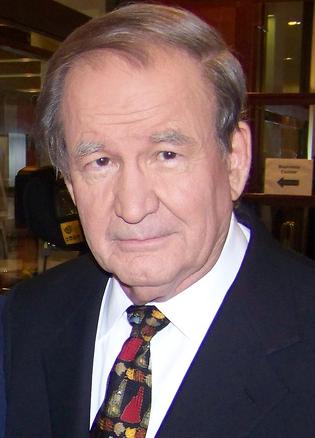
Patrick J. Buchanan, the great writer and political analyst, officially retired from his decades-long career in journalism a few weeks ago.  His influence in conservative politics is hard to overstate.  Even though he spent much of his career since the 1990s as the alternative paleoconservative voice in an increasingly interventionist and neoliberal Republican Party, that disciplined commitment to his values and the original vision of the American Founding made him one of the most impactful political figures of our time.

I wrote more extensively about Buchanan’s legacy in a piece for American Patriot Radio entitled “Pat Buchanan’s America” back in 2017, in the early months of the Trump administration.  Trump, in many ways, was the political apotheosis of Buchanan’s views on trade, immigration, and the culture wars.  Put more simply:  no Buchanan, no Trump.

Read More »

TBT: Alone

Last February I found myself in a rather discouraging place—dumped and dejected, wiling away my time with designer LEGO sets and DiGiorno pizza.  Unbeknownst to yours portly at the time, I’d embark on two relationships:  a short-lived, doomed-from-the-start imbroglio with a hyper-progressive, anxiety-ridden schoolmarm, then what I thought might be “It.”  It didn’t last, and I found myself in a similar mindset around Christmastime.

Ironically, watching It’s a Wonderful Life (1946) helped immensely.  George Bailey’s frustrations and struggles very much mirrored my own (except that he resented his big family and happy marriage), and I understood his character’s despair and broken dreams palpably.

I’m in a better place—no need to send Clarence—but some of those enduring frustrations still hold fast.  I’m not nearly as bitter about it as I was when I wrote this piece, but no amount of frozen pizza can mend a broken heart.

With that, here is 1 February 2022’s “Alone“:

Read More »

TBT^2: Things That Go Bump in the Night

It’s the so-called “spooky season” again, which naturally turns my mind to things not seen.  Lately, I’ve been pondering the pre-modern mind, and how differently pre-moderns saw the world.  It’s hard for us to wrap our minds around it.  What must it have been like to fear God—naturally (as in, without the scientistic arrogance we moderns seem inculcated into at an early age)?  To suspect mercurial forces at play in every tree or lonely bog?

There’s so much we don’t know; so much we can’t see (even if it’s caught on video).  Ironically, for all of our assuredness about how the world works, we find ourselves in an age of constant epistemological confusion, one in which we seem incapable of knowing what is True or not.

Heady contemplations, indeed.  The possible existence of Bigfoot or any other number of odd creatures, corporeal or otherwise, is not insignificant:  if supernatural beings exist, God Exists (or, more probably, because God Exists, there are all manner of spirits and angels and the like at work, just beyond our perception).

Spooky stuff!  With that, here is “TBT: Things That Go Bump in the Night“:

Read More »

Gnostic Mysteries

There is something appealing about possessing some bit of secret knowledge or trivia that is unknown to everyone, save a select few “initiates” fortunate enough to partake in the mysteries.  The seductive allure of secret knowledge—or of just being “in-the-know” about some microniche subculture—seems to be a part of human nature.

We’d like to think in our modern age that we’re not superstitious sorts, but we are haunted everywhere.  Scientists have elevated themselves to the level of priests in a cult of scientism, worshipping the emptiness of nihilistic materialism just as the pagans worshipped lifeless idols.  Both are made of stuff—hard, material, unfeeling, insensate stuff—and both are equally empty.

But we here on the Right can fall prey to Gnostic fantasies as well.  The Libertarian dreams of a utopia in which everyone engages in frictionless free exchanges and all uncomfortable disputes are settled with cash and self-interest.  He’s as materialist and deluded as the mask-wearing mandatory vaxxer preaching loudly from the Church of Scientism.  The hyper-nationalist dreams of some impossible ethnostate that never really existed in the first place.  And so on.

Still, it’s seductive, the idea that we can possess the knowledge of good and evil, of true Reality.  After all, that’s the original sin, isn’t, it?  Eve, then Adam, could not resist the allure of being—so they were told, dishonestly—like God.  But even—perhaps, especially–Christians can fall into this trap.

Read More »

SubscribeStar Saturday: Martha’s Migrant Crisis

Today’s post is a SubscribeStar Saturday exclusive.  To read the full post, subscribe to my SubscribeStar page for $1 a month or more.

Apologies for the delayed post this morning, readers.  After a particularly grueling (but productive!) week and around three hours of sleep, I wasn’t prepared to write a post Friday night, and instead dozed off on the couch watching a Spanish-language horror movie.  —TPP

The big news this week is that Florida Governor Ron DeSantis sent a few dozen illegal immigrants to an upscale island vacation destination on the taxpayers’ dime.  Normally, I’d see this move as what these things usually are:  another example of scofflaws getting rewarded while the law-abiding foot the bill.

But these are not normal times, and the cost to Florida taxpayers was well worth the message sent:  if you progressive elites like illegal migrants so much—often at the expense, in terms of treasure and blood, of the naturalized and native-born citizens you’re sworn to protect—then surely they won’t mind a few dozen border hoppers lounging around Barack Obama’s palatial estate.

For conservatives out there concerned about the cost of these illegal immigrant vacation junkets, think of it as part of the State of Florida‘s advertising budget:  instead of spending money warning people to look out for cyclists or some other wasteful public service announcement, Floridians are getting a major return on their advertising dollars.  The speed with which the Martha’s Vineyarders (Vineyardians?) expelled the dusky hordes from their sleepy progressive utopia is an object lesson in how little elites really believe anything they say.  It’s also a pretty effective way of highlighting, on a small scale, what border towns experience every day, and to a far greater magnitude.

To read the rest of this post, subscribe to my SubscribeStar page for $1 a month or more.

TBT^2: Phone it in Friday XI: Coronavirus Conundrum, Part IV: Liberty in the Age of The Virus

The Virus is like a bad movie series that just refuses to die.  There was a controversial but impactful first release that everyone was talking about, even if they didn’t see it.  Then there was the lackluster sequel, which still enjoyed some popular support, even though ticket sales were down.

Now it feels like we’re on the tired third film, which is a watered-down, ineffectual finale (one hopes) to a premise that is played out.  Sure, critics love it, but audiences are tired of its antics.

What still seems to make it into the script of every one of these films is the part where the government bureaucrats lock everything down and release a bunch of ghosts into Manhattan (uh, wait, what?).  Meanwhile, we all kind of sit by and twiddle our thumbs and put our masks on dutifully.

What happened to the band of merry wastrels who tossed tea into Boston Harbor, rather than comply with an odious monopolization of the tea trade?  Or the plucky scofflaws who made it impossible to enforce the Stamp Act?  I’d rather disguise myself as an Indian (feather, not dot) and caffeinate the water supply than put a mask on again (but that would be cultural appropriation, of course).

In short, why don’t we get a backbone, instead of cowering behind masks and locking ourselves indoors?  We’re literally cowering before an invisible enemy with a 99%+ survival rate.

Well, liberty is never easy.  Better to stay inside watching movies and disconnecting from reality, eh?

With that, here is 29 July 2021’s “TBT: Phone it in Friday XI: Coronavirus Conundrum, Part IV: Liberty in the Age of The Virus“:

Read More »

TBT^2: Leftism in a Nutshell

When I first wrote about the “degrowth movement” three years ago, it seemed like another kooky Leftist spin to cover for an economy that would inevitably decline under a Democratic president.  When I revisited that post last summer, it was after five months of Biden the Usurper’s economic misery and malaise, and after a year of shutdowns thanks to The Virus.

In other words, we’d tried involuntary degrowth, and it’s made us poorer.

A year on, the economy has gotten even worse.  We’re all quite aware that gas prices are through the roof.  Food prices have skyrocketed as well.  One reason I’m dieting this summer (besides the fact that I need to return to my lean, pantheric form) and skipping breakfast is because it saves a few bucks (and because I need my massive spaghetti ration to last a lot longer—I can down a pound of spaghetti with shocking rapidity).  Groceries are too expensive for binge eating.

The most recent print issue of Backwoods Home Magazine (Issue #189, July/August/September 2022) features a cover story entitled “The Return of Victory Gardens.”  That piece discusses not just the high prices of groceries, but the scarcity of items on shelves.

For years, I’ve boasted about how cheap food is.  Just a few years ago, you could pick up a loaf of bread from Dollar General for eighty-eight cents.  Granted, it wasn’t good bread, but it got the job done.  Eggs were cheap.  Butter was maybe a dollar for four sticks.  Pretty much everything you could need was easily affordable, even if it wouldn’t make for the most exciting meals.

Now, none of those items are particularly cheap.  The lowest price for a loaf of crummy (and crumbly) white bread I can find locally is around $1.49 a loaf.  I have a hook-up for eggs, so I’m covered there.  But my egg supplier tells me that I should start canning butter, because the price of that is about to go way up.

And forget about eating meat.  It looks like the grand dream of the globohomo super elites—that we’ll all be eating cricket burgers, safely isolated and subdued in our living pods—is getting closer and closer to reality.

It became a BoomerCon cliché to point to Venezuela as an example of what happens when socialism runs amok.  But the BoomerCons were right.  Unless we want to be eating pet rabbits and zoo animals, we’d better do something to shore up our food stores and increase our independence from the supply chains stat.

With that, here’s “TBT: Leftism in a Nutshell“:

Read More »