Deportemal II: Trump Vows Mass Deportations

On Monday, President Trump announced the deportation of millions of illegal aliens beginning “next week,” vowing that ICE agents would remove such aliens “as fast as they come in.”

Here are the two pertinent tweets from the president:

Critics and supporters alike are asking for details on how Immigration and Customs Enforcement will process the millions here illegally.  As I write this post, I’ve just listened to part of Ben Shapiro’s podcast on the announcement; he argues that a surgical, case-by-case approach is preferable, as some illegal aliens possess skills we would want in the United States.

While I appreciate Shapiro’s measured response, I can’t agree.  As I wrote in “Deportemal,” the time for half-measures has passed.  A lengthy review process of the millions of illegal aliens—which could be anywhere from 11 to 33 million (PDF; that document shows an illegal population of 12 million as of 2015), and maybe higher (that no one can know for sure is a major part of the problem)—would bog down for years, if not decades.  Another visa process ladled on top of inherent law-breaking will merely exacerbate the problem.

Consider:  our current catch-and-release system—migrants show up to one court date, get a temporary visa and orders to report back to court, then disappear into the countryside, never darkening an immigration court again—already gives migrants an easy in.  Essentially, touching American soil is like tagging home base:  once you’re here, you’re in.

Now, imagine adding an individual review process to that.  First, you’d have to assume good-faith on the part of illegals in the country.  They have virtually no incentive to come to another hearing.  Yes, they have the opportunity to be absolved of their illegal status (I’m assuming that’s what Shapiro is proposing), but if they think they don’t, they’ll avoid the process.

Second, a whole cottage-industry of gaming the individual amnesty system will emerge.  Lawyers skilled in the ins-and-outs of this fresh bureaucratic hell will profit at the expense of their countrymen and poor illegals.  Appeals—and you know with the federal government there would be a lengthy appeals process—would linger on for months, even years, further adding to the administrative load of ICE and our courts.

If we were dealing with a few thousand people, we could demonstrate some mercy and approach this issue with a lighter touch.  Unfortunately, we’ve failed to enforce our border laws for so long that we’ve allowed this crisis to metastasize, to the detriment of American citizens and potential immigrants alike.

Republicans squandered a golden opportunity to make some real strides on immigration reform during the 2017-2019 congressional session.  President Trump has moved mountains since then via constitutional executive orders and international diplomacy, particularly his threat of slapping hefty, incremental tariffs on Mexico.  Increased enforcement of Mexico‘s southern border has, according to Shapiro, already eased the number of arrests on the American border.

In the wake of President Trump’s massive 2020 reelection campaign launch last night in Orlando, Florida, it is imperative for immigration patriots to run (and win!) in 2020, and for Americans to support Trump’s reelection.  It’s our best hope to resolve this crisis, to the benefit of Americans and the world.

For more of my writing on immigration, check out “Lazy Sunday XIII: Immigration.”

Consider supporting the blog at my SubscribeStar page.  $1/mo. gets you exclusive access to new posts every Saturday.

FreeSpeech.TV Lineup Announced

Thanks to my brother for this nocturnal news update:  Gavin McInnes’s new subscription-based service, FreeSpeech.TV, is ready to launch.  Listeners to the excellent, hilarious Get Off My Lawn podcast know that Gavin has been planning this platform for some time now, so it’s exciting to see the lineup.  The most exciting part of that schedule:  the twice-monthly sit-downs with Milo Yiannopoulos to talk about the news.  Talk about throwing gasoline onto a raging fire of awesomeness.

The service is $10 a month, or $100 a year, which is on par with Steven Crowder’s Mug Club or Ben Shapiro’s subscription.  I just don’t think it comes with a Leftist Tears Hot-or-Cold Tumbler, much less a far superior hand-etched mug.  But with McInnes’s crazy, controversial, humorous observations about life and culture, I can live without a drinking vessel tossed in (although it would be hysterical to drink coffee from a mug made to look like McInnes’s bearded mug).

Because of constant censorship from techno-elites and their ever-shifting “terms of services,” conservative and Dissident Right voices have fewer and fewer options to raise funds.  Some sites, like immigration patriot website VDare.com, can’t even use PayPal anymore.  As such, more and more content creators are turning to alternative or free-speech-friendly services, or undertaking the cost of creating their own infrastructure, so they can continue to get their work to fans.

I am definitely a small fry in this game of commentary, but that’s why I’ve setup a page with SubscribeStar.  My goal isn’t too live off of subscriptions, but just to supplement my income slightly to make blogging more on a daily basis more feasible (and to reinvest some of the funds into maintaining and improving the experience).

For guys like Gavin McInnes, who has been hounded from even supposed safe havens like his old employer, CRTV (now BlazeTV), reliable income streams aren’t a passing lark—they’re absolutely crucial.

In a better timeline, McInnes would be hosting Red Eye.  But he’s a fighter, and I have no doubt his new service will continue to deliver the laughs.

Free speech isn’t free.  Support creators like McInness, Crowder, Shapiro, and Milo to the best of your ability to keep their content alive.

If you’d like to support MY content, consider signing up for a subscription to my SubscribeStar page.  New, exclusive content every Saturday, starting at just $1 a month.

Happy Father’s Day!

It’s been a busy weekend, thus the delayed post.  In lieu of the regular Lazy Sunday post, I’ve opted (out of expediency) to simply wish all the fathers out there a very Happy Father’s Day.

I got to spend some quality time with my dad, my mom, my two brothers, and my sister-in-law, and my niece and nephews over the weekend.  Dad enjoyed lunch at Red Lobster, and I gave him Tucker Carlson’s Ship of Fools on CD for his long commute.

The Sunday morning sermon at my parents’ church was quite good, and avoided the pitfall of Father’s Day sermons that mock fathers for being weaklings, an unfortunate trend that Dalrock identified on his site.

Have a wonderful weekend, and we’ll be back to our regular programming tomorrow.

–TPP

Consider supporting The Portly Politico on SubscribeStar.  $1/mo. gets you access to exclusive content, released every Saturday.  It’s the perfect gift for dad.

Other Lazy Sunday Installments:

Hustlin’: Minecraft Camp 2019

The June slump has hit, as people are less interested in news and politics and going outside.  It’s been a gorgeous few days here in South Carolina.  I left the house Wednesday morning and it was cold.

For non-Southerners, allow me to explain:  here in the Deep South, our only true season is summer, which runs from late March through Thanksgiving.  I’ve seen people mow their lawns a week before Christmas.  If we’re lucky we get a mild summer.  After an oppressively muggy May, a morning in the low 60s is a blessed reprieve here in the Palmetto State.

But talking about the weather is probably why my numbers are down, so I’ll move on to another non-politics-related topic:  my penchant for hustlin’.  Readers know that I have a few gigs running at any time, including private music lessons, adjunct teaching, my History of Conservative Thought summer course, and playing shows.  I also paint classrooms and do sweaty manly maintenance work at my little school when I’m not molding minds.  And while it doesn’t pay anything yet, I’m hoping to get a few bucks for my writing.

But perhaps my favorite side gig is an annual tradition:  my school’s annual Minecraft Camp.  A former school administrator started the camp, and I’ve carried it on for some years now.

For the uninitiated, Minecraft is basically LEGOs in video game form.  The genius creation of programmer Markus Persson, the game places players in a massive sandbox world, with the objective being… anything!  There are no timers (other than a day and night cycle), no goals, and no ending.  Players generate a theoretically endless world from scratch, and proceed to build—craft—their way to civilization (or endless PVP battles).

Players can activate Creative Mode, which allows for endless flights of fancy, with access to every block and resource in the game, or they can play in Survival, which is exactly what it sounds like:  players hide from (or fight) monsters at night, hunt for or grow food, and have to keep their health up.

Minecraft has enjoyed ubiquity since its release in 2011—it’s the best-selling video game of all time—and when we started Minecraft Camp back in the day (I think it was summer 2013 or 2014, but I’m not sure), it was HUGE.  The game has inspired probably tens of thousands of mods, from simple additions like extra monsters or types of blocks, to total conversions that completely rebuild the game’s mechanics.

With the rise of Fortnite a year ago, the game seemed to wane in popularity, but it’s apparently enjoying a resurgence:  our camp was up to twelve Crafters from a low of about four or five last year.  It gets absolutely chaotic at times—like during our final camp PVP battle, and a hectic boss fight against a gigantic, camper-created Creeper named “Creeperzilla,” that saw kids shouting nearly at the top of their lungs with unabashed glee—but it’s also beautiful to see the creativity of young children.  I am constantly amazed to see what they create.

And, let’s face it, there are worse ways to make an extra buck than playing video games with a group of creative eight-to-thirteen-year olds.  It definitely beats raking up old pine straw and spraying Roundup on cracks in the parking lot.

You can check out our camp’s blog here:  https://tbcsminecraft.wordpress.com/

The Price of Freedom: A Good Attorney

A common observation on the Right is that the process is the punishment.  Leftists understand this premise well:  the power of an accusation and an attending lawsuit is that, even if the allegation is ultimately untrue, their opponent has endured costly legal battles.  That battle can cost them even more, including their livelihoods and their families.

Few people are able or willing to pay the costs, both financial and psychological (and, increasingly, physical) of Leftist attacks.  Those that do can look forward to years of grueling court appearances and legal fees, as the Masterpiece Cakeshop case demonstrated.

Conservatives know that story well:  the Christian owner of the Colorado bakery refused to bake a cake for a same-sex wedding, and the Colorado Civil Rights Commission trampled all over his religious convictions.  Rather than knuckle under to the social justice tyrants, the owner won a case in the Supreme Court after years of litigation… only to return home and have a man request a cake for a “gender transition” party.  The CCRC pounced on Masterpiece Cakeshop again.

The Left, in this regard, is relentless, as we saw last week with the Carlos Maza incident.  There is no pretext of fair play beyond the flimsiest, airiest of rhetoric—and, increasingly, the Left doesn’t bother with that.

Case in point:  a small, family-run bakery, Gibson’s Bakery, in Oberlin, Ohio, won a three-year suit for $11 million in damages against ultra-progressive Oberlin College.  The bakery was robbed the day after the 2016 election by three young black men, students at Oberlin.  The owner reported it to the police, and the three men were arrested.

But, because the burglars were black and the owners white—and, as the Breitbart piece reporting on the case implies, the progressives of Oberlin wanted to vent their tear-soaked anger at Donald Trump’s presidential victory on some unsuspecting white folks—the arrests soon became about race.

Not only did students protest—their professors and administration gave them time out of class to do so (and snacks)!  A college vice president, Meredith Raimondo, distributed flyers denouncing the bakery as racist, and which recommended other bakeries in the area.  The college also severed its business relationship with the bakery.

Like a medieval pope demanding criminal bishops be tried in ecclesiastical courts instead of civil ones, Oberlin further demanded that “first-time” offenders who are students at the college be turned over to the school for punishment.  Ignoring the glaring problem of how a shopkeeper is supposed to intuit if thugs in his store are first-time or repeat-offenders, that move to skirt the law through extralegal college tribunals smacks of the campus “rape” scare and its kangaroo courts—young men found guilty on flimsy charges of “retroactive rape” and the like.  Of course, in this situation, we all know that the college “courts” would sweep the criminal indiscretions of its students under the rug.

The result:  Gibson’s Bakery laid off most of its employees and nearly went out of business.

Justice was served in this instance with the much-deserved settlement (which has the potential to triple in value, pending a further hearing), but to quote commenter “mercury” on the Breitbart piece:

Unfortunately, there are probably 1,000,000 other cases that didn’t end so well for urban grocery stores, gas stations, convenience markets, clothes stores, and so on. This is where the perps got away with the theft, harassed or stole from customers, or shot the owners for resisting the theft.

Consider, too, the thousands of establishments that sucked it up and took one on the chin to stay in business.  Freedom, sadly, isn’t free.  Gibson’s Bakery defeated the Goliath of Oberlin College, but many Davids wither before progressive dominance.

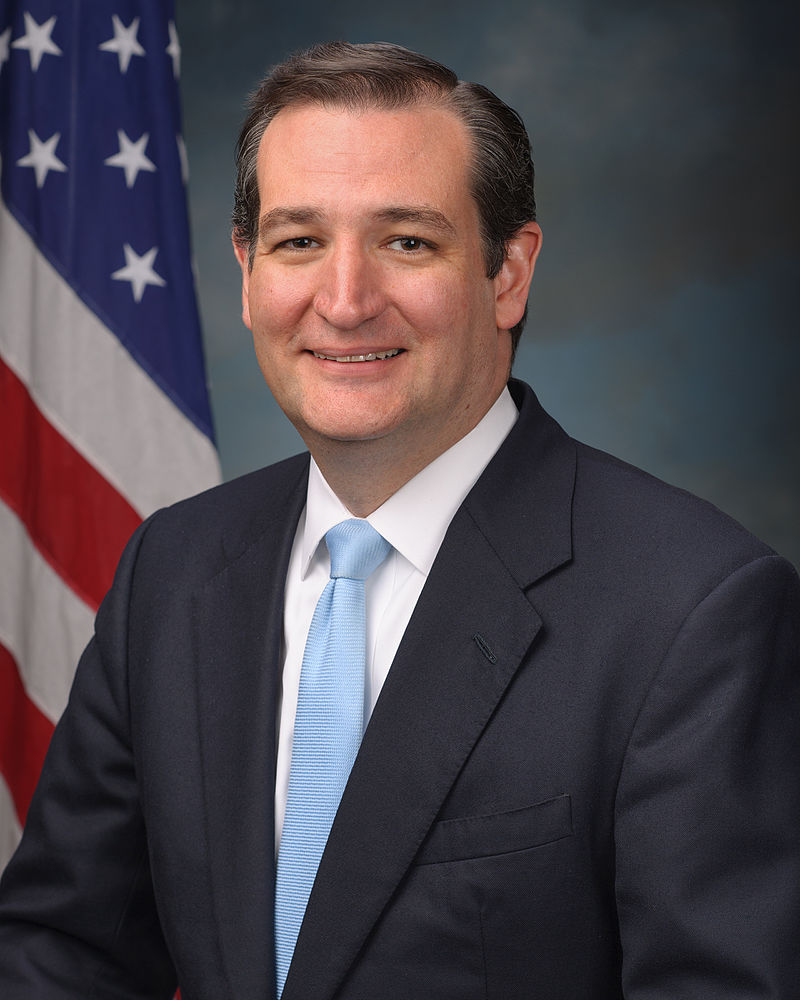
Ted Cruz on Ben Shapiro

It was a glorious weekend at Casa de Portly, deep in the heart of Dixie.  It was the kind of weekend that saw a lot of non-blog- and non-work-related productivity; in other words, I loafed a great deal, then did domestic chores around the house.

In case you missed it, on Saturday I released my Summer Reading List 2019.  If you want to read the whole list—and it’s quite good—you have to subscribe to my SubscribeStar page at the $1 level or higher.  There will be new, subscriber-exclusive content there every Saturday, so your subscription will continually increase in value.

Anyway, all that loafing and cleaning meant that I was unplugged from politics.  I did, however, manage to catch the Ben Shapiro Show “Sunday Special” with Texas Senator Ted Cruz.

I was a big fan of Cruz in the 2016 Republican presidential primaries, and I voted for him here in South Carolina.  Cruz intuited the populist mood of the electorate the way that President Trump did, and combined it with policy innovation and constitutionalism.

There’s a reason Cruz hung in there as long as he did against Trump:  he’s a canny political operator, but he also knew how to pitch a conservative message that was appealing to many voters.  I sincerely believe that had he clinched the nomination, he would have won the 2016 election (and, perhaps, by an even wider Electoral College margin than did Trump).

Cruz catches a lot of flack because he’s a little dopey and looks odd—a whole meme emerged in 2015-2016 claiming that Cruz was the Zodiac Killer—but he’s been an influential voice in the Senate.  He possesses a supple, clever mind, and has urged Republicans to make some bold, innovative reforms to the Senate (he vocally champions and has proposed a constitutional amendment for congressional term limits).

The hour-long interview with Ben Shapiro—which opens with a question about his alleged identity as the Zodiac Killer—shows how affable and relaxed Cruz really is.  I’ve never seen him appear more relaxed and genuine (and I never took him for a phony—I’ve seen him speak live at least once at a campaign rally in Florence, and spoke very briefly to him afterwards) than in this interview.

Granted, it’s friendly territory—Shapiro was a big supporter of Cruz in the primaries—but Cruz spelled out some important ideas, as well as his projections for 2020.  If you don’t have a full hour, fast forward to about the forty-minute mark for his discussion of Trump’s reelection prospects.

To summarize them briefly:  Cruz thinks it all comes out to turnout, and that Democrats will “crawl over broken glass” to vote against Trump.  He even points out that his own race against Democrat Robert Francis “Beto” O’Rourke was as close as it was because Beto ran against Trump more than he did against Cruz.  He also thinks Joe Biden is going to flame out, and one of the more radical, progressive Dems will clinch the nomination, making the prospect of a truly socialistic administration terrifyingly possible.

That said, Cruz is optimistic.  Discussing his own narrow victory over Beto in 2018, he points out Beto’s massive fundraising and staffing advantages (Cruz had eighteen paid staffers on his campaign; Beto had 805!), but explains that a barn-burning bus tour of the State of Texas pulled out conservative and middle-class voters in a big way for his reelection.

That points to one of Trump’s strengths:  the relentless pace with which he campaigns.  Trump held three and even four rallies a day in key battleground States in the final days of the 2016 election, which likely made the difference in Michigan, Wisconsin, and the Great White Whale of Republican presidential elections since the 1980s, Pennsylvania.  If Trump can get his pro-growth, pro-American message out there as effectively in 2020 as he did in 2016 and can excite voters who want to protect their nation and their prosperity, he could cruise to reelection.

Cruz’s optimism, tempered by practical challenges ahead for Republicans, really came through in the video.  Really, the entire interview reminded me why I liked Ted Cruz so much the first time.  I’d love to see him remain a major presence throughout the next five years, and to see him run for the presidency again in 2024 (him, or Nikki Haley).

Regardless, I encourage you to listen to this interview.  Take Cruz’s warning to heart:  don’t get complacent, because the Democrats aren’t.

Lazy Sunday XIV: Gay Stuff

Apparently, June is Pride Month, so there’s a lot of gay stuff going around.  If you’re part of the expansive LGBTQ2+ABCDEFGetc. community in New York City, you get two parades to show off your bedroom antics.  From deplatforming conservatives to avoiding prosecution for hate-crime hoaxes, it’s never been a better time to be out and proud.

To celebrate “pride”—which I take to mean loudly proclaiming who you like to sleep with while wearing ass-less chaps in public—this week’s Lazy Sunday looks back at the influence of gay stuff on our body politic.  Enjoy!

  • Gay Totalitarianism” – This post discussed the prevalence of homosexual hate-crime hoaxes, the most ubiquitous being Empire actor Jussie Smollett’s claim that a couple of white Trump supporters assaulted him with bleach and nooses in a tony, largely gay Chicago neighborhood early in the morning.  I linked to Pedro recent piece for American Greatness, “Our Queer Decline,” which deftly analyzed this phenomenon:  if homosexuals really faced persecution, they wouldn’t feel safe lying to the authorities about being attacked.  Instead, they know they’ll have the full support of and sympathy from the government, corporations, and the media.

    As the Smollett case showed, agents within the government would simply refuse to enforce the law via prosecution.  The issue here is not that gays are receiving legal protection—like all Americans, they should be protected from assaults on their persons—but that there is a dual-standard at play.  Jussie Smollett received egregious preferential treatment in part because he is gay (and, presumably, because he’s black and connected to the Obamas).

  • Buttigieg and Buchanan: Redefining Morality” and “Bland and Gay” – These twin screeds explore South Bend, Indiana Mayor Pete Buttigieg’s appeal to voters—and his ungodly misinterpretation of Scripture regarding his homosexual lifestyle.  The former essay pulls heavily from a piece Pat Buchanan wrote for Taki’s Magazine about Buttigieg’s radical redefinition of Christian teaching on homosexuality (essentially, Buttigieg’s argument is “God made me this way, so I’m supposed to ignore His teachings on homosexuality”).

    The latter essay attempts to explain Buttigieg’s appeal to voters, which seems to be waning a bit.  At the time, I argued that Buttigieg’s popularity was due to his blandness—he speaks largely in indefinable generalities, a la Barack Obama’s “Hope and Change” slogan—mixed with the mildest splash of exoticism—his homosexuality.  Now that same-sex marriage is legal and homosexual behavior is largely normalized in the United States—but still, we all tacitly acknowledge, abnormal—Buttigieg’s gayness offers the slightest frisson of excitement for voters.  The thought process seems to be “oh, he’s a safe, non-offensive, boring white guy, but I can virtue-signal on the cheap because he’s gay!”

  • First They Came for Crowder” – This piece covered the demonetizing of conservative comedian Steven Crowder, all because a flamboyant “journalist” at Vox pitched a hissy-fit.  If that’s not proof that being gay aligns you with the full power and influence of big corporations and our techno-elites, then there’s no convincing you.

There you have it!  Some celebratory reading for Pride Month 2019.  Here’s hoping your Sunday is as fabulous as Milo Yiannopoulos.

Other Lazy Sunday Installments:

First They Came for Crowder

The big news in the conservative world this week was YouTube’s unceremonious demonetizing of Steven Crowder, yet another example of techno-elites censoring conservative and dissident voices.  Apparently, YouTube has somewhat reversed that decision if Crowder removes the hilarious “Socialism is for Figs” t-shirt from his website’s store (which, if that link is any indication, they have done).

The occasion for this deplatforming was a bout of limp-wristed hysterics from gay Hispanic (that’s a two-fer) Carlos Maza, a whinging, soyboy-ish fop with a penchant for calls of violence against conservatives.  Once again, loafer-lightened totalitarianism rears its fabulous head.

Maza argued that Crowder had “bullied” him in a series of sketches lampooning the sassy Latina’s emphatic videos for Vox.  As such, Maza demanded YouTube demonetize Crowder’s videos on its site.  When YouTube refused, Captain Canines led progressive journalists on a crusade against YouTube, claiming it didn’t do enough to protect LGBTQ2+etc. creators.

Please.  As Will Chamberlain writes in a piece on Human Events, Maza is one of the most privileged people on the planet:  he’s a flamingly gay Hispanic journalist.  Few people enjoy greater access to the full might and rancor of the progressive press (but I repeat myself) than this guy.

Crowder, on the other hand, has to hawk humorous t-shirts and hand-etched mugs to create a source of non-YouTube funding in order to keep his show going.  He’s been urging fans to subscribe to Mug Club for years for precisely this reason:  YouTube could pull the rug out at any moment (use promo code “Free Speech” for $30 off an annual subscription—that’s an incredible bargain).

YouTube brought in users with the promise of using their platform to make a living.  Now that they have a monopolistic market share of viewer eyeballs, they murkily shift their guidelines like a witch’s cauldron, booting conservatives for the slightest perceived offense.

Conservative content creators need reliable sources of funding to fight against the progressive media machine.  Steven Crowder needs your support.

And trust me—the mug alone is worth $70.

TBT: New Summer, New Site

Today’s feature is a bit of a cop-out, a “recovery day” after yesterday’s lengthy post on Russell Kirk’s Six Principles of Conservatism, “What is Conservatism?”  That said, this little post—the first official post of the TPP 3.0 era—from 1 June 2019 relaunched the blog after a long hiatus.  It’s hard to believe it’s been a year already.

I originally launched The Portly Politico on Blogger back in April 2009.  Back then, everyone and their dog had a blog, and as I was facing unemployment, I guess 2009 me figured I had a lot of free time to kill.

It’s been fun since relaunching the blog, and especially in what I’m not dubbing the “TPP 3.1 Era”:  the era of daily posts.  Sure, there are weeks like this one where I have to phone it in a bit, but the exercise of writing regularly clarifies the mind wonderfully.

As I wrote Monday, I’ll be dedicating Saturday’s posts to my SubscribeStar page, with a brief “teaser” on this website.  This weekend I’ll be sharing my 2019 Reading List (check out the classic 2016 Reading List to prepare).

Well, that’s enough navel-gazing.  Here’s a bit more.  Enjoy “New Summer, New Site“:

In summer 2016, I relaunched the old Portly Politico blog, and put myself on a rigorous schedule, posting three times a week—Monday, Wednesday, and Friday—at 6:30 AM.  It was, for me, a daunting task, but the more I wrote, the more lucid and easily the words flowed.

It was a great experience, but with the school year starting, I fell behind, and never really did much with the site.  All that effort seemed wasted, even if I got a few good essays out of it.  Even in the wake the historic 2016 election, I couldn’t muster the time or energy to write regularly.

But now it’s time for new beginnings.  Henceforth, I’ll be posting new content here on WordPress, and I’ll use the old Blogger site as an archive.  All the great content you read in 2016 will still be available there, and all my sweet new content will appear here.

As such, I’d encourage you to take a moment to subscribe afresh to receive each post as I write them.

Thanks, and welcome to the new Portly Politico.

Regards,

TPP

The God Pill

There’s some interesting developments in the “manosphere,” a sometimes seedy, always lively corner of the Internet.  The manosphere grew out of the pickup artist (PUA) phenomenon of the early 2000s, then morphed into a catch-all philosphical, cultural, and lifestyle movement that encapsulated all manner of ideas about relations between the genders.  While not necessarily “conservative,” the manosphere broadly occupied a space on the fringe of the Right, overlapping with Dissident or Alt-Right thinkers.

It also promoted strongly the idea of the “red pill” and “red pill awareness”:  its leading lights and most avid followers purported to see things as they really are, not the fantasy realm of blue pill NPCs.  That came with a number of time-tested insights about the nature of male-female relationships, along with some unfortunate detours down the dark by-ways of discourse:  anti-Semitism, racism, libertine sexual mores, and the like.

Ultimately, though, it was a beautifully messy example of what free speech should be:  free-flowing, raucous, even unsettling discussions about every conceivable topic.  We like to imagine the public square as some kind of sanitized, lofty forum of David French-ian gentlemen debating arid abstractions.  In the world of the Internet, it’s more of a mud-flecked, bloody arena.

The 2015-2016 election cycle probably witnessed the greatest growth in this movement.  Donald Trump—a man known for his success in business and with beauties—captured the imagination of the manosphere the same way he won over the Silent Majority:  he was tough, brash, and unpredictable.  More importantly, he challenged a stagnant, ossified establishment and status quo.

The manosphere glommed onto Trump like herbal supplements on an Alex Jones live-stream.  Until the implosion of the Alt-Right at Charlottesville, the ‘sphere was going strong.

There are many strains of thought within the broad Red-Pill/manosphere movement, and I can’t do justice to them in a short blog post.  What I found interesting while reading some of these authors—the “Big Three” are Rollo Tomassi, Roissy, and Roosh V—was their gradual transition from PUAs to snake-oil sophists to political theorists.  One might scoff at the idea of a dude teaching guys how to pick up chicks formulating political and cultural ideas, but, hey, they did it.

What’s even more fascinating was watching the probing into the foundations of political systems.  On the old Return of Kings website, controversial founder Roosh V wrote a series of articles examining the different world religions, weighing their perceived pros and cons.  He also seemed to grow increasingly disgusting with a life of meaningless sex (I’ll provide some actual links when I write a longer treatment of this transition).

Now, Roosh has done a dramatic turnaround, after he has undergone—he claims—a profound religious conversion.  Consistent with that conversion, he’s banned posts on his popular forum about “pre-marital sexual activity,” to great scorn from his readers.  He’s also removed eleven of his Bang guides from his website (books for hooking up with women at home and abroad).

Some of his readers are accusing him of engaging in censorshipa la big tech companies shutting down InfoWars.  This comparison is absurd.  Roosh is a single entity, maintaining a server with his own funds and for his own purposes.  He’s not crushing political discourse or criticism of a regime.

Other comments accuse Roosh of “selling out”—as if telling people not to talk about sex is somehow going to sell more books.  Maybe the eleven books he’s removed from his website weren’t selling well anymore, but it does seem like a sincere example of “putting your money where your mouth is.”  Sure, maybe he’ll parlay his newfound faith into giving talks to churches, but that’s a pretty big transition to swing.  He’s not tapped into that market at all.

I could be naive, but this doesn’t seem like a case of “conversion-for-cash.”  There was a distinct undertone of disgust with his former lifestyle in Roosh’s recent writing, and a subtle repudiation of the West’s culture of sexual license.

Even before his conversion, I noted the Augustinian quality of the path Roosh trod.  He gave himself fully to the pursuit of earthly pleasures, only to find that pursuit was fruitless:  no amount of casual encounters could give him meaning.  Indeed, a theme that was beginning to emerge on sites like Return of Kings was a call to return to traditional gender and sexual roles, including a renewed embrace of Christianity in the West.

“Game” practitioners like Roosh were researchers in the dark field of dating and relationships in the twenty-first-century West.  They developed some useful techniques and stratagems for navigating those murky, painful waters, but their experiences also led them to Truth.  Roosh might have been a dime-store Sophist, but he’s come to realize that only Christ can fill the void.

I do hope his conversion is sincere.  If it is, his moves to remove potentially damaging books from his website is commendable, and a show of good faith.

It’s no wonder, though, that heads are exploding.  Christians are guaranteed persecution.  As Roosh puts it:

If you’re not a believer, it is unlikely you will understand the nature of these decisions and similar ones that will come in the future.

Amen, brother.  God bless.