Milo on Generation Joker

Earlier this week, I finally had the opportunity to watch Joker, the movie that DC got right (I also watched black-and-white indie film The Lighthouse, which I also heartily recommend).  It’s one of those films that has stuck with me, as I keep contemplating its title character’s woeful arc.

That’s unusual for a superhero movie.  I’m not a film snob, and I enjoy the action-packed, high-gloss hilarity of [insert Marvel Cinematic Universe movie here].  But I’ve usually forgotten most of the details of those superhero movies by the time I get home from the theater.

Joker is different.  Indeed, I wouldn’t even call it a “superhero” (or even a super villain) movie.  Yes, it’s the origin story of the The Joker, Batman’s greatest rival.  It does follow some of the tropes of the standalone superhero flick:  the discovery of the character’s powers (in this case, a 38 Special and mental illness), his utilization of those powers, and his full acceptance of his new role.

But it’s more than a superhero flick.  It’s the brooding, angsty cry of a generation.

Read More »

Destroying Marriage with the Flip of a Coin

Today’s post is something straight out of Dalrock’s excellent blog:  a couple in Florida decided to take the last name of whoever won a coin toss.

Here is the image from the article:

A picture is worth a thousand soyboys.  I sent this article to my younger brother, sister-in-law, and girlfriend yesterday, and my brother commented, “The entire aesthetic of the lady officiant makes me think of one of these dystopian sci-fi settings where there’s one secular religion imposed by the State.”  Amen.

I will add:  the bride’s (Darcy’s) reaction to winning the coin toss speaks volumes.  She’s clearly gloating at winning an arbitrary coin toss that strips her husband of his last remaining shred of masculine dignity.  And the look on the groom’s (Jeff’s) face suggests he is not pleased with the outcome.

Of course, Jeff will never admit this fact.  Here is a particularly cringe-inducing excerpt:

At the altar of their Dec. 14 wedding, they flipped a brass, engraved medallion, one side with Darcy’s last name, and the other with Jeff’s surname.

“It’s fair. I am a graduate student in economics at Florida State and I think about fairness,” Jeff told the Palm Beach Post.

“Being with someone who was willing to start the marriage from a creative and teamwork and fair place felt like a really good first step toward an equal partnership,” Darcy, a nurse-midwife, added.

When the time came, it was Darcy’s name that won out. Mr. and Mrs. Ward were thrilled with the result.

“You could say I won,” Jeff said. “I was the one who received something new.”

The phrase “I am a graduate student in economics at Florida State and I think about fairness” perfectly encapsulates the clueless virtue-signalling of noodle-wristed academics.  Jeff is saying, “I’m smart, so I know better than centuries of tradition.”

His claim that he “won” because he “received something new” is protesting too much.  Jeff knows that what he and his wife have done is ludicrous—otherwise it wouldn’t make the New York Post—and emasculating, so he’s attempting to save face with a ex post facto justification.

The hyphenation of last names, or wives keeping their maiden names, may seem like a small personal choice, but it’s one of the thousand little cuts against traditional marriage.  Marriage is the coming together of two people into one, with the husband as the spiritual leader.  Taking her husband’s last name is a significant demonstration of devotion and fidelity.  It also serves the practical purpose of confirming paternity and keeping fathers responsible to their children.

It might seem like I’m making a big deal over a small decision—“it’s just a name, TPP.”  Well, what’s in a name?  Surely there is some symbolic and practical significance to taking a husband’s name.

Further, I’d be more amenable to such arguments if we hadn’t seen the systematic destruction of marriage over the last 100 years.  That destruction began with baby steps.  Anything we can do to shore up traditional marriage is a positive good.

I completely understand the special cases:  academics retaining their maiden names professionally, for example.  But a wife should not begrudge her husband for becoming one with him—that’s a recipe for a failed marriage.  Besides, no kid wants to be saddled with a hyphenated last name.

Let’s hope Jeff and Darcy make it.  My instincts tell me they won’t.  Darcy is clearly the “man” in this relationship, and Jeff is not.  Whether they realize it or not, that’s going to breed a great deal of unhappiness and strife.

I hope I’m wrong, for their sake.

New Mustang is a Sign of the Times

Before diving into today’s post, I’d like to give a YUGE “thank you” to Nebraska Energy Observer for reblogging yesterday’s postHis commentary on my post and Leslie Alexander’s moving personal essay adds greatly to the discussion of modern alienation, and gives me some encouragement in these dark days.

Everything awesome goes to crap.  That’s the thought I had yesterday when reading fridrix’s brief post lamenting the new electronic Ford Mustang, the Ford Mustang Mach-E.

Electric cars are fine, although environuts shouldn’t delude themselves that driving these battery-powered vehicles are saving the environment (it’s pedantic to point out, but batteries require a great deal of mining to get the metals necessary to build them, and the electricity to charge them comes from coal-, oil-, and nuclear-power, so it’s not like you’re truly making an end-run around fossil fuels).  But a Ford Mustang shouldn’t be an  electric car; at least, it shouldn’t be one that looks like this iteration.

Read More »

Lazy Sunday XXXVI: Best of the Reblogs, Part I

Last week’s posts had me diving into the blogs of some good friends.  Friday’s post featured blogger and musician friend fridrix’s Corporate History InternationalWednesday’s post looked at the writings of another blogger friend, Bette Cox.  And I daily read the blogs of photog (Orion’s Cold Fire) and Nebraska Energy Observer.  Indeed, one of the joys of blogging is discovering other bloggers’ work (I almost forgot Gordon Scheaffer‘s excellent history blog, Practically Historical).

In the spirit of these intrepid citizen journalists and commentators—and the cheeky fun and intellectual grit of their blogs—I thought I should pay homage to the posts that, when I’m struggling with writer’s block, helped me slap together some daily content.

I’ll be presenting these posts in chronological order in which I initially reblogged them, so if you don’t show up these week, Internet Friends, don’t worry; you’ll make it up here eventually!

  • Reblog: The Falling Down Revolt” –  This post examined photog’s “The Falling Down Revolt” essay, one of the most trenchant pieces I’ve read this year.  The issue that photog address is what dissident blogger Z-Man calls “anarcho-tyranny“; that is, the state in which all manner of violent and property crimes occur unmolested, but law-abiding citizens get the shaft.  The tiniest infraction gets convicted if you’re the average American citizen, but if you’re an illegal immigrant or a welfare-moocher of a certain background, you skate.  Police are ineffective at catching the real bad guys, so they ding you for rolling through a stop sign with no traffic on the road, or the government comes after you because you’re eight bucks short on your taxes.

    That situation leads to frustration among society’s straight-man.  Why do rule followers get the brunt of the state’s terrible force, but criminals blatantly break the rules, and get off scot-free?  It’s a recipe for an awakening.

  • Reblog: New White Shoe Review for You” – This piece reviewed fridrix’s review of a book about Wall Street during the Progressive Era of the early twentieth century.  It’s a fantastic review, and I recommend you check out it and fridrix’s other writings at Corporate History International.
  • Reblog: Of Grills and Men” – One of the most important bloggers in both the manosphere and the traditional Christian Right today is Dalrock.  I featured Dalrock on one of my lists of excellent dissident writers.  The occasion for this post was the infamous Gillette ad in which men were portrayed as toxic abusers and advocates of kid-on-kid violence.  Yeesh!  Get woke, go broke, as they say.

That’s it for this week.  Enjoy the waning hours of your glorious weekend!

—TPP

Other Lazy Sunday Installments:

Unspeakable Horror

Blogger photog has a piece up at his blog, Orion’s Cold Fire, entitled “What I Took Away from the Weekend Horror Fest,” which sums up the root causes of this weekend’s two terrible shootings: fatherless, isolated young men with few prospects, few role models, and an excess of narrow ideology.

As I wrote way back in January, I don’t typically write about shootings, because I don’t have much to add, and because the discussion always (incorrectly) focuses on controlling guns, not on addressing the real underlying issue.  The United States doesn’t have a gun problem; we have a God problem.  More precisely, we’ve jettisoned any sense of a transcendent moral order in favor relativism and a form of neo-paganism.

Read More »

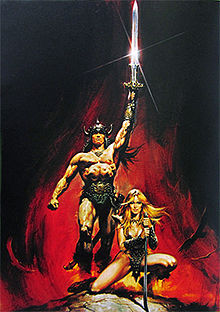
Reblog: Conan the Southerner?

I’m heading back from a glorious week in New Jersey today to return to my beloved South Carolina.  It was serendipitous, then, that I read this piece from the Abbeville Institute, “Conan the Southerner?

I recently stumbled upon the Abbeville Institute while doing some research on John Randolph of Roanoke for my History of Conservative Thought course.  It’s an institute dedicated to Southern history, and to presenting a more nuanced interpretation of the antebellum South.  Their blog features some dense, interesting bits of Southern history (I’m reading through a long-ish essay on “The South Carolina Federalists” that has taught me a great deal more about my State’s history in the period of the Early Republic), and champions constitutionalism, limited government, and a traditional way of life.

The Conan piece is an excellent—and fun—analysis of the Conan the Barbarian series of low-fantasy pulp novels, focusing on Conan creator Robert E. Howard and his Jacksonian roots in Texas.  The post’s author, Marine Corps Lieutenant Colonel Joel T. Leggett, argues that Howard’s Conan is a modern example of American mythology, one with distinctively Southern roots.

The essay is also useful as it offers a clear definition of Jacksonian principles, via historian Walter Russell Meade.  As we continue to attempt to define “populism” in the midst of Trumpian nationalism, I always relish a concise definition of the principles of the godfather of American populism, Andrew Jackson.

Meade, per Leggett, defines these principles as “self-reliance, equality, individualism, financial adventurism, and courage.”  Leggett then proceeds to demonstrate how the character of Conan embodies these qualities, and that Howard was chiefly concerned with promoting individual liberty.

That part of the essay is, for me, the most useful and enjoyable.  The qualities are certainly deeply American—and deeply Southern.  The “equality” is not the banal egalitarianism of our present age, which seeks to level off everything and everyone into conformist blandness, but the old equality of opportunity, in which every man can forge his destiny.

Tied with that is the notion of “financial adventurism.”  Leggett notes that Meade argued that “Jacksonians view money and wealth as a means to finance a lifestyle of self-definition.  The value of wealth is to enable you to be you, to live life to its fullest.”  This notion of financing “a lifestyle of self-definition” accords with my own long-term financial goals.  It also seems to be the direction that “free” speech is headed:  to exercise this right truly, one must have financial independence from social justice scolds.

And this, for Leggett, seems to be the core of Conan’s Southern Jacksonianism:  a desire for individual liberty, for a man to be able to live his life on his own terms.  Howard might have wrapped that ideal in a burly barbarian warrior-king who rose to rule a kingdom due to his own prowess, but it’s one every American should aspire towards.  In this way, Leggett makes a compelling case for Conan the Barbarian as a valuable piece of American mythology.

Reblogs: Of Grills and Men

Traditional Christian blogger Dalrock wrote two posts Monday about grilling, specifically grilling in the context of traditional masculinity and fatherhood.  The occasion for these posts is the infamous Gillette razor ad, which basically scolds men for not being noodle-wristed soy boys and pliant betas.

I really thought that after 2016, when a swaggering alpha male with a supermodel wife won the presidency, we’d see fewer of these hectoring, pedantic social justice ads.  Sadly, feminized, postmodern Corporate America still allows radical feminists to scare off their customers.

If you’ve seen the ad, you’ll recall there’s a scene with a row of dads grilling in an endless backyard, intoning “boys will boys” while two kids wail on each other (as if that’s an accurate depiction of fatherhood).  Dalrock’s first post Monday, “The symbolism of the line of men grilling in the Gilette ad,” quotes from a piece from Post Millenial, in which the author points out the significance of that scene (Dalrock’s quotation of Barbara Kay’s “‘Toxic Masculinity’ in Advertising:  Keeping Women Scared and Men Shamed“):

For what does a neatly-dressed man standing behind a barbecue signify? Think of every Father’s Day ad you have ever seen. How many of them feature barbecue tools? Maybe 50%? Why? Because when men barbecue, they are usually in a back yard. If men have a back yard, it means they live in a house. If they have a house, they are generally married with children. When men barbecue, they are usually feeding their families and friends and having fun doing it. In other words, barbecue men are deeply invested in family life.

They are, in short, fathers. And what is the easiest way to produce boys who do not understand or respect the boundaries between positive and negative masculinity? Take away their fathers.

The barbecue men are the reason most boys with loving fathers grow up to be strong, productive men: men who will never be a threat to anyone—except to bad guys who never learned the boundaries for—or how to positively channel—aggression, because so many of them had no fathers to teach them.

The ad is not just an attack on men, per se, but on married fathers, a key demographic in the war against unruly hooligans.  Let’s be clear here:  the problem isn’t “toxic masculinity”; it’s a lack of masculinity.  Boys without fathers are the major problem.

Consider the male child of a single mother:  outside of an uncle or grandfather, his formative years will be devoid of male influence.  Nearly all of his teachers will be female until at least middle school.  His absent father will be a lingering shadow in his life, unconsciously imprinting him with the idea that men are unreliable and that he has no obligation to his hypothetical future offspring.  Such a child has a higher propensity for loafer-lightening flamboyance (probably).  There are a host of negative consequences of fatherlessness.

Dalrock’s second piece looks at a 2015 Slate “think-piece” about a man who hates himself for loving to grill.  It is painful to read the quotations from the essay.  It affirms a central tenant of postmodern political philosophy, especially radical feminism:  you’re not allowed to enjoy anything.

Dalrock elaborates in that piece that the point is to feminize grilling; that is, to bring women into a traditionally male space, and to make men feel bad if they want to keep it a male space.  This topic is a major theme of Dalrock’s writing:  the forced infiltration of men’s private spaces, such as social clubs, with women, depriving men of any kind of separate world they can enjoy on their own terms.

Check out the pieces linked (caution:  you will cringe incredibly hard reading that Slate piece, but it is from Slate, after all) and leave your comments below.