Retro Tuesday: Veterans’ Day 2018, Commemoration of the Great War, and Poppies

Today marks the 107th anniversary of Armistice Day, the day that the Great War (the First World War) ended.

The First World War has come back into vogue as an example of the absurd, murderous capacity of even seemingly enlightened humans to engage in massive, needless violence.  I think that’s true, but I also think the First World War is when the West lost confidence in itself.

Consider:  if the allegedly “enlightened” moderns of Western Civilization could lead their armies into senseless, ceaseless warfare for four years, how did that make us any better than the rest of the world?  Indeed, it seemed to make us and our advancements seem even worse.

That analysis misses some key points, however.  The war wasn’t just about nationalism-run-amok, or secret alliances swinging into a deadly, almost automatic catastrophe of geopolitics gone wrong.  It reflected the dehumanization of modernity itself, the turning of people into, first, mere cogs in vast industrial machines and, second, into fodder for a brutal meatgrinder.

The First World War may have caused the West to lose its “mojo,” as I’ve argued before, but the West was already losing its soul before that great, terrible conflict.  Fast forward 107 years, and Europe is a place so venal, so atheistic, so nihilistic, so devoid of meaning, that it’s gladly and eagerly invited its own replacement by foreign nationals and faiths.  The very same civilization that resisted Islamic domination for 1400 years has now given up without a fight.  As long as the endless welfare benefits keep coming, no one cares.

It’s truly tragic.  The World Wars cost millions of lives and wrought untold damage upon the world.  They also destroyed what little will the West had left to preserve itself, at least in Europe.  The West may very well have died 107 years ago.

I hope I am wrong.

With that, here is 13 November 2018’s “Veterans’ Day 2018, Commemoration of the Great War, and Poppies“:
Read More »

SubscribeStar Saturday: Have We Forgotten?

Today’s post is a SubscribeStar Saturday exclusive.  To read the full post, subscribe to my SubscribeStar page for $1 a month or more.  For a full rundown of everything your subscription gets, click here.

This past Wednesday marked another observation of 9-11, the events of 11 September 2001.  While there were the usual tributes to the fallen, the observation seemed quite muted.

Perhaps we can chalk it up to the anniversary falling a Wednesday, the day of the week least-suited to hosting holidays both celebratory and reflective.  I suspect, however, that there is more to our forgetful ennui than the inconvenience of Wednesdays.

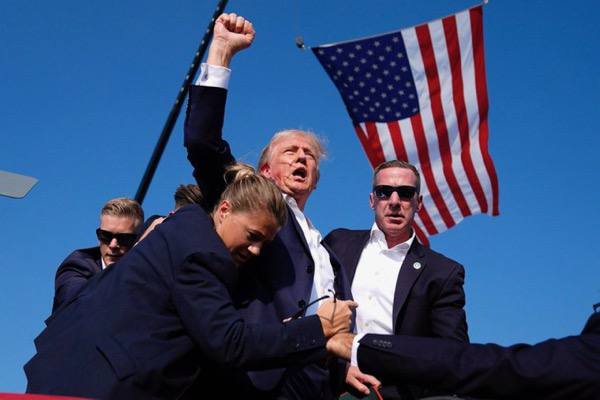
Consider that President Trump narrowly survived an assassination attempt earlier this summer.  Has anything really changed since then?  Has the Left and its media toned down its murderous rhetoric?

Instead, they’ve ludicrously claimed that he brought it upon himself—or that his team coordinated a fake assassination attempt.  Given the totally lax and inexperienced Secret Service detail, as well as the peeling away of President Trump’s most accomplished agents to cover some asinine speech from “Dr.” Jill Biden, these excuses smack of lame psychological projection.

Regardless of the hypocrisy of the Left—which isn’t going to change no matter how much we point it out—it’s clear that modern Americans have a woefully short memory about major events.  If we’ve already moved on from the failed assassination attempt against a President and presidential candidate, how can we be bothered to remember a series of devastating terrorist attacks from twenty-three years ago?

To read the rest of this post, subscribe to my SubscribeStar page for $1 a month or more.

Rest in Peace, Jeremy Miles

Earlier this week, my good friend Jeremy Miles passed away after a struggle with cancer.  Long-time readers will know that Jeremy was a writer and poet, and released several volumes of his poetry over the past few years (somehow I missed his last release, Shadows in Suburbia; sadly, it will be the only volume of his poetry in my collection that will never host his autograph).

Jeremy’s influence in the tiny world of Florence County, South Carolina coffee shops was absolutely massive, to an extent and in a way that he in his self-deprecating humility would never acknowledge.  His poetry captured the spirit of a golden age of open mic music, that glorious period in The Before Times, before The Age of The Virus, when musicians and poets promiscuously plied their creative wares in a supportive and encouraging environment.  His first published collection of poetry, A Year of Thursday Nights: Everyday Poetry, conveys the energy and creative ferment of those halcyon days, all with his sly humor and playful wit.

He was also a good man—a great man.  Always clad in black from head-to-toe, and always wishing it were Halloween, he always encouraged those around him with his gentle demeanor.  He was that guy that looked cool, but was never intimidating or exclusive about his natural coolness.  He was cool, yes, but warm—a warmth that derived from his sensitive and reflective nature.  Anyone was welcome in Jeremy’s circle, and if you could quote Big Trouble in Little China, even better.

Jeremy was moved to hospice this past Sunday, and passed early on Tuesday, 10 January 2023.  I was unable to visit him before his passing.  While I regret that, his girlfriend pointed out to me that now I will always remember him as he was—joyful, funny, ebullient, full of life, a shining beacon of friendship and love, even in all-black.

I regret, too, not spending more time in conversation with him this past year.  He was rallying and even played a few songs with his band, Jeremy and the Blissters, but the cancer—that terrible, wicked disease—won out in the end.

But cancer cannot destroy the culture that Jeremy created.  Nor can it destroy his memory.

I will miss him deeply, as I know many others will.

Rest in peace, Jeremy Miles.

Lazy Sunday CII: Obituaries, Part II

Another week is dawning, and it’s time to look at the sun setting on some excellent individuals.  2020 was a rough year for many reasons, not least because of the deaths it brought.  Here’s hoping this week’s titans are resting in the arms of Jesus:

  • Rock in Peace, Eddie Van Halen” – If any of these three aren’t resting in the arms of Jesus, it’s probably Eddie Van Halen, though I’m holding out hope he experienced some manner of conversion experience and is playing “Panama” inside the pearly gates.  Eddie was a pioneering guitarist, but he also built on the legacies of past giants, like the violinist Niccolo Paganini (who was so good, it was said he sold his soul to the devil for the privilege; if that’s true, there’s a pretty good band in Hell right now—not that you’d want to go and hear them!)
  • Rest in Peace, Alex Trebek” – Smarmy.  Smug.  Canadian (I think).  Alex Trebek is synonymous with Jeopardy!, and it’s unclear that anyone can fill his shoes.  He brought just the right balance of bedside manner and not giving a damn to his hosting duties, asking guests for their tedious life stories, and occasionally finding them lackluster.  But, boy, he was a good host.  Rest in Peace, Alex.
  • Rest in Peace, Rush Limbaugh” – Speaking of irreplaceable hosts, Rush Limbaugh is one of the first greats to shed off this mortal coil in the great year 2021.  I don’t think anyone can truly replace Rush behind the legendary EIB Golden Mic, but I’m hoping they hire Mark Steyn as a perpetual guest host.  “The Rush Limbaugh Show w/ Mark Steyn” has a nice ring to it.  That’s a Canadian I can get behind.

That’s it for another macabre edition of Lazy Sunday.  Happier retrospectives to come in March.

Happy Sunday!

—TPP

Other Lazy Sunday Installments:

Tip The Portly Politico:  Support quality commentary on politics, education, culture, and the arts with your one-time donation.

***NOTEThis link is NOT a subscription to my SubscribeStar Page; it is for a one-time donation/tip via PayPal. To subscribe to my SubscribeStar page, use this URL:   https://subscribestar.com/the-portly-politico***

Lazy Sunday CI: Obituaries, Part I

Dedicating two Lazy Sundays to obituaries is a bit grim, but after Rush Limbaugh’s death last week and a solid week of cold, rainy weather, it seemed appropriate.

As I began looking back at posts about deaths, I was surprised to see I had written several obituaries and memorials (enough to split this retrospective into two parts).  2020 was a particularly difficult year, as we all know, and it took some of the greats with it.

Too many.  But, as my blogger and real-life friend Bette Cox noted on my Limbaugh memorial, she doesn’t wish for a peaceful rest, but a joyously busy time in Heaven.  I’m sure Rush has a golden mic up there, broadcasting praises to Christ for all eternity.  Excellent in Broadcasting, indeed.

  • Breaking: Conservative Commentator Charles Krauthammer Dies at 68” – This post was the first (I believe) I wrote about the passing of any public figure on the WordPress version of the blog (other than a blurb about Michael Jackson’s death on the old Blogger site).  Krauthammer was a bit of a squish by today’s standards, and it would be interesting to see how he would have fallen on Trumpism after four years, but he was one of the more creative and intelligent pundits on the airwaves.  I always enjoyed his writing, and his interesting insights into human nature.
  • Rest in Peace, Herman Cain” – The Godfather of Godfather Pizza, and one of my favorite political figures of the twenty-first century, Herman Cain was, in some ways, a prelude to Trump:  fun, humorous, controversial, down-to-earth, and populist.  I loved his “9-9-9” Plan, if for no other reason than it was good marketing (and because of his belief that (to paraphrase) “if 10% is good enough for God, 9% is good enough for the federal government).
  • Remembering Ravi Zacharias” – Since his death, allegations surfaced that Ravi Zacharias was a sexual predator; sadly, after intense investigation (fully and transparently conducted and supported by his ministry, RZIM), it seems these allegations are true.  That’s a terrible coda to an otherwise exemplary career.  Zacharias may have fallen to temptation later in life, but it does nothing to erase his impact on generations of Christians.  He still won thousands of souls for the Lord, and his detailed apologia for Christianity still stand powerfully.  His fall serves as a powerful reminder, as The Didactic Mind put it, to “not base your faith on the words of men.”  It’s also an admonition to finish the race strong.

That’s it for this weekend’s obituaries.  Rather than dwelling on them gloomily, let’s think of them as a celebration of life, both in this world and the next.

Happy Sunday!

—TPP

Other Lazy Sunday Installments:

Tip The Portly Politico:  Support quality commentary on politics, education, culture, and the arts with your one-time donation.

***NOTEThis link is NOT a subscription to my SubscribeStar Page; it is for a one-time donation/tip via PayPal. To subscribe to my SubscribeStar page, use this URL:   https://subscribestar.com/the-portly-politico***

Rest in Peace, Rush Limbaugh

Talk-radio legend and the master of the golden mic Rush Limbaugh passed away Wednesday after a fight with lung cancer.

Limbaugh—who fans affectionately called Rush (or “El Rushbo”)—pioneered the conservative talk-radio format.  After the lifting of the FCC’s Fairness Doctrine in 1987, radio and television no longer were required to present both or all sides of an issue being debated.  That made it possible for entire programs to be dedicated to commentary tilted towards one political worldview or another.

Into that new media environment stepped Rush.  He was the first of many to seize upon the idea of delivering withering attacks on the Left and Democrats through the format of a three-hour radio program.

Read More »

Happy 250th Birthday, Beethoven!

Today marks the 250th birthday of Ludwig van Beethoven, one of the greatest composers of all time.  Beethoven’s name is usually mentioned in a triumvirate of major composers, the musical holy trinity that also includes Bach and Mozart. (curiously, composers I’ve never written about in their own right on this blog).

Beethoven was a key figure in the transition from the Classical period—the time of Mozart, Haydn, et. al.—and the Romantic period, which saw the emergence of composers like Chopin and Saint-Saëns.  Classical music is renowned for its preciseness, its almost mathematical symmetry.  Romantic music, on the other hand, is less predictable, more flowing and emotive.  It was Beethoven who expanded classical music’s possibilities—for example, stretching symphonic form to unforeseen lengths (his symphonies are, on average, much longer than those of Mozart and Haydn, and Beethoven wrote substantially fewer of them)—and introduced new extremes of mood and dynamics into music.

Read More »

Pearl Harbor Remembrance Day 2020

When writing this morning’s post about “Away in a Manger,” I completely neglected to mention or recognize the anniversary of the Japanese attack on Pearl Harbor on 7 December 1941.  That attack—premised on the ludicrous idea that attacking America would cow our nation into re-opening trade exports to Japan’s thirsty navy—brought the United States into the Second World War, with Adolf Hitler foolishly declaring war on the United States three days after the Japanese attack.  The attack also resulted in 2403 American deaths, both military and civilian, as well as the destruction of a huge chunk of America’s Pacific Fleet.

The world is a very different place than it was in 1941.  In scanning Pearl Harbor headlines, one Business Insider headline seemed indicative of our fear of death:  that daily deaths last week were higher than the number of deaths on the “date which will live in infamy.”  Never mind that the nation’s population is substantially larger and more elderly (and, dare I say, less healthy) than it was in 1941.  The Virus is a quasi-mystical force to be feared, so we huddle alone in our homes and avoid contact (ironically engaging in the very Japanese activity of mask-wearing).

By contrast, the response from Americans in 1941 was valorous.  Hundreds of thousands of young men volunteered.  My own paternal grandfather, who was only sixteen at the time, enlisted.  He did so by purchasing a huge Bible, and then filled out the family genealogy by antedating his birth by two years.  He then took the Bible and kicked it around in the dust of the road to give it the appearance of age, and presented the Bible and its doctored genealogy to the recruiting office.  Pretty soon he making air supply runs for Uncle Sam.

What would happen now if the ChiComs the West Coast (actually, that might save the Republic…)?  I have a hard time believing soy boys would be rushing to enlist.  After all, they’ve been indoctrinated into believing our nation is a wicked tool of imperialism.  They’d probably welcome our new Chinese overlords.

But perhaps the Spirit of ’41 is still strong in America.  I like to think it is, at least here in the South.

Regardless, let us never forget the men who gave their lives that day, and throughout the war.  They defeated great evil, and made America great.

God Bless.

—TPP

Wayback Wednesday: Memorable Monday: Veterans’ Day 2018, Commemoration of the Great War, and Poppies

While preparing a separate post on hymns (which I will likely post Friday), it occurred to me that today is Veterans’ Day in the United States, the observance formerly known as Armistice Day.  I’ve never thrown back to past posts on a Wednesday before, but it seemed fitting to recognize our fallen heroes on the day.

Last year I looked back at a Veterans’ Day post from 2018.  The post itself was originally delivered as remarks to the Florence County (SC) Republican Party, and was the most affecting of my old “Historical Moments” I’ve ever delivered.

It’s hard to believe that the centennial observance of the Great War has already passed, yet we’re still dealing with the fallout from that terrible war just over a century later.  The more I’m learning about the great Baroque, classical, and Romantic composers of Europe, the more the senseless loss and nihilistic destruction of that conflict weighs on me—and that the shimmering, confident civilization that fostered those composers also destroyed itself.

Read More »

SubscribeStar Saturday: 9-11

Today’s post is a SubscribeStar Saturday exclusive.  To read the full post, subscribe to my SubscribeStar page for $1 a month or more.  For a full rundown of everything your subscription gets, click here.

Yesterday I launched Five Dollar Friday, a series of 2020 election series posts for $5 a month and higher subscribers.  Just another perk for my subscribers.

Nineteen years ago yesterday, Al-Qaeda terrorists hijacked four passenger airliners, crashing them into the World Trade Center’s Twin Towers, the Pentagon, and—thanks to the bravery of Americans aboard Flight 93—a field in Pennsylvania.  2977 Americans lost their lives that day, with another 25,000 injured in the aftermath.

I was a junior in high school when the attacks occurred.  My classmates and I first heard about it during trigonometry class with our ancient math teacher, one of those public school double-dippers who was pulling a pension but still teaching (to her credit, she was a good math teacher).  The psychology teacher from across the hall—a large, red-faced woman—burst into the room, blubbering, “They’ve attacked the Pentagon!”

To my shame, the class erupted in laughter.  We weren’t laughing because we thought it was good news—like those Muslims partying on rooftops and those public school kids in New York cheering at the destruction.  We laughed because it was so absurd (it didn’t help that a very rotund, hysterical woman shouted it hysterically).  America, attacked?  Who would do something so foolish?  It was so beyond our comprehension, we couldn’t believe it.

As the day wore on, we realized pretty quickly that something terrible had happened.  I don’t remember if we watched news footage during the day, but we were not sent home early.  Indeed, we had marching band practice that afternoon.  But there were real fears:  would terrorists attempt an attack on the Savannah River Site, where we used to process tritium for nuclear weapons?

My dad was in Pennsylvania at the time at a work conference.  Of course, Flight 93 went down in Pennsylvania, and all air travel was shut down (my German teacher commented on how it was probably the first time since the rise of commercial aviation that no aircraft were in the skies).  Fortunately, he was safe, and road the rails back to South Carolina.  My grandparents were out in the Southwest, and rented a Toyota Camry to drive cross-country (they went on to purchase the vehicle).

In the coming days, we came to find out it was the work of radical Islamic terrorists.  I recall a conversation with friends in which I suggested we ban any travel and immigration from any countries with a majority Muslim population until we got this terrorism threat worked out.  It wasn’t long after that President Bush started in with the “Islam is a religion of peace” nonsense, but there was a brief, albeit very mild, nativist flare-up (when the French refused to join us in the Iraq War, restaurants changed French fries to “freedom fries” on their menus).

It felt like our Pearl Harbor.

To read the rest of this post, subscribe to my SubscribeStar page for $1 a month or more.

Donate to The Portly Politico

Support quality commentary on politics, education, culture, and the arts with your one-time donation.

$5.00