TBT^2: Beethoven’s Sixth Symphony

One of the many benefits of teaching music is (re)discovering beloved favorite works.  During last week’s round of distance learning, I had to pull out some of the classics.  If we’re going to sit on a Google Meet call, let’s listen to some music, not just talk about it.

I really love programmatic music—instrumental music that tells a story, often accompanied by program notes explaining (usually very briefly) what the listener is supposed to hear in the musical “story.”  Students often like to imagine their own stories when listening to instrumental music, which is great, but I find that programmatic works give students (and myself!) some guideposts to follow.

Fortunately, Ludwig von Beethoven provided some handy ones for us in his Sixth Symphony, quite possibly my favorite symphony, and certainly my favorite of Beethoven’s.  It’s the so-called “Pastoral” symphony, as it depicts a pleasant trip to the country (besides the roiling thunderstorm in the fourth movement).

It’s also unusual in two respects:  instead of the standard four movements of the classical symphony (a fast opening movement, a slow second movement, a dancelike third movement, and a fast fourth movement), Beethoven includes five; and the third, fourth, and fifth movements all flow seamlessly into one another, without the customary pause between each.

It is also long, especially by the standards of the classical symphony (the Romantics, however, would have easily matched Beethoven for runtime), clocking in at nearly forty-five minutes (the typical classical symphony averages around twenty-five-to-thirty minutes, but forty-five would have been the upper limit for the time).  But that length is in service to Beethoven’s vision, and he fully explores every theme in this symphony.

Here is a particularly excellent performance—the one I showed, in part, to my classes last week—by the Berlin Philharmonic, under the direction of Bernard Haitnik:

https://youtu.be/9ORsinmqm0M

With that, here is 4 February 2021’s “TBT: Beethoven’s Sixth Symphony“:

Read More »

TBT: The Joy of Romantic Music II: Bedřich Smetana’s “The Moldau”

In “The Worst of 2021” post, there was a much-neglected gem amid all the filler:  this January 2021 post about Czech composer Bedřich Smetana‘s The Moldau.  My good friend and former colleague H. L. Liptak—herself a noted writer and a recent subscriber, *hint, hint*—praised it in her a comment on “The Worst.”

That got me thinking about this post, and that it deserved a comeback.  Thus, here is January 2022’s “The Joy of Romantic Music II: Bedřich Smetana’s ‘The Moldau’“:

Read More »

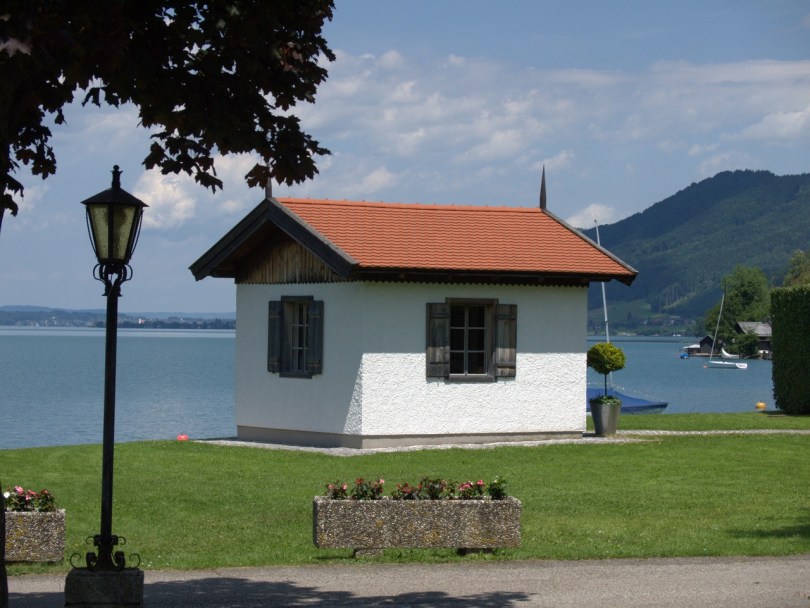
Mahler’s Composing Shack

While teaching Pre-AP Music Appreciation last school year, I stumbled upon an excellent YouTube channel, Inside the Score, which features videos explaining and analyzing some of classical and Romantic music’s greatest works and composers.  It’s a wonderful resource for exploring famous works in greater depth, and has greatly enhanced my own appreciation for music.

At some point, I ended up on Inside the Score‘s mailing list, and I receive little e-mail newsletters from the site periodically.  These are like delicious, bite-sized treats compared to the longer videos (which themselves are by no means daunting, coming it at around twenty minutes a pop).

Recently, one of these morsels found its way into my inbox:  a look at Gustav Mahler‘s daily routine.  Mahler wrote incredibly long symphonies—to this day, the single longest piece of music I have ever sat and listened to live is Mahler’s Fifth Symphony, which clocks in at an impressive seventy-five minutes—and did so while touring the world as a conductor.  According to Inside the Score, Mahler had summers off to compose at a little shack on the Attersee in Austria, and stuck to a fairly consistent schedule.

Read More »

TBT: Music Among the Stars

It’s been a musical week here at The Portly Politico, so I figured, “why stop now?”

I’ve dedicated more and more space on the blog to musical and cultural matters, especially in the last year.  Among the posts I most enjoy writing—and of which I am most proud—are those I write about music.

This week’s TBT feature, “Music Among the Stars,” is one I really enjoy, and I think (humbly) it’s one of my better posts.  It’s about the golden records aboard the Voyager I space probe, and about the true purpose of music—to worship God.

I’ll let the essay speak for itself.  Here is 8 September 2021’s “Music Among the Stars“:

Read More »

TBT: Benjamin Britten’s “The Young Person’s Guide to the Orchestra”

The new year school year is back into full swing, with this week being the first full week of classes.  Needless to say, yours portly is tired, but very much enjoying the academic year so far.

I’m teaching Pre-AP Music Appreciation again this year, so I’m excited to dive back into some of the works we discussed last year—and some new ones!  Of course, we’ve kicked the year off with a listening to “The Young Person’s Guide to the Orchestra,” a favorite for introducing orchestral instruments.

My Pre-AP Music class this year is quite small—just five students—which makes for a more relaxed classroom environment.  We’re able to explore tangents as they arise (and, based on my frequent use of em dashes and parentheses, you can imagine I go off on them frequently), and generally take the time to enjoy the music, which the students seem to be doing.

I don’t have much more to add that I didn’t write a year ago.  Britten ingeniously weaves a whopping thirteen variations on a Henry Purcell theme, featuring nearly every instrument in the orchestra—including the percussion section!—in solo or soli.  Even the neglected double basses get some love with a melody of their own.

With that, here is 31 August 2020’s “Benjamin Britten’s ‘The Young Person’s Guide to the Orchestra’“:

Read More »

Sheet Music Burning

The latest target of the woke elites and their braying mobs is—that great symbol of imperialism and Western dominance—sheet music.

Apparently, some Oxford dons are considering removing sheet music and the ability to read traditional notation from its curriculum.  One quotation from The Telegraph article notes that “The Oxford academics went on to pronounce that teaching the piano or conducting orchestras could cause ‘students of colour great distress’ as the skills involved are closely tied to ‘white European music’.”

This latest crusade is the musical equivalent of the effort in English departments across the country to downplay the teaching of grammar.  Sure, one can make plenty of excellent music without knowing how to read notation, but why limit one’s self to tabs or lead sheets?  I can certainly communicate certain ideas without adverbs, adjectives, or even pesky commas, but doing so severely limits the range of expression.

Read More »

The Joy of Romantic Music IV: Claude Debussy

The big news this week is that Milo Yiannopoulos is now “Ex-Gay,” which I intended to write about today.  However, that topic is so huge—much like the personality of the formerly loafer-whitened gadfly—that it deserves a more thorough treatment than I’m capable of producing at present.  Suffice it to say that, based on reading hundreds of his Telegram posts and listening to Milo’s commentary and analysis for years, I think he’s sincerely turning his life over to God completely, and through Christ is cleansing himself of his homosexual proclivities.  It’s a bit of celebratory news akin to Roosh V’s dramatic conversion to Christianity two years ago.

So instead of covering a flamboyant man’s dedication to Christ and consecration to St. Joseph, I’m dedicating today’s post to the flamboyant music of a Frenchman:  Claude Debussy.

Read More »

Lazy Sunday XCIX: Romantic Music

After three Sundays, several SubscribeStar Saturdays, and some Mondays of movie reviews, it seemed like a good time to give the movies a rest.  Don’t get me wrong—there’s a good chance I’ll be writing a movie review tomorrow—but I realized the blog has been skewing a bit heavily in that direction for a few weeks.  Sure, it’s wintertime, the perfect time to vegetate while consuming schlock in the evening, but that doesn’t mean we can live on cultural junk food alone.

To that end, I thought I’d highlight the classier side of The Portly Politico with haute cuisine—my recent posts on Romantic music.  Seeing as Valentine’s Day is one week away, why not cozy up with passionate music from some of history’s greatest composersBon appétite!:

  • Beethoven’s Sixth Symphony” (and “TBT: Beethoven’s Sixth Symphony“) – photog gave the TBT version of this post a shout-out in his most recent “Friday Finds” post.  I’m grateful he did, in no small part because everyone should hear this beautiful, programmatic symphony.  The Pastoral is a beautiful, melodious traipse through the countryside—all told musically.
  • The Joy of Romantic Music” – For a very brief introduction to and primer for Romantic music, I humbly submit this post.  I point out just a few of the many excellent composers from the time period, almost all of whom I’ve discussed in class this semester.
  • The Joy of Romantic Music II: Bedřich Smetana’s ‘The Moldau’” – Due to a WordPress error, the e-mail preview for this post went out a couple of days before the post was published, meaning that many folks missed it.  That’s a shame, because it’s an absolutely gorgeous bit of nationalistic (and naturalistic) composing, detailing a whimsical river cruise down the titular river, sailing through the Bohemian countryside, through Prague, and past an ancient castle.
  • The Joy of Romantic Music III: Hector Berlioz’s ‘Symphonie Fantastique’” – I’ve become fascinated with Hector Berlioz, which is apparently quite common:  music critics either love him almost as madly as he loved Harriet Smithson, or they reject him entirely.  I tend towards the former camp.  Berlioz was a Romantic’s Romantic—full of lofty ideals about the power of music and the passions it stirred.  The Symphonie Fantastique—which he wrote for and about Smithson, and his intense love for her—is likely the first psychedelic work, as it features an opium-addled artist descending into strange dreams.

I’m sure I’ll write more about Romantic composers soon, but these four posts should give you plenty of listening to get you started.

Happy Sunday!

—TPP

Other Lazy Sunday Installments:

Tip The Portly Politico:  Support quality commentary on politics, education, culture, and the arts with your one-time donation.

***NOTEThis link is NOT a subscription to my SubscribeStar Page; it is for a one-time donation/tip via PayPal. To subscribe to my SubscribeStar page, use this URL:   https://subscribestar.com/the-portly-politico***

TBT: Beethoven’s Sixth Symphony

I’ve been on a major classical and Romantic music kick lately, dedicating the last three Fridays specifically to the music of the Romantic Period (here, here, and here).

As such, I thought it would be apropos to look back at a piece I wrote last January about Beethoven and his masterful Sixth Symphony.  The occasion for that piece was the South Carolina Philharmonic‘s Sunday matinee performance of their popular Beethoven and Blue Jeans concert—back in The Before Times when we still had live music.  The program, as I wrote at the time, was “‘Beethoven’s Greatest Hits,'” featuring Beethy’s Symphony No. 5 in C Minor and Symphony No. 6 in F Major.

The Sixth, often called the “Pastoral,” is one of my favorites.  I’m a sucker for programmatic music, and there are programmatic elements embedded in the titles of each of the symphony’s movements, but the music sounds like the countryside.

But I covered all of this a year ago, so why repeat myself (except that I’m doing that below… hmm…)?  Here is January 2020’s “Beethoven’s Sixth Symphony“:

Read More »

The Joy of Romantic Music III: Hector Berlioz’s “Symphonie Fantastique”

To take us into the last weekend in January, I thought it would be nice to do at least one more entry in my unplanned Friday miniseries on “The Joy of Romantic Music” (read the second installment here).  I very much enjoy the music of the Romantic composers, and have discovered some new favorites as I’ve been covering them in my Pre-AP Music Appreciation class.

I’m a real sucker for program music—music that tells a story or depicts an idea or place—and the Romantic period was full of it.  There was perhaps no greater champion—if not practitioner; Camille Saint-Saëns likely holds that title—of the form than French composer Hector Berlioz.

Read More »