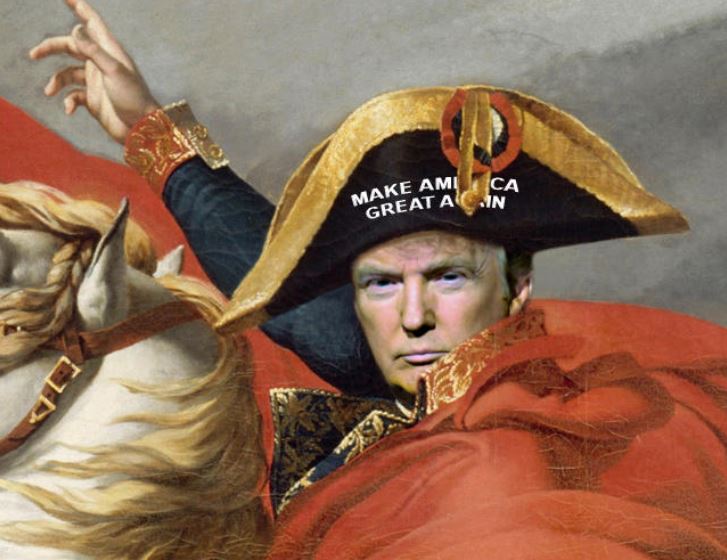
TBT: Trade War with China is Worth It

Amid this whole coronavirus situationconundrum, crisis, globalist meltdown—we should keep in mind that it’s all China’s fault.  That’s why GEOTUS keeps calling it the “Chinese Virus” and the “Wuhan Flu,” because those names are completely accurate.  Of course, the media is having conniption fits about the supposedly “racist” intentions and implications of those names (which are quite mild compared to my favorite, “Kung Flu”).  It’s why the only real response to charges of racism—which are designed to make conservatives apologize in panicked fear—is to ignore them.

Regardless, it’s worth remembering that China is to blame.  Whether it was the result of abhorrent, unhygienic culinary practices (the infamous “bat soup“) or a malicious (or incompetent) leak of an engineered biological weapon, China unleashed this plague upon the world.  Perhaps the strongest argument against uncritical globalization is just that:  we made ourselves excessively dependent upon a regime that is fundamentally opposed to our very existence, and which rejects our deepest held values and beliefs.

In retrospect, then, President Trump’s trade war with China looks all the more prescient.  We’ve become so dependent upon and integrated with China, we’re running short on the ingredients for essential medicines because of China’s disease.  Supply chains have been seriously disrupted, and will continue to be, it seems, for some weeks.  Thank goodness the tariffs began moving production of some goods back to the United States.

That’s an important lesson to remember:  paying a bit more for your washing machine is worth the price of having domestic production.  We don’t need to make everything in the United States, but saving a hundred bucks or so on a major appliance isn’t worth gutting our industrial capacity and leaving our middle and working classes out of work.

Oh, well.  A lesson learned too late is still a lesson learned.  When this whole fiasco is over, let’s consider a healthy dose of autarky going forward.

With that, here is August 2019’s “Trade War with China is Worth It“:

There’s a lot of disingenuous scuttlebutt flying around about a looming recession, the inverted yield curve, and the costs of the trade war with China.  I can’t help but think such doom and gloom reporting is part of an effort to undermine President Trump.  Investor and consumer confidence are emotional, fickle things, based as much on feeling as they are on hard economic data.

As such, I suspect that major media outlets are attempting a bank-shot:  scare investors and consumers enough, and they panic into a recession.  President Trump’s greatest strength at present is the booming economy and low unemployment rate; take that away, and loopy, socialist Democrats have a much better shot in the 2020 elections.  With Leftists like Bill Maher actually hoping for a recession to unseat President Trump, that’s not a far-fetched speculation at all.

The inverted yield curve is a bit academic, though, and I don’t think it’s going to have the scary impact its prophets of doom hope.  Oh, a curve on a graph is inverted—scary!  Most Americans aren’t going to respond to that in any substantial way.

On the other hand, the negative media attention around the trade war with China could negatively impact perceptions of the president.  Trade wars, in which countries throw up tariff barriers against one another’s imports, often ratcheting up the duty levels, is a game in which both sides lose out over the long-run—that is, assuming they don’t have other viable trading partners, and that they’re both evenly matched economically.

And, yes, the trade war has had some drag on the American economy—but it’s been so minuscule, only a few sectors have really felt the pain.  Meanwhile, China is really struggling.  Getting Trump out of office would serve China beautifully, as narrow-minded neoliberal economists would likely push a Biden (or Harris—gulp!) administration to end the tariffs.  China has the dubious luxury of an authoritarian system that can direct its economy, while President Trump must survive reelection to keep his trade policy going.

The case for maintaining the trade war is compelling (and it pre-dates Trump:  one of Mitt Romney’s advisers in the 2012 election, Oren Cass, wrote an essay for National Review calling for a trade war with China in 2014).  The best recent summary for why the trade war is beneficial actually comes from my hometown paper, The Aiken Standard (kudos to my Dad for sharing this piece).

Greg Roberts spells out the case in “Facts behind the U.S.-China trade war“; I highly recommend you give it a read.  As Roberts points out, in a normal trading relationship, the price of each trading nations’ currencies would fluctuate based on its relative trade imbalance with its trading partners; this fluctuation would occur until some rough equilibrium in currency values is reached.

China—in violation of its agreement not to do so upon entering the World Trade Organization—has continually depressed the value of its own currency in order to encourage a trade imbalance with the United States.  Because the Chinese currency is held artificially low, it is cheaper for the United States to import Chinese goods than to export American goods to China.  Why?  Because the Chinese currency is cheaper, Chinese goods are less expensive, and can be bought and imported cheaply.

Because China is a currency manipulator, it is not acting per its agreement upon joining the WTO.  Further, Roberts points out other violations, including China’s requirement that firms wishing to manufacture in China turn over their patents, blueprints, and other intellectual property to the Chinese government as the cost of doing business.

Here are two relevant paragraphs:

Has China kept its promise? The answer is a resounding no, since the Peoples Bank in China, which is controlled by the Communist Party, routinely devalues its currency to maintain, in the case of the U.S., a positive trade balance, which, for us, means we have a trade deficit with China, now totaling more than $300 billion annually.

China agreed to many other provisions when it joined the WTO which the country has not kept, to wit not requiring the transfer of foreign technology as a condition of market access; enterprises in China that are owned or controlled by the government have expanded rather than diminished; foreign banks have not been given the access that had been agreed to; the theft of intellectual property has not abated; among many others.

Clearly, China has acted in bad faith repeatedly.  Further, the United States has a number of alternatives for trade in the region, including Vietnam.

Also, the goods China receives from the United States are the stuff of life—soybeans and other agricultural products.  Does the United States need more cheap plastic crap?

Give Roberts’s analysis a read.  It’s the best, most succinct summary of the trade war I’ve read recently, and it will convince you of the necessity of holding the line against Chinese economic aggression.

High-Tech Agrarianism

The coronavirus situation—which I am convinced is both quite serious, but also inspiring some huge overreactions—has created a world that feels almost entirely different than it did even a few days ago.  This time last week, I was convinced that the whole thing was way overblown, and that life would largely continue apace, minus some school closures here and there.

By Friday evening I was growing more concerned, as everything began to get closed or cancelled.  I proctored the SAT Saturday morning and even went out of town that evening.  At that point, I thought the risk of my school closing was greater than it had been even two or three days before, but I still figured it was a relatively remote possibility.

Then Governor McMaster announced the closure of all South Carolina public schools (I teach at a private school, but we always follow gubernatorial closures)—and a bunch of other stuff shut down.  I picked up dinner at a Hardee’s in Florence, South Carolina Monday evening after a guitar lesson, and it was surreal—everything was gone from the front, and the cashier had to give me a lid and straw according to their new cleanliness guidelines.

(Let’s take a moment to thank all those service industry folks and long-distance truckers who are continuing to work and risking exposure; they are unsung heroes.  Also, spare a thought to people in those industries that are out-of-work at the moment.  They need our love and charity now more than ever.)

That’s all to say that, in a remarkably short period of time, the United States has undergone a major paradigm shift.  The world of Saturday, 14 March 2020 at 2 PM—when I emerged from the cocoon of extended time SAT testing—was a different than the world of Wednesday, 18 March 2020 at 9 PM (when I’m writing this very belated blog post).

One trend—that I think will be positive if it endures—is the implicit rejection of globalism.  People are suddenly awakening, dramatically, to the manifold downsides of open borders and excessive global economic integration.  Suddenly, localism is back in vogue.

Read More »

Phone it in Friday IX: Coronavirus Conundrum, Part II: Attack of the Virus

If last week was crazy busy, this one is moving at ludicrous speed (and yet also dragging by—last Friday seems like a distant eternity ago).  Since last week, panic over the coronavirus is spreading alongside the dreaded virus.  There have been a series of major cancellations, all of which have been well-advertised:  Disneyland, professional sports, etc.  The South Carolina Philharmonic, of which I used to be a season ticket holder, is closing its concert to the public, but will instead livestream the proceedings.  Our senior US Senator Lindsey Graham has self-quarantined.

My assessment up until this week has been that we should be prudent in preparing for the impact of the coronavirus, but that it’s a tad overblown—it’s just a nasty flu.  I still caution prudent prepping—and against panic—but after the events of the past week, I’m adjusting my assessment.  There is definitely something different about this pandemic.

Read More »

Post-Trump America

Well, the craziness of yesterday has subsided, and I’m almost finished with report cards.  Student-musicians apparently did quite well at their Music Festival, and life is (hopefully) about to calm down a bit before getting insane all over again in about five or six weeks.

All that said, I’m still pretty worn-out today.  Fortunately, my good blogger buddy photog, proprietor of Orion’s Cold Fire, wrote a post yesterday, “Building on Trump’s Revolt,” which raises some interesting questions.  Foremost at the back of every Trumpist’s mind:  who takes over after Trump?

Read More »

TBT: The Human Toll of Globalization

One of the more interesting developments in conservatism since Trump’s rise in 2015-2016 has been a reevaluation of our basic economic policy.  Much of the ideas debated originated, in our modern political era, with Pat Buchanan.  For decades, the assumption among conservatism was that economic efficiency was the highest good, as it lowered costs and eliminated or reduced government overreach.

That was a reasonable set of assumptions when our nation shared a common culture, and when the United States dominated global markets hegemonically.  But the goal of reducing the size of government morphed pathologically into the mad worship of Efficiency above all else.  We sold out social capital—stable families, cohesive communities, robust civil society—for quick cash.

That’s the gist of Z-Man’s post today, “Middle-Man Conservatism.”  Tucker Carlson has similarly touched upon the woeful consequences of worshiping Efficiency-for-its-own-sake.  Sure, Americans possess a pioneering spirit—we’ll move to the oil fields in North Dakota if we have to do so—but we’re still motivated by the same things other humans are:  family, community, belonging.  Gutting our communities to save fifty bucks on a washing machine is a ludicrous trade-off.

Read More »

Delusional Crone (Almost) Divorces Husband over Trump

If you’re ready for your blood pressure to spike before you even eat your cholesterol-thick breakfast, here’s an example of the delusional loonies on the Left:  a California woman (almost) divorced her husband because he voted for Trump.

This story is a bit old, as it dates back to early 2017, but it’s indicative of where our nation is.  It not only demonstrates the intense loyalty of the Left to their progressive dogma, but also how cheaply marriage is held.

The short version is thus:  73-year old Gayle McCormick threatened seriously to divorce her husband of twenty-two years when she found out he voted for Trump (ultimately, they merely separated permanently).

Read More »

SubscribeStar Saturday: Moral Outrage about Moral Outrage

Today’s post is a SubscribeStar Saturday exclusive.  To read the full post, subscribe to my SubscribeStar page for $1 a month or more.  For a full rundown of everything your subscription gets, click here.

Teaching is a profession that attracts complainers.  Teaching requires some risk-tasking, but it’s fundamentally a job for folks that want great degrees of stability.  When that stability is disrupted, teachers, being creatures of habit and order, get ornery.

That might explain, in part, the high turnover in the teaching profession.  We live in an increasingly disordered world, even in the classroom.  Part of that disorder is the assumption that children are somehow wiser and more morally pure than their elders.

That’s a notion that goes back at least to the counterculture movement of the 1960s (not to blame, pedantically and predictably, all of our problems on that misguided, suicidal decade):  the youth a moral vanguard, crusading against the long-established order and its absurdities.  The outraged shrieking of a youngling carries with it, the culture suggests, greater weight than the elderly master with decades of experience and accumulated wisdom.

To read the rest of this post, subscribe to my SubscribeStar page for $1 a month or more.

TBT: Lazy Sunday – APR Pieces

This coming Sunday’s edition of Lazy Sunday will mark the fiftieth installment of that venerable tradition (also, yesterday’s post marked the 500th post of all-time for the blog), so I thought I’d take a look back to the very first one, from 24 February 2019.

The first Lazy Sunday was aptly titled.  As I wrote at the time, I was “phoning in” the post; thus, the necessitous title for the unplanned series.

The posts looked back to my days writing and contributing to American Patriot Radio, an online streaming station that never quite took off, despite lofty plans and an impressive roster of hosts.  It seems some folks still participate in its chatroom, but it has that weird feeling of a place that no one really visits anymore, except for a handful of cranks.

But I digress.  I wrote some pretty good material (I think) for the website, and I hate to see it lost to the cranks.  So aside from celebrating the approaching fiftieth Lazy Sunday, I figured this would be a good way to draw attention back to those classic posts.  I also can’t help but appreciate the idea of a “reblog within a reblog.”

With that, here is the first “Lazy Sunday – APR Pieces“:

It’s been a busy weekend, so I’m very far behind on today’s post (about twelve hours late!).  That said, I’m worn out, so I’m phoning in this Sunday’s post.

I used to be associated with an online radio station, American Patriot Radio, in a mild way:  I would occasionally fill-in for the station’s most popular host, and I contributed some pieces for the site’s blog.

There’s no good way to navigate to these pieces on the site now, but they are, remarkably, still there.  I do not know the current status of the station, but while seeking out these pieces, I heard some streaming audio, so it may still be active, or it may be recycling old content.

Regardless, I thought it would be worthwhile to link to my writings there, as they reflect the heady days of early 2017, when the young Trump presidency seemed full of promise, and it looked as though populist uprisings would continue all over the globe.

Enjoy this grab-bag/impromptu archive of TPP submissions to APR.

8 May 2017 – “A Disheartening, but Expected, Defeat” (about the defeat of National Front candidate Marine Le Pen to France’s current president, Emmanuel Macron): https://americanpatriotradio.com/2017/05/08/a-disheartening-but-expected-defeat/

8 May 2017 – “Pat Buchanan’s America” (about the impact of Pat Buchanan’s economic and foreign policy thought on the Trump ascendancy): https://americanpatriotradio.com/2017/05/08/pat-buchanans-america/

9 May 2017 – “A New Conservatism?” (a rumination on the future of conservatism, and the possibility of a new “fusionism” to include Trumpism): https://americanpatriotradio.com/2017/05/09/a-new-conservatism/

10 May 2017 – “Comey-tose” (about the firing of former FBI Director James Comey, as well as a brief discussion of my frustration with National Review‘s hand-wringing over decorum):  https://americanpatriotradio.com/2017/05/10/comey-tose/

Enjoy this self-indulgent blast from the recent past.

–TPP

Weird Utah: Polygamy Passes State Senate Committee

More proof that Mormonism is not Christianity:  the Utah State Senate approved a bill in committee that will decriminalize polygamy, reducing it from a felony to an infraction.  The premise behind that bill is that it will encourage people (presumably women) in polygamous relationships to come forward when reporting other crimes, and that polygamists are tired of being treated like “second-class citizens.”

Well.  The My Faith Votes post on this bill makes a compelling point against the bill:  “decriminalizing polygamy will give more power to the abusers” and “the act of categorizing it as a mere infraction, with jail time only enforced for additional crimes such as fraud or abuse, sends the message (whether intended or not) that polygamy is a legitimate lifestyle as long as the adults are consenting.”  The latter, I suspect, is the real point.

Everyone knows of Mormonism’s controversial history with polygamy.  In an older, better America, polygamy was not just frowned upon—it was illegal.  Indeed, the young Republican Party was organized to fight slavery and polygamy, which its platform proclaimed “the twin relics of barbarism.”  In order for Utah to enter the Union, it had to do away with polygamy, which was accepted practice in the Church of Jesus Christ of Latter Day Saints.  It finally did so in 1890.

But now we have an odd situation in which progressive dogma dovetails with a conservative religion.  Progressivism’s successful assaults on traditional, monogamous marriage opened a Pandora’s Box of sexual deviancy.  If gay marriage is acceptable, why not other forms of “marriage”?  At least polygamy has historical foundations, unlike gay marriage, but it’s still a destructive social arrangement.

To be clear, I am intentionally conflating politics in Utah with Mormonism.  The LDS faith dominates the State’s politics, and this bill has support from Republicans.  With the usual acknowledgment that there are always rare exceptions, my premise is that a Republican in Utah is incredibly likely to be a Mormon.

As such, it seems like this bill is old-school Mormonism making a comeback—they can finally undo the indignity (as I suspect some of them see it) the United States forced upon them in 1890, and they can revive their original acceptance of polygamous relationships.

Polygamy is a dangerous institution.  Indeed, the United States today essentially practices informal polygamy in the form of modern dating:  alpha chads dominate the sexual marketplace, while normal guys struggle.  Such is the outcome of polygamy:  wealthy, successful men in traditional polygamous societies kept multiple wives, but most men never had the opportunity to enjoy marriage.

That’s a recipe for disaster.  A stable society needs monogamous, opposite-sex marriages for the vast majority of its people.  It prevents the shiftless shuffling of legions of young, unmarried men.  It also causes the slow, demographic death of a country, and it destabilizes families, leading to a profusion of single motherhood.

Men become simpering betas and sexual mercenaries, hoping for a simulacrum of love.  Women come to expect nothing more than a series of hook-ups and flings, then find themselves pining for the alpha lover of their youths while desperately seeking a pliant beta to raise her kids.  It is a bleak, bleak scenario.

Polygamy merely formalizes a bad system.  It also strips women of dignity, forcing them to participate in harem politics, jockeying for the favor of their man for the benefit of their children.  It brings out the worst in men and women—a man domineeringly controlling his brood, and his women fighting cattily for a crumb of his affection.

Alternatively, a monogamous society creates stability and social harmony.  Children grow up with two parents in the household, gaining important elements from their fathers and their mothers, as each provide something different to their children.

I’ll give the Mormons credit:  they’ve made monogamy work extremely well, and they raise lovely families.  They should stick to it.

And vote out Mitt Romney.

Populists and Elites

This past weekend gave Americans two studies in contrasts, between President Trump and Democratic hopeful Michael Bloomberg.  Contrasting these two men and their attitudes highlights the wide divide between populists and elites.

On the one hand, President Trump made a grand entrance to the Daytona 500, where he served as the iconic race’s grand marshal.  NASCAR is a hugely popular sport among President Trump’s core supporters, so that move was good politics.  But it was also an acknowledgment of the humanity of his supporters, and an endorsement of a key event in their lives.

I’ve never understood the appeal of NASCAR personally (other than the crashes… and then you realize that a real person is inside that hunk of steel, and the thrill quickly vanishes).  But that doesn’t matter.  Millions of Americans love the sport, and my inability or unwillingness to understand or appreciate it doesn’t detract from their enjoyment.  Nor does it mean they’re wrong to enjoy the sport.

That’s the trap most elitists fall into—“if I don’t like something, then it’s the height of philistinism!”  I confess I get this way about rap music, but I can at least articulate an objective case against rap (it lacks melody, its subject matter is often foul and dehumanizing, it is often unsophisticated in its musical structure, etc.).  Nor do I seek to destroy it, even if I believe—sincerely—that it is detrimental to the health of our society.

There’s also a haughty arrogance to most elitists:  they presume that they what they like is nuanced and complex, whereas everything else is simplistic rubbish for rubes.

Such was the case of former New York City Mayor Bloomberg, who ostentatiously proclaimed that farming is a job any moron could do, while information technology work is difficult and requires more “gray matter.”  Here is the quotation from the linked Fox News article:

“You dig a hole, you put a seed in, you put dirt on top, add water, up comes the corn. You could learn that,” Bloomberg said during a 2016 appearance at the University of Oxford Saïd Business School. “At one point, 98 percent of the world worked in agriculture, now it’s 2 percent in the United States,” he continued.

Ask any gardener how easy it is to grow even the simplest of plants.  How many of us have killed a potted plant due to lack of watering, or overwatering?

Now, apply that to hundreds of acres of crops, many of which are complex, genetically-engineered supercrops that depend on a deep understanding of agronomy, horticulture, biology, and chemistry.  There’s a reason people go to school for four years to become farmers.

And farming is hard work.  That’s nothing against all the code monkeys out there slaving over a hot C++ compressor (that reference probably dates me, and illustrates my ignorance of coding).  But both professions require focus, attention to detail, and a degree of erudition.

If anything, coding is probably easier.  Lest I indulge in the same arrogance as Bloomberg, just consider how we’re importing Third Worlders (mostly from India) to write code for us (undercutting the ability of native-born Americans to make a good salary in tech).  Indians are bright, hardworking people, but their ability to code well is more the result of relentless focus and intense family and social pressures.  Anyone willing to apply the effort could figure it out.

And it’s not slaving away in a field, sweating every weather forecast, wondering if it will rain too much this winter, or if the late frost does or does not come.  Will a hurricane hit and wipe out an entire crop?  Will hail destroy my barn?  The code monkey’s biggest worry is when his next shipment of Mountain Dew Code Red is coming in, and if he’ll have it in time to help him meet his next deadline.

Regardless, President Trump is the model of respect for Middle America:  he respects the people that work hard, and he respects their interests and traditions.  Michael Bloomberg is an out-of-touch elitist who disdains everyone who doesn’t have enough money to buy the Democratic nomination.

When NeverTrumpers ring their hands over “decorum” and “character,” they should understand that President Trump has shown his character through his actions:  he cares about his voters, and about Americans generally.  Michael Bloomberg only cares about Michael Bloomberg.