Hungry Like the Wolf

I’m puppy-sitting today, watching my parents’ ten-week-old rat terrier while they’re working and attending various doctors’ appointments.  I pray that the day I go to the doctor and various specialists as frequently as my parents do is still decades away.

Dogs are interesting critters.  It’s kind of amazing that our ancient ancestors domesticated wolves and bred them to hunt on behalf of humans, instead of merely hunting humans.  It’s even more interesting how breeding for selective traits led to various breeds.  There’s a whole art and science to animal husbandry that is fascinating.

The rat terrier, for instance, is the result of various combinations of terriers (for hunting), greyhounds (for speed), and chihuahuas (for compactness—the rat terriers had to be small enough to get into rat holes).  According to my dad, who has become something of an authority on the breed since getting the puppy, rat terriers used to be very common in the United States—most farmers had one or two to help kill pests.  Theodore Roosevelt kept one named Scamp around the White House to kill mice (although Scamp may have been a different variation of terrier).

Of course, the question that interests me is thus:  if we domesticated dogs once, couldn’t we do it again from their cousins, wolves?  Naturally, there’s no need to do it again—it was surely a long process—but doing so would help us to understand how difficult domestication was, and why our ancient ancestors thought it was worth the effort.

Read More »

Cancelling Jesus

Yesterday, I wrote about the destruction of statues of American leaders—the destruction of American history.  My position is that tearing down virtually any statue—Confederate, Union, Theodore Roosevelt, etc.—is the untenable erasure of our nation’s history.  Further, the historic illiteracy of the woke SJWs has seen the defenestration of statues of abolitionists—an absurdity for groups that claim to be fighting against the legacy of slavery.

In that context, I made a big deal about the toppling of a statue of Abraham Lincoln.  Lincoln has assumed something of a demigod status in American history, one that glosses over some of the thorny issues of how to respond to the secession of the Southern States (a real question at the time was, having opted into the Constitution, could States later opt out; for a good biographical read on that issue, check out “A Voice of Reason” by John Marquardt at the Abbeville Institute).  Lincoln was certainly a man with many noble qualities, and a keen constitutional mind.  The toppling of his statues is the height of insanity—or nearly so.

In my haste, I neglected the even more egregious calls to destroy statues and stained glass windows depicting The most important Figure in world historyJesus Christ.

Read More »

Postmodern Iconoclasm

Statues are coming down all over the United States.  A few years ago, during our nation’s last bout of racialist temper tantrums and looting, the calls were for Confederate monuments to come down, on the premise that our nation shouldn’t celebrate “losers” and “traitors.”  For an historically illiterate population that just knows that “slavery was because of bad white Southerners,” it was a compelling, if ultra-simplistic and stupid, case.

At the time, many conservatives pointed out that, hey, if you start tearing down statues of former slave owners, you’re inevitably going to move onto George Washington and Thomas Jefferson.  Should we really judge great men of the past solely based on one practice, one that we now acknowledge as immoral, but that was widespread—and, let’s not forget, practiced globally, with particular zest and gusto among Muslims—during their lives?  And let’s not forget that many slave owners wished to see the ultimate demise of the “peculiar institution.”

What we’re seeing now is an orgy of presentism, one that fits nicely with the orgy of animalistic rioting.  These ignorant, borderline illiterate (they are, in fact, excessively educated in Grievance and Victim Studies, but uneducated in actual knowledge and Truth) progressives and their pawns live in a perpetual present, in which the only good is whatever the social justice commissars decided at the last struggle session.  “We have always been at war with Eurasia.”

Read More »

TPP Summertime Update

Even with cities burning and an election mere months away, the summertime doldrums have hit.  “Doldrums” isn’t exactly the right word, as things are going pretty well, but the long (for me) Father’s Day weekend distracted me from the woes of the world.

There’s also the issue of unlimited free time that is summer vacation.  Don’t get me wrong—I’m not complaining—but when I have one slender hour in the day to get my blog post done, I tend to be much more productive and focused.  It takes pressure to make diamonds—or 600-word blog posts full of sweeping generalizations.

I’ve fallen a bit behind on SubscribeStar content.  I still owe $5 subs a couple of editions of Sunday Doodles, which I will have up soon.  All subscribers missed out on a SubscribeStar Saturday post, which I will also attempt to make up soon.

History of Conservative Thought is going well, and we have two more meetings before the Fourth of July break.  This Wednesday we’ll be reading documents from John Adams and Alexander Hamilton, the Federalists/Northern Conservatives.  Next week we’ll dive into Southern Conservatism with John Randolph of Roanoke and (possibly) some excerpts from Richard Weaver‘s Southern Essays.

So that’s it for a quick Monday update.  Be on the lookout for more substance tomorrow.

—TPP

TBT: History of Conservative Thought Update: Edmund Burke

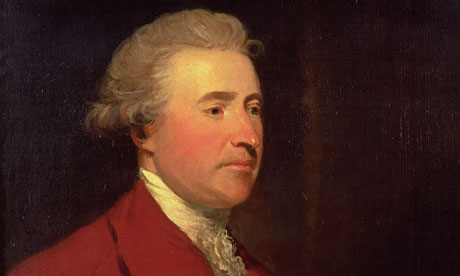
The Summer 2020 session of History of Conservative Thought is really going well.  Yesterday, the three young man each gave brief presentations on three excerpts from Edmund Burke’s writing, summarizing Burke’s main points and ideas.

It was made for a lively, far-ranging discussion.  One of the students is taking another summer course, Terror and Terrorism, a popular summertime offering from one of my colleagues.  I had the pleasure to fill-in last summer for the French Revolution portion of that class while my colleague was away at an AP Summer Institute.  Apparently, that course just covered the French Revolution again, so it dovetailed nicely with our discussion of Burke’s Reflections on that bloody affair.  We had a good time contrasting Burkean “ordered liberty” and Rousseau’s “general will.”

As such, I thought this edition of TBT could look back to Summer 2019’s HoCT update, “History of Conservative Thought Update: Edmund Burke“:

A bit of a delayed post today, due to a busier-than-usual Monday, and the attendant exhaustion that came with it. The third meeting of my new History of Conservative Thought class just wrapped up, and while I should be painting right now, I wanted to give a quite update.

Last week, we began diving into the grandfather of modern conservatism, Edmund Burke. Burke prophetically saw the outcome of the French Revolution before it turned sour, writing his legendary Reflections on the Revolution in France in 1789 as the upheaval began. Burke argued that the French Revolution ended the greatness of European civilization, a Europe that governed, in various ways, its respective realms with a light hand, and a sense of “moral imagination.”

To quote Burke reflecting on the Queen of France:

“I thought ten thousand swords must have leaped from their scabbards to avenge even a look that threatened her with insult. But the age of chivalry is gone. That of sophisters, economists, and calculators, has succeeded; and the glory of Europe is extinguished forever. Never, never more, shall we behold that generous loyalty to rank and sex, that proud submission, that dignified obedience, that subordination of the heart, which kept alive, even in servitude itself, the spirit of an exalted freedom. The unbought grace of life, the cheap defence of nations, the nurse of manly sentiment and heroick enterprise is gone! It is gone, that sensibility of principle, that chastity of honour, which felt a stain like a wound, which inspired courage whilst it mitigated ferocity, which ennobled whatever it touched, and under which vice itself lost half its evil, by losing all its grossness.”

What a powerful excerpt! The “sophisters, economists, and calculators,” indeed, reign in the West. What Burke was driving at here was that the rationalistic, abstract bureaucrats who would abandon tradition in their quest for a perfect society would sacrifice everything that made their country great, and life worth living.

Burke was also arguing that there is more to obedience to a government or king than the mere threat of power. People are invested in their country and society—and willing to submit to authority—because of organic culture from which it grows. Uprooting the great tree of tradition in favor of abstract foundations merely destroys the tree, and plants its seedlings in shallow ruts of stone. What grows will be anemic and pitiful by comparison.

Volumes could and have been written about Burke, but I’ll leave it here for now. Next week we’re getting into the development of Northern and Southern conservatism, which should make for some pre-Independence Day fun.

The Magna Carta Turns 805

Good old Scott Rasmussen’s Number of the Day observes that King John signed the venerable Magna Carta 805 years ago today.  The beleaguered king signed the great charter essentially at sword point, as his barons had him cornered at Runnymede on 15 June 1215.

The Magna Carta’s history is a fascinating one.  King John challenged the document’s legitimacy almost immediately, but his son reaffirmed it.  Essentially, the Magna Carta was not a sweeping guarantee of the rights of all Englishmen; rather, it was a guarantee of the rights of a narrow band of English nobility (the aforementioned barons), and that the king was subject to his own laws.  No taxes could be levied on the nobility without their consent.

It took another four hundred-odd years, during the events leading up to and following the English Civil War, for the Magna Carta to be applied more broadly.  The Stuart monarchs sought to aggrandize the monarchy, turning it into a form of absolute monarchy in the mode of the French kings.  Parliament—jealous of its prerogatives—dug up the Magna Carta and used it in its legal case against absolute monarchy.

Read More »

If the South Woulda Won

Amid all the upheaval of the past few weeks, conservatives are wondering, “What next?” and “Where did we go wrong?”  There are multiple answers to both questions.  To the latter, there are the familiar suspects:  the 1960s, the Progressive Era of the early twentieth century, the influence of the Frankfurt School of Cultural Marxism, etc.

One possible answer—one that’s been pushed aside in our historically incompetent and racially hypersensitive era—is the victory of the Union in the American Civil War.  I wrote extensively about “The Cultural Consequences of the American Civil War” a few weeks ago; in that essay, I wrote that

…[T]he biggest legacy of the American Civil War was that it marked the victory of a certain Yankee political philosophy and political economy over the rest of the country. The North and the South took fundamentally different views of the world….

…[T]he larger point was that the South existed in a far more traditional version of the world than the Yankee.

The Yankee, instead, came from a Puritanical/Calvinist perspective. Weaver argued that the Southerner recognized and named evil, but rather than try to stamp it out—thereby breeding a multitude of smaller, more insidious evils—he sought to fence it off, to mark it. The Northern Puritan sought to eradicate evil–thus the radical abolitionist impulse (in the context of the Civil War), on down to the modern-day “Puritanism” of the SJWs, for whom nothing is ever good enough.

Immediately after the Civil War, the South, being out of national politics in the Reconstruction Era, could not stop the political-economic alliance of the North and West, which put into place high protective tariffs and expanded federal authority….

And so on.  Essentially, the victory of the Union, which brought many material blessings, and the moral good of abolishing slavery, also brought with it the totalizing influence of Yankee imperialism and the erosion of legitimate States’ rights at the expense of expanding federal power.

Read More »

SubscribeStar Saturday: Civil War?

Today’s post is a SubscribeStar Saturday exclusive.  To read the full post, subscribe to my SubscribeStar page for $1 a month or more.  For a full rundown of everything your subscription gets, click here.  NEW TIER: $3 a month gets one edition of Sunday Doodles every month!

The nation is aflame in disorder.  These race riots—really, thinly-veiled pretenses for mob violence and destruction—have become a depressing feature of our progressive utopia; perpetual revolution for the perpetually aggrieved.

The reactions from the two sides of our great national divide illustrate the unavoidable contrasts.  The Left either celebrates the violence, or washes its hands of it, claiming they can’t condemn the riots “without walking in the shoes” of looting blacks.  The Right, grounded in reality and respect for rule of law, expresses disbelief that anyone, even a progressive, could somehow endorse or even ignore rioting.

The United States has not been so divided since the 1850s.  When John Brown, the crazed radical abolitionist, staged his raid on the federal arsenal at Harpers Ferry, he was hanged for his reckless crime.  Brown’s goal had been to use federal arms to equip slaves, leading them in a massive rebellion—the deepest fear of slave owners.  In the North and among the elites, Brown was heralded as a hero of and martyr to a noble cause.  To Southerners, this praise seemed like cheering for a murderer—a murderer who wanted Southerners in particular dead.

Slavery was wrong—as tiresome as it is to have to repeat it in the vain attempt of shielding one’s self against attack—but Brown’s zealotry shed blood needlessly.  Had he succeeded, many innocent Virginians would have died—and the rebellion would have been put down.  Regardless, the differing reactions of the two sections of the country highlighted how thoroughly alienated both had become.

So it seems we are similarly poised today in the United States.

To read the rest of this post, subscribe to my SubscribeStar page for $1 a month or more.

TBT: What is Conservatism?

I’m still struggling with fever and migraines, although both seem to be improving and growing milder.  Fortunately, I received word today that I do not have The Virus.  So now I have to get to the bottom of whatever malady plagues me.

Yesterday I launched the Summer 2020 session of History of Conservative Thought online; you can read about our discussion here.  As such, it seemed a good time to look back 2019’s What is Conservatism?,” the first post from the Summer 2019 run.

The post here details Russell Kirk’s “Introduction” to The Portable Conservative Reader, which has also been repackaged as “Ten Conservative Principles.”  It’s an important essay that details the general principles and attitudes of the conservative as he attempts to make sense of the world.

It’s influential, too, though Kirk’s influence has suffered somewhat versus Buckley-style fusionism.  The Z Man dedicated an entire podcast to the essay a few weeks ago.

It’s well worth a read.  But for now, here’s my summary of it in “What is Conservatism?“:

Today I’m launching a summer class at my little private school here in South Carolina.  The course is called History of Conservative Thought, and it’s a course idea I’ve been kicking around for awhile.  Since the enrollment is very small, this first run is going to be more of an “independent study,” with a focus on analyzing and writing about some key essays and books in the conservative tradition.  I’ll also be posting some updates about the course to this blog, and I’ll write some explanatory posts about the material for the students and regular readers to consult.  This post will be one of those.

Course Readings:

Most of the readings will be digitized or available online at various conservative websites, but if you’re interested in following along with the course, I recommend picking up two books:

1.) Richard Weaver‘s Ideas Have Consequences ($6.29):  this will be our “capstone” reading for the summer.
2.) The Portable Conservative Reader (edited by Russell Kirk):  we’ll do some readings from this collection, including Kirk’s “Introduction” for the first week.

Course Scope:

I’ll be building out the course week-to-week, but the ultimate goal is to end with 2016 election, when we’ll talk about the break down of the postwar neoliberal consensus, the rise of populism and nationalism in the West, and the emergence of the Dissident Right.

After the introductory week, we’ll dive into Edmund Burke, then consider the antebellum debates about States’ rights.  I haven’t quite worked out the murky bit during the Gilded Age, but we’ll look at the rise of Progressivism in the early twentieth century, then through the conservative decline during the Great Depression and the Second World War.

After that, it’s on to Buckley conservatism and fusionism, as well as the challenges of the Cold War and international communism.  Paleoconservatives like Pat Buchanan and (if I’m feeling edgy) Sam Francis will get shout-outs as well.

Week 1:  What is Conservatism?

That’s the basic outline.  For the first day, we’re going to look at the question in the title:  what is conservatism?  What makes one a conservative?  Feel free to comment below on your thoughts.

After we see what students think conservatism is, we’ll begin reading through Russell Kirk’s “Introduction” in The Portable Conservative Reader.  It’s an excellent overview of the question posed.  The first section of the lengthy “Introduction” is entitled “Succinct Description,” and it starts with the question, “What is conservatism?”

Not being one to reinvent what others have done better—surely that is part of being a conservative (see Principle  below)—I wanted to unpack his six major points.  Kirk argues that though conservatism “is no ideology,” and that it varies depending on time and country, it

“may be apprehended reasonably well by attention to what leading writers and politicians, generally called conservative, have said and done…. to put the matter another way, [conservatism] amounts to the consensus of the leading conservative thinkers and actors over the past two centuries.”

Kirk condenses that grand tradition into six “first principles,” derived largely from British and American conservatives.  To wit:

1.) Belief in a Transcendent Moral Order – conservatives believe there is higher authority or metaphysical order that human societies should build upon.  As Kirk puts it, a “divine tactic, however dimly descried, is at work in human society.”  There is a need for “enduring moral authority.”  The Declaration of Independence, for example, draws on the concept of “natural law” to complain about abuses of God-given rights.  The implication is that a good and just society will respect God’s natural law.

2.) The Principle of Social Continuity – Kirk puts this best:  “Order and justice and freedom,” conservatives believe, “are the artificial products of a long and painful social experience, the results of centuries of trial and reflection and sacrifice.”

As such, the way things are is the product of long, hard-won experience, and changes to that social order should be gradual, lest those changes unleash even greater evils than the ones currently present.  Conservatives abhor sudden upheaval; to quote Kirk again:  “Revolution slices through the arteries of a culture, a cure that kills.”

3.) The Principle of Prescription, or the “wisdom of our ancestors” – building on the previous principle, “prescription” is the belief that there is established wisdom from our ancestors, and that the antiquity of an idea is a merit, not a detraction.  Old, tried-and-trued methods are, generally, preferable to newfangled conceptions of how humans should organize themselves.

As Kirk writes, “Conservatives argue that we are unlikely, we moderns, to make any brave new discoveries in morals or politics or taste.  It is perilous to weigh every passing issue on the basis of private judgment and private rationality.”  In other words, there is great wisdom in traditions, and as individuals it is difficult, in our limited, personal experience, to comprehend the whole.

It’s like G. K. Chesterton’s fence:  you don’t pull down the fence until you know why it is built.  What might seem to be an inconvenience, a structure no longer useful, may very well serve some vital purpose that you only dimly understand, if at all.

4.) The Principle of Prudence – in line with Principles and , the conservative believes that politicians or leaders should pursue any reforms only after great consideration and debate, and not out of “temporary advantage or popularity.”  Long-term consequences should be carefully considered, and rash, dramatic changes are likely to be more disruptive than the present ill facing a society.  As Kirk writes, “The march of providence is slow; it is the devil who always hurries.”

5.) The Principle of Variety – the “variety” that Kirk discusses here is not the uncritical mantra of “Diversity is Our Strength.”  Instead, it is the conservative’s love for intricate variety within his own social institutions and order.

Rather than accepting the “narrowing uniformity and deadening egalitarianism of radical systems,” conservatives recognize that some stratification in a society is inevitable.  Material and social inequality will always exist—indeed, they must exist—but in a healthy, ordered society, each of these divisions serves its purpose and has meaning.  The simple craftsman in his workshop, while materially less well-off than the local merchant, enjoys a fulfilling place in an ordered society, one that is honorable and satisfying.  Both the merchant and the craftsmen enjoy the fruits of their labor, as private property is essential to maintaining this order:  “without private property, liberty is reduced and culture is impoverished,” per Kirk.

This principle is one of the more difficult to wrap our minds around, as the “variety” here is quite different than what elites in our present age desire.  Essentially, it is a rejection of total social and material equality, and a celebration of the nuances—the nooks and crannies—of a healthy social order.  “Society,” Kirk argues, “longs for honest and able leadership; and if natural and institutional differences among people are destroyed, presently some tyrant or host of squalid oligarchs will create new forms of inequality.”

Put another way:  make everyone equal, and you’ll soon end up with another, likely worse, form of inequality.

6.) The Principle of the Imperfectibility of Human Nature – unlike progressives, who believe that “human nature” is mutable—if we just get the formula right, everyone will be perfect!—conservatives (wisely) reject this notion.  Hard experience demonstrates that human nature “suffers irremediably from certain faults…. Man being imperfect, no perfect social order ever can be created.”  An Utopian society, assuming such a thing were possible, would quickly devolve into rebellion, or “expire of boredom,” because human nature is inherently restless and rebellious.

Instead, conservatives believe that the best one can hope for is “a tolerably ordered, just and free society, in which some evils, maladjustments, and suffering continue to lurk.”  Prudent trimming of the organic oak tree of society can make gradual improvements, but the tree will never achieve Platonic perfection (to quote Guns ‘n’ Roses:  “Nothing lasts forever, even cold November rain”).

Conclusion

Kirk stresses in the rest of the introduction that not all conservatives accept or conform to all of the six principles again; indeed, most conservatives aren’t even aware of these principles, or may only dimly perceive them.

That’s instructive:  a large part of what makes one conservative is lived experience.  “Conservatism” also varies depending on time and place:  the social order that, say, Hungary seeks to preserve is, of necessity, different than that of the United States.

Conservatism, too, is often a reaction to encroaching radicalism.  Thus, Kirk writes of the “shop-and-till” conservatism of Britain and France in the nineteenth century:  small farmers and shopkeepers who feared the loss of their property to abstract rationalist philosophers and coffeeshop radicals, dreaming up airy political systems in their heads, and utterly detached from reality.

If that sounds like the “Silent Majority” of President Richard Nixon’s 1968 and 1972 elections—or of President Trump’s 2016 victory—it’s no coincidence.  The great mass of the voting public is, debatably, quietly, unconsciously conservative, at least when it comes to their own family, land, and local institutions.  Those slumbering hordes only awaken, though, when they perceive their little platoon is under siege from greater forces.  When they speak, they roar.

But that’s a topic for another time.  What do you think conservatism is? Leave your comments below.

–TPP

First Day of History of Conservative Thought 2020

Today marked the first day of the Summer 2020 session of my History of Conservative Thought course.  Because I’m sick and awaiting COVID-19 test results, we held the inaugural session on Google Meet, discussing the big picture question “What is Conservatism?

The session went quite well (and I was pleased to see that even with a fever I could last around 75 minutes).  The students hit upon these concepts as being key to conservatism:

  • Fiscal responsibility
  • Constitutionalism (in the American context)
  • Limited/small government and States’ Rights
  • Traditionalism in a cultural and religious sense
  • Opposition to Progressivism itself (certainly a feature of Buckleyite fusionism
  • Peace through Strength
  • Strict immigration enforcement

To that list I added the classically liberal concept of natural rights and the Burkean idea of “ordered liberty.”  We also talked about how the earliest conservatives of the Enlightenment Period were largely monarchists, and explicitly rejected the concept of natural rights (at least, rejected the concept as Americans understand it; that is, that all men are created equal and God gives them their rights).

They’re reading Russell Kirk’s “Ten Conservative Principles” for next week, and we’ll check Kirk’s principles against their list.

Read More »