SubscribeStar Saturday: Productivity in The Age of The Virus

Pick up my latest releaseThe Lo-Fi Hymnalfor just $4 (or name your own price).

Today’s post is a SubscribeStar Saturday exclusive.  To read the full post, subscribe to my SubscribeStar page for $1 a month or more.  For a full rundown of everything your subscription gets, click hereNEW TIER: $3 a month gets one edition of Sunday Doodles every month!

My precious, teacherly Spring Break is drawing to a close, but unlike past years, it doesn’t have quite the same sensation as usual—that distinct combination of excitement that summer is near, and the dread that the school calendar is open sailing, like a dinghy adrift in the middle of the Pacific.  There’s no land in sight for weeks, your sails are tattered, the crew is on the verge of mutiny, but you all know that you’ll reach Cathay soon enough.

Instead, it’s just going to be a resumption of distance learning.  The mutinous crew members are divided up into their own separate lifeboats, waiting for my captainly orders to arrive in a digital floating bottle every morning.  Meanwhile, I’m still back on Fiji, drinking pineapple juice and avoiding getting eaten by the natives.

One quality of the digital age—and especially The Age of The Virus—is that work life bleeds inexorably into non-work life.  I resented this feature of our connected age when I was putting on hour-long historical stand-up routines for disinterested sophomores for six hours a day—one can never truly escape work now.  Now, it’s just a part of our lives, like cybernetic implants in Neuromancer.

To read the rest of this post, subscribe to my SubscribeStar page for $1 a month or more.

TBT: April Fool’s Day: A Retrospective

Last year marked the tenth anniversary of my unceremonious lay-off/non-renewal of my teaching contract.  It was the height of the Great Recession, and jobs were lean on the ground.  “Entry-level” positions called four a four-year degree and two-year’s (minimum) experience, yet holding an advanced degree was considered “overeducated” and could potentially disqualify an applicant for work.

It was the worst of all situations for a young man barely out of graduate school and just one year into his teaching career.  I was lucky, though, to have a good dad with a background in human resources and local government, who helped me find a decent job with the City of Sumter.  I was only out of work maybe three months, and had parents who were able and willing to support me during that period.

Even then, I was anxious to get out on my own again, not because I was chafing under my parents, but because I was keenly aware I was not being a man.  Instead of earning my own way in the world at twenty-four, I was living off the generosity of my parents.  That’s one of the myriad ways in which an economic downturn can take a spiritual toll on a young man.

Now it appears we’re on the precipice of another major economic catastrophe, this time thanks to the coronavirus and the stringent public health measures taken to slow its inexorable spread.  Things were really started to rev up again.  Even though the economic recovery began even as early as 2009, it didn’t feel like we were in a recovery until around 2017.  Trump’s election didn’t just buoy the stock market; it brought a sense of renewal, hope, and optimism to the United States.

Americans, especially younger Americans, don’t remember how bad the Great Recession was.  I feel for young college students who are just about to enter the workforce—I was there, too, not long ago.  I wish you could have enjoyed at least a few years of the good life.

On the plus side, we will get through this downturn, although I suspect it’s going to be far worse than the Great Recession.  We’ve never tried shutting off the entire economy before, then plugging it back in two weeks—or maybe a month, or three months—later.  Two weeks we may have seen things roaring back; maybe we will after a month.

But I can’t conceive of a rapid return to normality if it stretches much longer than that.  Small businesses are going to go under once they burn through their cash reserves.  The restaurant industry, along with the hundreds of thousands of waiters, cooks, busboys, hostesses, etc., it employs, is going to be changed for a long time.  That’s just one example among many.

I’m already feeling the effects on my private lesson business, which was booming before The Virus (although it was down a bit from its 2019 peak).  Right before The Virus hit, I had six consistent students at $30 per lesson, per week.  That’s not bad for supplemental income (at my peak, I had ten students, one for a $45 lesson, though I was only charging $25/lesson at that point).  Most of those cancellations are for the duration of The Virus, but once the plague has passed, the damaged economy will remain.  Some of those students will resume, but belt-tightening budgets are going to eliminate piano lessons fairly quickly, if I had to guess.

That said, I am blessed to have a steady job now, and will hopefully avoid any repeats of 1 April 2019.  The Great Recession left a mark on me, and it’s made me more prepared for this next downturn.

With that, here is 2019’s “April Fool’s Day: A Retrospective“:

Today is April 1, 2019, popularly known as April Fool’s Day.  It’s a day for good-natured pranking and mirthful fun, a bit like a poor man’s Halloween.

This April Fool’s Day holds a particular resonance for me, however.  It was ten years ago today that, in the midst of the Great Recession, I lost my job.

Technically, my teaching contract was not renewed.  I still had an obligation to finish out the year, which I did as best I could, but I would not be coming back.

I remember it vividly:  my school’s former headmaster told me he wanted to speak with me.  I went into his office, and he told me a few things:  the school was consolidating my classes into fewer sections; the school desperately needed money (the enrollment was around ninety-five kids, and things were so tight they needed the $28,000 going towards my salary); and the economy was not conducive to private school fundraising and tuition.

He told me that, as I’d studied history (he, too, was a history teacher), I knew how these kinds of economic downturns went.  I thought he was mentioning this as a bit of cold comfort, a sort of, “don’t worry, it won’t last long, a[nd] you’ll be okay.”  Instead, he continued, saying, “this thing could last an entire decade!”  Yikes!  Way to kick a man when he’s down.

I knew (or, at least, I hoped—the day isn’t over yet!) that I’d never have the opportunity, grim as it was, again, so I said, “Wait a minute—this isn’t just some elaborate April Fool’s joke, is it?”  He said, stone-faced, “I wish it were.”

So, there I was, facing imminent unemployment in the worst job market since the Great Depression, with only one year of teaching under my belt and a Master’s degree in United States Trivia.

We forget, living in the wonderful Trump economy, how hard it was back then.  Jobs were not to be found.  Remember going to gas stations, and people would start polishing your hubcaps against your will so they could sell you the cleaner?  That’s how bad it was—people were hawking hubcap polisher at rural gas stations to try to make ends meet.  “Entry level” jobs required two years of experience, at minimum, which no one fresh out of college plausibly had (unless they’d wisely done some kind of internship or work study).

Fortunately, with some help and coaching from my dad, I landed a job at the City of Sumter, after only three months of formal joblessness.  I was quite fortunate.  I managed the Sumter Opera House, where I learned to run live lights and sound.  I also met some interesting people, including the comedian Gallagher (that used to be an impressive anecdote, but now few people under thirty know who Gallagher is; it’s a shame).  He was an odd bird, which isn’t that surprising, given he made a career out of smashing fruits with a sledgehammer.

That job turned into a grind—remember, if you had a job, you had to do pretty much anything your employer demanded, lest you face termination—but I learned a great deal, and it landed me back at my old teaching gig, under a new headmaster, in 2011.

That experience—being jobless in the Great Recession—left an enduring mark on me.  My first year teaching, I definitely phoned it in.  I worked hard on lectures, of course, but beyond a little club for musicians, I didn’t do much extra.

My first year back in the classroom, in 2011, was completely different.  I was teaching World History, Government, Economics, History of American Popular Music (a course I created), and AP US History.  I had to do prep for all of them.

I was astonished how much American history I’d forgotten since high school and college (a pro-tip:  studying American history in graduate school is more about reading overly-detailed monographs about obscure bits of the story of America; when I took my exams to finish my Master’s, I essentially used information I learned in my eleventh-grade AP US History class).  I would spend hours on Sunday afternoons at the Thomas Cooper Library at the University of South Carolina writing up lesson plans.

Then, I became the de facto sound guy for school events after a talented tech kid graduated (I named an award after him, which I give to students who assist with our concerts and plays on the tech end).  It’s the ultimate in job security—no one else knows how to do it—but it’s also a major obligation—no one else knows how to do it.

Since then, I’ve grown a decent side hustle teaching private music lessons.  I also teach courses at a local technical college, mostly online, but some face-to-face.  In 2014, I taught Monday-Wednesday evenings, first from 6-7:15, then from 9-10:15 PM.  I’d come home, exhausted, and fall asleep in my recliner.  Thursdays felt like Saturdays because, even though I still had two days at the high school, it was the longest possible point before a grueling sixteen hour Monday rolled around.

I save constantly for retirement—I make the legal annual maximum contributions to my IRA, 403(b), and HSA—and spend very little money.  I still drive the same Dodge Caravan that I’ve had since 2006.  I will occasionally splurge and buy digital piano, but my saxophones are falling apart (literally—my pawn shop alto sax has a key falling off).  I occasionally worry that, on that glorious day when I do retire, I won’t know what to do with myself if I’m not working.

All that said, I have done everything possible to position myself against another recession, bad labor market, etc.  April 1, 2009, seems now like a distant memory, but it could all come back.  I’m reminded of The Simpsons episode where some repo men are repossessing property from a failed Dot Com start-up.  One of them says, “It’s a golden age for the repo business—one which will never end!” as he lights a cigar with a $100 bill.

It’s easy to fall into that mindset.  I’m optimistic for the future, but I’ll never take prosperity or security for granted again.  Constant hustling—booking new gigs, picking up more students, getting more classes, working maintenance on the weekends, leading summer camps, collecting songwriter and publishing royalties—is what it takes.

Phone it in Friday X: Coronavirus Conundrum, Part III: Working from Home

Well, another week of distance learning is in the books (nearly), and it seems folks are settling into an uncertain new normal as The Virus—what I’ve taken to calling the coronavirus (or COVID-19, to your cool kids)—continues to spread its invisible tentacles.

I personally have enjoyed the transition to distance learning, though I wish it were under rosier circumstances, obviously.  It’s been stimulating to solve the puzzle of moving instruction online, and while I think I’m actually working harder and longer most days, I am far more refreshed.  Being able to wake up at 7:30 AM and shuffling to the computer with some coffee is much more pleasant than my typically frantic morning routine, with both starts earlier and is more hectic.  It’s also nice knowing that, once 3:30 or 4 PM hit, I am done, if I wish to be.

Naturally, I realize many Americans don’t have this luxury—they’re either in essential jobs that require them to risk constant interactions with other people, or they’re in non-essential work that can’t simply move to the Internet, so they find themselves out of work.  My heart goes out to both groups.  The real heroes of this situation are the garbage men, nurses, doctors, utility workers, cooks, plumbers, and the rest that soldier on.

Read More »

Reflections on Distance Learning, Day One

The first day of distance learning is officially in the books.  I promise that this topic will not be the only one I write about for the next two weeks, but I am going to give updates periodically.

Being the first day, it was certainly the busiest.  Yesterday students came to school in the morning to collect whatever materials they may need for the next two week, and teachers spent the day buzzing away at recorded lectures, digital lesson plans, etc., so we’d be ready to hit the ground running at eight o’clock this morning.

A great deal of teaching is staying one or two days ahead of the students, especially when you’re first starting out.  I had a bit of that sensation—the first-year teacher drowning under a Herculean load of preps—yesterday and today, but where I’ve been lecturing on US History and Government for so long, I can riff almost effortlessly with just a few cues from my well-worn lecture slides.

Prepping for Music, ironically, has been the most difficult.  We’re using Google Meet to livestream and record lessons, which makes it pretty easy to record audio while also sharing slides with students.  With my two Music classes, though, I had to get a little creative.

Read More »

Memorable Monday II: Monday Steakhouse Blues

Almost exactly a year ago today, I wrote a brief post from my cellphone at a Western Sizzlin’ in Florence, South Carolina.  At the time, I was incredibly stressed out, due to a combination of factors:  the end-of-quarter dash to grade papers, the looming Music Festival, and a home without Internet.

Here it is a year later and the seventy posts of a year ago seem minuscule.  I also find myself in a similar state of frantic scrambling.  This year, my Internet is working—thank goodness!—but we’re in the midst of our once-every-five-years reaccreditation visit.  It’s the culmination of eighteen-months of work, and the administration is hyper-vigilant (and extremely on edge) about us presenting the best, most Potemkin Village-esque version of the school.

I’m also preparing kids for the aforementioned Music Festival—which should now be done—and working on buying curtains for our stage.  Yikes!  And, in an object lesson of how we never learn our lessons, I’m struggling under a mountain of papers for third quarter report cards.  Ay caramba!

As such, today’s post is a reblog, a look back at one year ago.  I probably won’t eat steak tonight, but I did eat a fourteen-ounce, $35 blackened ribeye on the school’s dime last night, so that’s something.

Here is 2019’s “Monday Steakhouse Blues“:

I’m writing today’s post on my phone at one of the few surviving Western Sizzlin’ steakhouses in America. Yep, it’s been that kind of day.

Yesterday’s post marked the 70th consecutive daily post on this blog. That means I’ve posted at least one post a day for ten weeks.

I don’t have much to say today. I’m taking a group of roughly forty student-musicians to a “Solo and Ensemble”-style music festival tomorrow, and today report card grades were due. Without Internet at the house, everything had to get done today in a compressed time.

As such, the only interesting thing I’ve had a chance to hear about today was Tucker Carlson saying a bunch of controversial, awesome stuff on a radio show a decade ago—and, instead of kowtowing to the Left, he invited folks to debate him on his show: https://www.breitbart.com/the-media/2019/03/11/tucker-carlson-refuses-to-apologize-over-media-matters-compilation-of-shock-jock-call-ins/

More to come tomorrow and Wednesday. I couldn’t blow a 70-day streak.

Happy Monday!

–TPP

TBT: Brack Friday Bunduru: Workers Need a Break

I’m on vacation this week, burning through my precious personal days in order to spend some time in Florida with the family.  Normally, I wouldn’t feature such a recent post for TBT (I try to do posts that are at least six months old), but when going through my archives for vacation-themed posts, this was the closest fit I could find… even if it’s not Thanksgiving.

Regardless, I increasingly believe that workers need time off.  I understand the economics of time off—it’s only possible with a great degree of efficiency and wealth—so I’m not unrealistic about it.  It just seems that people should be able to take off Christmas and a few other key days.  Just as folks will “unplug” from social media for twenty-four hours, shouldn’t we be able to escape work, even for a day?

Speaking of social media, it does seem that cell phones and e-mail have made it impossible to escape work.  I have never worked a job that truly stopped at 5 PM.  That’s likely true for most Americans.  The ability to be connected constantly means that people expect you to be available constantly—there’s never truly a moment that I feel at rest.

Perhaps that’s a person problem, and my pathetic generation is particularly anxious and afraid of a ringing phone, but Lord knows I hate getting a call during my free time, limited as it is.  There’s always the fear that it’s going to be some tedious, work-related issue.  Such issues always seem to pop up right before, or even during, a break.

Oh, well.  I can’t complain—or, at least, I shouldn’t.  Work is a blessing.  But like all good things, you can have too much of it.

With that, here’s “Brack Friday Bunduru: Workers Need a Break“:

Thanksgiving has come and gone, and Christmas‘s time—an ever-expanding season that stretches into September—has finally arrived.  Today is Black Friday, the consumerist threshold that formally inaugurates the Christmas (shopping) season.

Black Friday, much like the holiday season it ushers in, has slowly stretched beyond its one-day window.  First, the expansion went into Small Business Saturday, then Cyber Monday.  Next came Giving Tuesday—a bit of charitable giving to close out the mad dash for savings.  Once you’ve spent all of your money in big box stores on Friday, at the dying mom and pop joint in your town, and everything else on Amazon on Monday, whatever is left goes to the United Way.

Now Black Friday even bleeds into Thanksgiving Day itself.  Doorbuster sales with lines forming up at 2 AM on Black Friday is spectacle enough; now, stores opening Thanksgiving afternoon or evening try to squeeze more revenue from zealous shoppers.

As a schoolteacher, I’m spoiled:  with the exception of two years of my life, I’ve been involved in education in some way, which means I’ve always gotten a glorious Thanksgiving holiday.  It rankles me, though, when service folks are denied even one day to relax and spend with their families (until I need to buy something at 8 PM on a Thursday, and that Thursday turns out to be Thanksgiving).

“They should get a better job, Portly.”  Okay, sure, a perk of teaching, for example, is all the crazy days off; a perk of a professional job is to vacation or flex-time.  Federal employees have to work on Black Friday, but they get every second- and third-tier holiday on the calendar as a paid vacation day, so I don’t feel much sympathy for them (plus, they work for the federal government).

But even taco jockeys and the weird, pushy old gay sales clerk at Macy’s need a day off to spend with their families (or, in the case of the weird old gay guy at Macy’s—an actual person I have in mind—his little lapdog, Snickers—that part is pure speculation on my part).  There will always be those who want to work on Thanksgiving for that sweet golden time, of course, but wouldn’t it be worth it to shut everything down for a day or two?

Yes, if you work in retail, you’re going to work Black Friday.  All the more reason—before clocking in for a twelve-plus-hour shift—to have the day of Thanksgiving completely off.  Gotta have time to sleep off that turkey and dressing, at the very least.

Christmas is another one where I often forget—cozy in my cosseted bubble of quasi-academia—that most people work the day before and/or after Christmas.  The idea of working the day after Christmas seems like a death sentence, but that’s not as bad as working on Christmas itself.  Whatever Ebeneezer Scrooge is forcing his employees to work on Christmas Day should probably be imprisoned.

The folks in Medieval Europe had the right idea—dozens of feast days to celebrate this or that minor saint or hero.  They probably went too far in the other direction, going overboard with merriment.  I’m sure there’s a happy medium.

Today, we modern Americans work our fingers to the bone.  That’s one reason we’re great, and I’m a firm believer in hard work.  All the more reason, then, to take a day or two during this time of year to slow down and relax a bit.  We hustle and bustle through the Christmas season with such rapidity and motion, we don’t take the time to savor it.

Shutting down everything but essential services—God Bless police officers and emergency medical personnel for being there on Christmas and Thanksgiving—would be an admirable goal for at least Christmas Eve and Christmas Day, as well as Thanksgiving.  Open your store up at 12:00 AM on Black Friday if you want, but don’t make your employees come in until right at that moment.

These are just some stream-of-consciousness thoughts I’ve had as I’m wrestling with questions about the proper balance between work and life.  But hard workers could use a little downtime with their families during the Christmas season.

Dawn of a Decade

Happy New Year!  It’s 2020!  Wags will quip that “it’s not really a new decade—that doesn’t start until next year, in 2021.”  It’s a case where the wags are correct on the facts, but don’t appreciate how appealing that nice, round “0” at the end looks.  Everyone was excited for 2000 AD; 2001 was greeted with shrugs.

Regardless, it’s an exciting time to be alive, in every sense of the word “exciting.”  2020 is a presidential election year, with a contentious, cartoonish Democratic primary season to endure.  The impeachment trial is (allegedly) coming up soon, if Speaker Nancy Pelosi decides to rummage through her purse and take them to the Senate.

America is enjoying an economic boom, with a long bull market and the lowest unemployment rate since 1969.  President Trump’s administration is restoring some sense of sanity and reason to the absurdity of 21st-century governance.  He at least expects the government to work for the American people, not actively against them.

New Years’ Day is when bloggers both look back to the year recently passed, and look ahead to the coming year.  Prediction posts are popular and fun, so long as you don’t take them too seriously.

Read More »

SubscribeStar Saturday: End-of-Decade Reflections; Age and Class

Today’s post is a SubscribeStar Saturday exclusive.  To read the full post, subscribe to my SubscribeStar page for $1 a month or more.  For a full rundown of everything your subscription gets, click here.

Today’s post is a bit of a counterpoint to yesterday’s Trumpian triumphalism—not a repudiation of my own points, but a mild qualifier.  Yesterday’s post discussed the hard numbers behind the Trump economy, and the enormous gains in the S&P 500.

I argued that, unlike the “sugar high” years of the Obama Fed—when stock prices soared, but wages remained low and unemployment high—the growth we’re currently enjoying more accurately reflects the reality on the ground.  Americans are benefiting in their 401(k)s and their IRAs, to be sure, but they’re also enjoying higher wages, and more of us are working than at any point in our history since 1969.

All of that is true, and good.  But as I wrote yesterday’s post, I couldn’t escape the nagging feeling that something is still off.  There remains a real disconnect between the prosperity we see both in reality and on paper, and the sense that there is a lack of prosperity.

Since popular politics is a matter of emotions and feeling far more than it is about reasoned discourse, addressing that enduring sense of economic disparity and privation is critical.  My foolish but troubled generation, which came of age and fought for jobs during the Great Recession, perceives that gap profoundly—with potentially major consequences for the future of the United States and the West.

To read the rest of this post, subscribe to my SubscribeStar page for $1 a month or more.

Lazy Sunday XLI: Food

‘Tis the season for excessive consumption, dear readers.  For a blog with a synonym for “fat” in the title, I’ve yet to feature a Lazy Sunday about food.

Well, that’s about to change.  Here are four succulent pieces about food—and my favorite vice, gluttony:

  • #MAGAWeek2019: Fast Food” – One of the pieces from MAGAWeek 2019 (all exclusive to my SubscribeStar Page with a $1/month subscription), this little essay is an ode to the glories of fast food.  Fast food truly is a modern-day miracle, bringing together advancements in agriculture, food preparation, logistics, etc., into one gloriously low-priced, high-fat package.
  • The Future of Barbecue” – The inspiration for this post was a piece at the Abbeville Institute, which detailed the deleterious effect of “mass,” or mass-market, barbecue chains on mom and pop barbecue joints, as well as the tradition of community barbecue.  It’s one of the many interesting chapters in the negative consequences of unbridled economic growth and efficiency at the cost of tradition and community.
  • Shrinkflation” – Another SubscribeStar Saturday exclusive, this piece examines the shrinking size of beloved foodstuffs.  Did you know a two-liter Coke isn’t really two-liters anymore?  Ever noticed how Twinkies don’t seem as big as they used to appear?  Well, in an effort to cut cost (and, presumably, to bamboozle consumers), many food processors cut the sizes of their products in order to hide cost increases from customers.  I’ve had the gnawing feeling lately that the future we live in is far less amazing than it’s supposed to be; here’s another example of reality disappointing us yet again.
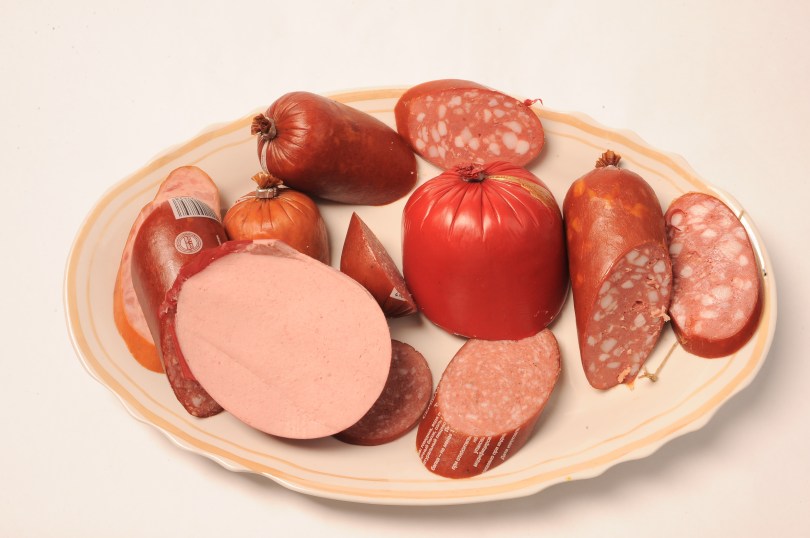
  • Bologna” – I was really stretching when I wrote this post (just this past Friday), but, well, I love bologna.  In our current age of hyper-politicization, even the sandwich meat we consume says something about socio-economic status and our outlook on life.  Bologna is the humble mystery meat of the workingman, and I cherish its delicious, cost-effective flavor.

That’s it!  I’m looking forward to stuffing my face with gleeful abandon over the next few days (you know, to celebrate the Birth of Jesus).  Then I’ve got to reverse course; my jeans are ever-snugger, and my double-chin has slowly made a comeback.  Yikes!

Happy Eating—and Merry Christmas!

—TPP

Other Lazy Sunday Installments:

Bologna

The long national nightmare is over.  No, not the impeachment farce; it’s the end of the semester!  Grades are in the books, work is done, and teachers and students are heading out for two weeks of glorious Christmas Break.

It’s been an eventful week.  As the House was fulminating about Trump’s alleged “crimes,” I was playing a gig with our community jazz band.  I play second alto sax with the group, but I asked to sing a song on this concert.

It’s long been a dream of mine to sing with a full jazz swing band behind me, and that dream came true Wednesday evening.  I sang Andy Williams’s “It’s the Most Wonderful Time of the Year,” and was a nervous wreck (if you’ve seen the lyrics to that tune, you’ll understand why—what a mouthful!).  But I got through it admirably enough, even with a low-grade sinus infection.

The gig was during the dinner hour at a large church in town.  The first alto player indicated how hungry he was, and wondered if he could get a plate.  I told him (unhelpfully) that I’d eaten a bologna sandwich in my car before coming in (which sounds like a joke and/or the most mundane, pathetic detail in the world, but it was true).  All the old guys in the band—it’s a swing band, so there are a lot of them—expressed their enthusiasm for bologna sandwiches, and asked how it was prepared:  did I use mustard?  “Nope, Duke’s mayonnaise, with cheese.”  Murmurs of approval followed.

Read More »