

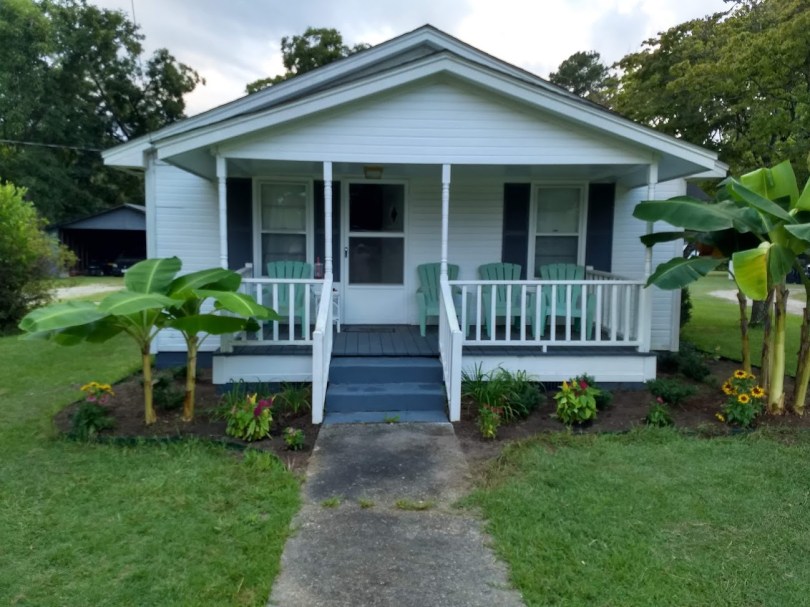
After a week of incredibly hot weather here in South Carolina, Saturday brought a blessed drop in both the temperature and humidity—a foretaste of autumn. My girlfriend and I spent Saturday weeding my disgracefully overgrown flower beds, which were mostly weeds strangling the life out of everything but the hardiest of perennials (and my robust banana trees). We then did some new plantings (with a few more to put in, as well as some mulch). The results were pretty good:
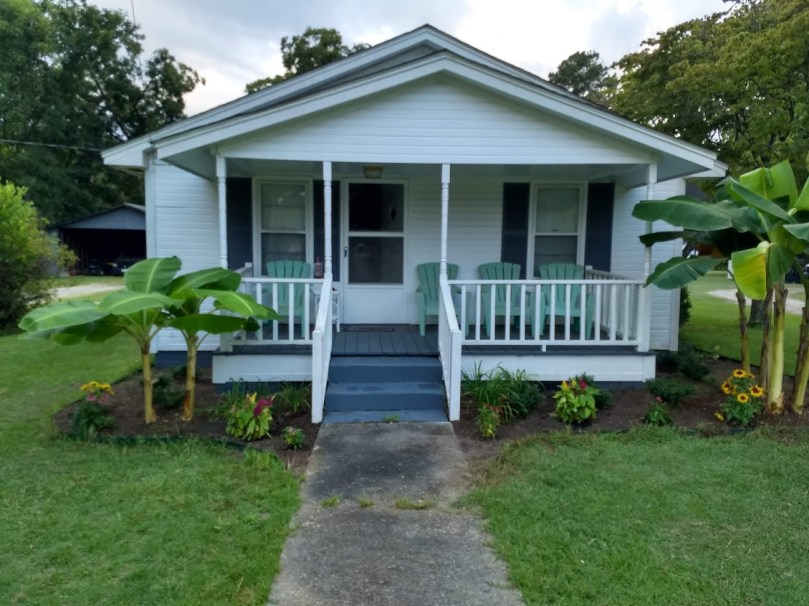
It felt good to get our hands (and clothes, and faces) dirty, digging through the dirt and nurturing plant life. My mother is an expert gardener, so I’ve picked up a few simple techniques from her; otherwise, we just bought flowers we liked and plopped ’em in with some in-ground bedding soil and a some water. Fingers crossed that everything survives.
My mind has been on the soil lately, and our connection to it. I have a fondness—perhaps a tad romantic—for country life. With current trends in the cities—rising home prices, rising property taxes, and rising urban violence—country life seems like an attractive, even inevitable, alternative.
As such, I thought I’d dedicate this week’s Lazy Sunday to some pieces about rural America:
- “TBT: Rustics Have Opinions, Too” – This piece dates way back 2009, when the blog was in its first iteration on Blogger, and I was still enthralled with “Randian-libertarian economic” philosophy. Such are the follies of youth. However, I did notice even then the deep disdain of limousine liberals for the rest of us here in “flyover country,” a disdain that, at least in part, accounts for the TEA Party movement and the Trumpian revolt of 2016.
- “High-Tech Agrarianism” – When The Virus hit, people were in a tizzy about having enough toilet paper and food. People gained a renewed interest in gardening as a source of sustenance, not just beauty. In this post, I mused about a possible return to small-scale homesteading, coupled with our advanced information technology. Essentially, I posited a world in which people still work, albeit increasingly from home and on more flexible hours, and can use their time to tend to small crops to supplement their diets.
- “SubscribeStar Saturday: The Future is Rural” – One of two recent posts on the lure of rural America and small town life, I argue here that life in the country offers many attractive incentives for working families. Not only are cities pushing people away with high prices and crime; the country is ready to take in telecommuters who earn good money but want a low cost of living in a safe, healthy environment.
- “SubscribeStar Saturday: Small Town Natalism” – The second post in my Saturday series about small town and rural living, this post is a preliminary sketch of a policy proposal: applying nationalistic, pro-birth natalist policies to the small town context. Instead of wasting money on seldom-used public facilities, local governments could offer a stipend to married families with children to encourage increased birth rates. That would grow towns organically and attract new residents, thereby broadening the tax bases in often distressed rural areas.
That’s it for this week. The garden is calling to me. Time to put down some mulch!
—TPP
Other Lazy Sunday Installments:
- Lazy Sunday – APR Pieces
- Lazy Sunday II – Lincoln Posts
- Lazy Sunday III – Historical Moments
- Lazy Sunday IV – Christianity
- Lazy Sunday V – Progressivism, Part I
- Lazy Sunday VI – Progressivism, Part II
- Lazy Sunday VII – Deep State
- Lazy Sunday VIII – Conservatism
- Lazy Sunday IX – Economics, Part I
- Lazy Sunday X – Economics, Part II
- Lazy Sunday XI – Walls
- Lazy Sunday XII – Space
- Lazy Sunday XIII – Immigration
- Lazy Sunday XIV – Gay Stuff
- Lazy Sunday XV – Work
- Lazy Sunday XVI – #MAGAWeek2018
- Lazy Sunday XVII – #MAGAWeek2019
- Lazy Sunday XVIII – SubscribeStar Posts
- Lazy Sunday XIX – Music
- Lazy Sunday XX – The Laziest Sunday
- Lazy Sunday XXI – Travel
- Lazy Sunday XXII – Reading
- Lazy Sunday XXIII – Richard Weaver
- Lazy Sunday XXIV – Education
- Lazy Sunday XXV – Techno-Weirdos
- Lazy Sunday XXVI – Small Town Living
- Lazy Sunday XXVII – Bric-a-Brac
- Lazy Sunday XXVIII – World History
- Lazy Sunday XXIX – The New Criterion
- Lazy Sunday XXX – Trump, Part I
- Lazy Sunday XXXI – Trump, Part II
- Lazy Sunday XXXII – Festivals
- Lazy Sunday XXXIII – Virtue Signalling
- Lazy Sunday XXXIV – The Desperate Search for Meaning Series
- Lazy Sunday XXXV – Corporate Grind
- Lazy Sunday XXXVI – Best of the Reblogs, Part I
- Lazy Sunday XXXVII – Best of the Reblogs, Part II
- Lazy Sunday XXXVIII – Best of the Reblogs, Part III
- Lazy Sunday XXXIX – A Very Dokken Christmas Series
- Lazy Sunday XL – Christmas Carols
- Lazy Sunday XLI – Food
- Lazy Sunday XLII – 2019’s Top Five Posts
- Lazy Sunday XLIII – Music, Part II: More Music
- Lazy Sunday XLIV – SubscribeStar Saturday Posts, Part II: The Search for More Money
- Lazy Sunday XLV – Techno-Weirdos II
- Lazy Sunday XLVI – Man Time
- Lazy Sunday XLVII – Winning
- Lazy Sunday XLVIII – Culture
- Lazy Sunday XLIX – Family
- Lazy Sunday L – The Best of Lazy Sunday
- Lazy Sunday LI – Just for Fun
- Lazy Sunday LII – Democratic Candidates, Part I
- Lazy Sunday LIII – Democratic Candidates, Part II
- Lazy Sunday LIV – Coronavirus
- Lazy Sunday LV – Animals
- Lazy Sunday LVI – Movies
- Lazy Sunday LVII – Christianity, Part II
- Lazy Sunday LVIII – Spring Break Short Story Recommendations Recap
- Lazy Sunday LIX – The God Pill Series
- Lazy Sunday LX – Music, Part II: Gigging
- Lazy Sunday LXI – The Tuck
- Lazy Sunday LXII – The South
- Lazy Sunday LXIII – Holidays
- Lazy Sunday LXIV – Grab Bag
- Lazy Sunday LXV – Rioting
- Lazy Sunday LXVI – Video Games
- Lazy Sunday LXVII – Phone it in Fridays, Part I
- Lazy Sunday LXVIII – Phone it in Fridays, Part II
- Lazy Sunday LXIX – Phone it in Fridays, Part III
- Lazy Sunday LXX – Phone it in Friday, Part IV
- Lazy Sunday LXXI – Road Trips
- Lazy Sunday LXXII – Forgotten Posts, Volume I
- Lazy Sunday LXXIII – Forgotten Posts, Volume II
- Lazy Sunday LXXIX – Forgotten Posts, Volume III
- Lazy Sunday LXXX – Forgotten Posts, Volume IV
- Lazy Sunday LXXXI – Forgotten Posts, Volume V

 The Portly Politico