Ratcheting up Towards Civil War

I’ve been catching up on photog’s excellent blog Orion’s Cold Fire, and boy did I miss a doozy.  Good ol’ photog regularly presents his pick for American Greatness “Post of the Day,” and on August 7, he wrote about a sobering Angelo Codevilla piece, “Igniting Civil War.”

Meanwhile, Southern history think-tank The Abbeville Institute posted an essay Monday asking “Is Political Separation in Our Future?”  These pieces suggest that something cataclysmic is looming for the United States.  Are they right to be concerned?

Read More »

Ideas Have Consequences – Introduction

Tomorrow is the last day of my History of Conservative Thought class for the summer term.  It was a fun course to run, though if I offer it in the future, I’m hoping to firm it up and make it a bit more organized, with some lecture slides to go along with the document readings.

To end the course, students are reading the “Introduction” to Richard Weaver’s Ideas Have Consequences (1948), one of my favorite books of all time.  I reread the introduction before the start of every school year, especially if I’m teaching Philosophy, as it helps remind me why knowledge and learning are important.

They’re writing short papers about the “Introduction,” which we’ll discuss in class tomorrow.  To aid them—and, hopefully, to convince you to read Ideas Have Consequences yourself—I’m briefly summarizing Weaver’s ideas in this post.

Weaver starts his book declaring that it “is another book about the dissolution of the West.”  He argues that due to the “widely prevailing Whig theory of history,” modern man has come to believe that history is always proceeding in an upward direction—that is, that things are always getting better.

Weaver disagrees, of course, arguing that “modern man has become a moral idiot.”  He laments that, not only are people able to agree on the facts of their situation, they are utterly incapable of recognizing their own fallen state.  Despite that moral idiocy, man “has been not only his own priest but his own professor and ethics, and the consequence is an anarchy which threatens even that minimum consensus of value necessary to the political state.”  Put another way, people have decided subjectively that they know right and wrong, independent of any transcendent moral order or God, and the results are personal and political chaos!

Weaver goes on to recount the horrors modernity and self-deification have wrought:  massive wars, ruined cities, lost lives, and a general, nagging sense of powerlessness.  Weaver references specifically the destruction of the Second World War (though not by name), suggesting that the optimistic Whiggish interpretation of history is, on its face, verifiably false.

So, who is to blame for this general malaise in Western civilization?  According to Weaver, the “best representative of change… over man’s conception of reality” is William of Occam.  Most readers will know Occam from the concept of Occam’s Razor, the notion that the simplest explanation is usually the correct one.

Weaver, however, focuses on Occam’s doctrine of nominalism, a doctrine that “denise that universals have a real existence.”  In other words, there are no true universal, transcendent ideals—justice, mercy, grace, virtue, etc.—and no metaphysical Truth or higher power.  Further, nominalism “banish[ed] the reality which is perceived by the intellect… to posit as reality that which is perceived by the senses,” setting man “on the road to modern empiricism,” the idea that only that which we experience is “true.”

Weaver proceeds to take us down that road:  nature comes to be seen as fully intelligible, merely a set of “rational mechanism[s]” to be uncovered and understood; man comes to believe that does suffer from original sin, but is rather a perfectible being; any flaws from which humans suffer are necessarily due to their environment, not their own choices.

Most significantly, belief in God and religion—a higher Form of Truth that binds together the cosmos—become reduced to “‘humanized’ religion,” like deism (the belief in a Creator that set the universe into motion, but who never intervenes with His Creation).  These reduced religions are little more than venerable institutions with the veneer of respectability, but which succumb to the materialism of the humanist.

Soon humans lose all free will, becoming the materialist machines of nature like any other animal.  Institutions crumble, which man “rationalizes with talk of emancipation,” believing himself to be free from the restrains of the benighted past.

An interesting point that Weaver makes is that, in order to feel some semblance of the old virtues—ideals that men sense they should uphold, but which they cannot understand or articulate—they fight wars with “increased frequency,” invoking ideas like justice, honor, and valor in service to materialist ends.

Of course, there are those who champion modernity.  These “apostles of modernism,” as Weaver calls them, “usually begin their retort [to Weaver’s position] with catalogues of modern achievement, not realizing that here they bear witness to their immersion in particulars,” as opposed to transcendentals.  That is the source of my own critique of capitalism, the best socioeconomic system that materialist modernism can offer.  Weaver notes that many great civilizations have shown with effervescent splendor in their dying gasps of relevance, so merely having beautiful, ingenious stuff doesn’t mean a civilization isn’t dying.

Perhaps the best passage from Weaver’s “Introduction” is what I call “Weaver’s drunk,” located on page 15 of the 1984 paperback edition linked here.  Weaver argues that the material wealth and comfort of modernity holds within it its own destruction—the more comfort we have, the less willing we are to do the work necessary to maintain it.  Weaver compares this situation to that of the drunk who is so addicted to his drink, he is incapable of doing the work necessary to sustain his addiction.  He may succeed for a time, but the more besotted he becomes, the less capable he is.

There are so many nuggets of wisdom and Truth in just the “Introduction” to this work, and I haven’t touched on all of them.  I encourage everyone to read through the full “Introduction”—and the entire book—as soon as possible.  Reading it now, some seventy-one years after its original publication, is sobering due to its prophetic nature.  The situation Weaver described has not improved.  It is imperative, now more than ever, that we consume Weaver’s work and begin pushing for a revival of religious belief and a traditional view of the cosmos, and our place in it.


Rudyard Kipling’s “The Mother Hive”

To start yesterday’s History of Conservative Thought class, I had students skim through Rudyard Kipling’s 1908 short story “The Mother Hive.”  I stumbled upon the reading in our class text, Russell Kirk’s The Portable Conservative Reader.

It is a grim little fable that warns about the perils of progressivism infiltrating a proud but weakened nation.  In the story, a deadly wax-moth sneaks into a large but bedraggled beehive during a moment of confusion.  She quickly steals away to the cell of the youngest bees, who have yet to take their first flight.  There, she fills their impressionable heads with gentle words and promises of a glorious future, all while covertly laying her eggs.

One young bee, Melissa, who has just returned from her first flight, is suspicious of the beautiful stranger’s soothing words, but the wax-moth plays the victim and insists that she’s only spreading her “principles,” not the eggs of her hungry future children.

Read More »

You Can’t Cuck the Tuck: Immigration

Consistent with my own posts on immigration, and particularly Somalian immigration, Tucker Carlson nails it (see the video in the Tweet below):

Read More »

History of Conservative Thought Update: Edmund Burke

A bit of a delayed post today, due to a busier-than-usual Monday, and the attendant exhaustion that came with it. The third meeting of my new History of Conservative Thought class just wrapped up, and while I should be painting right now, I wanted to give a quite update.

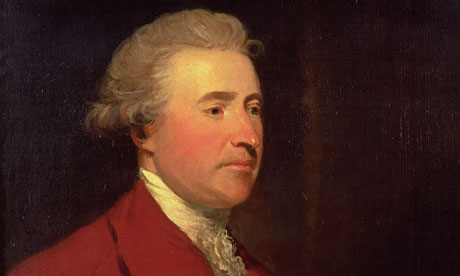
Last week, we began diving into the grandfather of modern conservatism, Edmund Burke. Burke prophetically saw the outcome of the French Revolution before it turned sour, writing his legendary Reflections on the Revolution in France in 1789 as the upheaval began. Burke argued that the French Revolution ended the greatness of European civilization, a Europe that governed, in various ways, its respective realms with a light hand, and a sense of “moral imagination.”

To quote Burke reflecting on the Queen of France:

“I thought ten thousand swords must have leaped from their scabbards to avenge even a look that threatened her with insult. But the age of chivalry is gone. That of sophisters, economists, and calculators, has succeeded; and the glory of Europe is extinguished forever. Never, never more, shall we behold that generous loyalty to rank and sex, that proud submission, that dignified obedience, that subordination of the heart, which kept alive, even in servitude itself, the spirit of an exalted freedom. The unbought grace of life, the cheap defence of nations, the nurse of manly sentiment and heroick enterprise is gone! It is gone, that sensibility of principle, that chastity of honour, which felt a stain like a wound, which inspired courage whilst it mitigated ferocity, which ennobled whatever it touched, and under which vice itself lost half its evil, by losing all its grossness.”

What a powerful excerpt! The “sophisters, economists, and calculators,” indeed, reign in the West. What Burke was driving at here was that the rationalistic, abstract bureaucrats who would abandon tradition in their quest for a perfect society would sacrifice everything that made their country great, and life worth living.

Burke was also arguing that there is more to obedience to a government or king than the mere threat of power. People are invested in their country and society—and willing to submit to authority—because of organic culture from which it grows. Uprooting the great tree of tradition in favor of abstract foundations merely destroys the tree, and plants its seedlings in shallow ruts of stone. What grows will be anemic and pitiful by comparison.

Volumes could and have been written about Burke, but I’ll leave it here for now. Next week we’re getting into the development of Northern and Southern conservatism, which should make for some pre-Independence Day fun.

What is Conservatism?

Today I’m launching a summer class at my little private school here in South Carolina.  The course is called History of Conservative Thought, and it’s a course idea I’ve been kicking around for awhile.  Since the enrollment is very small, this first run is going to be more of an “independent study,” with a focus on analyzing and writing about some key essays and books in the conservative tradition.  I’ll also be posting some updates about the course to this blog, and I’ll write some explanatory posts about the material for the students and regular readers to consult.  This post will be one of those.

Course Readings:

Most of the readings will be digitized or available online at various conservative websites, but if you’re interested in following along with the course, I recommend picking up two books:

1.) Richard Weaver‘s Ideas Have Consequences ($6.29):  this will be our “capstone” reading for the summer.
2.) The Portable Conservative Reader (edited by Russell Kirk):  we’ll do some readings from this collection, including Kirk’s “Introduction” for the first week.

Course Scope:

I’ll be building out the course week-to-week, but the ultimate goal is to end with 2016 election, when we’ll talk about the break down of the postwar neoliberal consensus, the rise of populism and nationalism in the West, and the emergence of the Dissident Right.

After the introductory week, we’ll dive into Edmund Burke, then consider the antebellum debates about States’ rights.  I haven’t quite worked out the murky bit during the Gilded Age, but we’ll look at the rise of Progressivism in the early twentieth century, then through the conservative decline during the Great Depression and the Second World War.

After that, it’s on to Buckley conservatism and fusionism, as well as the challenges of the Cold War and international communism.  Paleoconservatives like Pat Buchanan and (if I’m feeling edgy) Sam Francis will get shout-outs as well.

Week 1:  What is Conservatism?

That’s the basic outline.  For the first day, we’re going to look at the question in the title:  what is conservatism?  What makes one a conservative?  Feel free to comment below on your thoughts.

After we see what students think conservatism is, we’ll begin reading through Russell Kirk’s “Introduction” in The Portable Conservative Reader.  It’s an excellent overview of the question posed.  The first section of the lengthy “Introduction” is entitled “Succinct Description,” and it starts with the question, “What is conservatism?”

Not being one to reinvent what others have done better—surely that is part of being a conservative (see Principle below)—I wanted to unpack his six major points.  Kirk argues that though conservatism “is no ideology,” and that it varies depending on time and country, it

“may be apprehended reasonably well by attention to what leading writers and politicians, generally called conservative, have said and done…. to put the matter another way, [conservatism] amounts to the consensus of the leading conservative thinkers and actors over the past two centuries.”

Kirk condenses that grand tradition into six “first principles,” derived largely from British and American conservatives.  To wit:

1.) Belief in a Transcendent Moral Order – conservatives believe there is higher authority or metaphysical order that human societies should build upon.  As Kirk puts it, a “divine tactic, however dimly descried, is at work in human society.”  There is a need for “enduring moral authority.”  The Declaration of Independence, for example, draws on the concept of “natural law” to complain about abuses of God-given rights.  The implication is that a good and just society will respect God’s natural law.

2.) The Principle of Social Continuity – Kirk puts this best:  “Order and justice and freedom,” conservatives believe, “are the artificial products of a long and painful social experience, the results of centuries of trial and reflection and sacrifice.”

As such, the way things are is the product of long, hard-won experience, and changes to that social order should be gradual, lest those changes unleash even greater evils than the ones currently present.  Conservatives abhor sudden upheaval; to quote Kirk again:  “Revolution slices through the arteries of a culture, a cure that kills.”

3.) The Principle of Prescription, or the “wisdom of our ancestors” – building on the previous principle, “prescription” is the belief that there is established wisdom from our ancestors, and that the antiquity of an idea is a merit, not a detraction.  Old, tried-and-trued methods are, generally, preferable to newfangled conceptions of how humans should organize themselves.

As Kirk writes, “Conservatives argue that we are unlikely, we moderns, to make any brave new discoveries in morals or politics or taste.  It is perilous to weigh every passing issue on the basis of private judgment and private rationality.”  In other words, there is great wisdom in traditions, and as individuals it is difficult, in our limited, personal experience, to comprehend the whole.

It’s like G. K. Chesterton’s fence:  you don’t pull down the fence until you know why it is built.  What might seem to be an inconvenience, a structure no longer useful, may very well serve some vital purpose that you only dimly understand, if at all.

4.) The Principle of Prudence – in line with Principles and , the conservative believes that politicians or leaders should pursue any reforms only after great consideration and debate, and not out of “temporary advantage or popularity.”  Long-term consequences should be carefully considered, and rash, dramatic changes are likely to be more disruptive than the present ill facing a society.  As Kirk writes, “The march of providence is slow; it is the devil who always hurries.”

5.) The Principle of Variety – the “variety” that Kirk discusses here is not the uncritical mantra of “Diversity is Our Strength.”  Instead, it is the conservative’s love for intricate variety within his own social institutions and order.

Rather than accepting the “narrowing uniformity and deadening egalitarianism of radical systems,” conservatives recognize that some stratification in a society is inevitable.  Material and social inequality will always exist—indeed, they must exist—but in a healthy, ordered society, each of these divisions serves its purpose and has meaning.  The simple craftsman in his workshop, while materially less well-off than the local merchant, enjoys a fulfilling place in an ordered society, one that is honorable and satisfying.  Both the merchant and the craftsmen enjoy the fruits of their labor, as private property is essential to maintaining this order:  “without private property, liberty is reduced and culture is impoverished,” per Kirk.

This principle is one of the more difficult to wrap our minds around, as the “variety” here is quite different than what elites in our present age desire.  Essentially, it is a rejection of total social and material equality, and a celebration of the nuances—the nooks and crannies—of a healthy social order.  “Society,” Kirk argues, “longs for honest and able leadership; and if natural and institutional differences among people are destroyed, presently some tyrant or host of squalid oligarchs will create new forms of inequality.”

Put another way:  make everyone equal, and you’ll soon end up with another, likely worse, form of inequality.

6.) The Principle of the Imperfectibility of Human Nature – unlike progressives, who believe that “human nature” is mutable—if we just get the formula right, everyone will be perfect!—conservatives (wisely) reject this notion.  Hard experience demonstrates that human nature “suffers irremediably from certain faults…. Man being imperfect, no perfect social order ever can be created.”  An Utopian society, assuming such a thing were possible, would quickly devolve into rebellion, or “expire of boredom,” because human nature is inherently restless and rebellious.

Instead, conservatives believe that the best one can hope for is “a tolerably ordered, just and free society, in which some evils, maladjustments, and suffering continue to lurk.”  Prudent trimming of the organic oak tree of society can make gradual improvements, but the tree will never achieve Platonic perfection (to quote Guns ‘n’ Roses:  “Nothing lasts forever, even cold November rain”).

Conclusion

Kirk stresses in the rest of the introduction that not all conservatives accept or conform to all of the six principles again; indeed, most conservatives aren’t even aware of these principles, or may only dimly perceive them.

That’s instructive:  a large part of what makes one conservative is lived experience.  “Conservatism” also varies depending on time and place:  the social order that, say, Hungary seeks to preserve is, of necessity, different than that of the United States.

Conservatism, too, is often a reaction to encroaching radicalism.  Thus, Kirk writes of the “shop-and-till” conservatism of Britain and France in the nineteenth century:  small farmers and shopkeepers who feared the loss of their property to abstract rationalist philosophers and coffeeshop radicals, dreaming up airy political systems in their heads, and utterly detached from reality.

If that sounds like the “Silent Majority” of President Richard Nixon’s 1968 and 1972 elections—or of President Trump’s 2016 victory—it’s no coincidence.  The great mass of the voting public is, debatably, quietly, unconsciously conservative, at least when it comes to their own family, land, and local institutions.  Those slumbering hordes only awaken, though, when they perceive their little platoon is under siege from greater forces.  When they speak, they roar.

But that’s a topic for another time.  What do you think conservatism is? Leave your comments below.

–TPP

Carnival Gets Even Lighter in the Loafers

There’s something inherently flamboyant about Latin cultures.  Maybe it’s all the hip-thrusting dances and melodramatic machismo, coupled with the passionate temperaments of the people.

Whatever the reason, Brazil just got even gayer.  Brazil’s Supreme Court ruled 11-6 last week in favor of criminalizing homophobia and transphobia.  Wrongthink regarding same-sex marriage and other issues will be treated as equivalent to racism.

Violent crimes committed against homosexuals are a problem in Brazil, so rather than prosecute those assaults and murders as such, Brazil will now treat them as “hate crimes.”  Apparently, simply enforcing the law isn’t good enough for gays, so to be treated like everyone else, they want special treatment.

A homosexual rights group in Brazil argues that their kind are subject to violent attacks, citing the deaths of 141 homosexuals in the tropical nation this year.  That figure is, of course, tragic, but consider the high-risk lifestyle associated with being gay, lesbian, or transgender.  We don’t often discuss these risks in polite company, but the gay lifestyle invites dealings with some shady characters—older gays grooming younger men for the lifestyle, dangerous “bed-hopping” activities, etc.

Part of this vote is, surely, a reaction to Right-wing President Jair Bolsonaro, a self-described homophobe.  I would never endorse treating homosexuals poorly—or, God forbid, attacking them—because of their sexuality, but it takes a certain amount of courage and bravado to straight-up call yourself a homophobe in 2019.

But I digress:  President Bolsonaro, the “Trump of the Tropics,” strenuously opposes gay marriage and the undermining of traditional Brazilian values.  We might disagree with his tactics here in the United States, but, to his credit, he’s seen what happens when homosexuality becomes normalized.

Consider:  here in the United States, deep-blue States were voting against legalizing same-sex marriage just fifteen years ago.  Now we have trannies reading pro-LGBTQ2+ books to pre-school kids in public libraries.  You can’t blame Bolsonaro for wanting to block his country from sliding down that same slippery slope.

The other part of this ruling must surely be the creeping secular-progressivism that seems to afflict ruling elites of many Western and Western-ish nations.  No good thing can go unsullied for long from the globalist tentacles of Soros, Inc.

Finally, it does seem that Bolsonaro’s popularity is fading.  But like Trump, he retains a die-hard group of core supporters, and it could be that the overwhelmingly enthusiasm of his historic campaign is merely dwindling as the difficult task of governance continues.

All people deserve to be treated with dignity and respect.  That said, the aggressive attempts to normalize homosexual behavior and other alternative “lifestyles” are destructive to social stability and civilizational survival.  We shouldn’t be celebrating our own decadent embrace of decline.

Lazy Sunday XII: Space

This Memorial Day Weekend, consider supporting this blog on SubscribeStar.

Long-time readers will know that I have a love of and fascination with space.  One of the first calls I ever made to a talk-radio show was back in 2009 to the now-defunct Keven Cohen Show.  The occasion was the fortieth anniversary of the moon landing, and the question was, in the midst of the Great Recession, should the government invest in space exploration and going to the moon (and beyond)?  In my clumsy call, I argued that, yes, it should.

As I noted earlier this week, I lack a strong technical foundation in these matters.  I assume that any practice problems of exploration, colonization, and exploitation of space are, ultimately, technical in nature, and will eventually get figured out.  My interest is more philosophical and political in nature:  what are the possibilities of space?  What benefits could expansion into space offer?

But, really, I’m just a childlike nerd who wants to walk on the moon.  If I’m being totally honest, that’s my primary motivation:  I want to visit the moon.  I also relish the idea of humans partaking in bold space adventures.  Is it any wonder one of my favorite movies of all time is Guardians of the Galaxy?

And I’m not alone.  According to (yet another) Rasmussen poll, 43% of American voters would take a trip to the moon and back given the chance.  That total includes 56% of men, but just 31% of women, so I suppose all those single moms posting on Facebook about loving their children “to the moon and back” is a sentimental expression, not a concrete pledge.

Here’s hoping that the eggheads at NASA and in the private sector take note of all the Americans eager to engage in some lunar tourism.  Market forces are far more likely to incentivize galactic expansion than government programs, so maybe offering affordable round-trip flights to the moon could one day turn a profit.  Who knows?

What I do know is that this Sunday I’m happy to share my various posts on space.  I hope you “love them to the moon and back”:

  • America Should Expand into Space” – this post was the topic of Thursday’s “TBT” feature.  As such, I’ll refrain from lengthy pontificating about it.  Essentially, it looks at the geopolitical reasons for expansion into space.  Short version:  don’t let the Chinese build a death laser on the moon!
  • Breaking: President Trump Creates Space Force” & “Why the Hate for Space Force?” – back in June 2019, President Trump announced the creation of “Space Force” as a separate branch of the armed services.  It’s a bold, visionary idea—and a damn good one.  As “America Should Expand into Space” suggests, space is the next frontier, not just for settlement, but for war.

    I also lament in the latter of these twin pieces that Americans no longer look boldly to the future in space as a new frontier, but instead remain firmly earthbound with various toys and gadgets.

  • To the Moon!” – this brief essay explores the metaphysical and cultural benefits of lunar colonization.  In it, I summarize the ideas of an oddball writer, James D. Heiser.  Heiser is a bishop in the Evangelical Lutheran Diocese of North America and a founding member of the Mars Society.

    He wrote a book,  Civilization and the New Frontier:  Reflections on Virtue and the Settlement of a New World, about the colonization of Mars.  In Civilization and the New Frontier, Heiser argues that the strenuous nature of such an endeavor would require and cultivate virtue, thereby reinvigorating our civilization.

    It’s an intriguing idea, and one that rings true:  anything worth doing is (usually) difficult.  The sacrifice that such a mission would require is self-evident, and would require men and women of great virtue and courage to achieve.

  • To the Moon!, Part II: Back to the Moon” – this post discussed NASA’s acceleration of its timetable for another manned mission to the moon.  The goal is to return by 2024, rather than 2028.  It would be the first manned mission to the moon since 1972—a sobering, depressing duration.  When I was a kid, we were told we’d see a manned mission to Mars by the year 2000.  So much for that.

As the preamble to this list demonstrated, there is hunger for holidays on the moon.  I, too, want to ride the mighty moon worm!  Sure, there are huge technical problems to overcome—but those can be overcome.  Let’s worry less about queer studies outreach Islamic countries.  Our destiny is among the stars!

Other Lazy Sunday Installments:

Lazy Sunday XI: Walls

Today’s post marks twenty weeks of consecutive daily posts—140 days in a row.  I’ve written so many posts, I’m beginning to forget that I ever wrote some of them.  If you’d to support my daily scribbling, consider subscribing to my page on SubscribeStar.

Walls work.  We understand this fact on a visceral level—humans have been building walls around their cities and kingdoms since the dawn of civilization, and continue building them today.  The Israelites rebuilt the Jerusalem’s walls as a form of national and spiritual renewal.

The only legitimate question regarding a border wall along the US-Mexican border is technical in nature:  how do you build an effective barrier along thousands of miles of varied terrain?  Technical questions are difficult to solve, but that doesn’t invalidate the effectiveness of a wall once it’s completed.  Further, even tricky engineering problems are solvable.

Indeed, many of the questions that plague our nation are not difficult to answer—it’s just that the answers are unpleasant, or politically inconvenient.  When a Democrat argues that the construction of a border wall is not feasible from engineering standpoint, it’s a smokescreen.  The progressives are only concerned about expanding their voting base on the cheap, while supplying their techno-elite masters with cheap, quasi-slave labor.

With that in mind, this week’s Lazy Sunday looks back at my posts on all things wall-related.  It’s a sign of our times that anyone has had to write even this much about walls:

  • Walls Work” – the title says it all.  This piece looked at a piece from American Thinker that pointed out dramatically how effective border barriers are.  When Israel constructed a wall along its border with Egypt, “it cut illegal immigration to zero.”  I emphasize that part of the quotation in the original blog post just to make sure no one misses it.  In cast the Israeli example isn’t convincing enough, consider that the…
  • Hungarian Border Wall is 100% Effective” – yep, Hungary built a fence along its border with Serbia in the second half of 2015.  The number of immigrants entering Hungary fell from 138,396 to fifteen.  Look at those figures again, numerically and side-by-side:  138,396 -> 15.  My knowledge of scientific notation has eroded too much to write out the exact percentage of that drop, but let’s call it 100% – 15.

    Granted, Israel and Hungary both enjoy relatively short borders compared to the southern border of the United States.  But the results speak for themselves.  The billions saved in medicating, educating, housing, and detaining illegal immigrants would be worth the one-time, up-front investment.  Aren’t progressives always lecturing us about government “investments”?  Further, the upward force on wages—no longer flooded with cheap labor from abroad—would create an additional return on this crucial national security investment.

  • Buchanan on the National Emergency” – in order to fund construction of the border wall, President Trump controversially declared a national emergency in February, which then allowed him to shift around existing national security funds to build a section of the wall.  Conservatives were, understandably, dubious and concerned about this executive action, which they feared constituted executive overreach in the vein of President Obama’s “phone and a pen” rule by fiat.

    Pat Buchanan—ever the lucid, original thinker—takes Congress, not President Trump, to task.  As I point out in this piece, Buchanan argues that the president was merely using authority Congress granted him in the National Emergencies Act of 1976.

    And as I argued in the first essay on this list, President Trump has a constitutional duty to protect national security under his Article II powers.

  • Nehemiah and National Renewal” – this essay was the first of a two-part analysis of the Book of Nehemiah, and has been featured on Lazy Sunday lists before.  In this essay, I argue that, just as rebuilding Jerusalem’s walls was an act of national renewal for the Israelites, so building a border wall would be a firm sign of America’s renewed commitment to its values and sovereignty.  Of all the essays on this list, it’s the one I most recommend you read.
  • Walls Work, Part II: Sailer on Walls” – this post covered a book review by Steve Sailer, a recent feature of my “Dissident Write II” list of great writers.  Sailer reviewed Walls: A History of Civilization in Blood and Brick, by David Frye, which makes a compelling case that walls protect civilization, allow for civilization, and create stable societies.

    America enjoyed the luxury of two moats—the Atlantic and Pacific Oceans—for 150 years, before naval and aerial technology took those natural barriers away.  Now, we face a sinister, because subtle, existential threat in the form of mass illegal immigration.  A border barrier is one key step in stemming the flow—and of preserving our civilization.

    I’m hoping to pick up Frye’s book soon, and plan to write a detailed review of my own.  That review will likely be a SubscribeStar exclusive.

Enjoy your Sunday, and remember that “good fences make good neighbors.”

–TPP

Other Lazy Sunday Installments:

The Decline of Religion in America

A frequent topic of this blog is religion, specifically Christianity, and its influence on American society and Western Civilization.  Many of the problems we face as a nation are the result not only of bad government policy or dangerous ideologies, but are metaphysical and spiritual in nature.  As Paul writes in Ephesians 6:12, “For we wrestle not against flesh and blood, but against principalities, against powers, against the rulers of the darkness of this world, against spiritual wickedness in high places.” (KJV)

As such, two pieces caught my eye this week, both dealing with the decline of religion in the West generally and the United States specifically.  One is from Dissident Right blogger Z Man, “Religion Versus Capitalism“; the other is a syndicated column by Daniel Davis, “America is Still Highly Religious, So Why Do We Keep Liberalizing?”  Both offer different answers to the question posed by the latter question.

For Davis, the problem is that, while Americans are more religious than our European counterparts, and that we say we want a greater role for religion in society, our theology is bad—infected (my term) by the social justice and Cultural Marxist platitudes of our age.

Americans embrace “feel-good Christianity,” what I call the “Buddy Christ” version of our faith:  Jesus was just a cool hippie who wanted everybody to love each other, man.  In this distorted version of the Gospel, sin isn’t a grave threat, but simply “missing the mark”—you’ll do better next time, kiddo.  Keep practicing sinning and eventually you’ll hit that mark!

(I’ve actually heard this argument from some Evangelical preachers, mostly of the hip, non-denominational type.  They get so caught up in the root of the word “sin” as “missing the mark” in the context of target practice, they inadvertently give blanket license to sin, as grace is abundant, so God will forgive you—an early heresy that the Apostle Paul addressed directly.  “Missing the mark” trivializes the gravity of sin, making it sound like “oops! My bad!”  If the “mark” is righteousness, then missing the mark is pretty serious.)

Davis points out the pitfalls of this “feel-good Christianity,” and our propensity to make God fit our worldview, instead of us trying to accept and embrace His:

What we have in America is a radical separation of God from “reality”—the real world that we claim to live in. It’s not that we reject “God” per se, but we reject a God who comes with a certified worldview package—a God who orders the universe, sets moral norms, defines our being, and binds our consciences to a moral code in this world—today.

We’ve kept God, but jettisoned the traditional package.

The problem is, this is almost the same as rejecting God completely. If believing in God has no impact on the way we view realities in this world—whether they be gender, marriage, or who counts as a person worthy of dignity and respect—then what God are we even worshipping?

Could it be that the atheists are right when they accuse us of worshipping a God of our own making?

Davis also links to a website, The State of Theology, which highlights the disconnect between professions of faith and what Christians—including Evangelicals!—actually believe.  Part of the problem is “feel-good” theology, but a big part is simple biblical ignorance.  Americans pay lip service, according to The State of Theology, to core precepts of Christianity, but don’t seem to understand them at a deeper level or apply them to their daily lives.

Z Man—who I believe is Catholic and Catholic-educated, though he stated in one podcast that he hasn’t been to church in years—approaches the problem from a different angle.  He argues, essentially, that the proliferation of capitalist materialism is at odds, fundamentally, with Christianity and other religions, and the West has embraced materialism as its true faith.

He also links the decline of religion to a decline in fertility rates, and notes that as nations have become more integrated in the global economy, they’ve become less religious and less fertile.  There are myriad possible explanations for declining birthrates in developed societies, but Z Man’s theory is intriguing.  As material wealth increases and the profit motive becomes the “highest good,” religiosity declines.  With the decline of traditional religious values comes less of an emphasis on family formation.

For Z Man, the problem is that we worship materialism—he argues that libertarianism is the irrational, passionate “religion” of capitalistic materialism—in place of God.  To quote his piece at length:

In a system where the highest good is a profit, then all other considerations must be secondary. Lying, for example, is no longer strictly prohibited. The seller will no longer feel obligated to disclose everything to the buyer. The seller will exaggerate his claims about his product or service. Buyers, of course, will seek to lock in sellers into one way contracts based on information unknown the other seller. The marketplace, at its most basic level, is a game of liar’s poker, where all sides hope to fool the other.

Religion, in contrast, also assumes certain things about people, but seeks to mitigate and ameliorate them. Generally speaking, religion assumes the imperfection of man and sees that imperfection as the root cause of human suffering. While those imperfections cannot be eliminated, the negative effects can be reduced through moral codes, contemplation and the full understanding of one’s nature. Religions, outside of some extreme cults, are not about altering the nature of man, but rather the acceptance of it.

I would argue that capitalism does not necessarily lead to liars—how do you build business if you gain a reputation for dishonesty?—but capitalism definitely needs the traditionalism of orthodox religion to work for long.  In the absence of the moral framework that socially and religiously conservative values supply, capitalism can easily become an orgiastic free-for-all of mendacious exchanges and swindling.

Indeed, China’s autocratic capitalism is a prime example of a state using the mechanism of capitalism in a moral vacuum to aggrandize its own power.  Wags and particularists will argue that China’s system is not true capitalism, but rather a corporatist perversion, which is certainly accurate—but the United States has its share of cronyistic arrangements.  To be clear, there is a world of difference separating China’s increasingly totalitarian brand of corporatism and America’s more mundane system of well-heeled lobbyists, but the Chinese example clearly demonstrates what happens when you value pure materialism at the expense of everything else.

While I don’t completely accept Z Man’s analysis, I do think he makes a solid point.  Christians should never subvert true faith in Christ to the false god of capitalist materialism.  Indeed, such faith is merely the more benign face of a two-sided Marxist coin.

Both unbridled libertarianism and full-throated Communism are premised on a materialist worldview that discounts the metaphysical.  The former allows religion to exist as a largely private, subjective concern, so long as it doesn’t get too insistent about its truth claims.  The latter seeks to destroy any loyalty to anything other than the state—or the “Party,” or “Dear Leader,” etc.  The former is certainly preferable to the latter, but both ultimately will leave followers unfulfilled.

The Church—Orthodox, Catholic, High Protestant, Evangelical Protestant, etc.—needs to commit itself fully to foundational biblical Truth.  We should be reading and debating Augustus and Aquinas, not to mention the Gospels and Paul’s Epistles.  Preachers need to move beyond the mega-church formula of glossy advertising campaigns, Sunday morning rock concerts, and blandly inoffensive, pop-culture-laden sermons.

Instead, unabashedly proclaim the Gospel.  Denounce abortion from the pulpit.  Call out homosexuality.  Call out radical Islamism and progressivism as the existential threats they are to Western Civilization.  Deus Vult!