TBT: [Four] Years of Excellence

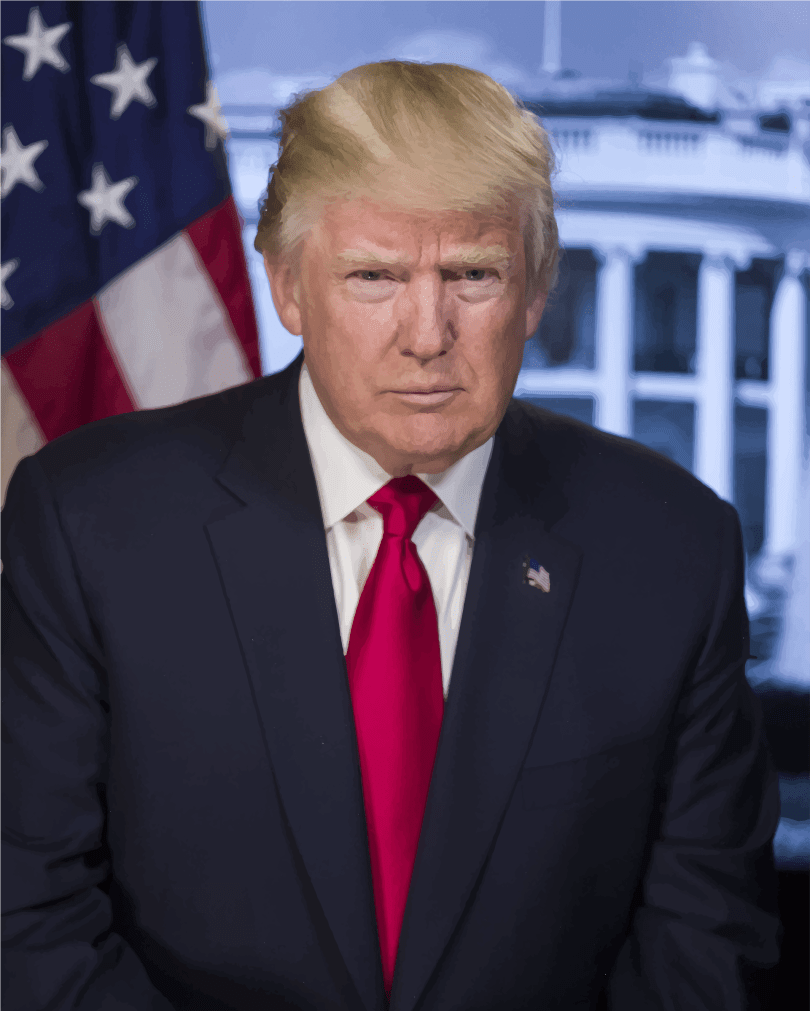
President Trump officially kicked off his 2020 reelection campaign earlier this week, and it’s been almost exactly one year since the post below.  I’ve been quite impressed with President Trump, who has governed far more conservatively than I and many other conservatives could have ever hoped.  While there is still much to be done on immigration—border crossings have accelerated due to misguided progressive policies that encourage child trafficking—and the wall seems to be more an abstraction than a concrete reality, Trump has slashed taxes, created jobs, and strengthened national security.

Trump has also stacked the federal courts with conservative-leaning judges and justices.  And that’s in the face of progressive aggression and Deep State coup attempts.

His record speaks for itself.  President Trump has taken the reins of the Republican Party and has done much to shore up the Republic.  Here’s looking to four more years—and to Keeping America Great!

Father’s Day—16 June 2018—marked three years since President Donald Trump’s now-legendary descent down the golden escalator at Trump Tower, following by his controversial but true-to-form announcement that he would be seeking the Republican Party’s nomination for President.

I was, initially, a Trump skeptic, and I voted for Texas Senator Ted Cruz in the South Carolina primaries the following February.  When Trump first announced, I wrote him off—as so many others—as a joke.  I appreciated his boldness on immigration, but I still thought the PC Police and the campus Social Justice Warriors were firmly in control of the culture, and that no one could speak hard truths.

I also remembered his brief flirtation with running in 2012, and thought this was just another episode in what I learned was a long history of Trump considering a presidential bid.  At the South Carolina Republican Party’s state convention earlier in 2015, I asked two young men working on Trump’s pre-campaign (this was before The Announcement) if he was reallyserious this time.  The two of them—they looked like the well-coifed dreamboat vampires from the Twilight franchise—both assured me that Trump was for real, and I left with some Trump stickers more skeptical than ever (note, too, that this was before the distinctive but simple red, white, and blue “Trump” lawn signs, and definitely before the ubiquitous “Make America Great Again” hats).

I even briefly—briefly!—considered not voting for Trump, thinking that he was not a “real” conservative.  I still don’t think he’s a conservative in the way, say, that a National Review columnist is (although, the way they’ve gotten so noodle-wristed lately, that’s a good thing; I’ve just about lost all respect for David French’s hand-wringing, and Kevin Williamson went off the deep-end), but rather—as Newt Gingrich would put it—an “anti-Leftist.”  That’s more than enough for me.

But my conversion to Trump came only belatedly.  I can still find a notebook of notes from church sermons in which I wrote, “Ted Cruz won the Wyoming primary.  Thank God!” in the margins.

Then something happened—something I predicted would happen on the old TPP site—and I couldn’t get enough of the guy.  It wasn’t a “road to Damascus” epiphany.  I started listening to his speeches.  I read up on his brilliant immigration plan (why haven’t we taxed remittances yet?).  I stopped taking him literally, and began taking him seriously.

And I noticed it happening in others all around me.  Friends who had once disdained the Republican Party were coming around on Trump.  Sure, it helped that Secretary Hillary Clinton was a sleazebag suffused with the filth of grasping careerism and political chicanery.  But more than being a vote against Hillary, my vote—and the vote of millions of other Americans—became a vote for Trump—and for reform.

Trump made politics interesting again, too, not just because he said outrageous stuff on live television (I attended his rally in Florence, South Carolina before the SC primaries, and I could feel his charisma from 200 feet away; it was like attending a rock concert).  Rather, Trump busted wide open the political orthodoxy that dominated both political parties at the expense of the American people.

Take trade, for example.  Since World War II, both Democrats and Republicans have unquestioningly supported free trade.  Along comes Trump, and suddenly we’re having serious debates again about whether or not some tariffs might be beneficial—that maybe it’s worth paying a little more for a stove or plastic knick-knacks if it means employing more Americans.

That’s not even to mention Trump’s legacy on immigration—probably the most pressing issue of our time, and one about which I will write at greater length another time.

Regardless, after over 500 days in office, the record speaks for itself:  lower taxes, fewer regulations, greater economic growthgreater security abroad.  At this point, the only reasons I can see why anyone would hate Trump are either a.) he’s disrupting their sweet government job and/or bennies; b.) they don’t like his rhetorical style, and can’t get past it (the Jonah Goldbergite “Never Trumpers”—a dying breed—fall into this group); or c.) they’re radical Cultural Marxists who recognize a natural foe.  Folks in “Option B” are probably the most common, but they’re too focused on rhetoric and “decorum”—who cares if he’s mean to Justin Trudeau if he gets results?  The folks in “Option C” are willfully ignorant, evil, or blinded by indoctrination.

As the IG report from last Thursday revealed—even if it wouldn’t come out and say it—the Deep State is very, very real.  That there were elements within the FBI willing to use extralegal means to disrupt the Trump campaign—and, one has to believe, to destroy the Trump presidency—suggests that our delicate system of checks and balances has been undermined by an out-of-control, unelected federal bureaucracy.  Such a dangerous threat to our republic is why we elected Trump.

President Trump, keep draining the swamp.  We’re with you 100%.
Lazy Sunday IX: Economics, Part I

I followed a fairly standard political-philosophical trajectory to where I am now. Back in my salad days, I was a big Milton Friedman fanboy (in many ways, I still am).  His works, particularly Capitalism and Freedom, compelling made the case for many things I already believed, and made me love liberty even more.

I skewed heavily into libertarian territory (without every fully becoming a capital-L Libertarian), and came to believe that, in most cases, free markets could (and, in some golden future, would) solve virtually all of humanity’s problems, as history Whiggishly improved more and more with each passing year.  Efficiency would free humanity from drudgery, and we’d all have plenty.

Indeed, that is, in many ways, the story of the modern West:  greater efficiency and economic fluidity has yielded material wealth unparalleled in human existence.  Capitalism works quite well at alleviating material misery.

But there’s the rub:  as I’ve grown older, gradually amassing a nest egg and hustling constantly, I’ve come to understand that, as nice as material abundance is, it is a false god (as is the neoliberals’ lust for ever-greater efficiency).  Despite our great wealth and our cheap, shiny, plastic baubles from China, America’s are culturally, morally, and philosophically miserable.

So, for the next two Sundays I’ll be featuring posts on economics, a topic I believe should be regarded as one of the humanities, rather than a social science.  I still believe capitalism is the best possible economic system ever devised, and does a great deal to secure liberty for individuals and nations (as Milton Friedman wrote, economic freedom is a necessary precursor to political freedom).  That said, I’ve adopted Tucker Carlson’s formulation that capitalism should work for us, not the other way around.

To that end, here are this week’s pieces on economics:

  • 4.8% Economic Growth?!” – this very short post relaunched this blog.  The TPP 3.0 Era, as I call it, kicked off with my move to WordPress.  It trumpets the incredible growth of the Trump Administration and its economic policies. After years of sluggish “recovery” under President Obama, the Trump Renaissance breathed fresh life into our moribund economy.
  • Q&A Wednesday – Tax Cuts, Trade Wars, Etc.” – I adapted this post from a response I wrote to some Facebook comments from two of my most loyal readers.  It details my evolving views on tariffs—essentially, that instead of opposing nearly completely, I now see their utility.Towards the end of this essay, I address an idea I’ve been kicking around:  that it’s better to subsidize workers through protective tariffs (thereby giving them work, and a sense of purpose) than simply to hand out money or administer costly welfare programs.

    I developed that idea more fully in the next essay on this list.  It goes to the idea that people—and, I would argue, specifically men—derive a great deal of their sense of self from their work.  This understanding is closer to the term vocation than it is merely to “work,” the distinction being that vocation is work that is both productive and fulfilling—it’s work in a higher sense, beyond merely providing for one’s basic needs.

  • The Human Toll of Globalization” – this post was inspired by a lengthy Breitbart piece about the costs of globalization, and is of a piece with the previous essay.  Therein I explored the idea, mentioned directly above, that work is ennobling, and its benefits go beyond a paycheck.  There is a quiet, affirmative satisfaction to doing something and doing it well.  Why else would I blog daily with zero revenue?
  • Global Poverty in Decline” – lest you think I’ve jettisoned the old Friedmanian views completely, this short post—based on a Rasmussen Number of the Day—deals with the decline in global poverty in the last few decades.  That decline is, truly, astonishing.  A good chunk of it came with economic liberalization in China, which has come, in part, at the expense of the United States, but it also reflects the benefits of economic liberty across the globe, particularly in the former Soviet bloc countries.For all the potential moral hazards of excessive material wealth, there’s no denying the inherent morality of a system that prevents starvation, malnutrition, and homelessness, all with only minimal government coercion and interference.  That’s pretty remarkable, and one reason we should be careful to protect capitalism, even as we seek to rein in its more destructive tendencies.

That’s it for this XXL (that’s “Extra-Extra-Large”) edition of Lazy Sunday.  Enjoy!

–TPP

Other Lazy Sunday Installments:

End the Income Tax

Today is tax day.  Despite President Trump’s signature tax reform, I ended up owing money to the feds for the first time in my adult life (although I’ll be getting a bit back from the State of South Carolina).

The income tax used to be unconstitutional in our Republic.  Indeed, the primary way that federal government gained revenue was from tariffs on imported goods and excise taxes on certain products, like whiskey.  Alexander Hamilton advocated for high protective tariffs to protect young domestic industries from British manufacturers, who were “dumping” cheap British goods into the infant nation (a practice China has taken up today).  Only during times of war, such as the American Civil War, did Americans have to endure a tax on incomes.

Like most odious, liberty-killing measures, the income tax was a Progressive Era project, ratified in the 16th Amendment (followed shortly thereafter by the 17th Amendment, which made US Senators directed elected, and the 18th Amendment, which prohibited the manufacture, sale, and distribution of alcohol).  Progressive reformers assured Americans that only a very small proportion of Americans would ever pay the income tax, which was graduated from the beginning.

That claim was true… for the first year.  Immediately, Congress began ratcheting up tax rates and requiring more Americans to pay it.  Governments are hard-pressed not to exploit a newfangled method of raising revenue.

The income tax is not all bad:  it’s a more stable source of revenue that tariffs, which depend upon foreign imports.  No imports, no taxation.  Advocates for the graduated income tax, like Tennessee Congressman and future Secretary of State Cordell Hull, argued that, in the event of a major war in Europe (which broke out a year after the 16th Amendment was ratified), international trade would fall, bringing collected duties down with it.  That was a prescient observation, and a strong argument in favor of some kind of domestic tax.

That said, the income tax is incredibly invasive.  Every year, I lament that the federal government has to collect so much information about me:  where I worked during the fiscal year, how I saved my money, etc.

According to Scott Rasmussen, 52% of Americans favor repealing the 16th Amendment.  Count me among them.  The income tax gives the government far too much influence over our lives, and the federal tax code is so byzantine and full of carve-outs and exemptions, it’s become the purview of the well-connected.  It’s become a corporatist monstrosity.

What would replace the income tax?  Given that it’s likely never to be repealed—governments don’t typically diminish their power (or access to other people’s money)—the question is largely academic.  Still, it’s worth considering.

While I think tariffs can serve a useful purpose (see also: bringing China to heel), and that there’s an argument for some mild protectionism, high protective tariffs like Republicans championed after the Civil War would be ruinous to trade.  The deadweight loss (destroyed economic activity) associated with tariffs—especially from the inevitable retaliatory tariffs other nations would pass in response—would do more harm than good, and could result in a Smoot-Hawley Tariff of 1930 situation (i.e., the Great Depression).

The only realistic alternative that I see currently (from my admittedly myopic position) is a national sales tax.  There are some serious drawbacks to this approach, to be sure, but it would be the cleanest, most efficient way to generate revenue.

A national sales tax would encourage saving and work, both of which are currently disincentivized under our current tax regime.  Instead, purchases would be disincentivized, which would hurt sales, but encourage people to hold onto more of their money.  Further, it would not require the government to keep elaborate tabs on every worker; the Internal Revenue Service could be greatly reduced, or even eliminated.

Of course, any tax is a necessary evil, and a national sales tax would make it more difficult for high sales tax States to raise revenue (as it would limit those States’ ability to increase their taxes if necessary).  It would also slow purchasing, and necessarily raise prices (by definition, especially if you’re tacking 15-25% on top of a good).  There’s also the question of whether a sales tax should just apply to consumer goods, or if it should be an uber-expensive value-added tax, with each economic transaction along the chain of production getting taxed.

Those are sticky questions for wonkier types than I to sort out.  But wouldn’t it be nice to build an economy on the production of real value—of stuff—rather than one built on ever-expanding sales, purchasing on credit, and debt financing?

Regardless, the federal income tax is a major imposition, an invasive intruder that enters our lives every April, borrowing from us (without interest!) throughout the year, and intimidating us with the looming threat of disruptive audits.  It seems everyone would be happier—even, in a way, the feds!—if it were eliminated.

Saturday Update

Today’s post is short and delayed. My Internet has been restored (as has my faith in the competence of at least a small fraction of Frontier’s workforce), and I’m out of town for my nephew’s second birthday.

I also just filed my taxes returns for fiscal year 2018. Actually, my brother filed them for me. I was supposed to get it done on my own this year, but I waited long enough that he just did them anyway. The lesson: wait long enough, and someone else takes care of your problems for you.

The wrong lesson, perhaps. The other lesson I learned from filing taxes is that my various side gigs are now generating enough that, for the first time in my adult life, I actually owe taxes to the federal government. Apparently, I need to withhold more during the year.

Oh, well. It was a good year financially, especially with private lessons. I came back from some medical expenses from a broken wrist thanks to teaching private lessons, as well as adjuncting more classes on top of my day job.

Back to regular programming tomorrow.

Happy Saturday!

–TPP

The State of Education

Last night I attended a program hosted by the Florence County (SC) Republican Party featuring Dr. Richard O’Malley, the Superintendent for Florence School District 1.  The topic of the evening was an upcoming referendum on increasing funds for the district, which would go toward improving existing facilities, building new ones, and constructing some additional structures (notably, three football stadiums for the three high schools in the district).  Naturally, those funds would come with a 25-year bond issue, which requires hiking property taxes in the district.

Not surprisingly, the place was packed.  It was a good talk that highlighted the need for physical plant improvements to the school district.  Dr. O’Malley is from New Jersey, and has both raised and lowered taxes as a school district superintendent and two-term mayor for a New Jersey town.  He sincerely seemed interested in maintaining a balanced budget for the district, and doing what he believed was best by the students.

I no longer reside in Florence County, so I don’t have a dog in the fight, per se, but it was interesting to hear the complexity of the problems that face the district.  Dr. O’Malley was insistent that he “didn’t come here to build new buildings,” although that often seems to be the goal of school districts.  The attendees were mixed in their thoughts about the referendum, but they mostly voiced their opinions and concerns respectfully.

It was serendipitous, then, that after I arrived home from this lengthy program, I stumbled upon this piece by a former New York City French teacher, Mary Hudson, entitled “Public Education’s Dirty Secret.”  It’s a long piece, but I highly, highly recommend you read it in its entirety.  It’s a shocking, though not surprising, look at the state of public education today.

Hudson’s piece details her difficult career as a well-intentioned high school French teacher, one who was extremely dedicated to her students (as public school teachers tend to be) despite overwhelming cultural and administrative resistance.  After reading Hudson’s piece, I have a grudging respect for her teachers’ union, UTF, which actually tried to back her up in disciplinary hearings with students (hearings that, despite horrendous student behavior, Hudson always lost).

As I wrote a few weeks ago, a major problem facing teachers is overbearing, micromanaging administrators.  Hudson’s piece clearly highlights that, not only are administrative burdens hindering teachers, the laws (at least in New York State) empower students to act like disrespectful asses.  There is a persistent fear that punishing students is implicitly racist (sadly, it’s not surprising to read that Hudson’s worst students and schools possess predominantly black student populations, but even the heavily white and Asian technical high school where she teaches is full of behavioral issues, as students adopt an attitude of staunch resistance to “the system”).

Beyond heavy-handed, mediocre administrators—the scourge of all things good and noble—the students themselves are truly deplorable (and not in the good, Trumpian way).  At one school, two Snapple vending machines were pushed from an upper mezzanine to the floor below—on two consecutive days.  Hudson relates that students were constantly berating and threatening her.  She snapped at one school when a large black male told her he was going to “cut yo’ ass.”  Hudson says that a black colleague told her that in her “culture,” that expression is not literal.  A cold comfort, I suppose.

One particularly insane event occurred at a high school “talent show,” in which students essentially dry-humped each other on-stage while the swarthy, undulating masses in the crowd grew increasingly frenzied.  Here is Hudson at length:

The most Dantesque scene I witnessed at Washington Irving was a “talent show” staged one spring afternoon. The darkened auditorium was packed with excited students, jittery guidance counselors, teachers, and guards. Music blasted from the loudspeakers, ear-splitting noise heightened the frenzy. To my surprise and horror, the only talent on display was merely what comes naturally. Each act was a show of increasingly explicit dry humping. As each group of performers vied with the previous act to be more outrageous, chaos was breaking out in the screaming audience. Some bright person in charge finally turned off the sound, shut down the stage lights, and lit up the auditorium, causing great consternation among the kids, but it quelled the growing mass hysteria. The students came to their senses. The guards (and NYC policemen if memory serves) managed to usher them out to safety.

I work with a colleague who once taught at a local area high school.  She told me the students flitted erratically between “rage and ecstasy”—constant, persistent anger at themselves, the people around them, the “system,” etc., coupled with an almost-animalistic pursuit of pleasure.  That’s in relatively rural South Carolina.  In urban New York City, that “rage and ecstasy” is apparent when, at one small school, ten girls end up pregnant—out of a school population of ninety!

There are many more heartbreaking examples.  Hudson, to be clear, is a “true believer” in the power of education to save students’ lives, and she is not some kind of racist or supremacist.  She is compassionate toward her students, and it kills her inside that she can’t do more.  But she’s also clear-eyed about the problems facing schools, and our culture generally.  Her account is full of examples of students who have given up completely, and are simply unable to articulate their rage in any other way than to lash out at a “system” that is designed to enable their worst instincts.

One final thought:  from reading Hudson’s account, it is apparent that some students are simply beyond help.  I imagine it’s an incredibly small minority—maybe 1-3%—but in attempting to educate the uneducateable, we bring down the rest of the students, making it almost impossible for them to learn.  Hudson complains throughout her piece about her inability to remove students from the classroom (that’s like Classroom Management 101—put a disruptive kid in the hallway for a few minutes and/or send him to the office in order to defuse his chicanery).

It’s controversial to say so, but there are some students we should probably just cut loose.  Again, those are the exception, but it’s clear from Hudson’s account, as well as talking to other public school teachers, that some students will simply refuse to ever learn.  It’s tragic, but public schools can’t heal a broken, poisoned culture, and it’s unreasonable to expect them to do so.

A comment that came up several times at last night’s forum was thus:  real change in education begins with the family.  Everyone agrees with this conclusion.  But what do we do about it?  The Left has systematically fought a cultural war against the nuclear family and bourgeois values like thrift and respect for institutions and authorities.  We’re reaping the bitter harvest their misguided policies have sown.

We should try to teach as many children as possible in healthy, safe environments, and teachers have a huge moral responsibility in the molding of young hearts and minds.  That said, teachers, schools, and administrators are not enough to fill the gap left by destroyed families and gutted communities.  No tax increase or bond measure can fill that void.  At this point, I think only a massive religious revival could aright America’s most toxic subcultures.

The Human Toll of Globalization

Last week’s posts shared a similar theme:  the costs of unbridled free trade; the benefits of cutting corporate and income taxes to unleash economic growth; and the human side to economics that academics tend to miss.

The first and third topics referenced above came into sharp relief as I read an excellent piece by Chadwick Moore, “Left for Dead in Danville: How Globalism is Killing Working Class America.”  It’s a long-form piece of journalism for Breitbart, but it is well worth the read.  I encourage all of my readers to set aside twenty minutes to read it and its terrifying account of globalization gone wrong.

My post today simply seeks to offer up a summary of Moore’s findings, presenting them in an easily-digestible form for those who don’t have the time or inclination to read his full-length piece.

The conceit of the piece is simple:  Moore visited Danville, Virginia, a former textile mill town located on the Dan River, and very close to North Carolina.  The town was once—and “once” doesn’t mean “a hundred years ago,” but about twenty years ago—a thriving town that supported a solid middle-class through its robust textile industry.  Civic pride was abundant, and the Dan River Mill supported a number of youth and community activities and functions that are familiar to anyone who has grown up in a small town.

Then came NAFTA in 1994, followed by China’s entrance into the World Trade Organization in 2000.  After years of struggling to compete with foreign competition, Dan River Mills shut down in 2006 (it had been open since 1882).

As the town’s economy declined and unemployment skyrocketed, social problems grew.  Drug use increased dramatically, as did crime, and formerly-safe, middle-class neighborhoods devolved into dangerous slums.  More than a quarter of the town’s population is on food stamps.

Race relations also grew worse.  The town had enjoyed peaceful, working relationships between black and white citizens, who worked together happily in the mills and other businesses.  Now, the KKK plans rallies, preying off the desperation of the unemployed (the town is roughly half white, half black).

Moore gives a good bit of space to quoting Michael Stumo, the CEO of the Coalition for a Prosperous America.  Stumo elegantly explains the problem in Danville—as with many other small towns in Middle America—tracing it to China and the World Trade Organization.  Some choice bits to chew on:

“‘When China joined the WTO in 2000 with 1.3 billion people underemployed, it began pulling them out of the rice paddies, the farms, and rural areas, and putting them to work. The Chinese under-consume. They produce more than they consume, [in] a country that’s four and a half times as big as ours and relying on the American consumer to fund their path to wealth and doing so with a state-directed economy, which is different than communist, it’s a strategic mix of state capitalism with a little bit of private sector in it. We always thought communism would fail, but China found central planning 2.0 and is pretty good at it,’ he says….

‘We have free trade within the 50 states,’ Stumo says. ‘By impoverishing our middle class with this offshoring driven by free trade policy, you’re killing the U.S. consumer market, which drives growth, because they have no money. Five or ten percent cheaper prices is overwhelmed in this stage by lack of production and stagnant wages,’ he says. ‘The U.S. middle class cannot afford to fund the rise of other countries anymore.

‘Industry doesn’t stand still; industry is always incubating—you give up the jobs, the wealth creation, the supply chain clusters in communities, and that affects the service sector around them,’ Stumo says. ‘You pull those plants out, and a lot of people are out of work, and then the whole general wage level drops because burger-flipping isn’t an upward pressure on wages, but production is.'”

A degree of globalization, in an age of mass transit and mass communications, inevitable.  And open trade with lower tariffs generally is beneficial.  But naïvely-open trade with dishonest trading partners with slave-level wages primarily benefits the dishonest party.  Yes, there are some winners in the United States—I certainly enjoy a higher quality of life because of cheap electronics from abroad, for example—but as I wrote last week, isn’t it worth paying a little more for your television or washing machine, if it means an American keeps his job.

My thinking on this is simple:  the actual, physical and mental of work, in and of itself, important.  Yes, we could pay everyone a guaranteed basic income, or help people through more assistance programs (ignore the astronomical costs of those programs for the moment), but even if they worked beautifully in the material sense, they will, in the long-run, lead to a deterioration of real skills and, more important, a spiritual vitality.

I strongly believe that the three keys to happiness are faith, family, and work, in that order.  Work is ennobling, even if it is unpleasant at times.  As such, if the government is going to do something, would it not be wiser to offer assistance that requires work?

Tariffs accomplish this goal to some extent, and are entirely constitutional (indeed, one of the authors of the Federalist Papers, Alexander Hamilton, argued for them as Secretary of Treasury).  They also produce revenue for the federal government, and could be used to offset further reductions in corporate and income tax rates.

Ultimately, the social and civic costs of unbridled, unfocused free trade seem too steep.  Read Moore’s observations about the flood of drugs and despair into this once-civic-minded, prosperous town, and understand that the 10% discount you enjoy on your consumer goods is seldom worth the human toll.

To clarify once again, I’m not arguing we return to the massively high tariffs of the late-nineteenth and early twentieth centuries.  That would be economically disastrous in other ways, and would further enhance our federal government’s penchant for corporatist back-scratching and favoritism.  But some judicious, targeted tariffs, especially against nations like China, are wise.  Why should we be subsidizing China’s growth at the expense of our own?

One final thought:  as I wrote Friday, a married man used to be able to raise his kids on a gas station pump-boy’s salary.  Sure, life was lean, and there weren’t a ton of crazy gadgets to play with or luxuries to enjoy, but the kids grew up well enough and the wife could stay home to raise them.  Are we really that much better off now, when both husband and wife slave for 40+ hours a week (and usually longer), outsource their parenting responsibilities to daycare and public schools, and can’t get out from under student loan, home, car, and consumer debt?

There are a host of factors driving the modern scenario of today versus the “blue-collar father” of yesteryear, but surely one economic solution is to stop burrowing out our families and towns in favor of frosty, urban cosmopolitanism and aloof globalism.  I care about the people of China, and I’m glad to see they’re no longer trapped in rice paddies and collectivized farms, but—like our great President Trump—I care about my country and fellow countrymen first.  So should the United States government—it’s job is, literally, to put Americans first.

Q&A Wednesday – Tax Cuts, Trade Wars, Etc.

Two of my most loyal readers, Megan and Frederick (I highly recommend the latter’s corporate history blog, CorporateHistory.International), both chimed in via Facebook about Monday’s post on tax cuts.  Frederick pointed out a potential downside to corporate tax cuts—what’s to stop large multinationals from investing that money in physical plants and employees overseas, notably in China?  Megan asked me to elaborate further on tariffs in relation to that very question.

Being a conservative, I like to conserve things—traditions, morals, civil society, working institutions, etc.—but most especially effort.  I’m a strong believer in the dictum, “Work smarter, not harder” (although you need a healthy dose of the latter, too).  As such, I’m adapting my Facebook response to them here.

I think the question of tariffs and trade wars is hugely interesting, and needn’t be bogged down in tedious charts and numbers.  What I do believe is that President Trump has ripped the façade from the bipartisan push for globalism, and particularly demonstrated the real, human cost of unbridled free trade.

I used to be 99% a free trader, with 1% reserved for mild tariffs on national security-related goods, like steel.

Now I’m probably more 85% free trade, 15% tariffs. A tariff is a tax, yes, and it’s borne not just by foreign nations exporting goods to the US, but also by American consumers, who have to pay more for goods that are protected (and, thus, more expensive and potentially of a lesser quality than they would be in a competitive, free market).  That disclaimer aside, it seems like paying a few more bucks for your washing machine is a good way to keep Americans employed and earning a decent wage.

If you take that reasoning too far you fall into the dilemma of minimum wage increases, which increase unemployment (especially for unskilled, young, and minority workers) and raise costs, so that any increased wages enjoyed by the beneficiaries are eaten away by the increased costs of consumer goods—all served up with a side of higher unemployment.

That said, judicious tariffs—I’m not arguing for the high, blanket tariffs of the late nineteenth century, which wouldn’t work well in our modern, interconnected economy—especially related to key industries like steel, could keep a lot of Americans working, and would allow blue-collar workers to earn a wage that wouldn’t require years of expensive schooling.

Also, I think targeted tariffs against unequal trading partners—I’m thinking primarily of China—would level the playing field, and prevent some of the outsourcing and capital flight that might occur with a corporate tax cut (or, more likely, increase). It’s unreasonable to expect American workers—with all their labor protections, etc.—to compete with near-slave wage Chinese workers. China’s currency manipulation to make its exports artificially cheaper, as well its rampant intellectual property theft, needs to be combated, and if it means getting our cheap plastic Happy Meal toys from Vietnam (or the USA!) instead of China, so be it.

The current “trade war” with China sees Americans in a much better position than the Chinese. China needs those exports, but the USA can stand to experience some minor drag to its GDP growth given the massive growth we’re seeing with the tax cuts (not just the corporate tax cut, but also the 20% deduction for small business pass-through earnings, which is YUGE for small business growth—a key driver of employment in our country). I see it as a trade-off—pay a little more for some consumer goods, but create imbalance in the Chinese economy and force them to play ball on par with the Western world and Japan.

My only real concern with this approach is there is no limiting principle (although that’s true for any type of tax, and we have to have some of them), which makes me wary as a limited-government Jeffersonian, but the Hamiltonian commercialist in me sees this moment in history as one in which we can uniquely leverage our economic clout to improve our own economy and our position internationally, and we can afford to go through a trade war longer than China (or Mexico, or Europe).

Everyone loses if a trade war lasts too long, but I think the Chinese will blink first. American workers will be the ones to benefit.

One additional thought, which will require more elegant development in a future post:  even with the inefficiencies and deadweight loss that would occur from overly-high tariffs, wouldn’t protecting domestic jobs be a more effective and fulfilling way to provide a living for blue-collar workers than the current welfare system?  Instead of a massive, government-run bureaucracy administering a complex and redundant system of bennies, society could bear the cost through paying a bit more for consumer goods.  Such a system would create more semi-skilled positions in some industries, and I’d rather we subsidize people through work than to subsidize them not to work.  Again, that’s a very rough sketch, but some food for thought.

Regardless, tariffs are not an unalloyed evil, nor is free trade an unalloyed good.  There’s room for both.  Economics suggests that the balance should favor the latter more heavily than the former, but we can temper the massive social disruption that unbridled globalization unleashes.

Tax Cuts Work

Back in December, I wrote a post on the old blog begging Republicans to pass tax cuts.  When they did, I danced around my house like a silver-backed gorilla on Christmas.

I cannot understand objections to the Tax Cuts and Jobs Act, other than fiscal conservatives’ fear of increasing deficit spending.  By that I mean I can intellectually understand objections in an abstract, academic sense, but I’m unable to accept those arguments as valid in this case, and many of them are specious.

The historical record is clear:  tax cuts works.  Be it cuts on income, corporate, estate, or sales taxes, cutting taxes, in general, stimulates economic growth and usually increases government revenues.

Take the example of Calvin Coolidge, whom we might call the godfather of modern tax cuts.  As president, Coolidge used his predecessor’s Budget and Accounting Act of 1921 to carefully monitor and eliminate excess government spending.  He also signed into law the Revenue Act of 1926, reducing the top rate to 25% on incomes greater than $100,000.

By the time he left office, the government had increased revenues (due to the stimulative effect of the tax cuts on the economy—rates fell, but more people were paying greater wages into the system), federal spending had fallen, and the size and scope of the federal government had shrunk, a feat no other president has managed to accomplish.

The perennial wag will protest, “But what about the Depression?”  Certainly, there were a number of complicated reasons that fed into the coming Depression, but the stock market crash—really, a massive correction—did not cause the Depression.  Had the government left well enough alone, the economy should have adjusted fairly quickly, although modern SEC rules and regulations were not in place.  That’s a discussion for another post, but I suspect that Herbert Hoover’s signing of the Smoot-Hawley Tariff (1930)—a tax increase on imports—did much to exacerbate the economic situation, and a decade of FDR’s social welfare experiments injected further uncertainty into markets.

But I digress.  Subsequent presidents have championed tax cuts in the Coolidge vein, albeit without the corresponding emphasis on spending cuts.  John F. Kennedy pushed for tax cuts, which threw gasoline onto the fire of the post-war American economy.  Ronald “Ronaldus Magnus” Reagan’s tax cuts created so much prosperity, the ’80s are remembered for hair metal and cocaine; had he not had to spend the Soviets out of existence (and faced a Democratic Congress), he could have cut spending, too.

President Trump’s tax cuts have breathed new life into a sluggish, post-Great Recession recovery.  Jobs growth is increasing month after month, and wages are rising, slowly but surely.  Black unemployment is down from 7.7% in January to 5.9% as of May—the first time it’s ever been below 7% since the government began keeping statistics in 1972.

Leftists object that the cut to the corporate tax rate benefits big fat cats instead of everyday Americans, but the statistics suggest otherwise (see the article linked in the previous paragraph for more good news).  Further, Leftists moan and groan when companies put increased revenues into dividend payments to stockholders, as if this move is detrimental.  On the contrary, as more Americans invest in mutual funds in their 401(k)s or IRAs, they stand only to gain from these investments.  Progressives only see these investments as “big company benefits,” without following through on what that money does.

Of course, that’s because the Left’s focus is emotional (not economic), and worries about all the sweet government gigs that majors in Interpretative Queer Baltic Dance Studies will lose without the federal government’s largesse.  Getting voters off the welfare rolls further inhibits the Democratic Party’s mantra of “Soak the Rich,” as upwardly-mobile workers naturally want to keep a good thing going.

Conservative concerns of deficit spending are more grounded in economic reality, and while the federal deficit seems like an abstraction to most Americans, it does present a looming crisis.  Perpetual indebtedness in a personal sense seems inherently immoral if undertaken as a financial strategy unto itself (taking out a loan for a car, a house, a business, or education is one thing; living off of borrowed money, and borrowing more, with no intention of paying it back is quite another; I’m referencing the latter situation); the government should be held to the same standard.

That said, the problem of the federal deficit is a longstanding issue that has more to do with excessive and wasteful spending.  The stimulative effect of the tax cuts, by putting more people to work, will increase revenues.  The most pressing concern now is for Congress to make the income tax cuts permanent—another no-brainer, win-win move for all concerned.

Taxes are a necessary evil—we need the military, roads, and the like—and there comes a point of diminishing returns with cuts just as there are with increases, but allowing Americans to keep more of their money is, in almost every situation, the better choice, both economically and morally.

Pizza Paving Potholes

I love pizza and politics, and writing about both runs in the family.  So while looking for South Carolina’s primary election results this morning at thestate.com, I was intrigued to find the following headline:  “Tired of potholes? Domino’s Pizza helps pay for road repair. How to nominate Columbia.”

The State‘s article links to Domino’s Pizza’s Paving for Pizza program (how’s that alliteration?).  Here’s the gist of it:  nominate your town using your zip code, and Domino’s might pitch in some dough (tee hee) to fill its potholes.  They’ve already done it in several cities around the United States, from California to Texas to Delaware.

Every South Carolinian knows that one of our major issues is the poor state of our roads.  Indeed, last year the legislature passed a gas tax hike, the first phase of which kicked in at the beginning of 2018.  That tax will raise the tax by $0.02/gallon each year for six years, ultimately topping out at $0.12/gallon by 2023.

It also introduced increased fees for registering vehicles from out-of-state, and raised registration fees for hybrid and electric vehicles (which put more miles on roads using fewer gallons of gas, meaning hybrid and electric owners pay less in gas taxes—ergo, the State wants to get their cut from those drivers, too).

(Remember, South Carolina drivers, you can save your receipts from the gas pump starting this year—2018—and deduct what you paid in gas taxes from your SC income tax when you file for FY2018.  It has to be gas purchased in South Carolina—of course—and the receipt has to show the number of gallons purchased.  Hold on to those bad boys!)

So, what does this have to do with pizza?  Domino’s—like many companies in South Carolina and throughout the nation—needs good roads to deliver its gooey pies safely and efficiently.  Bad roads, littered with potholes, negatively impact Domino’s business, incurring expensive tire replacement and vehicle repair bills (and preventing your mushroom-and-pepperoni pizza from arriving in thirty minutes or less).

As such, Domino’s has a vested interest in seeing that roads are repaired.  Rather than lobbying for more roads funding or pushing for a gas tax, though, Domino’s decided to act directly in its economic interest—that is, to have better roads—and has committed to helping communities fill their potholes.

This kind of public-private partnership is innovative (and good marketing—I’m dedicating an entire wall-o-text to Domino’s Pizza!), and it demonstrates that free-market principles can work to the benefit of all parties.  Domino’s and its drivers get safer roads; residents of a “Paving for Pizza” town also enjoy safer roads; State and local governments save on astronomically expensive road repairs (I once heard a Florence County, SC Councilman say that it costs $1 million to repave one mile of road—yikes!); and taxes on gas or property don’t have to increase, which hurts everyone.

Kudos to Domino’s for taking a proactive approach to solving a public problem.

4.8% Economic Growth?!

Remember when President Obama, in Carter-esque fashion, gravely warned the American people that 2% annual GDP growth was the new normal?

The parallels between Obama and Carter’s doom-and-gloom economic forecasts–and between Reagan and Trump’s pro-American optimism–once again come to the fore with the latest predictions from the Atlanta Fed.

A piece at Breitbart notes that annualized GDP growth for the second quarter of 2018 is a whopping 4.8%.  And that’s despite threats of a trade war.

Maybe the scare over tariffs is premature, or the United States is in a position to benefit from playing some hardball on trade.  Free trade is not an unalloyed good, though it is certainly beneficial, and tariffs are not unequivocally bad.

Mostly, though, it seems that the tax cuts are working.  America is getting its economic groove back.  Trump is making America great again by getting government out of the way and letting business thrive.